Explainer
What MPGe Actually Means (and Why It Is Not Your Real Fuel Cost)
MPGe is an energy rating, not a price. Here is what the number means on a plug-in hybrid label, how the EPA calculates it, and how to compare it against a conventional hybrid like a 51 MPG Camry without getting fooled.
Updated November 11, 2026 · Based on 11 sources · How we research
If you are cross-shopping hybrids, the EPA window label hands you two or three different fuel-economy numbers for the same car and expects you to know what to do with them. This guide is for anyone staring at an 84 MPGe rating on a plug-in Lexus and a 51 MPG rating on a Toyota Camry Hybrid and asking which one actually costs less to drive. The short answer: MPGe is an energy rating, not a price, and on a plug-in hybrid it only applies while the battery has charge in it. Whether a big MPGe number saves money depends on how often you plug in and what you pay for electricity, and plenty of buyers get this wrong on the first look.
MPGe is a measure of energy, not miles or money
MPGe stands for miles per gallon of gasoline-equivalent. The EPA chose the acronym because one U.S. gallon of gasoline contains about 115,000 BTU of energy, the same amount carried by 33.7 kilowatt-hours of electricity, and the agency normalizes every electrified vehicle to that single conversion when it writes the window sticker (Miles per gallon gasoline equivalent). The EPA defines MPGe as "the number of miles the vehicle can go using a quantity of fuel with the same energy content as a gallon of gasoline" (Learn More About the Fuel Economy Label for Electric Vehicles).
An 84 MPGe car uses the same quantity of energy per mile as a hypothetical gasoline car returning 84 mpg, but you do not buy energy. You buy a kilowatt-hour at one price and a gallon at another. In November 2026 the U.S. average residential electricity rate ran about 18.2 cents per kilowatt-hour (Average Electricity Bill, Usage and Price per kWh by State) while regular gasoline averaged just under four dollars a gallon (USA Gasoline Falls Below $4 for 1st Time Since August). Those two prices move independently and by different amounts in different states, so an MPGe figure alone will not tell you cost per mile.
Why your plug-in hybrid shows two separate numbers
The EPA's plug-in hybrid label carries two side-by-side fuel economy boxes. The left box shows MPGe, describing the car during what the EPA calls charge-depleting operation, when it is drawing primarily from the battery. The right box shows gasoline-only MPG, measured after the battery is depleted and the vehicle is running as a conventional hybrid (Learn More About the Fuel Economy Label for Plug-in Hybrid Electric Vehicles). The two boxes describe two different modes of the same car, not two versions of the same number.
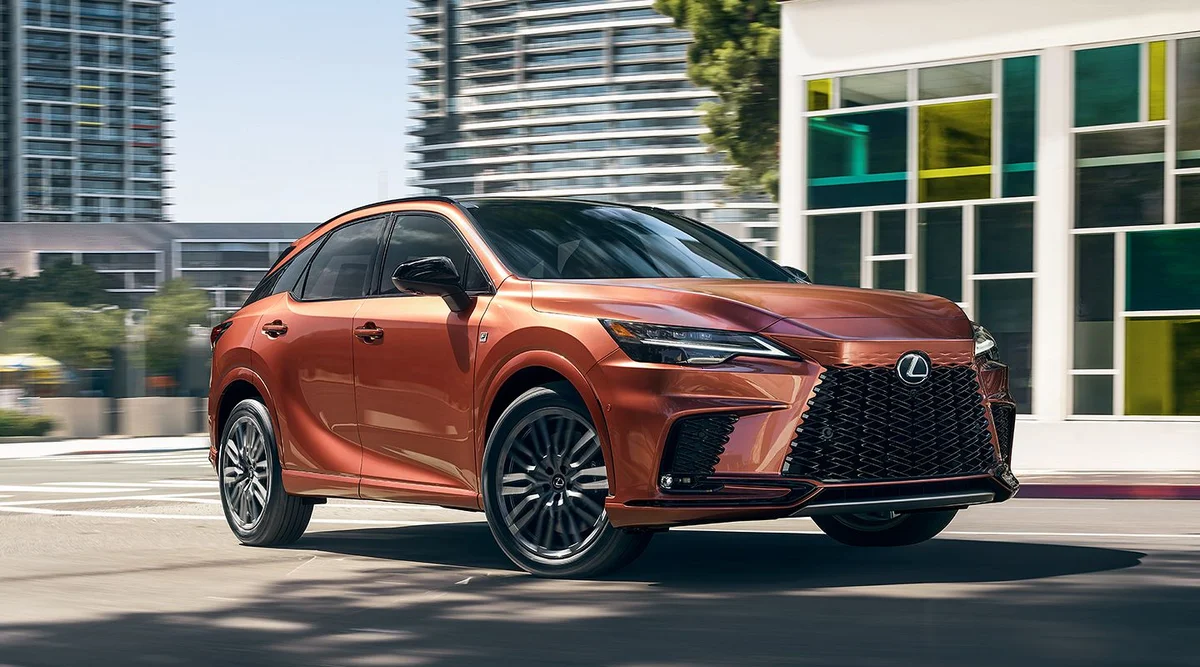
A 2026 Lexus NX 450h+ reports 84 MPGe on the left, 36 MPG combined on the right, and 37 miles of EPA-estimated electric range in between (2024 Lexus NX 450h Plus AWD). Your actual fuel bill is a weighted blend of both modes, with the blend set by how much of your driving happens before the battery runs out. See our 2026 Lexus NX 450h+ F SPORT Handling page for the full spec.
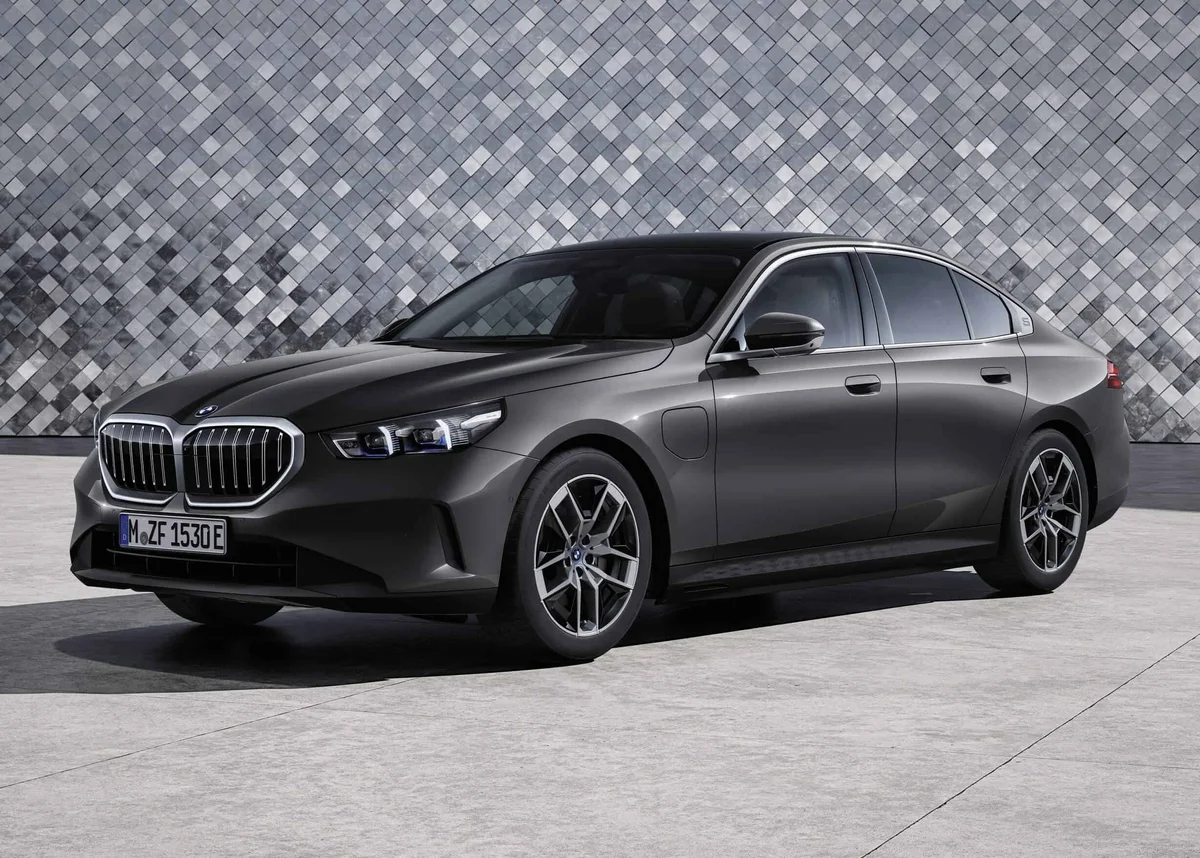
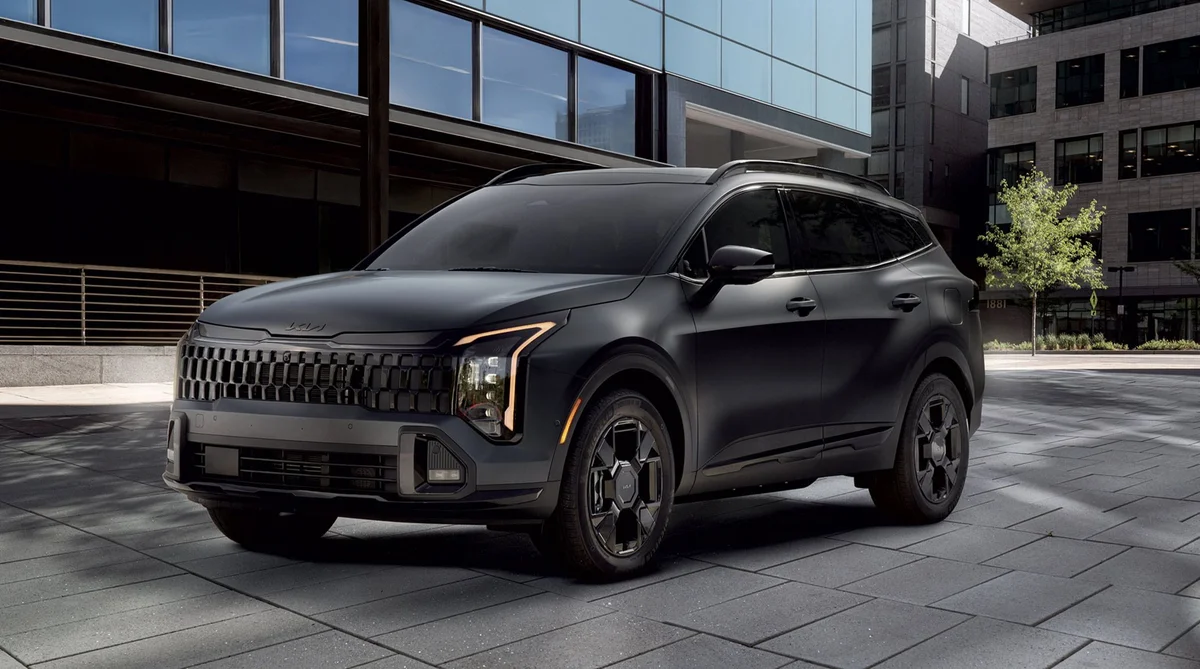
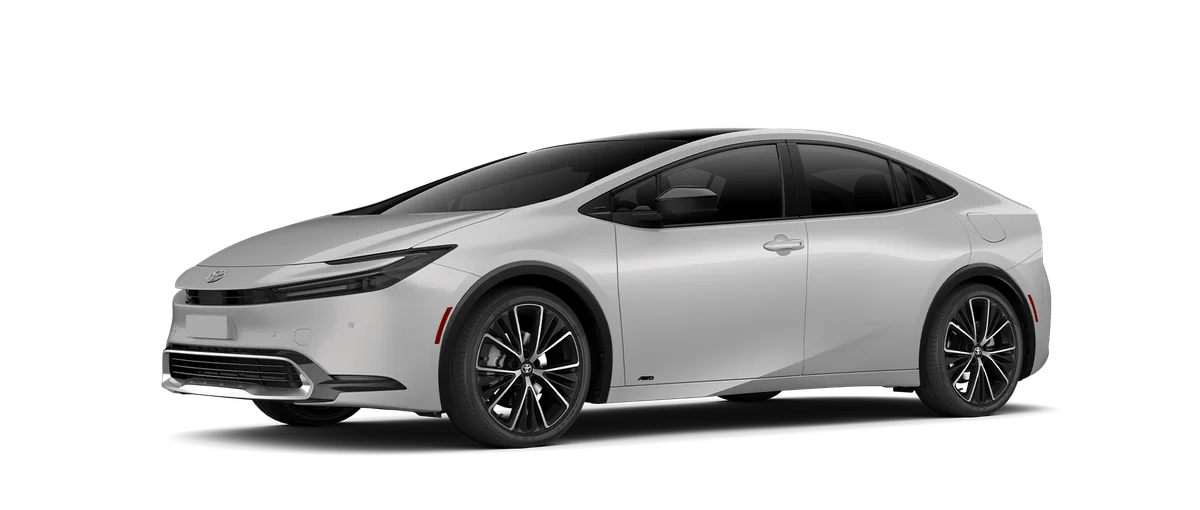
The same split shows up on every plug-in. The 2026 BMW 550e xDrive pairs 68 MPGe with 25 MPG combined on gasoline and 33 EV miles (BMW 5 Series Sedan Plug-in hybrid). The 2026 Kia Sportage Plug-In Hybrid reports 84 MPGe and 35 MPG combined on gasoline, with 34 EV miles (Our 3 Favorite Things About the 2026 Kia Sportage Plug-in Hybrid, KBB). The 2026 Toyota Prius Prime XSE is rated at 114 MPGe and 52 MPG, with 40 EV miles. Compare across them on MPGe alone and you lose the second half of the story.
Is 84 MPGe better than 51 MPG? It depends on what you plug in
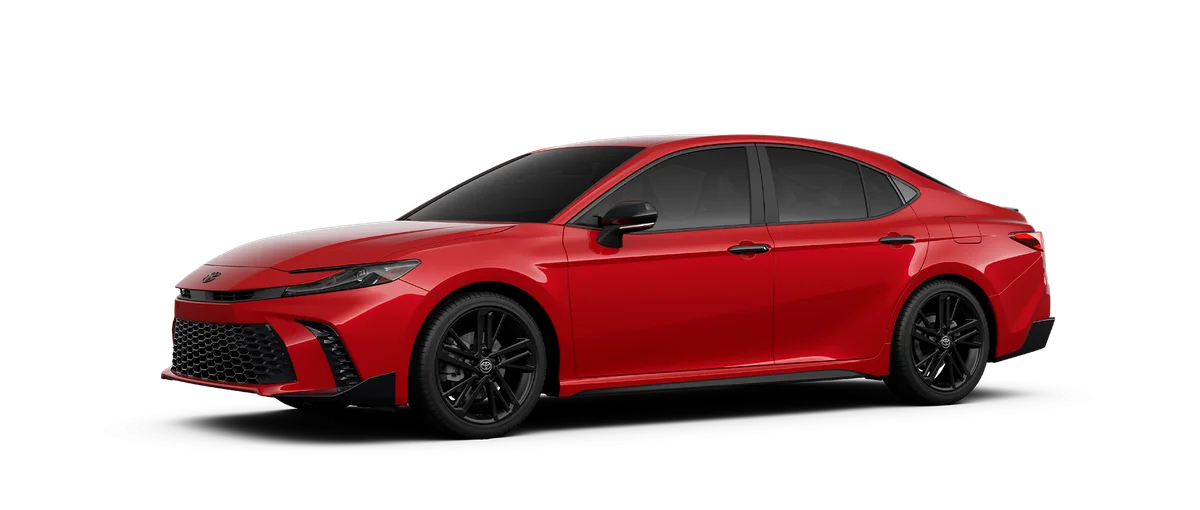
The 2026 Toyota Camry Hybrid LE is EPA-rated at 51 MPG combined with no plug. At four dollars a gallon that works out to about 7.8 cents per mile for fuel, every mile, regardless of what you parked next to.
The 2026 Lexus NX 450h+ is a different story. In electric mode at the U.S. average residential rate of 18.2 cents per kilowatt-hour, the NX 450h+ costs about 7.3 cents per mile, a small win over the Camry. But once the 37-mile EV range is used up and the car is running on gasoline, its 36 MPG combined rating works out to about 11.1 cents per mile, roughly 42 percent more per mile than the Camry. The Lexus only beats the Camry on operating cost if enough of your miles happen on the battery to drag the blended rate below the hybrid's 7.8 cents.
That break-even depends entirely on charging. An owner who commutes 30 miles a day, parks in a garage, and plugs in every night can keep the Lexus running 80 to 90 percent of its miles on grid electricity. An owner who parks on the street and never plugs in gets zero percent, and pays about 42 percent more per mile than the Camry for every gallon-powered mile. Same window sticker, two very different fuel bills.
| Model | MPGe (EV mode) | Gas MPG | EV range | Cents/mi on grid* | Cents/mi on gas* |
|---|---|---|---|---|---|
| 2026 Toyota Prius Prime XSE | 114 | 52 | 40 mi | 5.4 | 7.7 |
| 2026 Lexus NX 450h+ F SPORT | 84 | 36 | 37 mi | 7.3 | 11.1 |
| 2026 Kia Sportage PHEV X-Line | 84 | 35 | 34 mi | 7.3 | 11.4 |
| 2026 Hyundai Santa Fe PHEV SEL Premium | 79 | 33 | 36 mi | 7.8 | 12.1 |
| 2026 BMW 550e xDrive | 68 | 25 | 33 mi | 9.0 | 16.0 |
| 2026 Toyota Camry Hybrid LE | n/a | 51 | n/a | n/a | 7.8 |
How MPGe is calculated, and what it leaves out
The EPA generates MPGe from the same five-cycle dynamometer test it uses for gasoline cars: city, highway, high-speed, cold-temperature, and air-conditioning cycles. For an electrified vehicle the agency measures wall-to-wheel energy use, meaning the electricity pulled from the AC outlet to charge the battery, then divides by the vehicle's energy consumption per mile to get the MPGe figure (Miles per gallon gasoline equivalent).
Because the measurement starts at the wall plug, the number includes charger inefficiency and AC-to-DC conversion losses inside the car. It does not include upstream losses at the power plant or in transmission lines. Critics have argued that this flatters MPGe in comparisons with gasoline, which carries its own upstream refinery and distribution losses that the window label likewise ignores (Is The MPGe Rating System Misleading? Carscoops). The deeper point is that sticker MPGe is a tailpipe-equivalent efficiency, not an end-to-end one.
There is a separate MPGe figure the EPA and DOE historically used in federal fuel economy averaging that was far higher than the one on the window, thanks to a petroleum-equivalency multiplier. The 2023 Ford F-150 Lightning was rated at 66 to 70 MPGe on the window but about 237 MPGe for Corporate Average Fuel Economy accounting (Carscoops). After a 2025 federal appeals court ruling, the Department of Energy rescinded that multiplier (Trump rescinds the EV fuel economy math rule, CBT News). For a car shopper, only the window-sticker MPGe is relevant, and that is the figure every number in this guide refers to.
Charging habits decide which label is real for you
Engineers have a term for the share of a plug-in's miles that actually run on grid electricity: utility factor. SAE's J2841 standard models it from U.S. daily driving data and assumes the owner charges to full once a day (Updating Utility Factor Calculations in SAE J2841, UC Davis ITS). For a 50-mile-range PHEV like the 2026 Mercedes-Benz GLE 450e, the standard predicts a typical owner runs about 62 percent of miles on electricity; for a 21-mile-range Jeep Wrangler 4xe, closer to 37 percent.
Observed data from Chevrolet Volt fleets came in a few points higher than the J2841 predictions, so the standard is not pessimistic. The variance across individual owners is much larger than the variance in the model. If you commute 20 miles round trip and plug in every night, a 36-mile PHEV covers most of your driving on electricity. If you commute 80 miles and have no workplace charger, the same car runs mostly on its gas engine, and the MPGe number on the sticker is mostly scenery.
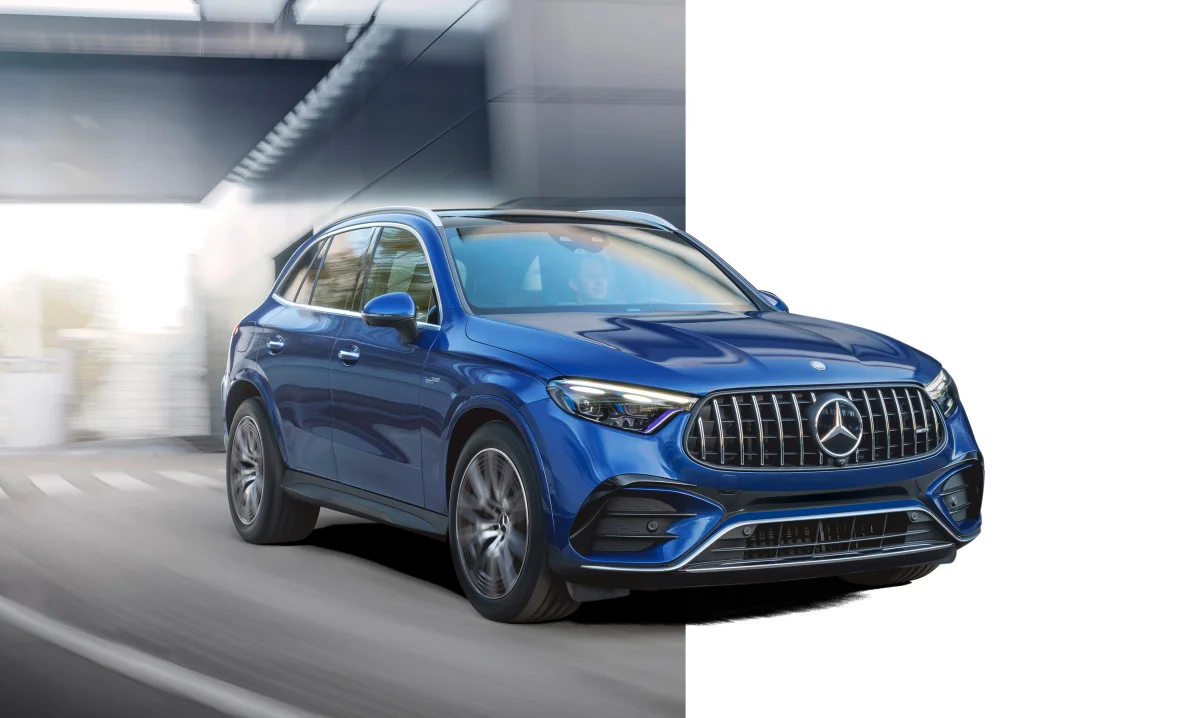
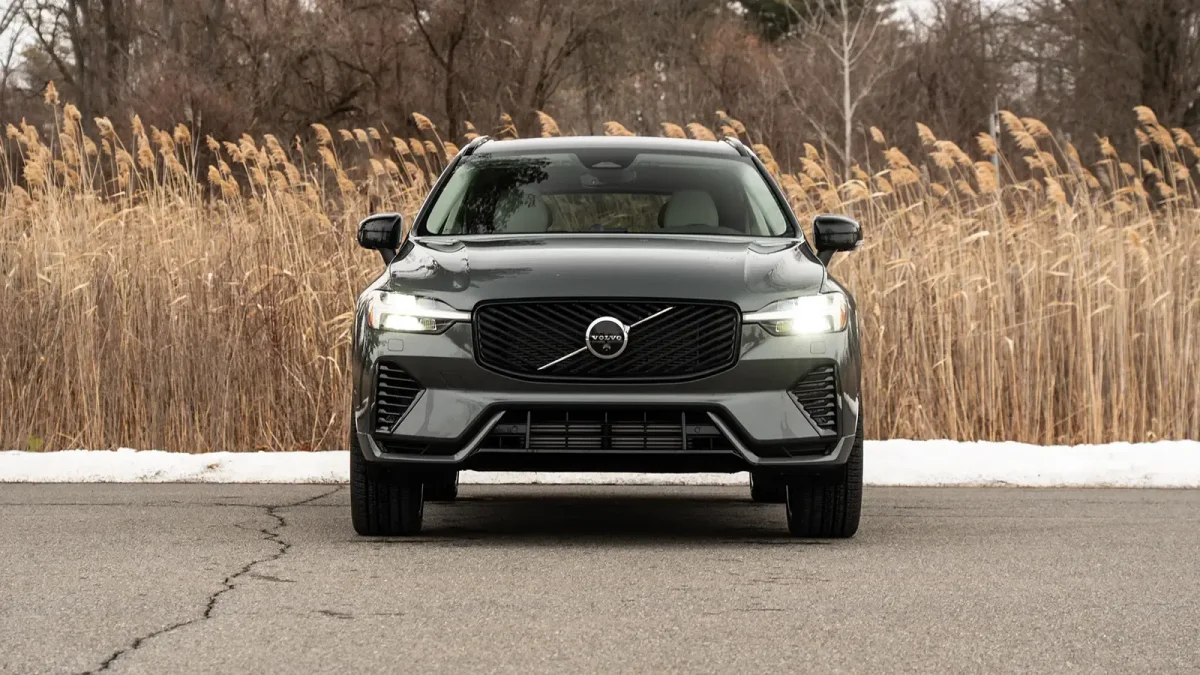
The 2026 Mercedes-Benz GLC 350e 4MATIC is EPA-rated at 64 MPGe with 54 miles of EV range, the longest in our top-ranked PHEV set. That matters because EV range is what sets the upper bound on the utility factor. A longer electric range is what makes a plug-in behave more like its MPGe number in day-to-day driving, and less like its gasoline-mode one. Shorter-range PHEVs like the 36-mile Volvo XC60 T8 Plug-In Hybrid Plus at 63 MPGe will stay in gasoline mode on longer errands even for a diligent charger.
How to compare hybrid fuel economy ratings without getting fooled
Reduce every rating to cost per mile using the prices you actually pay. For a conventional hybrid, divide your local gas price by the combined MPG. For a plug-in, do the same gasoline math for miles beyond the EV range, then handle the electric portion by dividing your electricity rate by (MPGe divided by 33.7) to get dollars per mile. Weight the two by the share of your driving that happens inside the EV range. Once you run the numbers, the ranking by cost per mile often looks nothing like the ranking by MPGe.
A few practical rules follow from the math:
- Regular hybrids with no plug: use only the combined MPG. A 2026 Camry Hybrid at 51 MPG and a 2026 Honda Accord Hybrid Sport at 44 MPG are directly comparable.
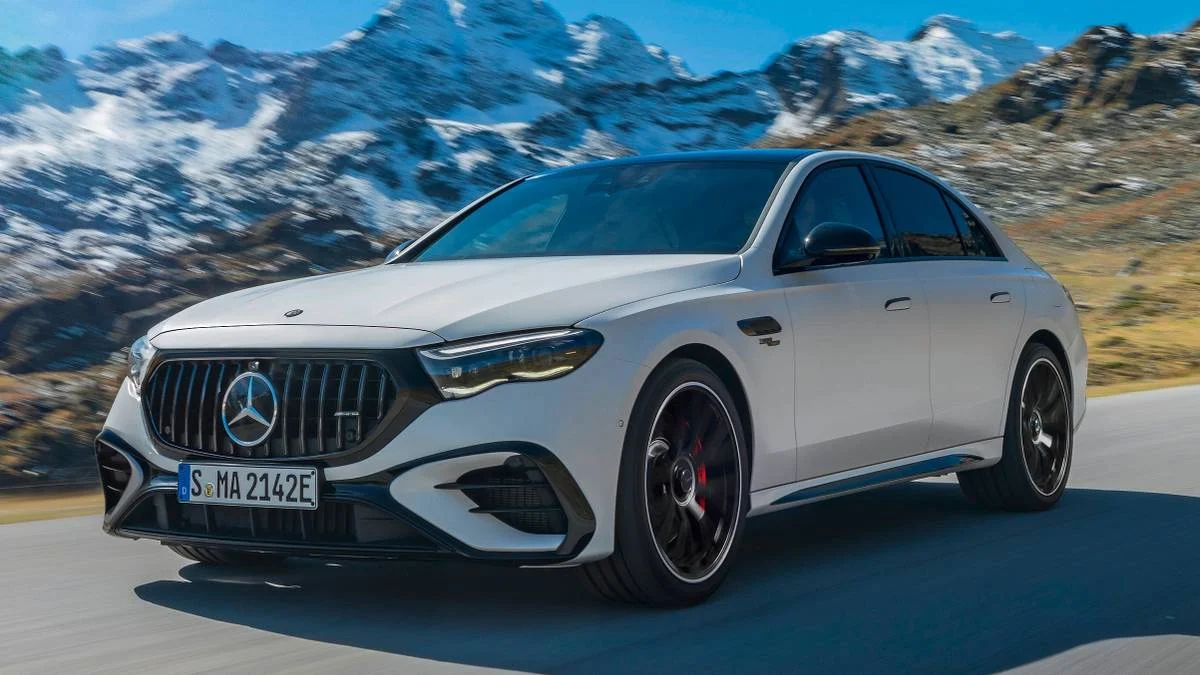
- PHEVs with reliable home charging: focus on MPGe and EV range together. A 54-mile GLC 350e or a 44-mile Mercedes-Benz AMG E53 PHEV Sedan can keep the gasoline engine mostly idle for suburban drivers.
- PHEVs without home charging: ignore the MPGe number and compare gasoline-only MPG against conventional hybrids. The Lexus NX 450h+ at 36 MPG loses to the Camry Hybrid at 51 MPG.
- Any plug-in: check your state's electricity rate against the 18.2 cent national average. In Hawaii, California, and much of the Northeast, MPGe savings shrink or flip.
- The 2026 Hyundai Santa Fe Plug-In Hybrid SEL Premium is a good test case: 79 MPGe, 33 MPG on gas, 36 EV miles. For a 30-mile daily commute it is close to the Camry on operating cost; for a 100-mile round trip it is well behind.
The short version
MPGe is a real measurement, but it measures energy use per mile in charge-depleting mode, not what you will spend at the pump or on your utility bill. Treat it the way you treat horsepower: a technical spec that only matters in context. If you drive less than a PHEV's EV range most days and you can plug in at home, a high-MPGe plug-in like the Prius Prime, Lexus NX 450h+, or Kia Sportage PHEV will almost certainly beat a conventional hybrid on fuel cost. If you cannot plug in reliably, buy the conventional hybrid with the best combined MPG and skip the plug-in premium. See our Best Hybrid Cars of 2026 ranking for how the hardware and the math stack up across the current field.
See Best Hybrid Cars of 2026Questions people ask
What does MPGe mean?+
MPGe stands for miles per gallon of gasoline-equivalent. The EPA defines it by energy content: 33.7 kilowatt-hours of electricity carries the same energy as one U.S. gallon of gasoline, about 115,000 BTU. A 100 MPGe rating means the vehicle uses 33.7 kWh of electricity to go 100 miles, measured wall-to-wheel on the EPA's five-cycle test. It is an energy-efficiency metric, not a dollar figure or a driving-range figure.
Why does my plug-in hybrid show two MPG numbers?+
The EPA's PHEV window label has two fuel-economy boxes. The left box is MPGe, describing the car when it is running primarily on battery power. The right box is traditional MPG, measured once the battery is depleted and the car is running as a conventional hybrid on gasoline. Your actual fuel bill is a weighted blend of the two, with the weighting set by how much of your driving happens before the battery runs out.
Is 84 MPGe better than 51 MPG?+
Only if you plug in often enough. At the 2026 U.S. average of 18.2 cents per kilowatt-hour, 84 MPGe works out to about 7.3 cents per mile on electricity. A 51 MPG Camry Hybrid works out to about 7.8 cents per mile on four-dollar gasoline. But a plug-in hybrid rated 84 MPGe (such as the Lexus NX 450h+) switches to 36 MPG once the battery is empty, which costs about 11.1 cents per mile. If you cannot charge regularly, the 51 MPG hybrid is cheaper to run.
How is MPGe calculated?+
The EPA measures how many kilowatt-hours the vehicle pulls from a wall outlet to travel a given distance across its five-cycle dynamometer test, which simulates city, highway, high-speed, cold-weather, and air-conditioning conditions. It then divides 33.7 (the kWh-per-gallon equivalence) by the vehicle's kWh-per-mile to produce MPGe. The measurement includes charger losses but does not include upstream power-plant or transmission losses.
How do I compare hybrid fuel economy ratings?+
Convert each rating to cost per mile. Gas cost per mile is (your local gas price) divided by (combined MPG). Electric cost per mile is (your local electricity rate) divided by (MPGe divided by 33.7). For a PHEV, weight the two by the share of your miles that fit inside the EV range. For a plain hybrid, only the combined MPG matters. Doing this once for your own prices will reorder the ratings.
Does MPGe include the cost of electricity?+
No. MPGe is an energy-equivalence rating, not a price. The EPA label does print a separate annual fuel cost estimate below the MPGe box, calculated for 15,000 miles a year at projected national electricity and gasoline prices. That estimate is a reasonable sanity check but assumes an average driver and average fuel prices. In high-electricity-rate states, the MPGe advantage can shrink or disappear.
Does MPGe account for charging losses?+
Partly. The EPA's window-sticker MPGe is measured wall-to-wheel, meaning it counts the AC electricity drawn from the outlet, including conversion losses inside the car's onboard charger. It does not count power-plant generation losses or transmission losses upstream of your home. Critics argue this makes MPGe look better than it would on an end-to-end basis.
Is a higher MPGe always cheaper to run?+
No. A higher MPGe is only cheaper when electricity is cheap relative to gasoline and when you actually run the car on the battery. In Hawaii at roughly 47 cents per kilowatt-hour, 84 MPGe costs about 18.9 cents per mile, more than most hybrids burning four-dollar gasoline. And if you never plug in, an 84 MPGe plug-in hybrid behaves like its gasoline-only rating, which is usually lower than a dedicated hybrid like the Camry or Accord.
Sources
What this guide is based on. We research from published specifications, independent reviews and owner reports; we did not test these products ourselves.
- 1.Learn More About the Fuel Economy Label for Plug-in Hybrid Electric Vehicles, U.S. EPA / fueleconomy.gov
- 2.Learn More About the Fuel Economy Label for Electric Vehicles, U.S. EPA / fueleconomy.gov
- 3.Miles per gallon gasoline equivalent, Wikipedia
- 4.2024 Lexus NX 450h Plus AWD, U.S. EPA / fueleconomy.gov
- 5.BMW 5 Series Sedan Plug-in hybrid: Overview, BMW USA
- 6.Our 3 Favorite Things About the 2026 Kia Sportage Plug-in Hybrid, Kelley Blue Book
- 7.Average Electricity Bill, Usage and Price per kWh by State (November 2026), ElectricityPlans
- 8.USA Gasoline Falls Below $4 for 1st Time Since August, Rigzone
- 9.Updating Utility Factor Calculations in SAE J2841, UC Davis Institute of Transportation Studies
- 10.Is The MPGe Rating System Misleading? US Gov Proposes Stricter Fuel Economy Rules For EVs and PHEVs, Carscoops
- 11.Trump rescinds the EV fuel economy math rule, CBT News
Products mentioned
 2026 BMW 550e xDrive Sedan
 2026 Honda Accord Hybrid Sport
 2026 Hyundai Santa Fe Plug-In Hybrid SEL Premium
 2026 Kia Sportage Plug-In Hybrid X-Line
 2026 Lexus NX 450h+ F SPORT Handling
 2026 Mercedes-Benz AMG E53 PHEV Sedan
 2026 Mercedes-Benz GLC 350e 4MATIC
 2026 Toyota Camry Hybrid
 2026 Toyota Prius Prime XSE
 2026 Volvo XC60 T8 Plug-In Hybrid Plus
More on hybrid cars
Explainer
Why Hybrids Get Better MPG in City Traffic Than on the Highway
Hybrids flip the usual pattern: city MPG beats highway. Here is why regenerative braking pays in traffic, what 75 mph really costs, and how cold weather changes the math for PHEV buyers.
Explainer
Hybrid Car Tax Credits in 2026: Who Qualifies and Who Does Not
The federal clean vehicle credit for hybrids ended on September 30, 2025. Here is what that means, who the old rules excluded, and what is still on the table.
Explainer
Hybrid Battery Life and Replacement Cost: What the Data Actually Shows
Fleet data shows most hybrid traction batteries last 150,000 to 200,000 miles, and OEM replacement now runs $2,500 to $4,500 on mainstream models. The feared catastrophic battery bill is not supported by the evidence.
Explainer
PHEV vs. Regular Hybrid: When the Plug Actually Pays Off
A plug-in hybrid costs thousands more and gets worse MPG on an empty battery. Here is the break-even math and the conditions that make the premium worth paying.
Buying guide
How to Choose a Hybrid Car: The Decisions That Actually Matter
Four questions decide the right hybrid: can you charge at home, what body style, mainstream or luxury, and how many miles a year. Everything else is noise.