Explainer
Why Peak Horsepower Is a Misleading Number in Compact Cars
Peak horsepower is a single data point. Torque delivery, curb weight, and differential type are what actually determine how a compact car accelerates and corners. Here is what to read on the spec sheet instead.
Updated November 12, 2026 · Based on 11 sources · How we research
If you are shopping a compact car by horsepower alone, you will miss the part that actually determines how it moves. Peak horsepower is a single number taken at one engine speed. It says nothing about how much torque is available at 2,000 rpm, how heavy the car is, or whether the driven wheels can put the power down when you ask them to. Two compacts with the same 200 hp sticker can be nearly half a second apart to 60 mph, and the one with more usable torque often feels decisively quicker in daily driving. This guide explains the specs that actually shape compact-car performance, using the cars on the RankGrids Best Compact Cars of 2026 list as examples.
What peak horsepower actually measures, and what it hides
Horsepower is a derived figure. An engine dyno measures torque at each engine speed, and horsepower is calculated as torque multiplied by rpm, divided by 5,252 (Motor Authority). Peak horsepower is therefore the single highest point on that calculation across the rev range, not an average.
You drive the whole curve, not that one peak. Most daily driving happens between 1,500 and 4,500 rpm. A high-revving naturally aspirated engine that makes its peak at 6,500 rpm has to be wound out to deliver that number. A turbocharged engine that holds peak torque from around 2,000 rpm to 5,000 rpm has usable torque where the tachometer actually spends most of its time. Peak horsepower rewards the first engine on a spec sheet. The second one often wins the merge onto the freeway.
The Civic Si case: 200 hp that feels like more
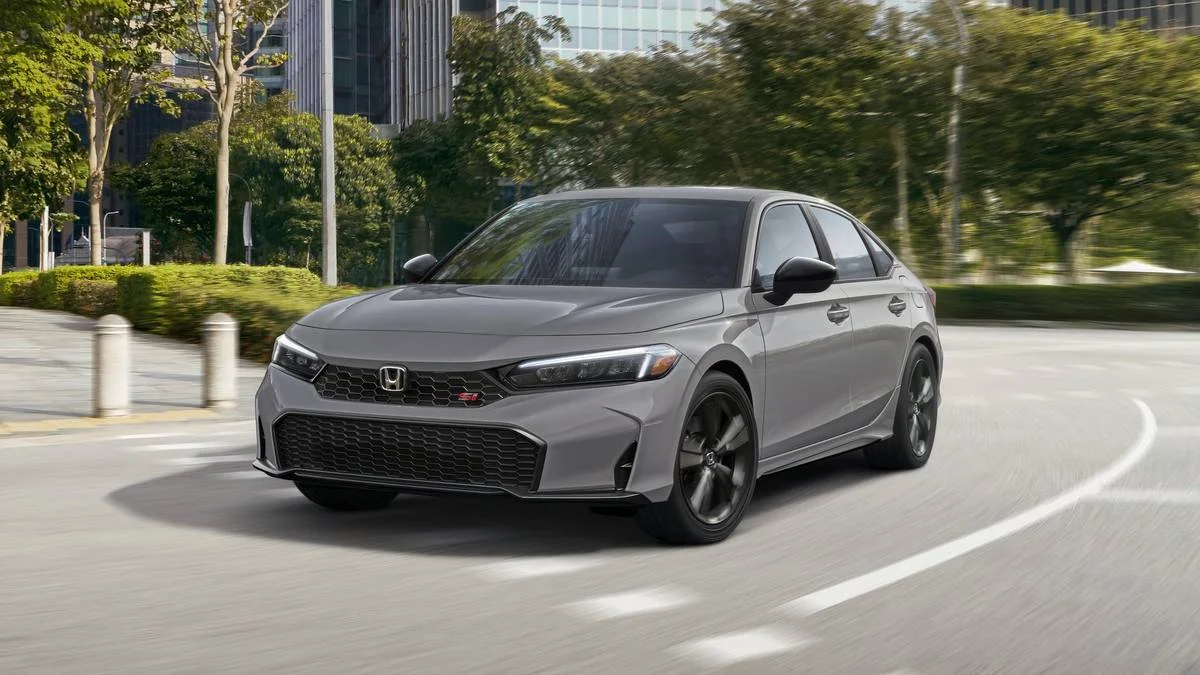
Honda rates the 2026 Civic Si at 200 hp and 192 lb-ft of torque, with peak torque available from 1,800 to 5,000 rpm (Honda Info Center). That is an unusually broad torque plateau for a compact. Consumer Guide's drive review confirms that the standard limited-slip differential helps keep launches smooth and reduces torque steer, though the reviewer also notes that the engine still rewards being kept in the upper half of the rev range to feel its best.
Curb weight is 2,952 lb per Honda. The transmission is a six-speed manual with short gearing. Add it up and the Si is roughly 200 to 600 pounds lighter than most 250-plus hp compacts, with torque that is available across a wide band and a helical LSD that puts it to the pavement cleanly. That is why the car on the RankGrids list at Honda Civic Si Sedan can feel more urgent than its 200 hp sticker suggests. The sticker ignores three of the four things that matter.
Torque curve shape matters more than the peak number
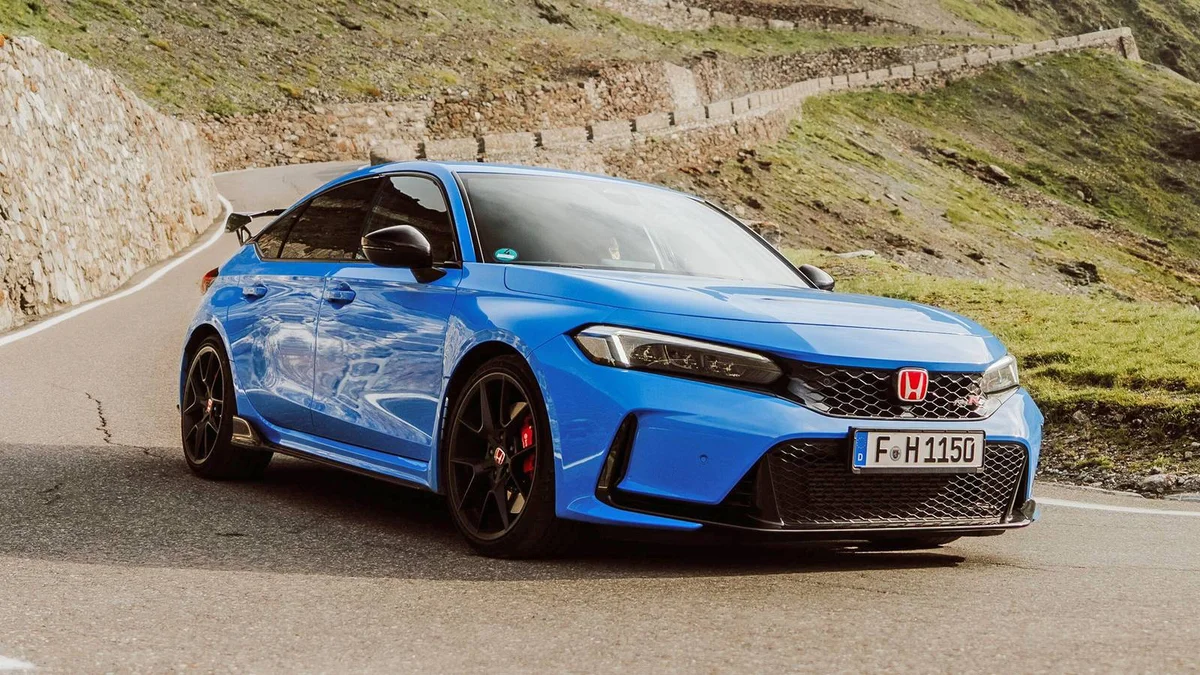
Where torque arrives is as important as how much of it there is. The 2026 Honda Civic Type R makes 310 lb-ft of torque, but only between 2,600 and 4,000 rpm, a narrower usable band than the Si's 1,800 to 5,000 (Honda Info Center Type R specs). The Type R is unambiguously the quicker car, but the shape of that curve explains why the engine wants to live in the mid-range to feel its best. The Si's torque is spread over a wider rpm band.
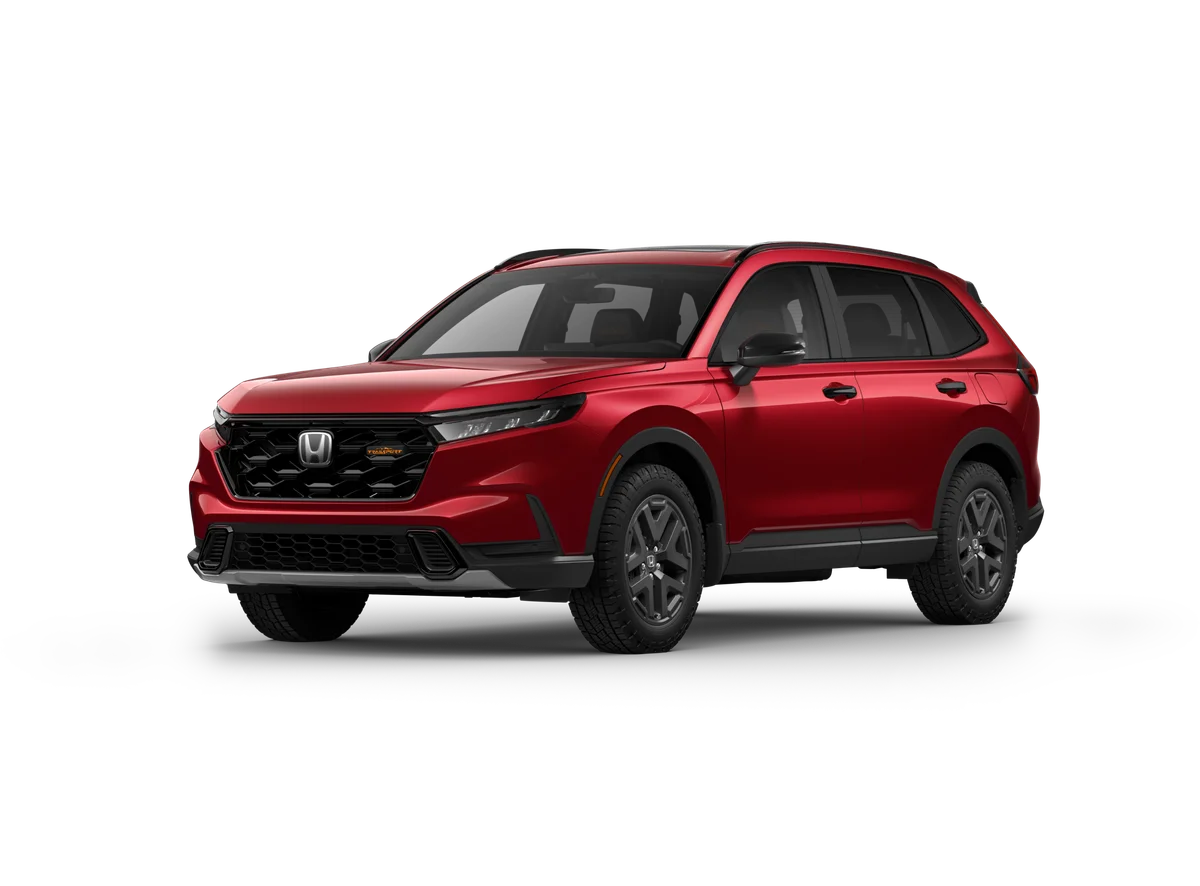
Electric motors are the extreme version of this principle. They make full torque from zero rpm. The 2026 Honda Civic Sport Touring Hybrid Sedan is rated at 200 hp combined, same as the Si, and its electric motor delivers 232 lb-ft from 0 to 2,000 rpm (US News). The hybrid sedan reaches 60 mph in roughly 6.2 seconds on the RankGrids scoring data, about four tenths quicker than the Si's 6.6. Same horsepower, different torque delivery, different car at the stoplight.
Weight is the other half of the equation
The best single predictor of straight-line acceleration is power-to-weight ratio: curb weight divided by horsepower (carsandbox explainer). Lower is faster. Adding 400 pounds to a car undoes a surprising amount of extra horsepower, because every one of those pounds has to be moved by every one of those horses.
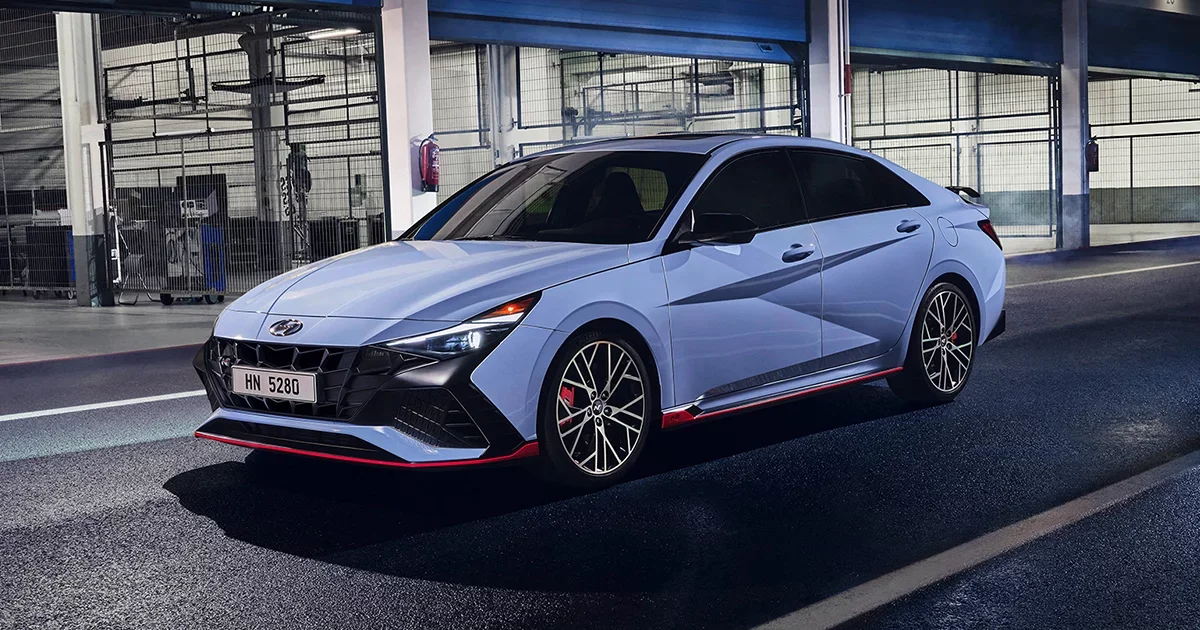
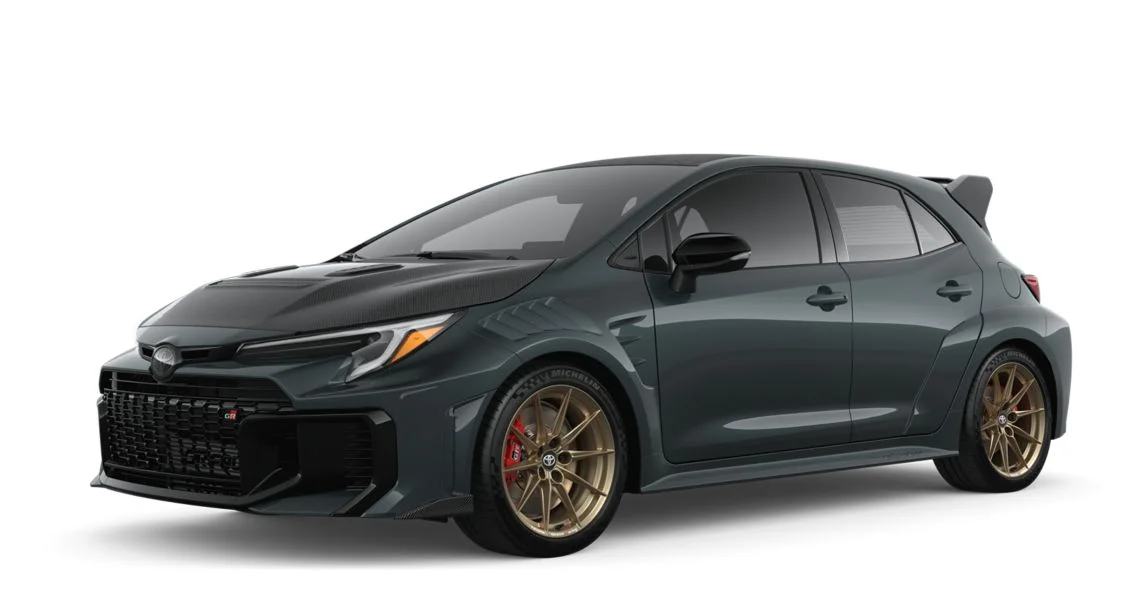
Run the numbers across the compacts on the RankGrids list. The Civic Si comes in at 14.8 lb per horsepower. The Hyundai Elantra N at 276 hp and roughly 3,186 lb with the manual (Autoblog) is at 11.5 lb/hp. The Toyota GR Corolla Premium Plus at 300 hp sits near 10.7. The Subaru WRX GT at 271 hp and about 3,560 lb is 13.1, lower than the Si despite being heavier, because it has more horsepower to carry its mass. In a compact, anything under 15 lb per hp feels quick. Under 12 feels fast.
The differential is the spec reviewers care about and buyers skip
Horsepower is useless if it cannot reach the ground. The differential decides how torque is split between the driven wheels, and it matters more in compact cars than it does in big-bore cars because compacts tend to run narrower, harder tires with less of a grip buffer. Four types show up in this segment.
Open differential. The default on economy trims. Splits torque equally between both wheels regardless of grip. On a hard corner exit, the inside front wheel unloads, loses grip, and the engine happily spins that wheel while the outside wheel, the one with grip, does nothing. All the horsepower in the brochure goes up in tire smoke on a single wheel.
Helical, also sold under the Torsen name. Gear-based, mechanical, no clutches to wear out, generally maintenance-free (Matt Lewis Racing explainer). When one wheel starts to spin, friction inside the gear stack sends more torque to the gripping side. Standard on the Civic Si and Civic Type R. Reduces torque steer and improves front-end grip on corner exit.
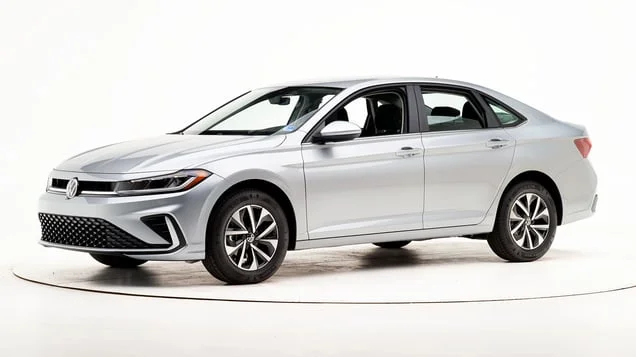
VAQ electronic. Volkswagen's design, fitted to the Golf GTI, Jetta GLI, and the GTI Autobahn trims on the RankGrids list, and to the rear axle of the Golf R. The Drive describes it as a torque-sensing LSD using a multi-plate clutch on the right driveshaft, controlled by a computer that reads ESC and traction-control inputs to decide when to lock up. More adjustable than a mechanical LSD, more complex to repair.
AWD torque split. The GR-FOUR system in the Toyota GR Corolla Core and Premium Plus can send torque anywhere between a 60:40 front bias and a 30:70 rear bias, with Normal, Gravel and Track modes (Wikipedia Toyota GR Corolla). The Volkswagen Golf R uses 4Motion with R-Performance Torque Vectoring, combining a Haldex-style center coupling with an electronic rear differential. Subaru's Symmetrical AWD in the WRX uses Active Torque Split with Active Torque Vectoring. All three get torque to the ground with four tires instead of two.
| Car | HP | Torque | Curb weight | Drive / diff | 0-60 |
|---|---|---|---|---|---|
| Honda Civic Si | 200 hp | 192 lb-ft @ 1,800-5,000 | 2,952 lb | FWD helical LSD | 6.6 s |
| Civic Sport Touring Hybrid | 200 hp | 232 lb-ft (electric, 0-2,000 rpm) | ~3,100 lb | FWD open | 6.2 s |
| Hyundai Elantra N | 276 hp | 289 lb-ft | ~3,186 lb | FWD electronic LSD | 5.1 s |
| Subaru WRX GT | 271 hp | 258 lb-ft | ~3,560 lb | Symmetrical AWD | 5.4 s |
| Toyota GR Corolla | 300 hp | 295 lb-ft | ~3,197 lb | GR-FOUR AWD | 4.7-4.9 s |
| VW Golf R | 315 hp | 295 lb-ft | ~3,400 lb | 4Motion AWD, e-diff | 4.7 s |
| Honda Civic Type R | 315 hp | 310 lb-ft @ 2,600-4,000 | 3,188 lb | FWD helical LSD | 4.9 s |
When AWD beats more horsepower off the line
Two 300 hp cars on the same tires will launch very differently if one is FWD and the other is AWD. The AWD car can use all four contact patches to transmit torque to the pavement. The FWD car has to pass everything through two front tires that are also steering. In the dry, with a good LSD and sticky rubber, FWD can hook up. In the wet, or on cold pavement, or from a standing start at full throttle, it often cannot.
One real-world illustration: an autoevolution report of a wet-road drag race at South Africa's Killarney Raceway between a Golf GTI and an automatic GR Corolla showed the AWD Corolla walking away in both standing-start runs. The GTI suffered wheel hop and traction-control intervention; the Corolla had Michelin Pilot Sport rubber and four driven wheels to put its power down. The horsepower gap in that specific race was around 20 hp. The traction gap decided it. This is why the GR Corolla and Golf R sit near the top of the RankGrids list, and why their 4.7-second 0-60 times can look like a formality while a 276 hp FWD rival is still hunting for grip in first gear.
What to read on a compact-car spec sheet instead
Six numbers tell you more than peak horsepower, in roughly this order of importance:
- Peak torque figure and the rpm range it is available at. 192 lb-ft at 1,800 rpm is useful every day. 310 lb-ft at 2,600 rpm is useful if you keep the engine spinning.
- Curb weight. Divide horsepower into it. Under 15 lb per horsepower is quick in a compact. Under 12 is genuinely fast.
- Drive wheels. FWD can hook up with the right differential and tires. AWD hooks up almost regardless. RWD is rare in this class.
- Differential type. 'Limited-slip,' 'helical,' 'Torsen,' 'VAQ,' and 'N Corner Carving' are words you want on the sheet. 'Open' is standard on lower trims and leaves horsepower on the table.
- Tire specification. A 235/40R19 summer tire changes how much of the engine's torque the car can use. The same car on an all-season 215 cannot access the same acceleration.
- Transmission and final drive ratio. Short gearing multiplies torque at the wheels. A six-speed manual with short gears, like the Civic Si's, is part of why it feels urgent.
The short version
Peak horsepower is a marketing-friendly single number that papers over the four specs that actually determine how a compact car moves: where its torque lives on the rev range, how much weight that torque has to push, how the wheels are driven, and what kind of differential sits between them. The 200 hp Honda Civic Si Sedan sits on the RankGrids Best Compact Cars list ahead of several rivals with 50 to 80 more horsepower because it wins on all four. Buyers chasing the biggest brochure number end up with a car that is quick on a dyno and ordinary on a freeway on-ramp. Read the torque curve, weigh the car, check the diff.
See Best Compact Cars of 2026Questions people ask
Why does the Civic Si feel so quick with only 200 hp?+
Because its 192 lb-ft of torque is available from 1,800 to 5,000 rpm per Honda, the car weighs 2,952 lb (light for the class), and a helical limited-slip front differential is standard. Torque is available across a wide band, there is little weight to move, and the LSD puts the power down cleanly on corner exit. The 200 hp sticker ignores all three of those factors.
Is more horsepower always better in a compact car?+
No. A 240 hp FWD compact with an open differential and 3,300 lb curb weight will often lose a corner-exit race to a 200 hp car weighing 2,950 lb with a limited-slip diff. Peak horsepower only wins if the car can actually use it, which depends on weight, drivetrain, differential, tires, and gearing.
What is a limited-slip differential and why does it matter more than raw power?+
A limited-slip differential sends torque to the wheel with more grip instead of splitting it evenly between both driven wheels. In a corner, an open differential feeds torque into the inside wheel as it unloads, spinning it uselessly. An LSD transfers that torque to the outside wheel that is still planted. For a front-wheel-drive compact, that is often the difference between using your horsepower and lighting up one front tire.
Why do some lower-horsepower compacts outperform higher-horsepower ones off the line?+
Three reasons stack up: better torque at the rpm you actually launch from, lower curb weight (a stronger power-to-weight ratio), and better traction from an LSD or AWD. A 200 hp Civic Hybrid with 232 lb-ft of instant electric torque hits 60 mph quicker than some higher-hp gas-only rivals because the torque is available at zero rpm and there is no turbo lag or clutch slip.
What specs should I look at besides horsepower when comparing compact cars?+
Peak torque and the rpm range it arrives at, curb weight, power-to-weight ratio, drivetrain (FWD, AWD), differential type (open, helical/Torsen, electronic/VAQ), tire specification, and final-drive ratio. All of these shape real-world acceleration and cornering more than the headline horsepower number.
Sources
What this guide is based on. We research from published specifications, independent reviews and owner reports; we did not test these products ourselves.
- 1.2026 Honda Civic Si Specifications, Honda Info Center
- 2.2026 Honda Civic Si Review: Guest Drive, Consumer Guide
- 3.2026 Honda Civic Hybrid Performance, HP & Engine Options, US News
- 4.2026 Honda Civic Type R Specifications, Honda Info Center
- 5.What's the difference between horsepower and torque?, Motor Authority
- 6.Power-to-Weight Ratio Beats Horsepower, carsandbox
- 7.2026 Hyundai Elantra N Review, Specs, Pricing, and Warranty, Autoblog
- 8.Understanding Limited Slip Differentials: Helical Gear vs Plate Diffs, Matt Lewis Racing
- 9.2022 Volkswagen GTI Will Be Loaded With Equipment, Kill Torque Steer Completely, The Drive
- 10.Toyota GR Corolla, Wikipedia
- 11.Volkswagen Golf GTI Drag Races Automatic Toyota GR Corolla in the Wet, autoevolution
Products mentioned

More on compact cars
Explainer
Sticker Price vs. True Cost: What a Compact Car Actually Costs to Own Over Five Years
Depreciation, insurance, premium fuel and scheduled maintenance can swing five-year ownership cost by $15,000 or more between compact cars with similar MSRPs. Here is where that money goes.
Explainer
Does a Hybrid Compact Actually Save You Money? The 2026 Payback Calculation
Real payback math on the 2026 Civic Sport Touring Hybrid and Toyota Corolla Hybrid. How long the extra sticker price takes to recover at today's gas prices and your actual annual mileage.
Explainer
Manual vs. DCT in Performance Compacts: What You Gain and What You Give Up
A clear read on whether to buy the manual or the dual-clutch in a GR Corolla, Civic Type R, Elantra N or Golf: lap times, resale, maintenance and daily driving with sources named.
Explainer
AWD vs. FWD in Compact Cars: When the Extra Drivetrain Actually Earns Its Cost
All-wheel drive adds weight, fuel cost, and $1,500 to $3,000 to a compact car's sticker. This guide quantifies the trade-offs and shows which drivers actually benefit, from snow country to the track.
Buying guide
How to Choose a Compact Car: A Decision Guide for 2026
The real forks in a compact car purchase: performance versus daily practicality, AWD by climate, hatch versus sedan, transmission choice, and sticker price versus five-year cost.