Explainer
Does a Hybrid Compact Actually Save You Money? The 2026 Payback Calculation
Real payback math on the 2026 Civic Sport Touring Hybrid and Toyota Corolla Hybrid. How long the extra sticker price takes to recover at today's gas prices and your actual annual mileage.
Updated November 12, 2026 · Based on 9 sources · How we research
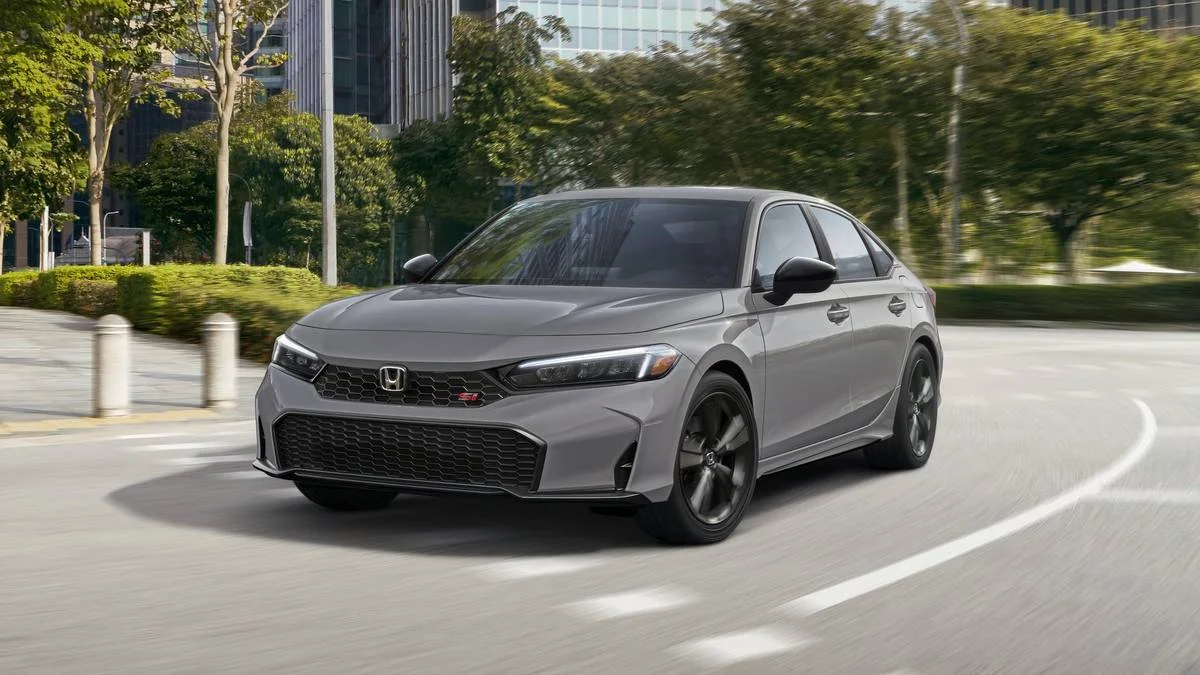
If you are shopping for a compact car in 2026, the hybrid question is unavoidable. Honda will happily walk you from a $26,695 Civic Sport sedan to a $32,395 Civic Sport Touring Hybrid and promise the extra fuel economy pays for the premium. The salesperson is not exactly lying. But they are not telling you how long the payback actually takes at your mileage and your gas price, or how much of that $5,700 gap is the hybrid system itself rather than leather, a Bose stereo, and 18-inch wheels. This guide runs the math using current EPA ratings and the AAA national gas price so you can decide whether a hybrid compact makes financial sense for your specific driving.
What the fuel savings actually look like at today's gas price
The EPA rates the 2026 Civic Sport Touring Hybrid sedan at 50 city, 47 highway, 49 combined MPG per Honda's 2026 Civic sedan pricing and EPA ratings release. The non-hybrid Civic LX sedan comes in at 32/41/36 and the Civic Sport drops to 31/39/34 because of its sportier tires and aero kit, per the same release.
The AAA national average for regular gasoline was $3.94 on November 11, 2026. At 15,000 miles a year the Civic Sport Touring Hybrid burns 306 gallons for about $1,206 in fuel. A gas Civic Sport burns 441 gallons for about $1,737. That is roughly $530 in annual fuel savings against the Sport, or $434 against the LX at 36 MPG combined.
Owner and reviewer figures track the EPA rating closely in temperate mixed driving but drop in cold weather and at steady highway speeds. GreenCars reported closer to 38.5 MPG in freezing weather with hard driving on the hatchback version, well below the 48 MPG combined rating for that body style. More on the highway side below.
How long until the hybrid pays for itself?
The useful question is not "does a hybrid save money" but "how many years of ownership until the premium comes back." The table below runs payback for the Sport Touring Hybrid against the gas Civic Sport, using the full $5,700 price gap and assuming all fuel savings go toward the premium. It ignores insurance, maintenance, and resale, which the sections below handle separately.
Those payback periods often stretch past how long most buyers keep a new car. Industry data puts the average new-vehicle hold around 8 years. If you drive 12,000 to 15,000 miles a year at today's gas prices, the full Sport-to-Sport-Touring-Hybrid gap does not pay back before you trade out. Narrow the comparison to the $2,700 Sport-to-Sport-Hybrid step and the hybrid system pays for itself in about five years at 15,000 miles a year.
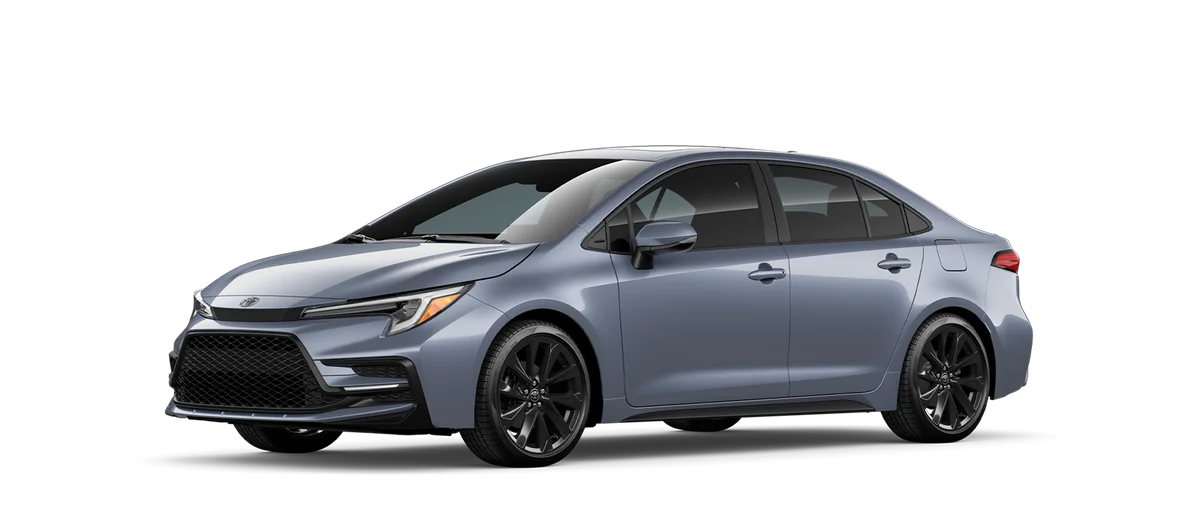
Toyota's math is cleaner. The Corolla Hybrid LE wins back its $1,850 premium over the gas LE in roughly three years at 15,000 miles, which matches Puente Hills Toyota's bottom-line comparison. Toyota prices the hybrid as a standalone upcharge rather than bundling it with a premium trim, which is why the Corolla's answer is unambiguous while the Civic's depends on which trims you line up.
| Annual Miles | Gas $3.00/gal | Gas $3.94/gal | Gas $5.00/gal |
|---|---|---|---|
| 10,000 | 21 yrs | 16 yrs | 13 yrs |
| 15,000 | 14 yrs | 11 yrs | 8 yrs |
| 20,000 | 11 yrs | 8 yrs | 6 yrs |
| 25,000 | 8 yrs | 6 yrs | 5 yrs |
The highway driver trap
Hybrids save gas mainly through regenerative braking and engine shutoff at stops. Highway cruising does neither. The EPA explains the mechanism in Where the Energy Goes: Hybrids: on steady-speed highway runs the gasoline engine does almost all the work and the electric motor contributes little beyond low-speed launches. Motor1 reaches the same conclusion in a feature on why hybrids excel in city driving.
The Civic Hybrid is rated 47 MPG highway versus the Civic Sport's 39 MPG highway, an 8 MPG gain, not the 15 MPG gap you see in combined ratings. At 15,000 highway-only miles and $3.94 per gallon, that works out to roughly $258 a year in fuel savings. Against the full $5,700 Sport Touring Hybrid premium, that is a 22-year payback. Even measured against the $2,700 Sport-to-Sport-Hybrid step, it is 10 years.
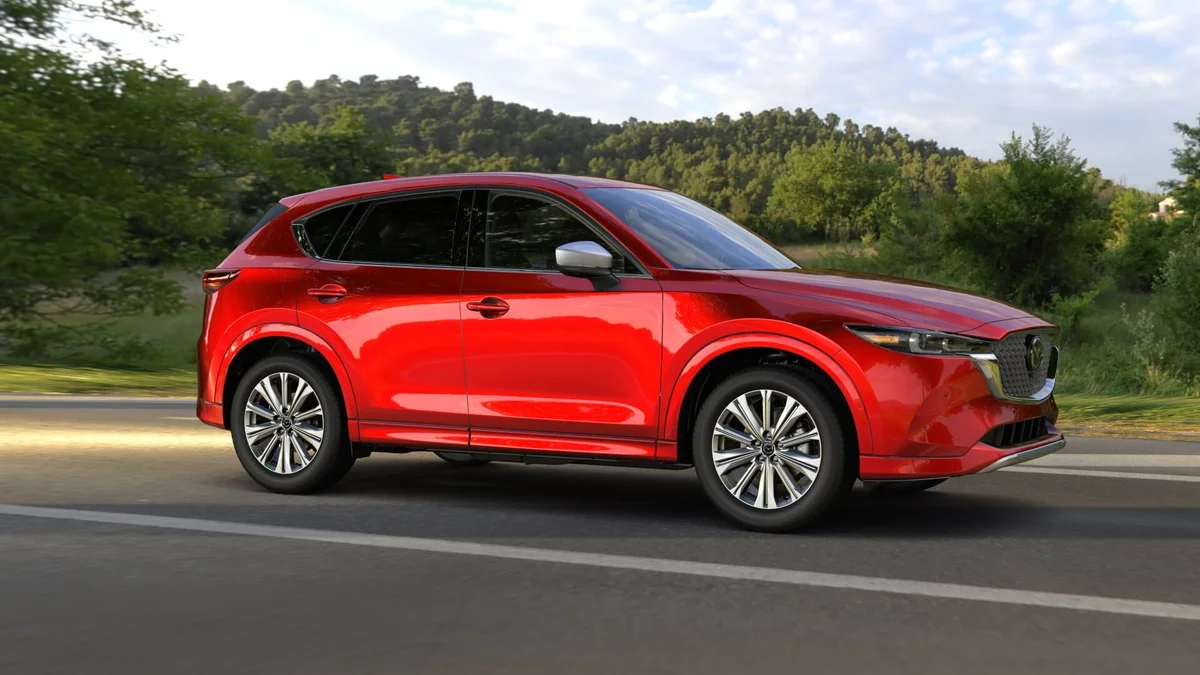
If 80 percent of your miles are interstate at 70 mph, a non-hybrid compact with a small efficient engine often returns most of the real-world efficiency of a hybrid without the premium. The Civic LX at 41 MPG highway, the Mazda3 2.5 S Select sedan at an EPA-rated 36 highway, and the Honda Civic Si at 37 highway all get close enough that the hybrid's advantage mostly evaporates on the interstate. The hybrid's real edge lives in city traffic, where the gas Civic drops into the low 30s and the hybrid stays near 50.
Maintenance, insurance, and resale: the second-order money
Hybrids have a small but real maintenance edge. Regenerative braking lets the friction brakes do less work, which stretches pad life compared with a gas compact and usually buys you one fewer brake job over 100,000 miles. The savings are modest, not transformative.
Insurance cuts the other way. Industry surveys put hybrid full-coverage premiums roughly 6 to 12 percent higher than gas equivalents, mostly because the car is worth more and the battery is expensive to replace in a collision. On a compact that is roughly $100 more a year, which trims several hundred dollars off any five-year savings tally.
Resale is a wash to slight hybrid advantage. iSeeCars pegs the Toyota Corolla Hybrid at 69.2 percent residual at five years, among the strongest hybrid residuals it tracks. The Civic Hybrid comes in at 66.9 percent, well above the 61.1 percent hybrid-car average. Battery coverage is the other worry: Honda covers the hybrid battery for 8 years or 100,000 miles federally and extends that to 10 years or 150,000 miles in California and other ZEV states.
Who should buy the hybrid, and who should not
The hybrid math works when three conditions line up: you drive 15,000 or more miles a year, at least half of those miles are city or stop-and-go, and you plan to keep the car six years or longer. Under those conditions, even on the full-sticker premium, you recover most of the money in fuel savings, pick up the small maintenance edge, and give back only a bit to insurance. That is the buyer for the Civic Sport Touring Hybrid or the Corolla Hybrid SE AWD.
The hybrid math breaks when you drive under 10,000 miles a year, when most of your miles are interstate at 70+ mph, or when you churn cars every three or four years. In those cases a Civic LX or EX at 36 MPG combined, or a Mazda3 at around 30 MPG, saves several thousand dollars up front and gives most of it back in gas you were not going to burn anyway. Our ranking Best Compact Cars of 2026 has five Civic variants and five Mazda3 variants precisely because the right compact depends on your driving.
One other case is worth flagging. If you were going to buy the Sport Touring Hybrid content anyway for the leather, moonroof, Bose stereo, and heated seats, most of that $5,700 premium is content you want regardless. The fuel savings then just accelerate how fast the hybrid-specific portion of the step pays back. That is the strongest specific case for stepping up to the top hybrid Civic as configured.
The short version
The honest answer: at 15,000 miles a year and $3.94 per gallon, a Civic Sport Touring Hybrid takes about 11 years to pay back its $5,700 sticker premium over a gas Civic Sport. The Toyota Corolla Hybrid's math is cleaner because the premium is smaller, closer to three years. Drive more, or face higher gas prices, and the hybrid wins faster. Drive less, or drive mostly highway at 70 mph, and the gas car is probably the right call. The decision is not "always hybrid" or "never hybrid." It is: run the numbers for your actual miles, your actual gas price, and how long you keep cars.
See Best Compact Cars of 2026Questions people ask
Is a hybrid compact car worth the extra cost?+
It depends on your driving. At 15,000 miles a year, mixed city and highway, and gas near $4, a Civic Sport Touring Hybrid saves about $530 in annual fuel against a gas Civic Sport. Over eight years of ownership that is roughly $4,200 against a $5,700 sticker premium, close but short. Narrow the comparison to the Sport-to-Sport-Hybrid step at $2,700 and the hybrid pays back in about five years. For high-mileage long-keepers, yes. For 10,000-mile commuters who flip cars every three years, usually no.
How long does a hybrid take to pay for itself in fuel savings?+
On a Civic Sport Touring Hybrid at $5,700 over a gas Civic Sport, roughly 11 years at 15,000 miles a year and $3.94 per gallon, or 8 years at 20,000 miles. A Toyota Corolla Hybrid LE at $1,850 over the gas LE pays back in about three years at 15,000 miles. The two numbers differ because Toyota prices the hybrid as a standalone upcharge while Honda bundles it with premium trim content.
Should I buy a hybrid or a regular compact car?+
Buy the hybrid if you drive 15,000-plus miles a year, your driving is mostly city or mixed, and you keep cars six or more years. Buy the gas car if you drive under 10,000 miles, mostly highway, or trade every three to four years. The Civic LX at 36 MPG combined is a capable non-hybrid, and the Mazda3 is worth a look for interior quality if MPG is not your first priority.
Is 49 MPG actually much better than 30 MPG in dollar terms?+
The gain is real but smaller than the ratio suggests. At 15,000 miles and $3.94 per gallon, 49 MPG costs about $1,206 a year, 36 MPG costs $1,642, and 30 MPG costs $1,970. The 49-to-36 gap is $436. The 36-to-30 gap is $328. Fuel savings scale with gallons, not MPG, so each MPG you add matters less than the one before. Jumping from 30 to 36 MPG often returns more per dollar than jumping from 36 to 49.
Does a hybrid compact car save money if I mostly drive on the highway?+
Barely. The Civic Hybrid is EPA-rated 47 MPG highway versus 39 MPG for the gas Civic Sport, an 8 MPG gain. That is roughly $258 a year at 15,000 highway miles and $3.94 per gallon, which translates to a 22-year payback on the full Sport Touring Hybrid premium. Regenerative braking returns little at steady speeds, so for highway-dominant drivers an efficient non-hybrid Civic or similar compact is usually the better buy.
What happens when the hybrid battery eventually needs replacing?+
Honda covers the hybrid battery for 8 years or 100,000 miles federally, extended to 10 years or 150,000 miles in California and other ZEV states. Out-of-warranty replacement for a Civic Hybrid pack typically runs several thousand dollars at the dealer and less with a reconditioned unit, which is worth factoring into resale math if you plan to hold past 150,000 miles.
Do hybrid compacts cost more to insure?+
Yes, slightly. Industry surveys put hybrid full-coverage premiums roughly 6 to 12 percent higher than comparable gas vehicles, mostly because the car is worth more and the battery is expensive to replace in a collision. On a compact that is roughly $100 more a year, which trims several hundred dollars off a five-year hybrid savings total.
Sources
What this guide is based on. We research from published specifications, independent reviews and owner reports; we did not test these products ourselves.
- 1.Today's AAA National Average gas prices, AAA
- 2.2026 Honda Civic Sedan Pricing and EPA Ratings, Honda News
- 3.Where the Energy Goes: Hybrids, EPA fueleconomy.gov
- 4.2026 Honda Civic Sedan Specifications & Features, Honda News
- 5.2026 Honda Civic Sport Touring Hybrid Hatchback Review, GreenCars
- 6.2026 Toyota Corolla, Toyota
- 7.Toyota Corolla Gas vs Corolla Hybrid: The Direct Bottom-Line Comparison, Puente Hills Toyota
- 8.Best Resale Value Hybrid Cars for 2026, iSeeCars
- 9.Traffic Usually Kills MPG. So Why Are Hybrids More Efficient In The City?, Motor1
Products mentioned

More on compact cars
Explainer
Sticker Price vs. True Cost: What a Compact Car Actually Costs to Own Over Five Years
Depreciation, insurance, premium fuel and scheduled maintenance can swing five-year ownership cost by $15,000 or more between compact cars with similar MSRPs. Here is where that money goes.
Explainer
Why Peak Horsepower Is a Misleading Number in Compact Cars
Peak horsepower is a single data point. Torque delivery, curb weight, and differential type are what actually determine how a compact car accelerates and corners. Here is what to read on the spec sheet instead.
Explainer
Manual vs. DCT in Performance Compacts: What You Gain and What You Give Up
A clear read on whether to buy the manual or the dual-clutch in a GR Corolla, Civic Type R, Elantra N or Golf: lap times, resale, maintenance and daily driving with sources named.
Explainer
AWD vs. FWD in Compact Cars: When the Extra Drivetrain Actually Earns Its Cost
All-wheel drive adds weight, fuel cost, and $1,500 to $3,000 to a compact car's sticker. This guide quantifies the trade-offs and shows which drivers actually benefit, from snow country to the track.
Buying guide
How to Choose a Compact Car: A Decision Guide for 2026
The real forks in a compact car purchase: performance versus daily practicality, AWD by climate, hatch versus sedan, transmission choice, and sticker price versus five-year cost.