Explainer
AWD vs. FWD in Compact Cars: When the Extra Drivetrain Actually Earns Its Cost
All-wheel drive adds weight, fuel cost, and $1,500 to $3,000 to a compact car's sticker. This guide quantifies the trade-offs and shows which drivers actually benefit, from snow country to the track.
Updated November 12, 2026 · Based on 16 sources · How we research
If you are shopping a compact car and the dealer is pitching all-wheel drive as the safety upgrade, this page is for you. The common mistake is treating AWD as a general-purpose winter solution. AWD only affects what happens when a drive wheel is trying to put torque down. It does nothing for stopping, and nothing for cornering grip once the tires are at their limit. Those jobs belong to the contact patch. So the real question is not whether AWD is better, it is whether your specific use case, climate, and driving style make the price, fuel, and weight penalties worth paying. The answer is sometimes yes, often no, and almost never because of track lap times.
AWD puts power down. It does not help you stop or corner.
The sales story usually blends two different things: traction under acceleration and grip under braking or cornering. Only the first one has anything to do with drivetrain. The second one is tires. A snow test reported by Motor1, drawing on Consumer Reports instrumented testing, made the gap unmistakable. An FWD Toyota Camry on winter tires stopped from 60 mph in snow in roughly 300 feet. An AWD Honda CR-V on the same winter tires matched it. The AWD CR-V on all-season tires needed about 700 feet (Motor1).
That same Motor1 piece cites NHTSA on a second point: drivers in AWD vehicles tend to travel faster in snow and ice because the traction feels secure, and AWD does not provide a braking advantage over two-wheel drive (Motor1). That is not a knock on AWD. It is a reminder that the safety gain most buyers assume they are paying for is the braking gain, and braking is a tire problem.
What AWD actually costs in a compact car
Three costs: weight, fuel, and dollars. AWD hardware adds roughly 100 to 250 pounds to a compact sedan or hatchback (Mobility Engineering Tech). That weight translates to about 1 to 3 MPG lost on the EPA combined cycle, and the price premium runs $1,500 to $2,500 for a mainstream compact, climbing past $3,000 for performance trims (US News).
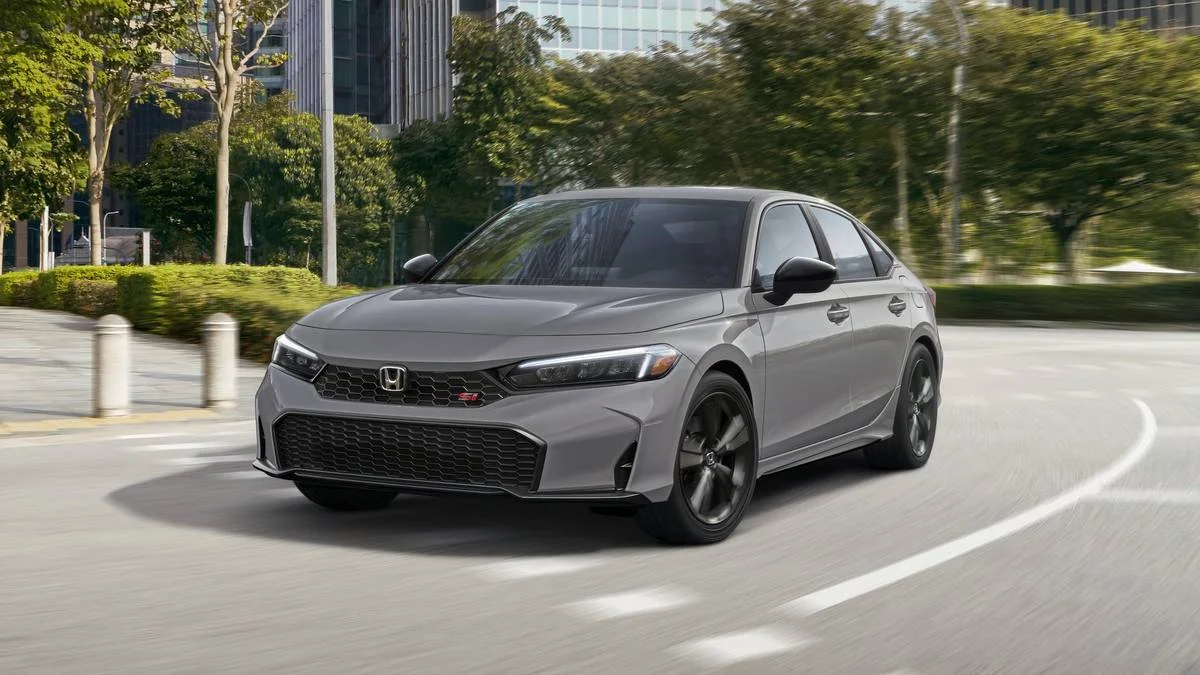
The RankGrids Compact Cars rankings show the gap in practice. The FWD Honda Civic Si returns 31 MPG combined on 200 hp for $31,495. The AWD Subaru WRX GT pulls 271 hp but returns 21 MPG combined for $44,995. Different missions, but the pattern is consistent: the AWD compacts in the category tend to ship with thirstier engines, higher prices, and heavier chassis.
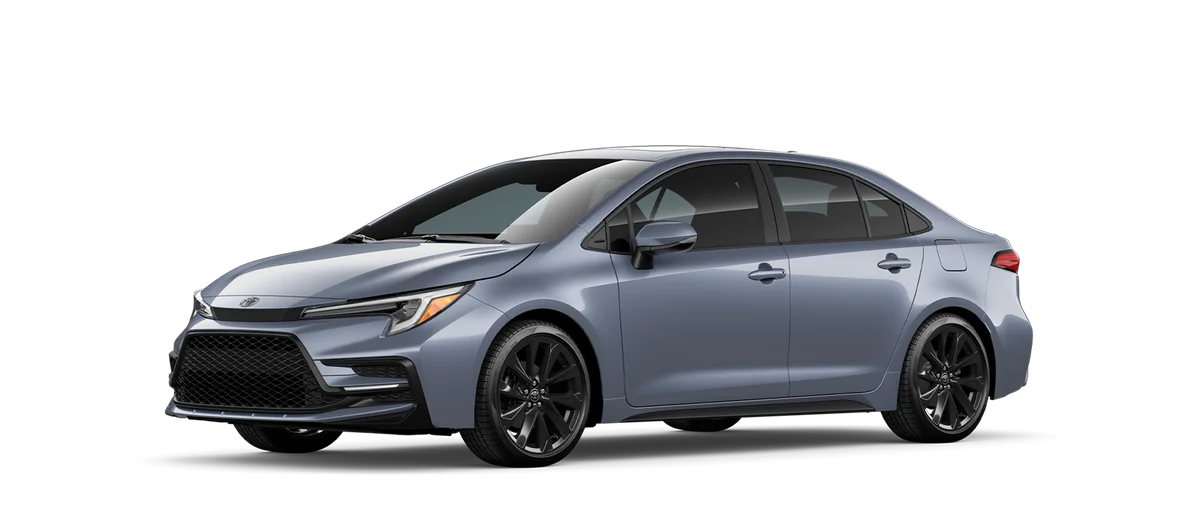
One exception breaks the pattern: hybrid AWD. The Toyota Corolla Hybrid SE AWD uses Toyota's E-Four system, which places a small electric motor on the rear axle with no driveshaft running from the front (The Autopian). The car still returns 44 MPG combined. If AWD is non-negotiable and fuel cost matters, this is the architecture that gives up the least.
| Model | Drivetrain | Combined MPG | Starting MSRP | 5-year TCO |
|---|---|---|---|---|
| Honda Civic Si | FWD | 31 | $31,495 | $46,000 |
| Toyota Corolla Hybrid SE AWD | AWD (E-Four) | 44 | $27,665 | $37,500 |
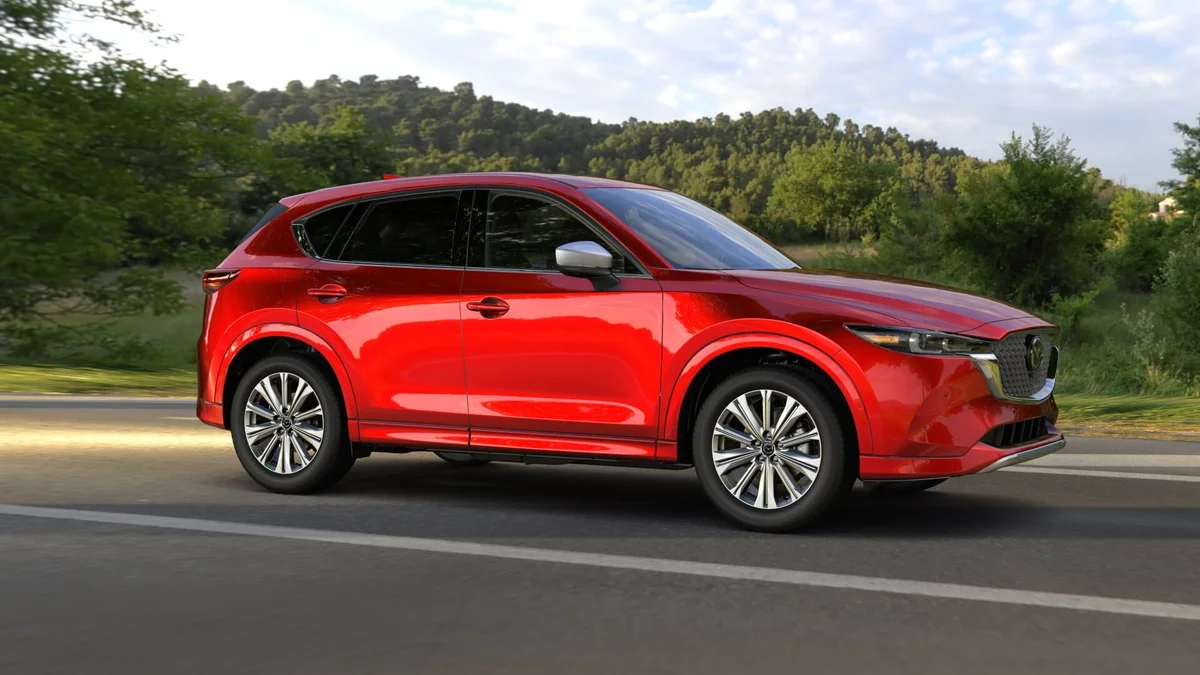
| Mazda3 2.5 Turbo Premium Plus AWD | AWD (i-Activ) | 26 | $37,535 | $58,444 |
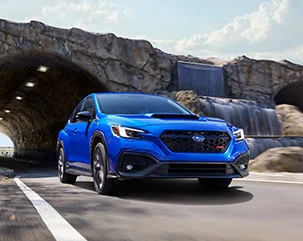
| Subaru WRX GT | AWD (symmetrical) | 21 | $44,995 | $56,000 |
| Honda Civic Type R | FWD | 24 | $46,895 | $41,600 |
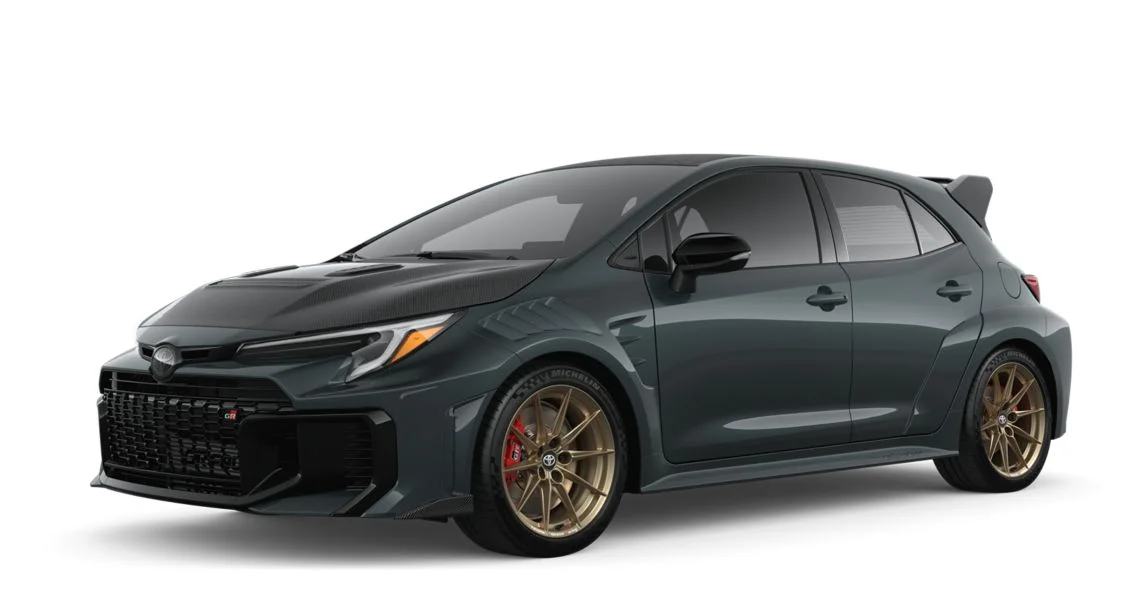
| Toyota GR Corolla Premium Plus | AWD (GR-FOUR) | 24 | $46,565 | $67,000 |
Do you actually need AWD for winter driving in a compact?
For most US winter drivers, no. Electronic stability control and traction control have been mandatory on US passenger cars since the 2012 model year, and modern FWD compacts handle plowed urban snow better than most buyers assume (Bridgestone). The failure mode AWD solves is getting moving from a stop on a grade. The failure mode it does not solve is stopping before an intersection. In metro areas with regular plow service, the second failure mode is the dangerous one.
The honest exception is rural snow country. If the plow runs late, the driveway is steep, the ski trailhead gets a foot of fresh overnight, or you commute through roads that are compacted snow for months, AWD removes a real set of problems. The Mazda3 Carbon Edition AWD hatchback at $30,765 and the Mazda3 Turbo AWD are among the cleanest compact passenger-car answers in that scenario, pairing AWD with cabin quality Mazda dealers tend to under-market.
The alternative most buyers skip: a dedicated set of winter tires on inexpensive steel wheels for any FWD compact, swapped on and off seasonally. Per published snow tests, winter tires beat AWD on all-seasons at braking and cornering by a wide margin (Carscoops). If you do not want to deal with a seasonal tire swap, AWD is the cheaper psychological ticket. If you do, it is the slower, heavier, thirstier solution.
Is the GR Corolla or Golf R better than the Civic Type R just because they have AWD?
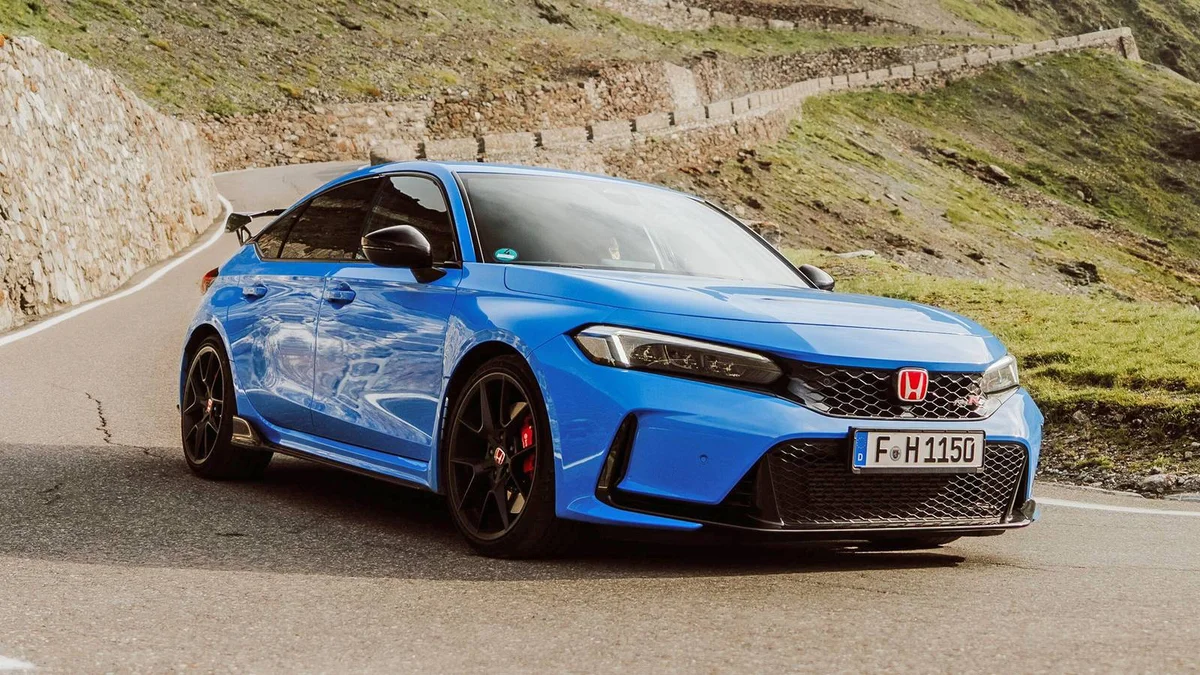
This is the question hot-hatch shoppers actually argue about. The short answer on dry pavement: no. The FWD Honda Civic Type R is faster around a track than either AWD rival, and the reasons are architectural, not just a Honda chassis-tuning win.
Independent testing clocks the Type R at 3:00.73 around Virginia International Raceway, with the Volkswagen Golf R at 3:04.25 (Fastest Laps). Honda claims a 7:44.881 lap at the Nürburgring Nordschleife, which Honda says stands as the production FWD record (Honda Europe). Car and Driver measured 1.04 g of lateral grip for the Type R versus 0.94 g for the GR Corolla Premium Plus, and MotorTrend ran the Civic through the figure-eight in 24.5 seconds against 24.9 for the GR Corolla (Road Ethos).
Three reasons FWD wins here. First, weight. The Type R carries roughly 200 pounds less than the GR Corolla despite its larger body, and AWD hardware is most of the difference (GR Corolla Forum). Weight is the enemy of sustained cornering and braking. Second, heat. Owners on track have reported the GR Corolla's GR-FOUR system entering a protective FWD-only mode when driveline temperatures climb across a hot session (GR Corolla Forum). Third, the Type R's helical limited-slip differential puts torque down out of a corner cleanly, without needing to drive a second axle through turning radii that create drivetrain bind.
AWD still wins at the stoplight. The Golf R and GR Corolla Premium Plus both hit 60 mph in 4.7 seconds; the Type R needs 4.9. On a wet track, on an autocross course with a single-cone launch, or on cold tires early in a session, AWD traction matters. For a buyer whose track days are dry and whose stopwatch is the primary measure, the Type R gives up less than the drivetrain alone implies. The RankGrids head-to-head of these three walks through the specifics.
Which compact AWD systems do something genuinely different
Not all AWD is the same mechanism with a different label. The compact segment currently includes five meaningfully different architectures, and they behave differently enough that "it has AWD" tells you almost nothing about how the car will handle snow or a wet corner.
Subaru Symmetrical AWD (WRX GT): mechanical, full-time, always sending torque to all four wheels. Paired with the low-slung Boxer engine, it is the most traditional always-on system in the segment (TopSpeed).
Mazda i-Activ (Mazda3 AWD): predictive rather than reactive. Mazda reports 27 sensor inputs polled over 200 times per second, pre-positioning torque split before the tires actually slip (Cox Mazda). Up to 50 percent rear torque is available.
Toyota E-Four (Corolla Hybrid AWD): electric rear axle, no driveshaft from the front. The rear motor wakes when the front axle slips or when hard acceleration needs more grip (Wikipedia: E-Four). This is why the hybrid barely pays a fuel penalty for its traction.
Toyota GR-FOUR (GR Corolla Core and Premium Plus): mechanical with driver-selectable 60:40, 50:50, or 30:70 front-to-rear splits, plus front and rear Torsen limited-slip differentials standard (Wikipedia: GR Corolla). More adjustable than any other system in the segment.
VW 4MOTION with R Performance Torque Vectoring (Golf R): twin rear clutches that vector torque side-to-side on the rear axle, with a Special mode that biases heavily rearward for adjustable, almost rear-drive handling at the limit (Volkswagen).
These distinctions matter because "my car has AWD" and "my car has i-Activ" or "my car has GR-FOUR" describe genuinely different experiences in snow, rain, and at the limit.
When AWD genuinely earns its cost in a compact
The useful frame is not "is AWD good," it is "does your use case match the specific thing AWD does well." Six scenarios where the premium pays for itself:
- You live in a region with 20-plus inches of annual snowfall, slow plow response, or steep terrain that regularly collects compacted snow.
- You tow a small trailer or regularly haul loaded cargo on wet or loose surfaces.
- You autocross or run wet-track days where launch grip and corner-exit traction matter more than a one-lap stopwatch.
- You refuse to run seasonal winter tires and still want cold-weather security, accepting that you still give up braking distance to an FWD car on winters.
- You are shopping a hybrid AWD like the Corolla Hybrid SE AWD, where the fuel penalty for AWD is essentially zero.
- You want the driving character a torque-vectoring AWD system creates, such as the Golf R in Special mode or the GR Corolla in Track mode. These are handling features, not safety features.
Is FWD good enough for a performance compact on a track day?
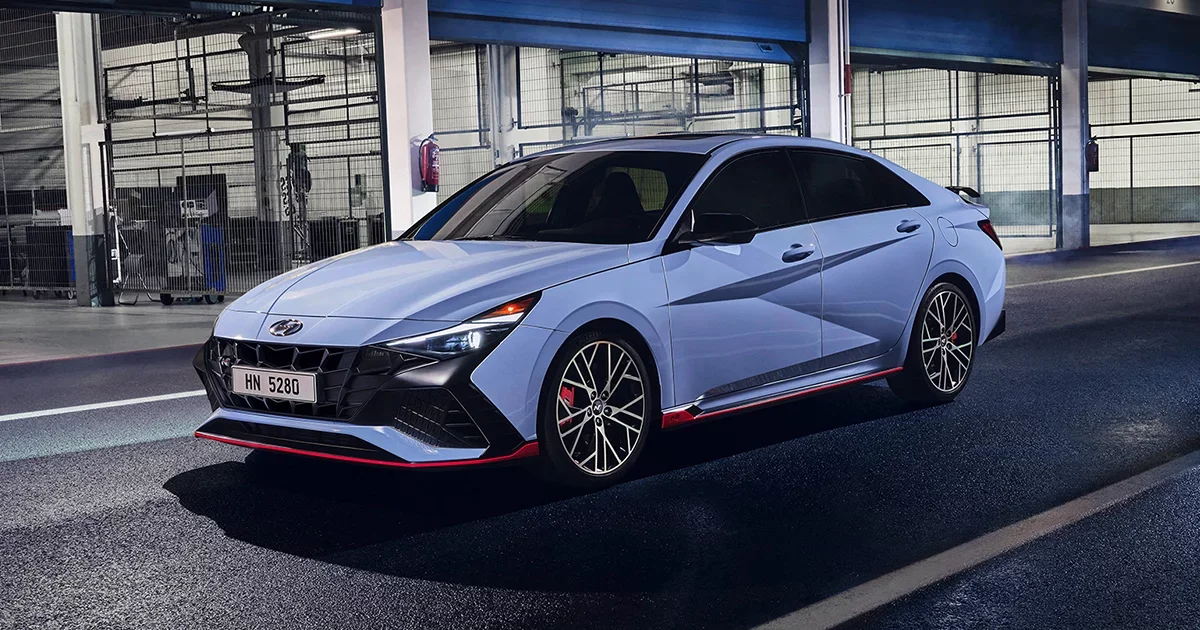
For most track-day drivers, yes, and for some, it is the preferred answer. The compact performance segment has been using sophisticated front limited-slip differentials to tame torque steer and put power down for over a decade. The Civic Type R and Civic Si use helical LSDs. The Golf GTI uses VAQ, an electronically controlled front LSD. The Hyundai Elantra N pairs its FWD chassis with launch control and corner carving at a sub-$37,000 price. These cars are not FWD in the apologetic sense; they are FWD by design, with mechanical and electronic systems built around that choice.
The genuine tradeoff: FWD cars tend toward understeer when the front tires are the limit under both braking and acceleration, and corner-exit speed is capped by front-tire grip. A driver who wants to rotate mid-corner with throttle or run on a reliably wet track will find AWD more forgiving. A driver chasing dry-track lap times, consistent brake temperature, and tire wear that does not exile the car after three sessions has reasons to prefer FWD.
The short version
Match the drivetrain to the use case, not to the sales pitch. For dry-climate commuters and dry-track performance drivers, FWD plus the right tires does the job for less money, less weight, and more MPG. The Civic Type R, Civic Si, and Golf GTI Autobahn show that clearly. For deep-snow, rural, or autocross buyers, AWD earns its cost, and the Subaru WRX GT, Mazda3 Turbo AWD, and Corolla Hybrid SE AWD each solve the problem differently. Just do not pay the $1,500 to $3,000 for AWD as a workaround for refusing to buy winter tires. The tires are the better fix.
See Best Compact Cars of 2026Questions people ask
Is AWD worth it in a compact car?+
For most US drivers, no. AWD adds $1,500 to $3,000 to the sticker, 100 to 250 pounds of weight, and 1 to 3 MPG of fuel economy. Those penalties are worth it if you live in a region with heavy snow, poor plow service, or steep terrain, or if you autocross and want launch traction. For most urban and suburban commuters in moderate climates, FWD with a set of winter tires delivers better cold-weather safety for less money.
Do I need AWD for winter driving in a compact?+
Usually not. Modern compacts have electronic stability control and traction control as standard, and in published snow tests an FWD car on winter tires out-brakes and out-corners an AWD car on all-season tires. AWD helps you get moving from a stop on a snowy grade, which matters in rural snow country or if you park at the top of a hill. It does not help you stop, which is the more common winter failure mode.
Is the GR Corolla or Golf R better than the Civic Type R just because it has AWD?+
Not on a dry track. The FWD Honda Civic Type R laps Virginia International Raceway in 3:00.73 versus 3:04.25 for the Golf R per Fastest Laps, Honda claims the production FWD Nürburgring record at 7:44.881, and Car and Driver recorded higher lateral grip on the skidpad than the GR Corolla. AWD helps the Golf R and GR Corolla Premium Plus hit 60 mph 0.2 seconds sooner, and matters more in wet or autocross conditions, but for dry-track stopwatches the Type R wins.
How much does AWD hurt fuel economy in a compact car?+
About 1 to 3 MPG on the EPA combined cycle for conventional AWD systems. The exception is hybrid AWD like Toyota's E-Four, which uses a dedicated rear electric motor instead of a driveshaft and pays almost no fuel penalty. The Corolla Hybrid SE AWD still returns 44 MPG combined per EPA.
Is FWD good enough for a performance compact on a track day?+
Yes for most drivers, and preferred for some. Front-drive hot hatches like the Civic Type R, Civic Si, Golf GTI, and Elantra N use helical or electronically controlled limited-slip differentials to put power down cleanly. FWD gives up launch grip but gains lighter weight, lower drivetrain heat, and more consistent lap pace across a dry session. The Type R out-laps both AWD rivals around VIR for exactly those reasons.
Should I get FWD with winter tires or AWD with all-seasons?+
FWD with winter tires is the safer and cheaper combination for most drivers. In the snow test reported by Motor1, an FWD Camry on winter tires stopped from 60 mph in roughly 300 feet, while an AWD CR-V on all-seasons needed nearly 700 feet. A dedicated set of winter tires on steel wheels transfers between cars. AWD only adds value if you also have proper tires or if the terrain is severe enough that moving from a stop is the hardest problem.
Which compact car has the best AWD system?+
It depends on the goal. For performance adjustability, the Toyota GR-FOUR system in the GR Corolla offers the widest driver-selectable torque split (60:40, 50:50, 30:70) with Torsen LSDs at both ends. For predictive winter grip, Mazda reports i-Activ polls 27 sensors over 200 times per second to pre-position torque. For fuel economy, Toyota E-Four in the Corolla Hybrid is unmatched. For traditional always-on traction, Subaru's symmetrical AWD in the WRX is the long-running benchmark.
Does AWD help with braking in snow?+
No. Braking uses the brakes at all four wheels, not the drivetrain. In the snow test reported by Motor1, AWD vehicles on all-season tires required more than double the stopping distance of a vehicle on dedicated winter tires. The same Motor1 piece cites NHTSA on a related point: drivers of AWD vehicles tend to travel faster in bad weather because traction feels secure, and AWD does not provide a braking advantage.
Sources
What this guide is based on. We research from published specifications, independent reviews and owner reports; we did not test these products ourselves.
- 1.Why AWD Isn't The Winter Advantage You Think It Is, Motor1
- 2.AWD Will Help You Go Faster In The Snow But Winter Tires Help You Stop Faster, Carscoops
- 3.Do I Need Snow Tires If I Have AWD?, Bridgestone
- 4.Getting a Grip on AWD Efficiency, Mobility Engineering Technology
- 5.Cheapest AWD Cars in 2026, US News
- 6.VW Golf R vs Honda Civic Type R Lap Time Comparison, Fastest Laps
- 7.New Honda Civic Type R Regains Production Vehicle FWD Lap Record at Nürburgring, Honda Europe
- 8.Honda Civic Type R Vs. Toyota GR Corolla Vs. VW Golf R: Performance Specs And Daily Practicality Compared, Road Ethos
- 9.Toyota GR Corolla, Wikipedia
- 10.GR-FOUR AWD System Discussion, GR Corolla Forum
- 11.Production Numbers, Curb Weights, and Costs: A Comparison, GR Corolla Forum
- 12.What Is Mazda's i-ACTIV AWD System?, Cox Mazda
- 13.E-four, Wikipedia
- 14.Micro Review: The 2025 Toyota Corolla Hybrid AWD Just Makes Sense, The Autopian
- 15.The Subaru WRX: All-Weather Sport Compact, TopSpeed
- 16.Volkswagen Golf R Official Page, Volkswagen
Products mentioned
 Honda Civic Si Sedan
 Honda Civic Sport Touring Hybrid Sedan
 Honda Civic Type R
 Hyundai Elantra N
 Mazda3 2.5 S Carbon Edition AWD HatchbackMazda3 2.5 Turbo Premium Plus Sedan AWD
 Subaru WRX GT
 Toyota Corolla Hybrid SE AWD
 Toyota GR Corolla CoreToyota GR Corolla Premium Plus
 Volkswagen Golf GTI AutobahnVolkswagen Golf R 2026
More on compact cars
Explainer
Sticker Price vs. True Cost: What a Compact Car Actually Costs to Own Over Five Years
Depreciation, insurance, premium fuel and scheduled maintenance can swing five-year ownership cost by $15,000 or more between compact cars with similar MSRPs. Here is where that money goes.
Explainer
Why Peak Horsepower Is a Misleading Number in Compact Cars
Peak horsepower is a single data point. Torque delivery, curb weight, and differential type are what actually determine how a compact car accelerates and corners. Here is what to read on the spec sheet instead.
Explainer
Does a Hybrid Compact Actually Save You Money? The 2026 Payback Calculation
Real payback math on the 2026 Civic Sport Touring Hybrid and Toyota Corolla Hybrid. How long the extra sticker price takes to recover at today's gas prices and your actual annual mileage.
Explainer
Manual vs. DCT in Performance Compacts: What You Gain and What You Give Up
A clear read on whether to buy the manual or the dual-clutch in a GR Corolla, Civic Type R, Elantra N or Golf: lap times, resale, maintenance and daily driving with sources named.
Buying guide
How to Choose a Compact Car: A Decision Guide for 2026
The real forks in a compact car purchase: performance versus daily practicality, AWD by climate, hatch versus sedan, transmission choice, and sticker price versus five-year cost.