Explainer
What Actually Changes as Midsize Sedan Prices Rise: Mainstream, Near-Luxury, and Luxury Compared
Which features move from standard to premium as midsize sedan prices rise from $28,000 to $90,000 in 2026, and what you really gain and lose at each tier.
Updated November 12, 2026 · Based on 13 sources · How we research
You can drive out of a Honda dealer this week in a 2026 Accord with automatic emergency braking, adaptive cruise, lane centering, wireless Apple CarPlay, and a 9-inch touchscreen for $28,395. Walk into a Mercedes-Benz store and the AMG E 53 next door, a car that starts at $89,600, offers all the same categories of equipment in more elaborate form. That is the core problem for anyone shopping midsize sedans in 2026: the safety, infotainment, and driver-assist baseline is now near-universal, so the roughly three-times price spread across the category pays for something narrower than the marketing suggests. This guide walks through what actually changes as prices rise, which luxury features still have no mainstream equivalent, and where the badge starts to look hard to justify.
In 2026, the safety and tech baseline is already luxury-grade
The 2026 Honda Accord is the clearest example of how fast mainstream equipment has leveled up. Honda reports that every trim, including the $28,395 LX, comes with the full Honda Sensing suite standard, along with wireless Apple CarPlay and Android Auto on a 9-inch touchscreen that is almost 30% larger than the previous generation's (Honda press release).
That matters because many of those features used to be reserved for upper trims or luxury brands. In 2026, they show up on cars at every price point in our best midsize sedans ranking. The federal AEB mandate itself does not take effect until September 2029 (NHTSA), but automakers added it across most lineups years ahead of that deadline to chase IIHS ratings and NHTSA scores.
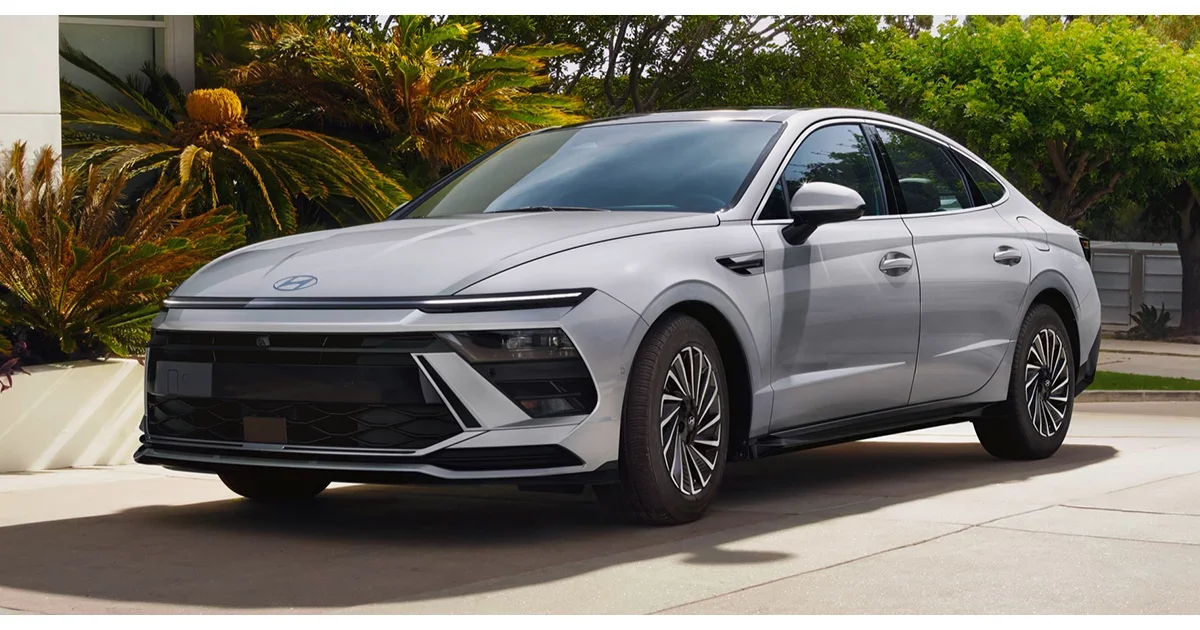
Crash safety has leveled too. The $29,200 Hyundai Sonata earned 2026 IIHS Top Safety Pick+ and the $28,395 Honda Accord earned Top Safety Pick, with Good ratings in moderate overlap front, small overlap front, and side tests (IIHS Accord). Meanwhile the $63,900 Mercedes-Benz E-Class rated Marginal on the updated moderate overlap front test and did not earn either designation, and the $60,500 BMW 530i also did not appear on the 2026 TSP or TSP+ list (IIHS Top Safety Picks). Paying more does not reliably buy a safer car in 2026.
Three real dividing lines: materials, powertrain, and badge
The most visible place the money goes is interior materials. On the Accord, the upper dashboard and door tops are soft-touch plastic with available genuine leather seating from Sport trim up. On a Mercedes-AMG E 53, the dashboard is wrapped in Nappa leather with real open-pore wood or carbon-fiber inserts, hand-stitched seams, and 64-color ambient lighting. Even within luxury the standard seat covering is often synthetic: on the BMW 5 Series, SensaTec leatherette is standard and Merino or Vernasca leather is an upgrade.
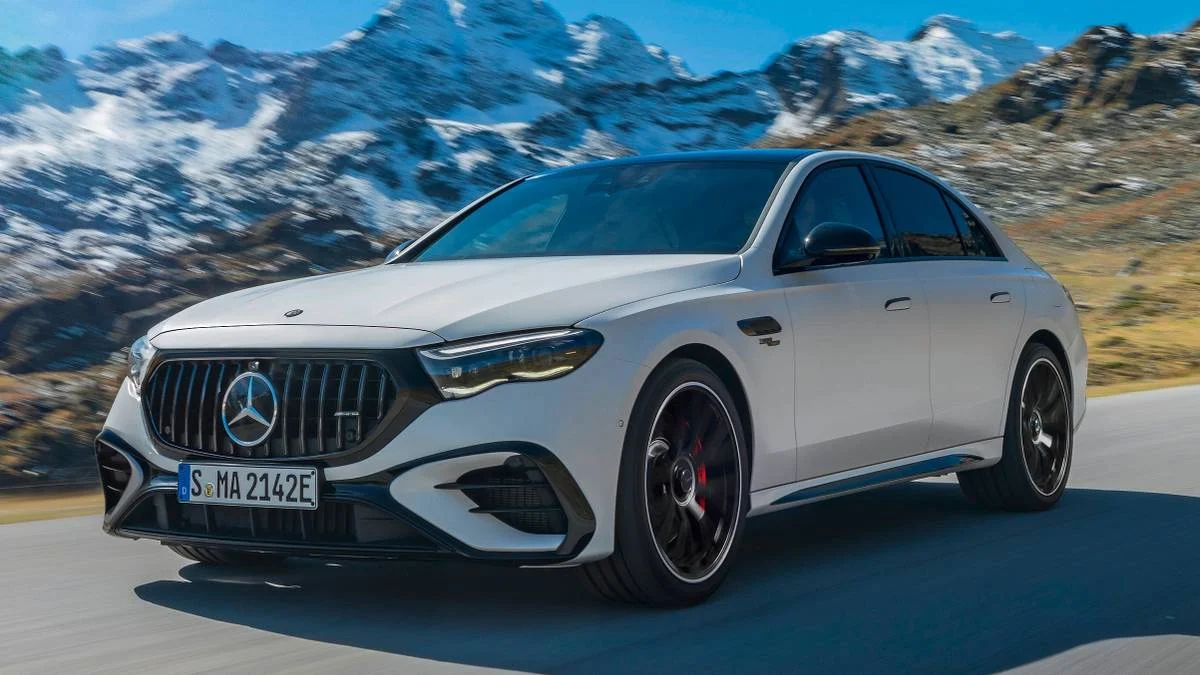
The second dividing line is powertrain output and refinement. The 2026 Accord's base 1.5-liter turbo makes 192 hp. The Genesis G80 2.5T makes 300 hp. The BMW 540i xDrive makes 375 hp from a turbocharged inline-six and reaches 100 km/h in 4.7 seconds (Canadian Auto Review). The AMG E 53 plug-in hybrid pairs a turbocharged inline-six with an electric motor for 577 hp combined and 43 miles of EPA electric range.
The third dividing line is the badge itself. This has nothing to do with engineering and everything to do with perception, resale, and how dealers treat you. In Consumer Reports' 2026 brand report card, Honda ranked 4th overall, Toyota 5th, and Lexus 6th, while Mercedes-Benz landed 19th and Genesis 21st, with the report noting that Genesis has no model scoring average or better for predicted reliability (Consumer Reports). BMW ranked 2nd overall, so among European brands it is the exception, not the rule.
| Attribute | Mainstream (Accord) | Near-luxury (G80 2.5T) | Luxury (540i xDrive) |
|---|---|---|---|
| Starting price | $28,395 | $58,450 | $67,700 |
| Horsepower | 192 | 300 | 375 |
| Combined MPG (gas/hybrid) | 32 / 47 | 24 | 28 |
| Infotainment display | 9.0 in | 27 in (dual OLED) | 14.9 in curved |
| Massage seats | Not offered | Standard (Ergo Motion) | Available |
| 2026 IIHS TSP+ | No (TSP only) | Yes | No |
| CR 2026 brand rank | 4th (Honda) | 21st (Genesis) | 2nd (BMW) |
Honda Accord vs Genesis G80: what the extra $19,000 actually buys
The clearest way to see the tier jump is to put a loaded Accord next to a base Genesis G80. The 2026 Accord Touring Hybrid is priced at $39,495, the 2026 Genesis G80 2.5T starts at $58,450, and the step from one to the other is just under $19,000. The three-way head-to-head between the G80 3.5T, BMW 540i xDrive, and AMG E 53 covers the next step up, but the first tier jump from Accord to G80 is where most of the real differences live.
What the G80 adds: 300 hp from the 2.5T turbo versus the Accord's 192 hp, available all-wheel drive, a 27-inch OLED dual-display setup across the dashboard, Ergo Motion massage seats with adjustable thigh bolsters on the driver's side, available quilted Nappa leather, and genuine wood trim. Genesis backs the car with a 10-year, 100,000-mile powertrain warranty, which BMW, Mercedes, and Audi do not match (Yahoo Autos). The G80 also carries the 2026 IIHS Top Safety Pick+ designation.
What the Accord keeps: a 16.7 cu ft trunk against the G80's 13.1, a 44 mpg combined figure in hybrid form versus 24 mpg for the G80 2.5T, and much lower long-run cost. iSeeCars data shows the Honda Accord loses 34.9% of its value over five years while the Genesis G80 loses 54.1%, a 19.2 percentage point gap (iSeeCars). Consumer Reports placed Honda 4th overall in its 2026 brand report card; Genesis landed 21st.
So the premium buys you 108 more horsepower, a cabin that looks and feels like a luxury car, massage seats, a far bigger display, and an AWD option. It costs you 3.6 cu ft of trunk space, 20 mpg of combined fuel economy, a weaker brand reliability track record, and close to 20 percentage points of five-year resale value. The 10-year warranty is Genesis's main hedge against those costs, and it is the strongest single argument for the G80 over an equivalently-priced BMW or Mercedes.
Which features are still luxury-only?
A handful of features have not crossed from luxury into mainstream sedans in 2026. These are the things you are genuinely paying extra for, as opposed to features that exist across all tiers in more or less elaborate form.
Hands-free highway driving is the most consequential. Super Cruise is standard on the Cadillac CT5 and offered on the CT5-V, using a driver-facing camera to confirm attention and operating on pre-mapped divided highways in the US and Canada (Motor1). Honda Sensing, Toyota Safety Sense, and Hyundai SmartSense all offer lane centering, but none of the mainstream systems are approved for hands-off operation. Massage seats are also absent from mainstream midsize sedans; the Accord, Camry, and Sonata all offer heated and ventilated front seats on upper trims but no massage function. Air suspension and genuine adaptive dampers remain Mercedes, BMW, Audi, and Cadillac territory.
- Hands-free highway driving (Super Cruise, standard on Cadillac CT5)
- Multi-function massage seats (Genesis, BMW, Mercedes, Audi, Volvo, Cadillac CT5)
- Air suspension and adaptive dampers (Mercedes, BMW, Audi, Cadillac V-Series)
- Nappa or semi-aniline leather, open-pore wood, real metal trim
- Curved or oversized infotainment displays (14.9 in BMW, 14.4 in Mercedes, 27 in Genesis, 33 in Cadillac CT5)
- Plug-in hybrid outputs above 450 hp with 30-plus EV miles (BMW 550e, AMG E 53)
- Full-color head-up display with augmented-reality navigation overlays
The second price gap is five years of ownership
Sticker price is only one of two gaps. The second is operating cost over five years, and it widens the luxury premium far more than the window sticker alone.
Depreciation is the biggest hidden cost. iSeeCars puts the Honda Accord at 34.9% depreciation over five years, so it holds about 65% of its value. TopSpeed reports that full luxury sedans like the BMW 5 Series, Mercedes E-Class, and Audi A6 typically shed 55 to 62% in the same period (TopSpeed). On a $70,000 luxury sedan, that is a roughly $40,000 depreciation hit over five years versus about $10,000 on a base Accord.
Maintenance and repair diverge too. Industry cost tracking puts mainstream sedan maintenance around $500 to $700 per year, while annual maintenance on a BMW or Mercedes runs closer to $2,000 to $3,500, and a standard intermediate service at a German dealer can cost $800 to $1,200 versus $200 to $400 at a mainstream shop (CoverageX). Insurance premiums on luxury sedans also track higher. Together, depreciation and higher service costs can add well over $30,000 to the five-year bill for a luxury sedan versus a mainstream one.
Where luxury sedans actually disappoint in 2026
There are specific places where luxury badges lose their claim in 2026, and buyers should know them before signing.
Crash safety is the most surprising one. In the 2026 IIHS updated moderate overlap front test, both the Mercedes-Benz E 350 and E 450 variants rated Marginal, the second-lowest score possible, and the E-Class lost its Top Safety Pick+ designation (IIHS). The BMW 530i did not appear on the 2026 TSP or TSP+ list either. Meanwhile the base Honda Accord LX at $28,395 earned 2026 Top Safety Pick with Good ratings across moderate overlap front, small overlap front, and side tests.
Reliability is the second. Consumer Reports' 2026 rankings placed Mercedes-Benz 19th and Genesis 21st for overall brand quality, both below Honda (4th), Toyota (5th), and Lexus (6th), with CR noting Genesis has no model scoring average or better on predicted reliability. RankGrids' own category scoring tags the Mercedes-AMG E 53 as Below Average for reliability, and the AMG's 577 hp output and PHEV complexity give owners more systems that can fail.
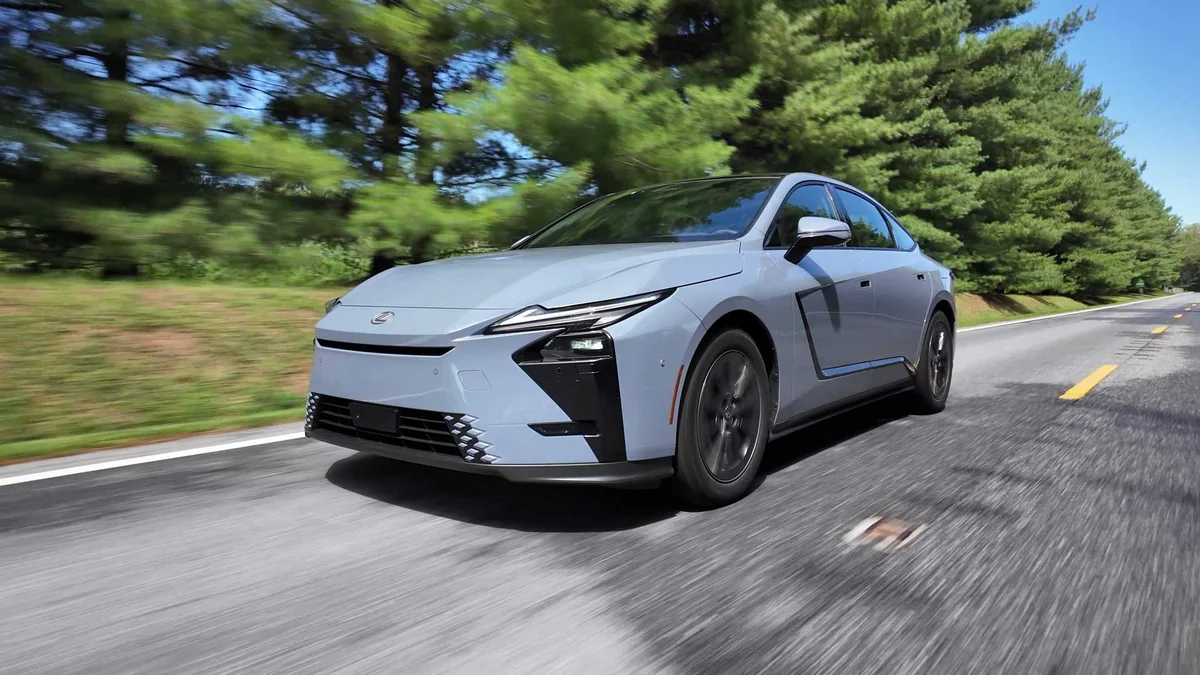
Even the hardware disappoints sometimes. Reviewers of the BMW 540i xDrive describe its standard suspension on 21-inch wheels as busier than pricier 5 Series variants that run adaptive dampers or air springs (Machines With Souls). A $67,700 entry price does not automatically buy you a plusher ride than a $49,700 Lexus ES 350h.
The short version
If your job is to move five people, carry luggage, and get 40-plus mpg with modern safety and infotainment, a mainstream sedan like the Honda Accord Hybrid or Hyundai Sonata Hybrid does it as well as any car in the segment and costs far less to own over five years. If you want massage seats, 300-plus hp, a 27-inch display, and a cabin that signals luxury intent, the Genesis G80 2.5T delivers that for roughly $19,000 more than a loaded Accord Touring Hybrid, with a 10-year warranty hedge against Genesis's low ranking on the 2026 CR brand report card. If you want the German badge, six-cylinder refinement, and air-sprung comfort, and you can absorb a $30,000 to $40,000 five-year depreciation swing, the BMW 540i xDrive or Audi A6 earns the step up. Pay for materials, power, and prestige. Don't pay for the safety or infotainment baseline; that is already standard.
See Best Midsize Sedans of 2026Questions people ask
What is the difference between a luxury and a mainstream sedan in 2026?+
The baseline is almost the same: adaptive cruise, lane centering, automatic emergency braking, wireless Apple CarPlay, and digital gauge clusters appear across all three tiers. The real differences concentrate in interior materials (Nappa leather and open-pore wood versus soft-touch plastic), powertrain output (375-plus hp versus 190-200 hp), screen size, available features like massage seats and air suspension, and brand prestige that drives resale behavior and ownership cost.
Is a luxury sedan actually worth the extra money?+
For most buyers, no. A mainstream Accord Hybrid at $34,990 shares the same safety and infotainment baseline as a luxury sedan but depreciates less than half as fast, and CoverageX data suggests annual maintenance runs roughly a quarter to a third of a BMW or Mercedes. Luxury makes sense if you specifically want massage seats, 300-plus hp, air suspension, hands-free Super Cruise, or the badge, and you can absorb the ownership cost.
Honda Accord vs Genesis G80: what am I actually paying for?+
Roughly $19,000 more between a $39,495 Accord Touring Hybrid and a $58,450 Genesis G80 2.5T for 108 additional horsepower, a 27-inch OLED display, driver massage seats, available Nappa leather and real wood, and available AWD. You give up 3.6 cu ft of trunk space, 20 mpg of combined fuel economy, close to 20 percentage points of five-year resale, and Honda's higher brand-reliability track record. The Genesis 10-year/100,000-mile warranty is the main offset.
Are expensive sedans better built or just better badged?+
A bit of both, and not always in the way you would expect. Luxury cabins use real leather, wood, and metal where mainstream cars use soft-touch plastic. But in 2026 the base Honda Accord earned IIHS Top Safety Pick while the Mercedes-Benz E-Class rated Marginal on the updated moderate overlap test, and Consumer Reports ranks Honda 4th and Lexus 6th overall, with Mercedes-Benz 19th and Genesis 21st. The badge is doing a lot of work.
What features are only on luxury sedans and not mainstream ones?+
Hands-free highway driving (Cadillac Super Cruise), massage seats, air suspension and adaptive dampers, Nappa or semi-aniline leather dashboards, curved or oversized displays, head-up displays with augmented-reality overlays, and plug-in hybrid outputs above 450 hp. Heated and ventilated seats, adaptive cruise, lane centering, and large touchscreens are no longer luxury-only.
Why do luxury sedans depreciate so much faster?+
Because the second owner is responsible for the maintenance bills, and those bills are much higher. CoverageX puts mainstream sedan maintenance at $500 to $700 a year; a BMW or Mercedes runs $2,000 to $3,500. Buyers price those costs into used offers, so a five-year-old luxury sedan trades at 55 to 62% below sticker per TopSpeed while iSeeCars shows the Honda Accord holds about 65% of its value.
Is the Genesis G80 actually equivalent to a BMW 5 Series or Mercedes E-Class?+
On features, largely yes: massage seats, a 27-inch OLED display, available Nappa leather, and AWD are all comparable or better than a base 530i or E 350. On price, the G80 2.5T at $58,450 starts $2,000 to $5,500 below those cars. Where it lags is predicted reliability and resale. Consumer Reports' 2026 report card ranks Genesis 21st overall and notes no Genesis model scored average or better on reliability, which is why the 10-year warranty matters so much to the value case.
What's the cheapest sedan with luxury-tier features in 2026?+
The Cadillac CT5 at $49,200 is the cheapest sedan that bundles massage seats, a 33-inch curved OLED display, and standard Super Cruise hands-free driving. If you prioritize hybrid efficiency and reliability over hands-free driving and massage, the Lexus ES 350h at $49,700 is a comparable price with Lexus refinement. Both come in roughly $11,000 to $14,700 below the base BMW 530i or Mercedes E 350.
Sources
What this guide is based on. We research from published specifications, independent reviews and owner reports; we did not test these products ourselves.
- 1.2026 Honda Accord Adds More Standard Tech and Sportier Styling; Now Arriving at Dealers, Honda News
- 2.NHTSA Finalizes FMVSS 127 Automatic Emergency Braking Rule, NHTSA
- 3.2026 IIHS Top Safety Picks, IIHS
- 4.2026 Honda Accord 4-door sedan ratings, IIHS
- 5.2026 Mercedes-Benz E-Class 4-door sedan ratings, IIHS
- 6.The BMW 540i xDrive has become superfluous, Machines With Souls
- 7.Review: 2026 BMW 540i xDrive Legacy Edition, Canadian Auto Review
- 8.Honda Accord vs. Genesis G80 Comparison, iSeeCars
- 9.Forget the BMW 5 Series, this Korean sedan wins on quality and value, Yahoo Autos
- 10.Consumer Reports Releases 2026 Automotive Brand Report Card, Consumer Reports
- 11.Honda Accord Long-Term Value: Why It Ages Better Than Luxury Rivals, TopSpeed
- 12.Most Expensive Cars to Maintain and Repair in 2026, CoverageX
- 13.The Cadillac CT5-V With Super Cruise Is a Future I Can Support, Motor1
Products mentioned
More on midsize sedans
Explainer
What a Luxury Midsize Sedan Really Costs Over Five Years
A $30,000 to $45,000 sticker gap between a Honda Accord and a BMW 5 Series or Mercedes E-Class typically widens by another $5,000 to $25,000 across five years once depreciation, dealer labor, insurance, and specialty tires are counted.
Explainer
AWD in a Midsize Sedan: What It Actually Helps With, What You Pay, and When FWD Is Enough
AWD in a midsize sedan adds about $1,800 and costs a couple of mpg, but only improves acceleration traction. A FWD sedan on winter tires outbrakes an AWD sedan on all-seasons. Here is when the upgrade is worth it, and when it is not.
Explainer
IIHS Top Safety Pick+ vs NHTSA 5-Star: Why These Ratings Disagree and What Each One Tests
NHTSA and IIHS run different crash geometries, so a midsize sedan can earn five NHTSA stars and still miss IIHS Top Safety Pick+. Here is what each program actually tests, where the two disagree on 2026 sedans, and which rating to prioritize when you shop.
Explainer
Hybrid, Plug-in Hybrid, or Electric: Which Midsize Sedan Powertrain Fits How You Drive
A plug-in hybrid only hits its MPGe sticker if you charge every night. Full hybrids are more reliable than gas cars; PHEVs are less. Match the powertrain to your commute and charging access.
Buying guide
How to Choose a Midsize Sedan: The Four Decisions That Actually Separate the Field
Most midsize sedans have the same safety tech, screens, and driver aids. Four forks resolve first: budget tier, powertrain, AWD, and the features that truly differ.