Explainer
Hybrid, Plug-in Hybrid, or Electric: Which Midsize Sedan Powertrain Fits How You Drive
A plug-in hybrid only hits its MPGe sticker if you charge every night. Full hybrids are more reliable than gas cars; PHEVs are less. Match the powertrain to your commute and charging access.
Updated November 12, 2026 · Based on 17 sources · How we research
Cross-shopping a 2026 Honda Accord Hybrid, a BMW 550e plug-in, and a Lexus ES 500e electric means choosing between three ownership contracts in the same sedan body. The number most buyers misread is the one on the window sticker. A plug-in hybrid rated at 68 MPGe only delivers that if you plug it in nightly and keep your trips inside the electric range. Drive one without charging and it behaves like a heavy gas car with worse fuel economy than the non-plug hybrid version. The real question is which usage pattern you can honestly commit to, and what the reliability data says about carrying two propulsion systems in one car.
What do mild, full, plug-in, and electric actually mean?
A mild hybrid uses a small motor on a 48-volt battery that cannot drive the car on its own. It smooths stop-start, recaptures a little braking energy, and adds roughly 10 to 15 percent to fuel economy. You never plug it in. What Car lays out the voltage and capability differences in detail.
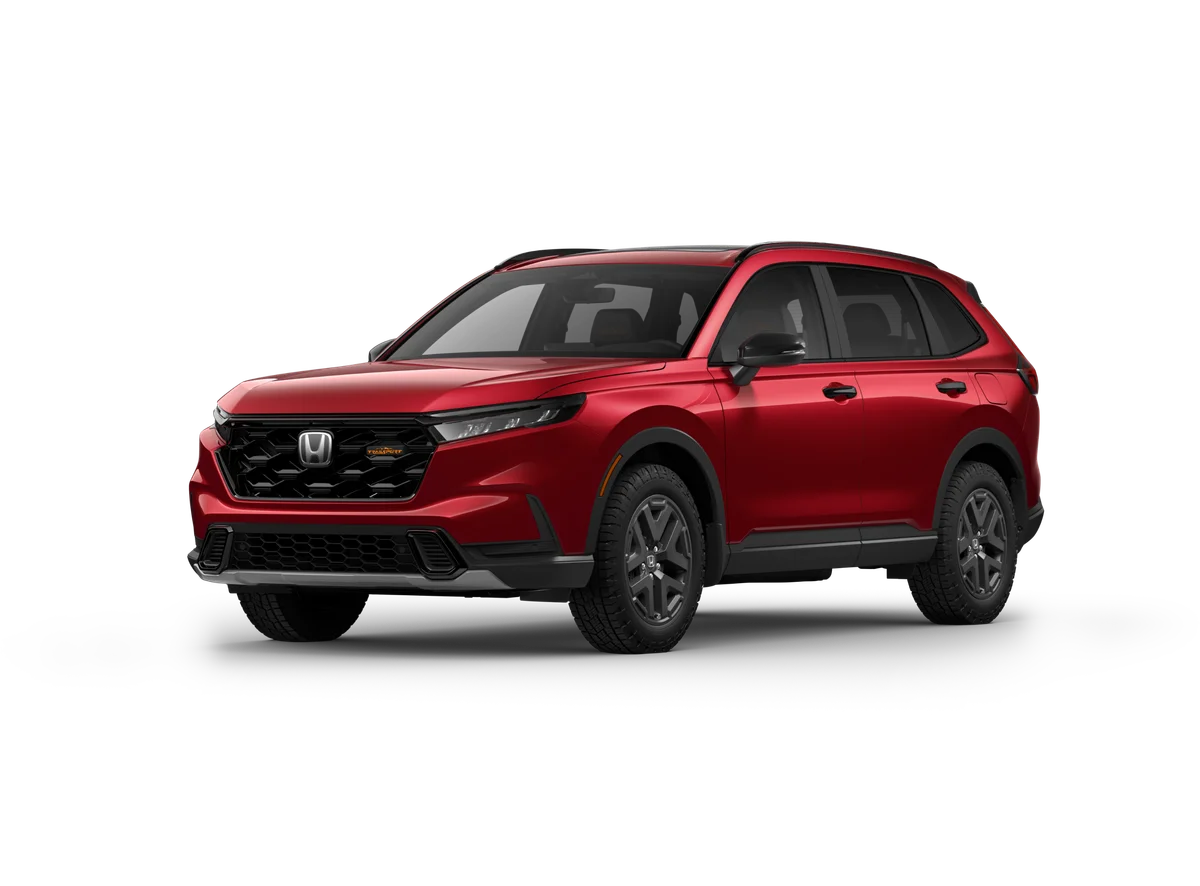
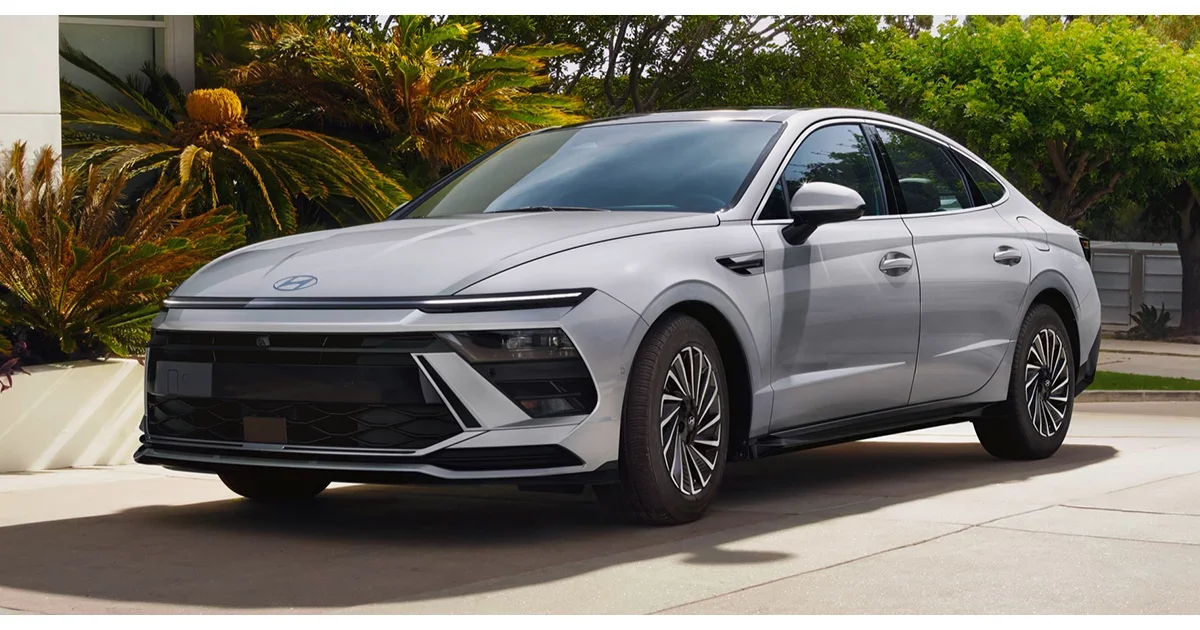
A full hybrid, often called a self-charging hybrid, uses a 200 to 300-volt battery and a motor large enough to drive the wheels at low speeds. The engine, motor, and regenerative braking manage the battery with no plug. The 2026 Honda Accord Hybrid and 2026 Lexus ES 350h are full hybrids. Honda rates the Accord Hybrid Sport trim at up to 51 city and 44 highway mpg per Honda dealer materials citing EPA figures, which EPA weights to 48 combined. The 2026 Hyundai Sonata Hybrid returns 47 mpg combined on RankGrids data.
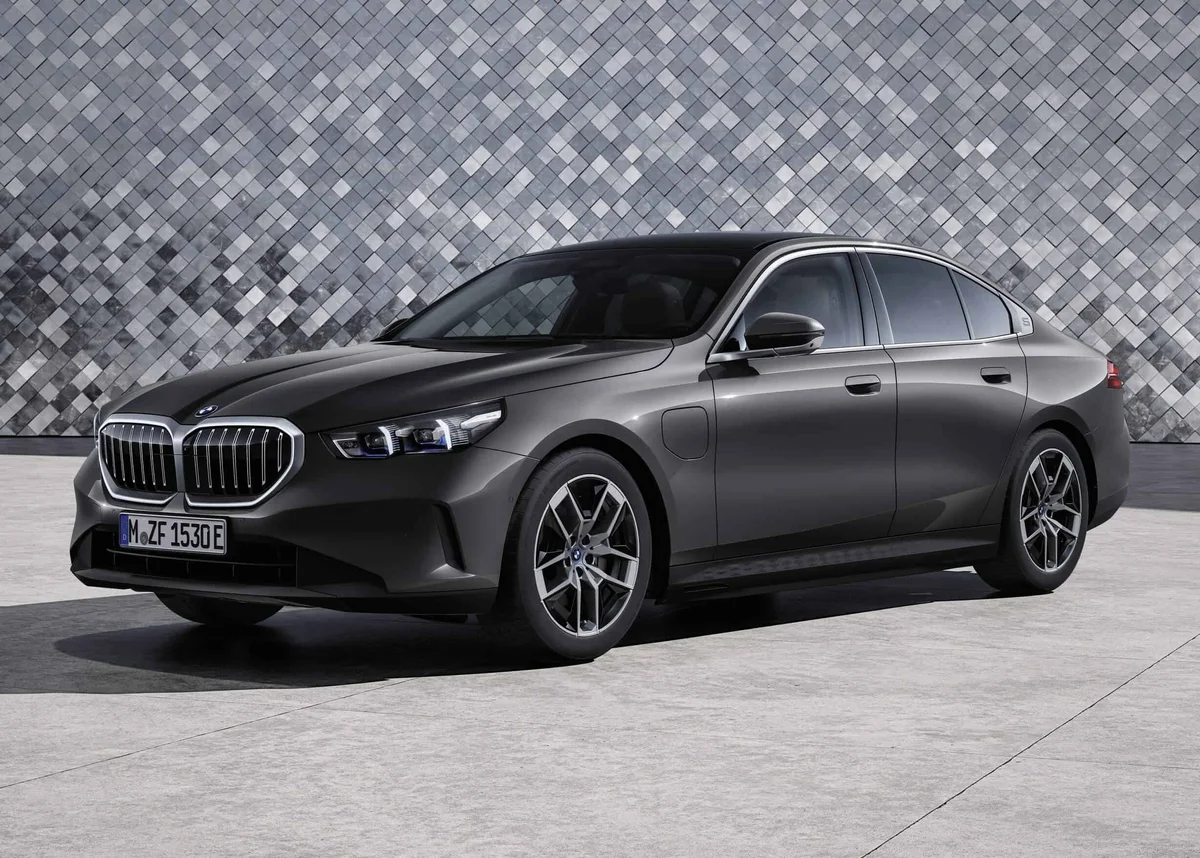
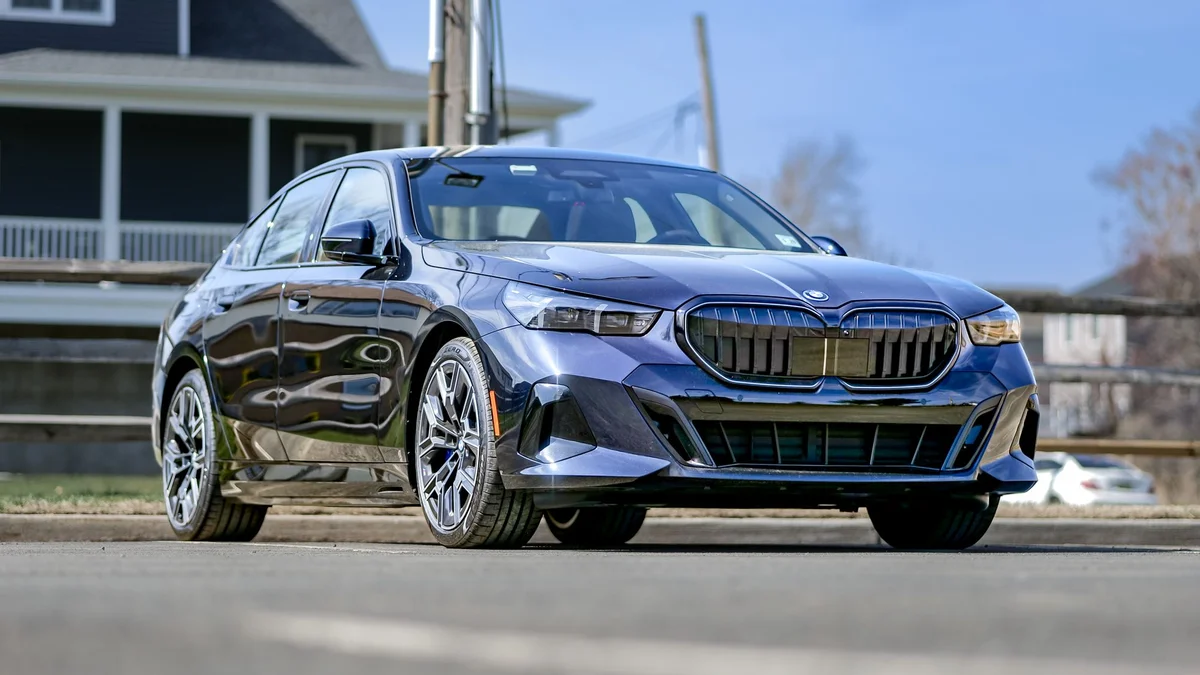
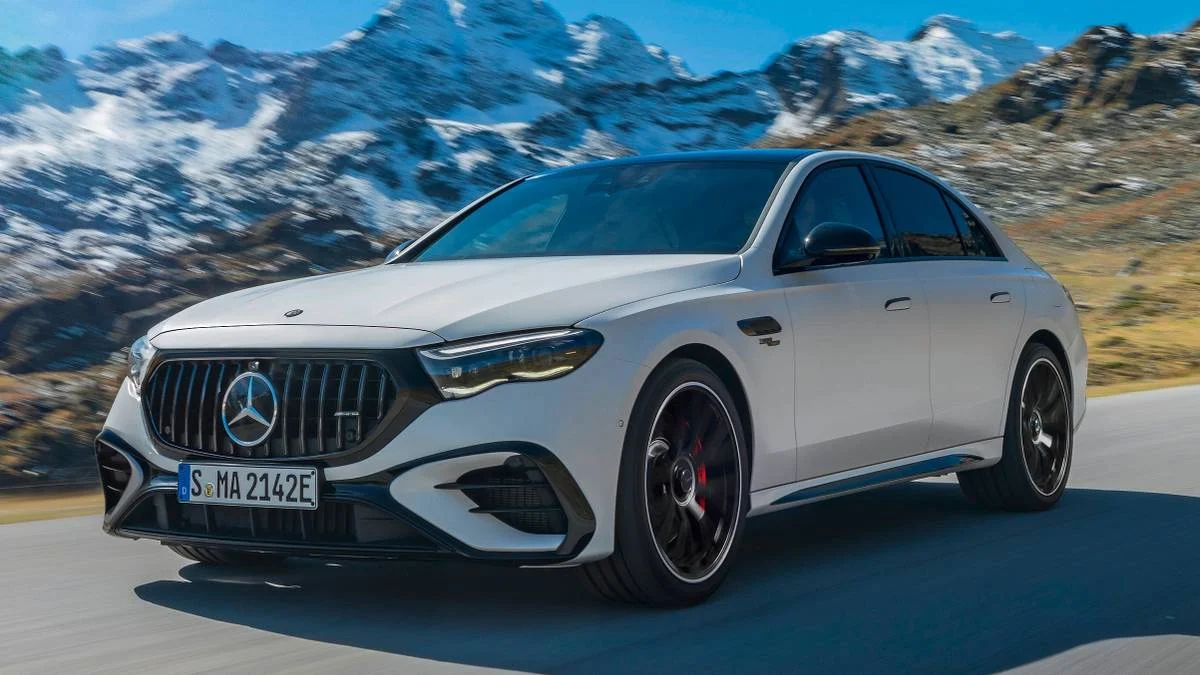
A plug-in hybrid (PHEV) carries a much larger battery, typically 12 to 30 kWh, and a charging port. It can drive on battery alone for 20 to 50 miles, then operates like a regular hybrid once the battery depletes. The 2026 BMW 550e xDrive delivers 34 miles of EPA electric range and 68 MPGe combined, but 25 mpg once the pack is empty, as described in Tom's Guide's review. The 2026 Mercedes-AMG E 53 is rated at 43 miles of electric range from its 28.6-kWh battery, which InsideEVs confirmed in real-world testing.
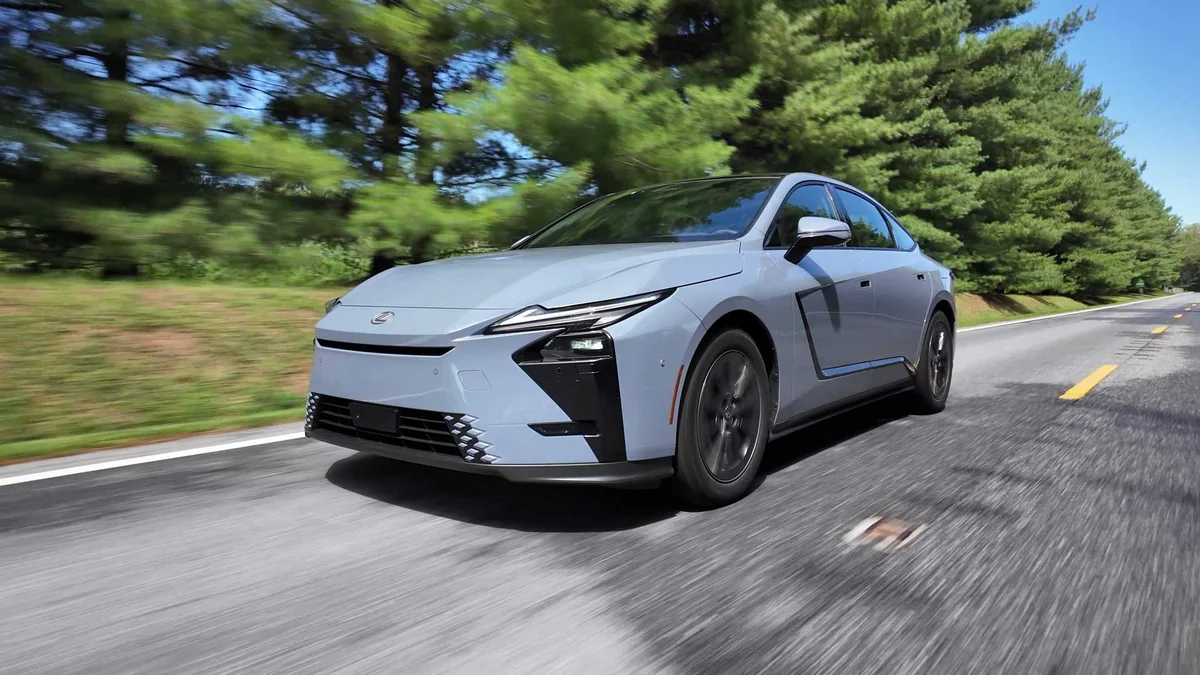
A battery electric vehicle has no engine at all. The 2026 Lexus ES 500e AWD uses a 74.7-kWh pack to deliver 276 miles of EPA range with 19-inch wheels and 338 combined horsepower from front and rear motors, per GreenCars and US News. You plug in to go anywhere; the car does not generate its own energy.
How a plug-in hybrid actually works, and why the MPGe number is conditional
A PHEV has two fuel paths. Start the car with a full battery and short trips happen on electricity, with the engine idle. Deplete the battery and the car reverts to hybrid operation, running on gasoline with the engine doing most of the work and regenerative braking topping up a small usable buffer. On the BMW 550e, that buffer-mode gas economy is 25 mpg combined. On the AMG E 53, it is 24 mpg combined on the RankGrids data sheet.
The 68 MPGe or 60 MPGe figures on a PHEV sticker assume a specific mix of electric and gas miles called the utility factor. EPA historically assumed a PHEV with 35 miles of electric range would be driven roughly 57 percent on electricity, but has moved to revise that assumption downward in CAFE compliance calculations after real-world data came in, closer to 45 percent for the same car, per analysis of SAE J2841 updates presented at EVS38%20Calculations%20in%20SAE%20J2841%20Analyzing%20Charging%20Behaviors%20and%20Other%20Real-World%20Impacts%20on%20PHEV%20UF.pdf). The International Council on Clean Transportation's real-world analysis of private US PHEV owners found drivers use the electric motor about 54 percent of miles on average, below type-approval assumptions, per the ICCT publication page.
That is why the same PHEV can post completely different real-world economy depending on who owns it. Owners with a nightly charge habit and a sub-30-mile commute can approach the sticker figure. Owners who charge once a week, or who use the car mostly for highway runs longer than the electric range, see numbers closer to the car's underlying hybrid rating or worse, because they are hauling a heavy battery around on gasoline. The Toyota Prius Prime, rated at 133 MPGe by EPA, averages about 104 MPGe in real-world data, a 22 percent shortfall, per futurecar.ai's analysis.
Do you need to plug in a hybrid car?
If the car is a full hybrid (no charge port), no. The Honda Accord Hybrid, Hyundai Sonata Hybrid, and Lexus ES 350h all manage their batteries entirely through the engine and regenerative braking. The systems are designed so the battery never fully charges or discharges in normal driving, which is one reason full hybrid batteries routinely outlast the warranty period.
If the car has a charge port, yes, if you want the economics to work. Toyota's Research Institute of North America published a peer-reviewed study analyzing more than 6,000 Toyota and Lexus PHEVs across the US and Canada, finding Toyota PHEV owners plug in on seven of every 10 driving days and Lexus owners on eight to nine of 10, with only 9 percent of Toyota drivers and 4 percent of Lexus drivers rarely charging, per Toyota USA Newsroom. Hyundai's own 311-owner survey found about half plug in daily or more and roughly 40 percent several times a week, per The Autopian. Mitsubishi Outlander PHEV owners self-reported 68 percent daily charging and 90 percent at least two to three times per week, per Fleet News.
Charging access predicts charging behavior. The Kia survey in the same Autopian piece found 97 percent of PHEV owners charge predominantly at home, with only 6 percent using public chargers regularly. If your home does not have a 240-volt outlet, a PHEV purchase is a bet against your own future behavior.
Are PHEV sedans less reliable than hybrids or gas cars?
Yes, and the gap is widening. Consumer Reports' 2025 member survey, covering roughly 380,000 vehicles sold from 2020 to 2025, found plug-in hybrids reported about 80 percent more problems per 100 vehicles than conventional gas cars, while full hybrids reported about 15 percent fewer, per CleanTechnica's summary of the data. J.D. Power's 2025 Initial Quality Study put PHEVs at 237 problems per 100 vehicles in the first 90 days of ownership, versus 212 for pure EVs, 196 for standard hybrids, and 184 for gas cars, per InsideEVs.
The diagnosis is the same across both studies: a PHEV carries two propulsion systems plus the electronic glue that coordinates them. There are twice as many things to break. Owners report issues clustered around high-voltage batteries, charging interfaces, and powertrain software, as discussed by Assembly Magazine. Full hybrids avoid this because the system is single-purpose and the battery never gets stressed by deep cycling.
Not every PHEV is a lemon. The 2026 BMW 550e xDrive carries an Above Average reliability note on RankGrids' data sheet, reflecting improved J.D. Power scores for the G60 5 Series generation. The 2026 Mercedes-AMG E 53, by contrast, carries a Below Average reliability flag, consistent with Mercedes' broader PHEV track record and the complexity of a 577-horsepower drivetrain.
Should you get a hybrid or a PHEV sedan?
Start with how far you drive in a typical day and whether you can plug in at home overnight. A full hybrid wins almost any comparison where you cannot commit to nightly charging, or where your average day exceeds the PHEV's electric range by a wide margin. An Accord Hybrid at 48 combined mpg, priced from $34,990 on RankGrids data, is already doing most of what a PHEV in gasoline mode does, for less money and with better reliability.
A PHEV starts to make economic sense when three things line up: a predictable daily commute inside the electric range, a home Level 2 charger, and a desire for performance or luxury content only bundled with the plug-in trim. The BMW 550e is the 540i with 108 extra combined horsepower (483 versus 375) and a 34-mile electric commute mode. The AMG E 53 is a 577-horsepower sedan that clears 43 EV miles on a charge, letting the owner commute silently and burn premium only on weekend drives.
If you cannot plug in at home, skip the PHEV category. The Honda Accord Hybrid, Hyundai Sonata Hybrid, or Lexus ES 350h will cost less, prove more reliable on the Consumer Reports and J.D. Power data, and deliver real-world economy the plug-in only matches when its owner behaves perfectly.
| Powertrain | Need to plug in? | Typical real-world MPG/MPGe | Reliability signal | Best fit |
|---|---|---|---|---|
| Full hybrid (HEV) | No | 40 to 50 mpg | 15% fewer problems than gas (CR) | Any commute, any charging situation |
| Plug-in hybrid (PHEV) | Yes, nightly, for the numbers to work | 60 to 90 MPGe charged, 20 to 30 mpg uncharged | 80% more problems than gas (CR) | Short daily commute plus home Level 2 charger |
| Battery electric (BEV) | Yes, home charging strongly preferred | 3 to 4 miles per kWh, 100+ MPGe | Better than PHEV in 2025 J.D. Power IQS | Predictable range, reliable home charging |
| Mild hybrid (MHEV) | No | 25 to 32 mpg, 10 to 15% over gas | Similar to gas cars | Shoppers who want a modest efficiency bump |
Is an electric sedan worth it in 2026?
The calculus changed on September 30, 2025, when the $7,500 federal EV tax credit under Section 30D expired as part of the One Big Beautiful Bill Act, per EV Math. The used-EV credit (Section 25E) and commercial/lease credit (Section 45W) were terminated by the same law. Any 2026 pricing comparison that still subtracts $7,500 is out of date.
The hardware stayed strong. The 2026 Lexus ES 500e AWD delivers 276 miles of EPA range and 338 combined horsepower from a $51,895 starting price per RankGrids data, undercutting most German luxury sedans while carrying Lexus's reliability record and the brand's DIRECT4 AWD system. Home charging remains the cheap path: Level 2 at the US average residential electricity rate runs about six cents per mile, versus roughly 15 cents per mile at public DC fast chargers at typical 2026 network rates, per ChargeCostLab.
The test for an electric sedan in 2026 is the same as always. Does your regular driving fit inside 250 to 300 miles with a charging stop you can plan? Do you have reliable home charging? If both are yes, a BEV is cheaper per mile, quieter, and showing better early reliability than PHEVs in the J.D. Power data. If either is no, you are forcing the car into a usage pattern it was not built for, and the hybrid category will treat you better.
Which powertrain actually fits how you drive?
The powertrain decision is a usage-pattern decision. Three questions separate the field.
First, can you plug in at home reliably? If no, you are choosing between a full hybrid and a gas car. Everything else carries penalties in fuel cost, charging anxiety, or worse resale.
Second, what is the longest regular trip? If your weekly pattern includes 300-mile drives, a BEV forces a charging stop that may or may not bother you. A PHEV or full hybrid absorbs the trip without planning.
Third, what is the daily commute? Under 30 miles is PHEV territory if you can charge nightly. Under 100 miles is BEV territory if you can plug in at home. Over 100 miles mixed with highway, a full hybrid often beats both on total cost and hassle.
- No home charging, long commute: full hybrid like the Honda Accord Hybrid or Hyundai Sonata Hybrid.
- Short commute, home Level 2 charger, want luxury content: PHEV like the BMW 550e.
- Any commute that fits inside 250 miles, home charging available: BEV like the Lexus ES 500e.
- Rural, towing, regular cold weather: full hybrid or gas; PHEV and EV ranges take winter hits.
The short version
Pick a full hybrid for the simplest answer with the best reliability record and no behavior change. The Honda Accord Hybrid and Hyundai Sonata Hybrid deliver 47 to 48 mpg combined under $35,000 starting prices on RankGrids data, with Top Safety Pick+ ratings. Pick a plug-in hybrid only if you have a home Level 2 charger and a short daily commute, and understand that Consumer Reports and J.D. Power both flag PHEVs as the least reliable powertrain category today. Pick a battery electric sedan if home charging is solved and your longest regular trip fits within one planned stop. The Lexus ES 500e is a strong 2026 example at 276 miles of range and Lexus reliability, even without the lapsed federal credit.
See Best Midsize Sedans of 2026Questions people ask
What is the difference between a hybrid and a plug-in hybrid sedan?+
A hybrid (HEV) manages a small battery through the engine and regenerative braking with no charge port. A plug-in hybrid (PHEV) has a larger battery and a plug, giving 20 to 50 miles of electric-only range. If you never charge a PHEV, it reverts to hybrid operation but with more weight, which is why uncharged PHEVs often return worse economy than the comparable HEV.
Do I need to plug in a hybrid car?+
Only if it has a charge port. Full hybrids like the Honda Accord Hybrid and Lexus ES 350h cannot be plugged in; they manage their own batteries. Plug-in hybrids must be charged to deliver their rated MPGe. Toyota's own study found Toyota PHEV owners plug in on seven of every 10 driving days and Lexus owners on eight to nine of 10; other data shows most charging happens at home.
Are PHEV sedans less reliable?+
Yes. Consumer Reports' 2025 data found plug-in hybrids report about 80 percent more problems per 100 vehicles than gas cars, while full hybrids report about 15 percent fewer. J.D. Power's 2025 Initial Quality Study put PHEVs at 237 problems per 100 vehicles, worse than EVs (212), standard hybrids (196), and gas cars (184). The root cause is carrying two propulsion systems in one car.
What does mild hybrid vs full hybrid mean?+
A mild hybrid uses a 48-volt motor that assists the engine but cannot drive the car alone. It adds about 10 to 15 percent to fuel economy. A full hybrid uses a 200 to 300-volt system with a larger motor that can propel the car on electricity at low speeds. The Honda Accord Hybrid and Lexus ES 350h are full hybrids; many German luxury sedans with hybrid badging but no plug are mild hybrids.
Is an electric sedan worth it in 2026?+
If you have reliable home charging and your typical trips fit within 250 miles, yes. The Lexus ES 500e delivers 276 miles of EPA range from $51,895 on RankGrids data. The $7,500 federal EV tax credit expired on September 30, 2025, so any 2026 pricing comparison that still includes it is wrong. Home Level 2 charging costs about six cents per mile versus roughly 15 cents at public DC fast chargers.
How does a plug-in hybrid sedan actually work?+
With a full battery, a PHEV runs as an EV for its rated electric range, 34 miles on the BMW 550e, 43 miles on the AMG E 53. Once the battery depletes, the car reverts to hybrid mode, running on gasoline with the engine doing most of the work. The published MPGe assumes you start every trip with a full charge, which real-world data from ICCT shows most owners do not consistently achieve.
Should I get a hybrid or PHEV sedan?+
If you cannot plug in at home, get the hybrid. If you have a home Level 2 charger and a daily commute inside 30 miles, a PHEV can deliver near-electric economy with no range anxiety on long trips. If reliability matters more than fuel economy, the full hybrid wins Consumer Reports and J.D. Power on defect rates by a wide margin.
Sources
What this guide is based on. We research from published specifications, independent reviews and owner reports; we did not test these products ourselves.
- 1.Consumer Reports Finds Plug-In Hybrids Have 80% More Problems, CleanTechnica
- 2.Plug-In Hybrids Now Have More Problems Than EVs Do: J.D. Power, InsideEVs
- 3.Plug-In Hybrids Are Prone to More Defects Than Other Vehicle Segments, Assembly Magazine
- 4.Real-World Usage of Plug-in Hybrid Vehicles (ICCT publication), International Council on Clean Transportation
- 5.Updating Utility Factor (UF) Calculations in SAE J2841, EVS38 Proceedings
- 6.Do Plug-In Hybrid Owners Actually Plug In?, Toyota USA Newsroom
- 7.Do People Actually Charge Their Plug-In Hybrids?, The Autopian
- 8.Mitsubishi Outlander PHEV charging survey, Fleet News
- 9.What is a mild hybrid electric car and should you buy one?, What Car
- 10.2026 Honda Accord Hybrid Fuel Economy, Headquarter Honda
- 11.2026 Lexus ES350e/ES500e First Drive Review, GreenCars
- 12.2026 Lexus ES First Drive, US News
- 13.2026 BMW 550e Review, Tom's Guide
- 14.The Mercedes-AMG E53 Plug-In Hybrid: We Expected More, InsideEVs
- 15.EV Tax Credit 2026: Federal Status, EV Math
- 16.PHEV vs EV vs Gas: True Cost per Mile (2026), ChargeCostLab
- 17.Plug in Efficiency Myths, FutureCar
Products mentioned
More on midsize sedans
Explainer
What Actually Changes as Midsize Sedan Prices Rise: Mainstream, Near-Luxury, and Luxury Compared
Which features move from standard to premium as midsize sedan prices rise from $28,000 to $90,000 in 2026, and what you really gain and lose at each tier.
Explainer
What a Luxury Midsize Sedan Really Costs Over Five Years
A $30,000 to $45,000 sticker gap between a Honda Accord and a BMW 5 Series or Mercedes E-Class typically widens by another $5,000 to $25,000 across five years once depreciation, dealer labor, insurance, and specialty tires are counted.
Explainer
AWD in a Midsize Sedan: What It Actually Helps With, What You Pay, and When FWD Is Enough
AWD in a midsize sedan adds about $1,800 and costs a couple of mpg, but only improves acceleration traction. A FWD sedan on winter tires outbrakes an AWD sedan on all-seasons. Here is when the upgrade is worth it, and when it is not.
Explainer
IIHS Top Safety Pick+ vs NHTSA 5-Star: Why These Ratings Disagree and What Each One Tests
NHTSA and IIHS run different crash geometries, so a midsize sedan can earn five NHTSA stars and still miss IIHS Top Safety Pick+. Here is what each program actually tests, where the two disagree on 2026 sedans, and which rating to prioritize when you shop.
Buying guide
How to Choose a Midsize Sedan: The Four Decisions That Actually Separate the Field
Most midsize sedans have the same safety tech, screens, and driver aids. Four forks resolve first: budget tier, powertrain, AWD, and the features that truly differ.