Explainer
IIHS Top Safety Pick+ vs NHTSA 5-Star: Why These Ratings Disagree and What Each One Tests
NHTSA and IIHS run different crash geometries, so a midsize sedan can earn five NHTSA stars and still miss IIHS Top Safety Pick+. Here is what each program actually tests, where the two disagree on 2026 sedans, and which rating to prioritize when you shop.
Updated November 12, 2026 · Based on 16 sources · How we research
Shoppers see a 2026 Kia K5 with a NHTSA five-star overall rating and assume it must be among the safest midsize sedans sold. The IIHS gave that same K5 a Poor rating in its updated moderate overlap front test and a Marginal rating in the updated side test, per IIHS. Neither rating is wrong. They measure different crashes. NHTSA and IIHS run different geometries, use different barriers, and in one critical test different dummies, so a car can land five stars and still fail the evaluation that most often separates top midsize sedans. If you check only one sticker, you can buy a car that underperforms in the crash scenario the other agency specifically targets. This guide walks through what each system tests, why the two disagree on specific 2026 sedans, and which rating to lean on when they conflict. See our Best Midsize Sedans of 2026 for the full ranked list.
What NHTSA's five stars actually measure
NHTSA's New Car Assessment Program runs four evaluations, per NHTSA. A full-width rigid-barrier frontal at 35 mph simulates a head-on collision between two vehicles of similar weight. A side moving-deformable barrier impact at 38.5 mph mimics being struck in an intersection. A side-pole test at 20 mph replicates the driver's side slamming a utility pole. A dynamic rollover evaluation, using static stability factor and a fishhook maneuver, measures tip-up resistance; it is not a crash. The agency combines all four into a single overall star rating of one to five.
Two things make the stars less decisive than they look. First, frontal and overall stars are only comparable to other vehicles within 250 pounds of the tested car, per NHTSA's own usage guidelines. Five stars for a 3,200-pound sedan and five stars for a 5,500-pound SUV do not describe equivalent crash outcomes in a car-to-SUV collision. Second, star inflation is real. About 98 percent of vehicles tested receive four or five stars for crashworthiness, as the Center for Auto Safety has documented.
Beginning with model-year 2026 vehicles, NHTSA added check marks for pedestrian automatic emergency braking and a pedestrian crashworthiness program, plus blind-spot warning, blind-spot intervention and lane-keeping assist evaluations, per Covington. These appear as discrete indicators next to the star rating; they do not change the star itself.
What IIHS Top Safety Pick+ requires in 2026
IIHS runs six active evaluations behind its awards, per IIHS. Small overlap front: 25 percent of the car's front end on the driver's side strikes a 5-foot rigid barrier at 40 mph, per Automotive Addicts. Moderate overlap front: 40 percent of the front strikes a deformable barrier at 40 mph. Updated side: a 4,200-pound moving barrier hits the driver's side at 37 mph, materially more energy than NHTSA's pole or barrier tests. Headlights across all trims. Front crash prevention vehicle-to-vehicle 2.0. Front crash prevention pedestrian. Each gets a rating of Good, Acceptable, Marginal, or Poor.
The moderate overlap test now includes a second dummy. In 2022 IIHS added a smaller Hybrid III dummy representing a small woman or 12-year-old child, belted in the second row behind the driver, after research showed newer vehicles were protecting front-seat occupants better than rear-seat ones, per IIHS. The rear-dummy injury measures and belt kinematics are what most often drop a well-built car's moderate overlap rating to Marginal or Poor.
Top Safety Pick+ in 2026 requires Good ratings in small overlap front, moderate overlap front, and side; Acceptable or Good headlights standard across all trims; a Good pedestrian front crash prevention rating; and Acceptable or Good vehicle-to-vehicle front crash prevention. The base Top Safety Pick differs in two places: only Acceptable is required in the pedestrian test, and the vehicle-to-vehicle evaluation is not required at all, per Repairer Driven News. The vehicle-to-vehicle requirement is new for 2026 and is often the cut-off that separates the two awards.
| Requirement | Top Safety Pick | Top Safety Pick+ |
|---|---|---|
| Small overlap front | Good | Good |
| Moderate overlap front (with rear dummy) | Good | Good |
| Updated side | Good | Good |
| Headlights (all trims) | Acceptable or Good | Acceptable or Good |
| Pedestrian front crash prevention | Acceptable or Good | Good |
| Vehicle-to-vehicle front crash prevention 2.0 | Not required | Acceptable or Good |
Why a five-star car can fail an IIHS evaluation
The two systems target different crash physics. NHTSA's full-width frontal loads the car's crumple structure uniformly across the bumper, which plays to designs with strong longitudinal rails. The IIHS small overlap is deliberately pathological: only the corner of the structure takes the hit, which can bend the front wheel into the firewall, push the A-pillar back, and drive the toe pan into the occupant's legs, per Edmunds. Cars engineered to the NHTSA test often did poorly on small overlap when IIHS introduced it in 2012. Many still fare poorly on the 2022 moderate overlap update because it measures the rear-seat passenger separately, and older designs protected the front seat at the back seat's expense.
Side crashes also diverge. NHTSA's side-pole test is a 20 mph driver-side impact. The IIHS updated side test uses a 4,200-pound barrier hitting the vehicle at 37 mph, delivering materially more energy than either NHTSA side evaluation. A car can earn full stars on NHTSA side tests and still slip to Marginal on the IIHS side test, because the harder hit exposes structural weaknesses the softer hit does not.
Rollover goes the other way. NHTSA runs a static stability factor measurement and a dynamic fishhook maneuver, which IIHS does not. For a sedan the margin matters little, but it is the only rollover number a sedan buyer sees anywhere in either program.
The practical takeaway: the IIHS small overlap and updated moderate overlap are the two tests that most often expose weaknesses the NHTSA sticker hides. A full IIHS Top Safety Pick+ covers those plus the harder side hit plus pedestrian AEB. A NHTSA five-star rating does not.
Where this bites in 2026 midsize sedans
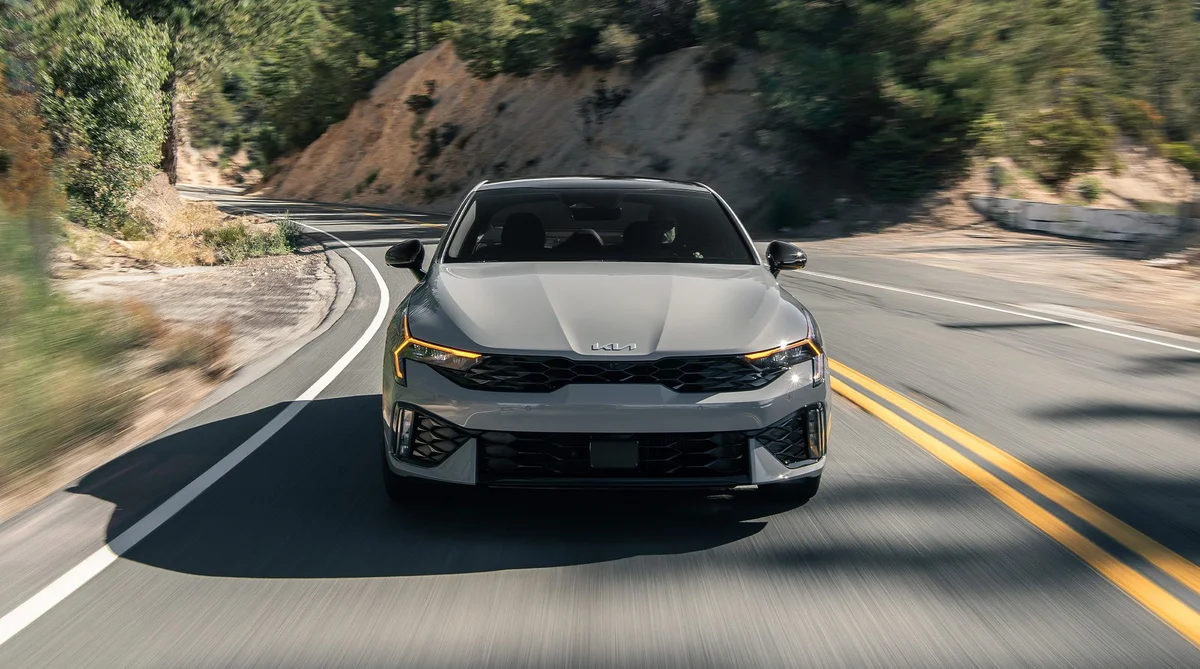
The 2026 Kia K5 is the clean example. NHTSA rated the K5 five stars overall. IIHS tested the same car and returned Good in small overlap front, Poor in moderate overlap front, and Marginal in the updated side, per IIHS. It does not qualify for Top Safety Pick or TSP+. A buyer who checked only the NHTSA sticker would miss that the K5's rear-seat occupants face materially elevated risk in a 40 mph offset frontal. Our 2026 Kia K5 GT listing lays out that split.
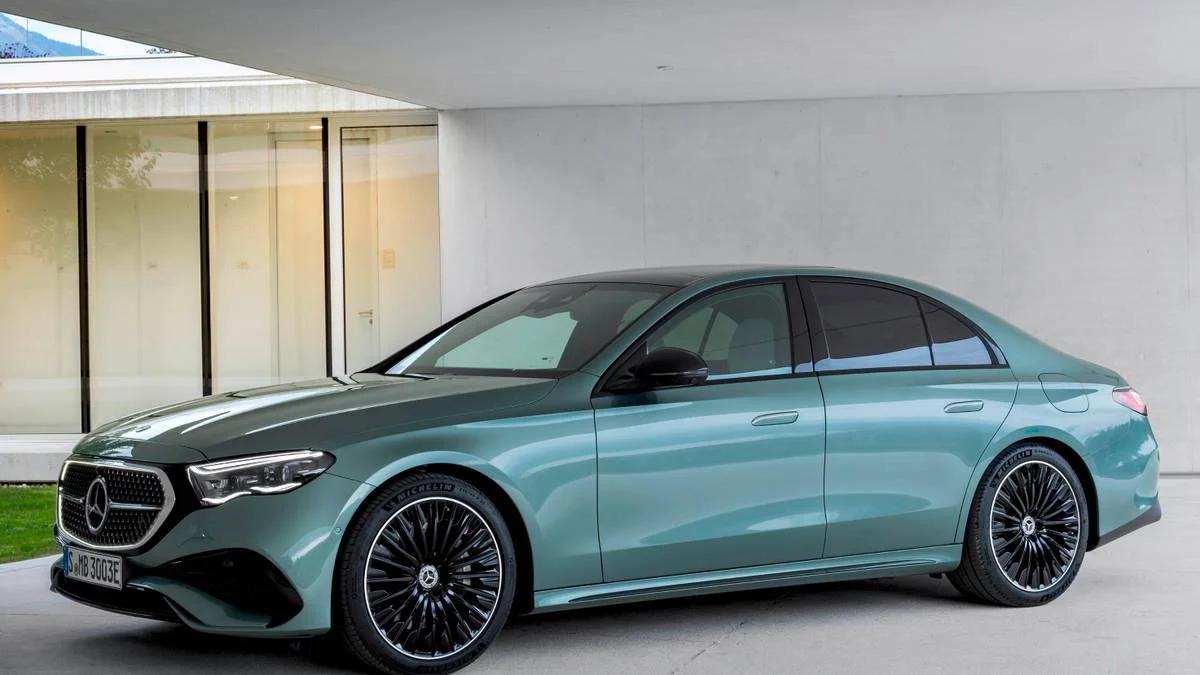
The German luxury sedans show the same pattern at the top of the price range. The 2026 Mercedes-Benz E-Class scored Good in small overlap and side but Marginal in the updated moderate overlap front test, specifically on rear-passenger restraints and dummy kinematics, per IIHS. That costs it 2026 TSP or TSP+. Both the 2026 Mercedes-Benz E 350 and E 450 4MATIC are on the W214 platform that produced that result.
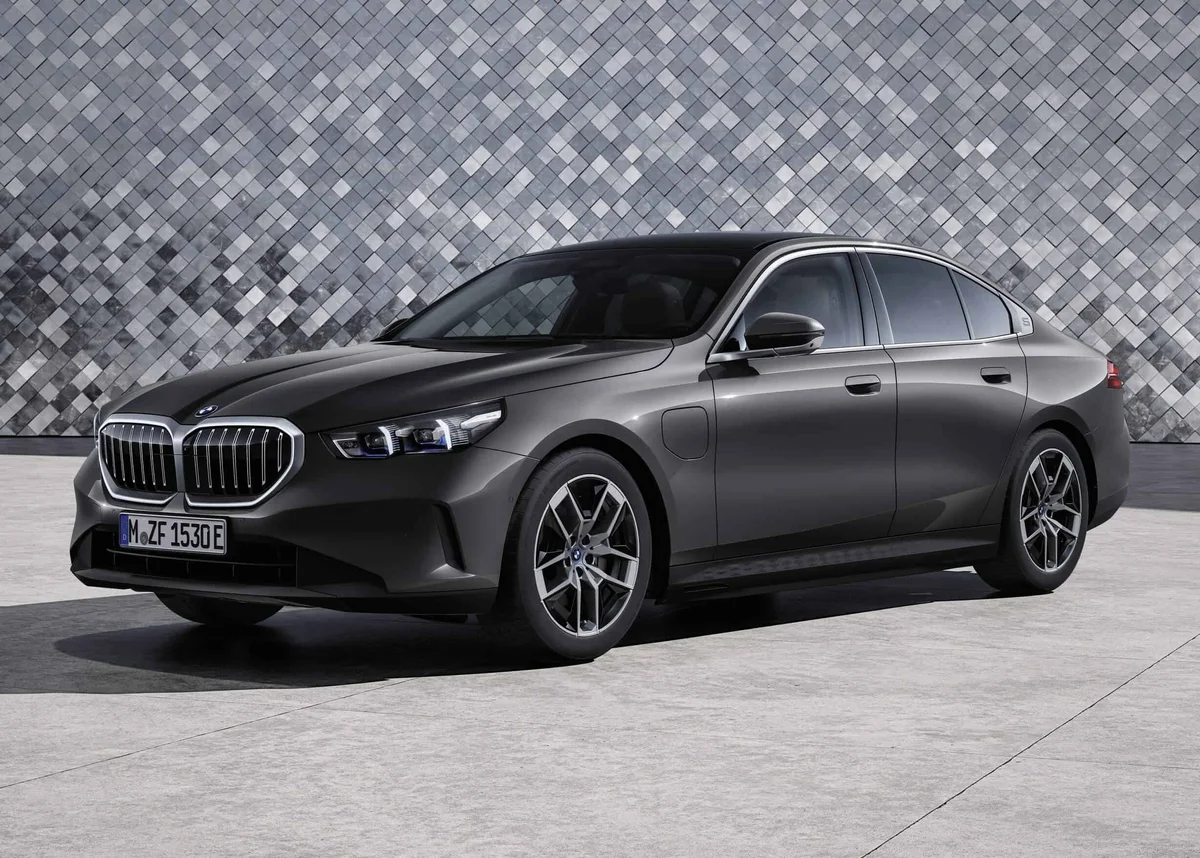
The 2026 BMW 5 Series has been rated Good in small overlap and the updated side but has not been evaluated in the updated moderate overlap front test, so it does not qualify for 2026 TSP or TSP+. See our 2026 BMW 530i, 540i xDrive and 550e xDrive listings.
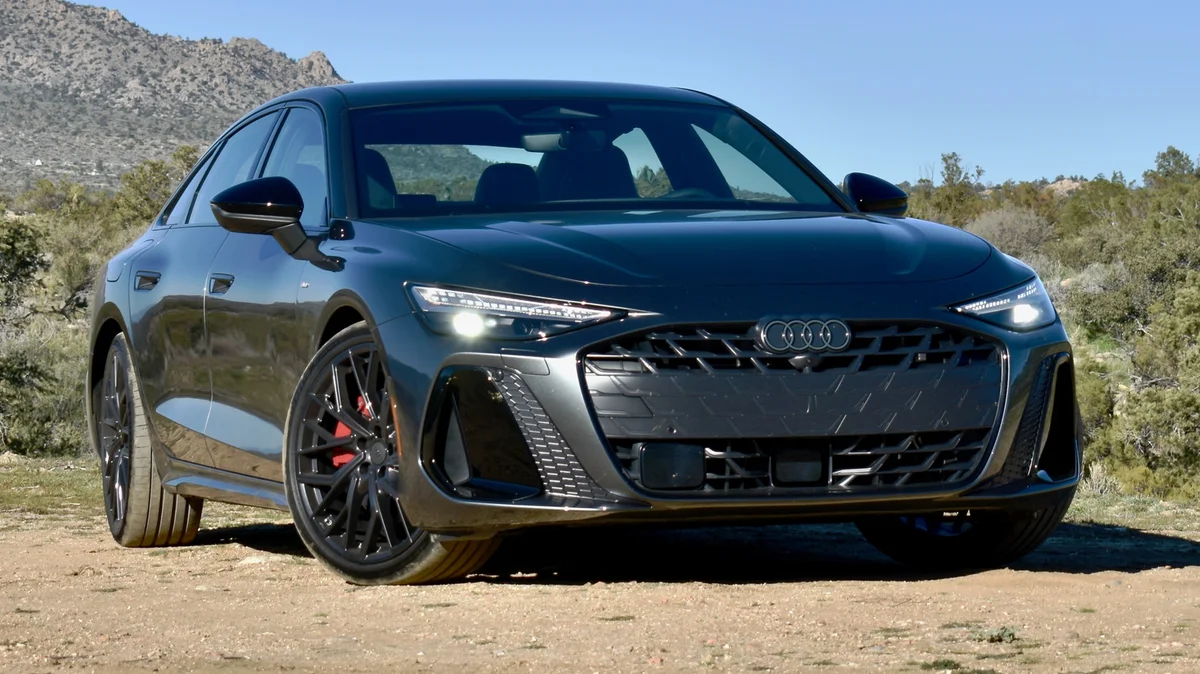
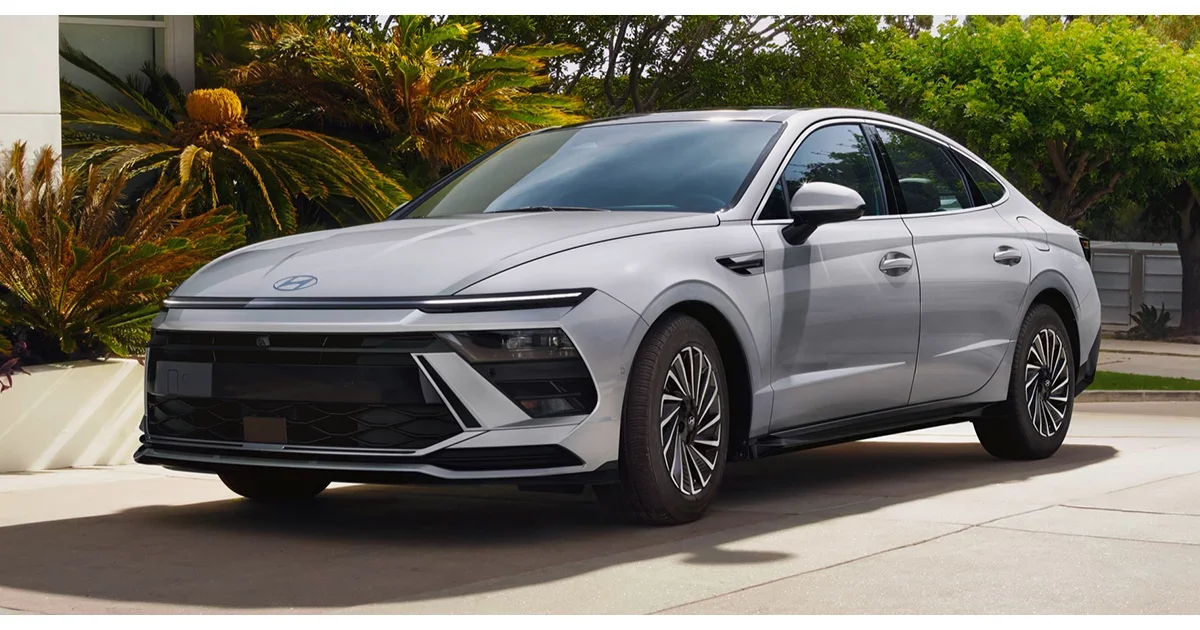
The Audi A6 is the counter-example. The 2026 A6 earned 2026 IIHS Top Safety Pick+ and is one of only two large luxury sedans on the 2026 TSP+ list, per IIHS. Among mainstream midsize sedans, IIHS awarded 2026 TSP+ to the Hyundai Sonata and Toyota Camry, per the Hyundai Motor Group release. See our 2026 Audi A6 and 2026 Hyundai Sonata N-Line listings.
The Honda Accord case is instructive about what separates TSP from TSP+. The 2026 Honda Accord earned Top Safety Pick but not TSP+ because its pedestrian front crash prevention is rated Acceptable rather than the Good now required at the top tier, per IIHS. The crashworthiness is the same as a TSP+ winner. The gap is one AEB rating. The 2026 Genesis G80 is on the TSP+ list, but the award applies only to vehicles built after June 2025, per IIHS, so build date matters when shopping a 2026 G80 2.5T or G80 3.5T.
Which rating to trust when they disagree
If a 2026 midsize sedan carries IIHS Top Safety Pick+, treat the badge as doing most of the work. TSP+ requires Good in every structural test IIHS runs, Good pedestrian AEB, and Acceptable or Good vehicle-to-vehicle AEB, with Acceptable or Good headlights standard across trims. The combination is harder to earn now than it has ever been, per Repairer Driven News.
If a sedan has NHTSA five stars but no IIHS award, look at the individual IIHS subtest ratings before dismissing. Marginal in the updated moderate overlap is often a rear-seat belt geometry issue rather than a structural failure, and it still matters when you carry children. Poor in the small overlap means the car's front corner is likely to collapse into the driver's footwell at 40 mph, which is the geometry of hitting a tree, a pole, or an oncoming car's corner. That is a real-world crash NHTSA does not currently simulate.
If you are cross-shopping across weight classes, remember that NHTSA frontal stars are only comparable within 250 pounds of each other. Five stars on a 3,200-pound Camry and five stars on a 5,200-pound full-size SUV do not describe comparable protection in a two-vehicle crash between them. IIHS Good ratings do not carry this weight-class caveat for structural tests, but IIHS also notes that moderate overlap results are most comparable among vehicles of similar weight.
What neither rating captures
Partner protection, the harm your vehicle does to smaller vehicles in a crash, is not in either rating. Repairability and post-crash vehicle integrity are not rated. Real-world driver death rates are tracked separately by IIHS by model but are not part of the award program. Rollover protection is only in NHTSA. Pedestrian crashworthiness, how badly a car's hood and bumper hurt a struck pedestrian, is now part of both programs for model-year 2026 but has not been integrated into NHTSA's single overall star.
Neither program predicts real-world outcomes perfectly. IIHS research has shown that small overlap ratings correlate with driver death rates: cars rated Good in small overlap had materially lower driver-death rates than cars rated Marginal or Poor, which supports that test's predictive value. NHTSA has not published equivalent outcome data at the per-subtest level.
The short version
For a 2026 midsize sedan, treat IIHS Top Safety Pick+ as the tougher and more discriminating label. Treat NHTSA five stars as a floor. Where they disagree, read the IIHS subtest ratings: Marginal or Poor in the updated moderate overlap or updated side is a real signal, not noise. Among the sedans in our Best Midsize Sedans of 2026, the Audi A6, Hyundai Sonata and Genesis G80 built after June 2025 sit at the top of the IIHS table; the Honda Accord lands one notch lower only because its pedestrian AEB is rated Acceptable rather than Good; the Mercedes E-Class, BMW 5 Series and Kia K5 have fallen off the TSP ladder for reasons worth understanding before you sign.
See Best Midsize Sedans of 2026Questions people ask
What is IIHS Top Safety Pick+?+
A 2026 Top Safety Pick+ vehicle must earn Good ratings in the small overlap front, moderate overlap front and side crash tests; Good in the pedestrian front crash prevention evaluation; Acceptable or Good in vehicle-to-vehicle front crash prevention; and Acceptable or Good headlights standard across all trims. The base Top Safety Pick differs in two ways: it allows Acceptable in the pedestrian test, and vehicle-to-vehicle front crash prevention is not required at all. The moderate overlap test includes a rear-seat dummy added in 2022.
IIHS vs NHTSA, which rating is better?+
Neither replaces the other. NHTSA covers rollover, which IIHS does not, and runs a full-width frontal at 35 mph that captures different physics than the IIHS offset tests. IIHS runs a 25 percent small overlap, a 40 percent moderate overlap with a rear dummy, and a harder side crash than NHTSA. For 2026 midsize sedans the IIHS award is the more discriminating label, because most of the field earns five NHTSA stars but far fewer earn TSP+.
What does a 5-star safety rating actually mean?+
It means the vehicle performed well across NHTSA's frontal (35 mph full-width), side-barrier (38.5 mph), side-pole (20 mph) and dynamic rollover evaluations, combined into a single overall rating. Frontal and overall stars are only comparable to cars within 250 pounds. About 98 percent of tested vehicles earn four or five stars for crashworthiness, so the stars alone do a poor job of distinguishing safer cars from merely average ones.
Why does a car have NHTSA 5-star but not IIHS Top Safety Pick?+
NHTSA's frontal test is full-width; IIHS runs a 25 percent small overlap and a 40 percent moderate overlap with a rear-seat dummy. A car with uniformly strong front rails can score full NHTSA stars and still collapse at the corner (small overlap) or fail the rear-seat belt geometry test (moderate overlap). The 2026 Kia K5 is a current example: five NHTSA stars overall, but Poor in the IIHS updated moderate overlap and Marginal in the updated side.
How are car safety ratings calculated?+
NHTSA combines injury probabilities from front, side-barrier, side-pole and dynamic rollover evaluations into one overall star rating of one to five. IIHS rates each of its six tests Good, Acceptable, Marginal or Poor, then awards Top Safety Pick or Top Safety Pick+ based on reaching thresholds across the crashworthiness tests plus crash-avoidance and headlight evaluations. The IIHS awards are pass/fail at each threshold; NHTSA rolls everything into a single number.
Which safety rating should I trust when buying a sedan?+
Prioritize IIHS Top Safety Pick+ for 2026 midsize sedans; use NHTSA five stars as a secondary check and for the rollover number. If a sedan has five NHTSA stars but no IIHS award, pull up its IIHS page and read individual subtest ratings, particularly updated moderate overlap and updated side. Marginal or Poor in either is a real signal. Check for build-date qualifiers on the IIHS award, especially for Hyundai, Kia and Genesis models.
Does a 2026 Top Safety Pick+ guarantee my car will protect me?+
No single award guarantees any outcome. TSP+ is a validated indicator the car passed a specific battery of tests with margin. IIHS research has shown driver death rates are lower for cars rated Good in small overlap than for those rated Marginal or Poor, which supports the test's predictive value. Real-world crashes vary by speed, angle, vehicle mismatch and belt use in ways no single rating captures.
What changed in the IIHS moderate overlap test in 2022?+
IIHS added a second, smaller Hybrid III dummy representing a small woman or 12-year-old child, belted in the second row behind the driver, with sensors that evaluate rear-seat restraint performance. The agency cited research showing newer vehicles were protecting front-seat occupants better than rear-seat ones. The rear-dummy belt kinematics and injury measures are now what most often drops a well-built car's moderate overlap rating to Marginal or Poor, which is what pushed the Mercedes-Benz E-Class off the 2026 award list.
Sources
What this guide is based on. We research from published specifications, independent reviews and owner reports; we did not test these products ourselves.
- 1.2026 IIHS Top Safety Picks, IIHS
- 2.Four more models take home Top Safety Pick+ awards in latest IIHS ratings, IIHS
- 3.New crash test spotlights lagging protection for rear passengers, IIHS
- 4.2026 Kia K5 4-door sedan ratings, IIHS
- 5.2026 Mercedes-Benz E-Class 4-door sedan ratings, IIHS
- 6.2026 Honda Accord 4-door sedan ratings, IIHS
- 7.2026 Genesis G80 4-door sedan ratings, IIHS
- 8.About our tests, IIHS
- 9.5-Star Safety Ratings, NHTSA
- 10.Government 5-Star Safety Ratings for Motor Vehicles Advertising and Communication Usage, NHTSA
- 11.NHTSA Announces Pedestrian Safety-Focused Updates to the New Car Assessment Program, Covington
- 12.Star Safety Ratings, Long Helpful to Car Buyers, Now Languish in the Breakdown Lane, Center for Auto Safety
- 13.Hyundai Earns Seven 2026 TOP SAFETY PICK Awards from IIHS, Hyundai Motor Group
- 14.IIHS Implements New 'Small Overlap' Crash Test, Automotive Addicts
- 15.IIHS Top Safety Pick, Top Safety Pick+ awards show crash avoidance improvement, Repairer Driven News
- 16.New Crash Test Shakes Up Car Safety Ratings, Edmunds
Products mentioned
More on midsize sedans
Explainer
What Actually Changes as Midsize Sedan Prices Rise: Mainstream, Near-Luxury, and Luxury Compared
Which features move from standard to premium as midsize sedan prices rise from $28,000 to $90,000 in 2026, and what you really gain and lose at each tier.
Explainer
What a Luxury Midsize Sedan Really Costs Over Five Years
A $30,000 to $45,000 sticker gap between a Honda Accord and a BMW 5 Series or Mercedes E-Class typically widens by another $5,000 to $25,000 across five years once depreciation, dealer labor, insurance, and specialty tires are counted.
Explainer
AWD in a Midsize Sedan: What It Actually Helps With, What You Pay, and When FWD Is Enough
AWD in a midsize sedan adds about $1,800 and costs a couple of mpg, but only improves acceleration traction. A FWD sedan on winter tires outbrakes an AWD sedan on all-seasons. Here is when the upgrade is worth it, and when it is not.
Explainer
Hybrid, Plug-in Hybrid, or Electric: Which Midsize Sedan Powertrain Fits How You Drive
A plug-in hybrid only hits its MPGe sticker if you charge every night. Full hybrids are more reliable than gas cars; PHEVs are less. Match the powertrain to your commute and charging access.
Buying guide
How to Choose a Midsize Sedan: The Four Decisions That Actually Separate the Field
Most midsize sedans have the same safety tech, screens, and driver aids. Four forks resolve first: budget tier, powertrain, AWD, and the features that truly differ.