Buying guide
How to Choose a Midsize Sedan: The Four Decisions That Actually Separate the Field
Most midsize sedans have the same safety tech, screens, and driver aids. Four forks resolve first: budget tier, powertrain, AWD, and the features that truly differ.
Updated November 12, 2026 · Based on 15 sources · How we research
Walk into a Honda dealer with a shortlist that also includes a BMW 540i xDrive and a Hyundai Sonata Hybrid, and you are not really shopping yet. You are gathering impressions. Shoppers lose weeks this way, comparing adaptive cruise control between models that all have it, or weighing a 192-hp engine against a 375-hp engine when they drive 12 miles to work. A 2026 Honda Accord starts at $28,395 and a 2026 Mercedes-AMG E 53 starts at $89,600, and the two cars are not in the same conversation. Four decisions, taken in order, do nearly all the narrowing: your budget tier, your powertrain, whether you need all-wheel drive, and the two or three features that genuinely differ car to car. Get those settled and the field drops from 20 cars to three.
Decision 1: Which price tier are you shopping, really?
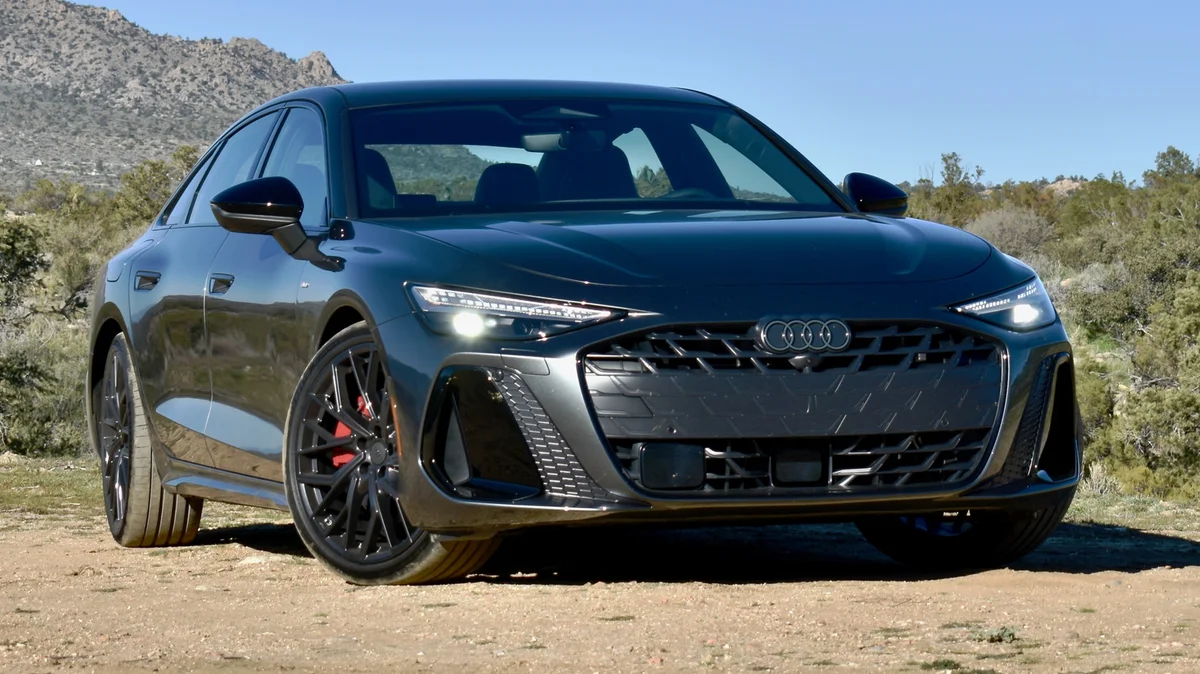
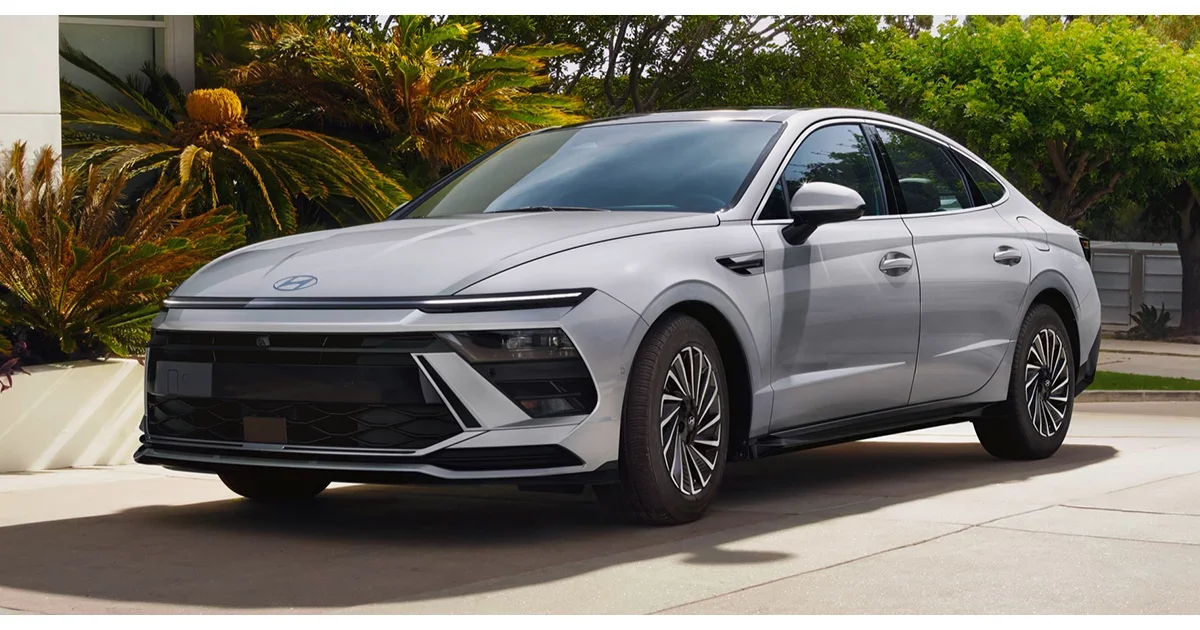
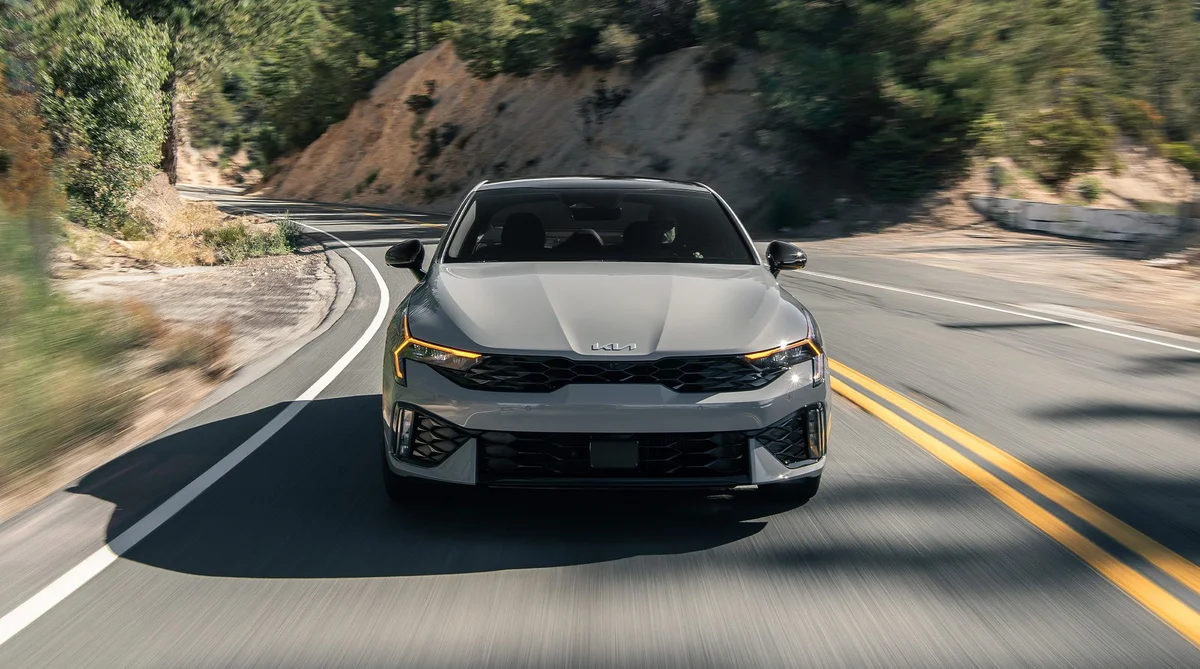
Midsize sedans fall into three tiers that barely overlap on paper. The mainstream tier runs from roughly $28,000 to $40,000 and contains cars like the 2026 Honda Accord at $28,395, the 2026 Hyundai Sonata Hybrid at $29,200, the 2026 Honda Accord Hybrid at $34,990, and the 2026 Kia K5 GT at $33,590. The near-luxury tier starts around $49,000 and includes the 2026 Cadillac CT5 at $49,200, the 2026 Lexus ES 350h at $49,700, and the 2026 Genesis G80 2.5T at $58,450. The luxury tier begins near $60,000 and reaches past $89,000, anchored by the 2026 BMW 530i at $60,500, the 2026 Mercedes-Benz E 350 at $63,900, the 2026 Audi A6 at $65,395, and the 2026 Mercedes-AMG E 53 PHEV at $89,600.
The jumps between tiers are large. A mainstream Accord Hybrid and a Genesis G80 2.5T are separated by about $23,000 at base. That money does not primarily buy horsepower, infotainment, or safety tech, because the mainstream cars increasingly match or exceed luxury cars on those spec lines. It buys cabin materials, acoustic isolation, dealership experience, and brand equity at resale.
Setting a tier first also matters because reviews are usually tier-internal. Edmunds and Kelley Blue Book rank the Accord against the Camry and the E-Class against the 5 Series, but almost never across tiers. If you cross-shop a Sonata Hybrid and a Genesis G80, you will not find a comparison test because reviewers do not write one. Buyers who skip this step usually talk themselves into the more expensive car because it looks better on the showroom floor.
Decision 2: Lock in the powertrain before you compare brands
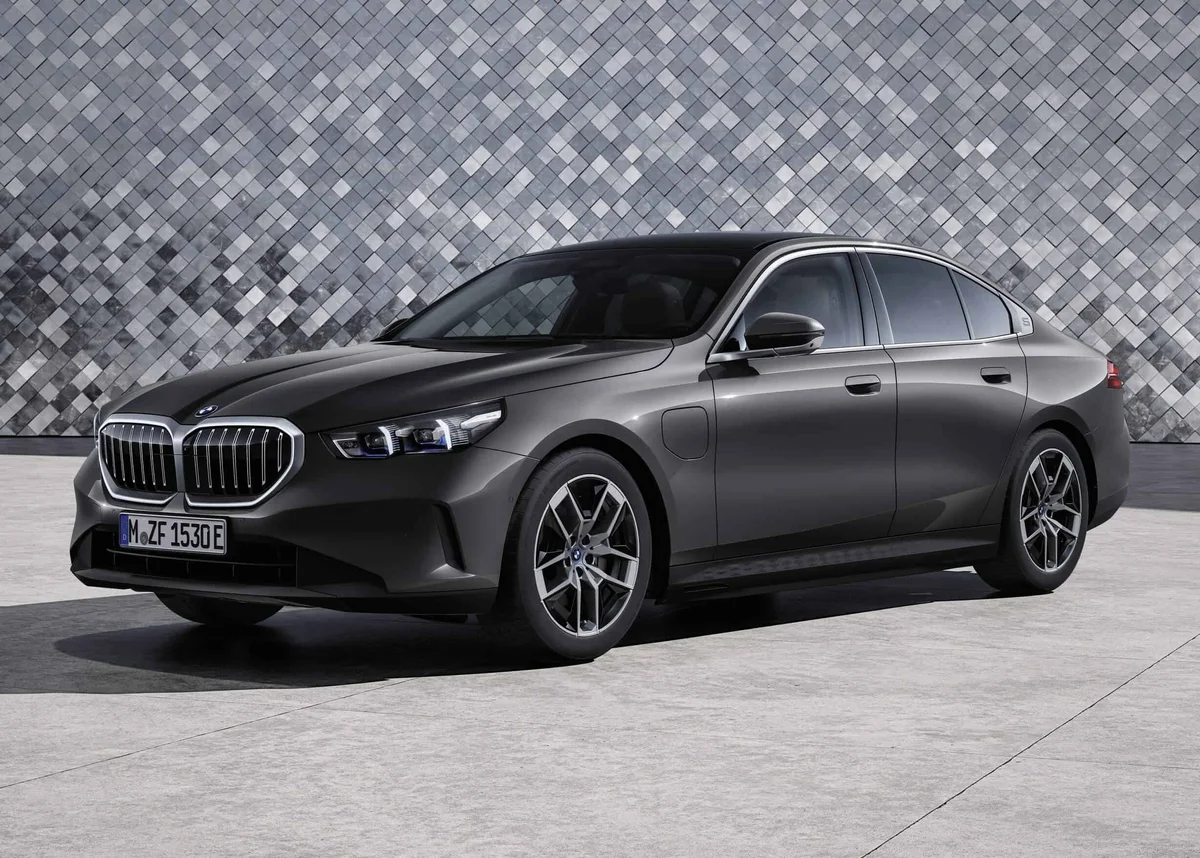
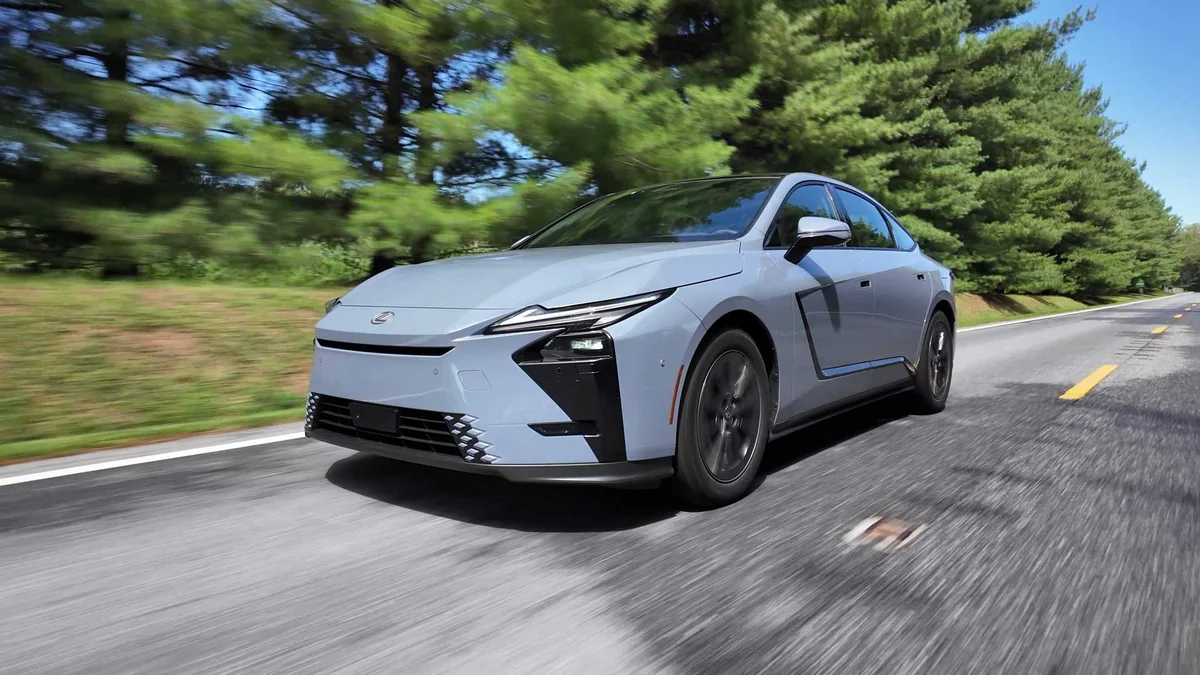
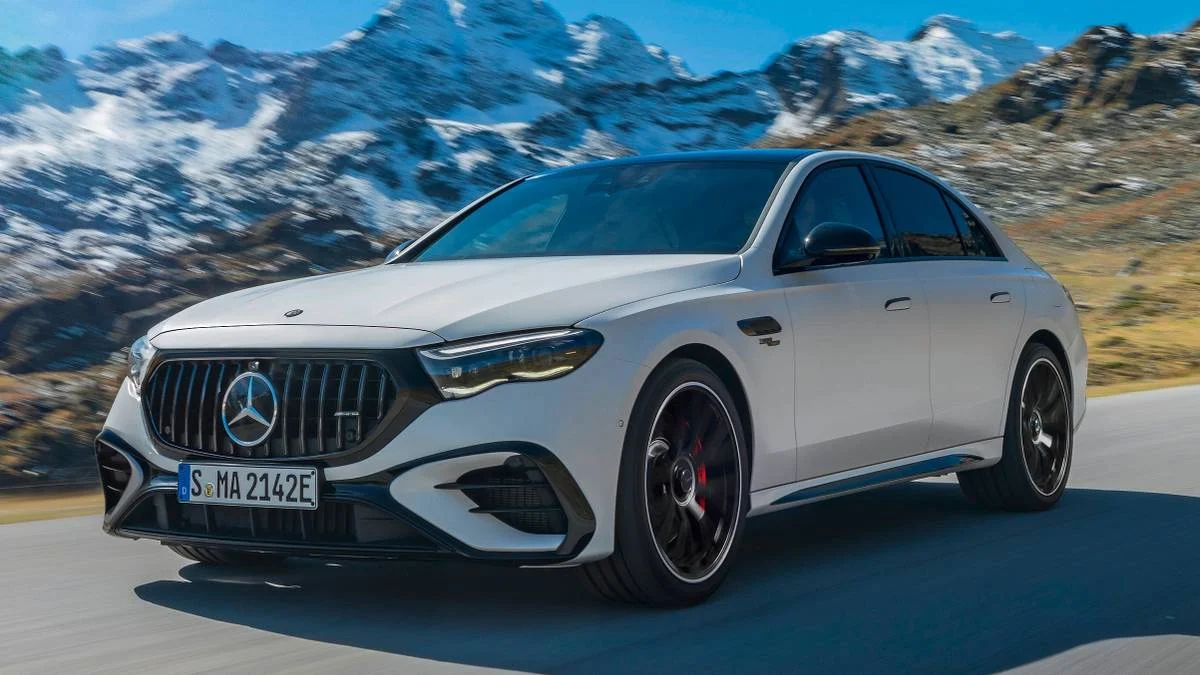
Four powertrains sell in meaningful volume in this class: gasoline turbos, conventional hybrids, plug-in hybrids, and battery electrics. Each one eliminates most of the market. The 2026 Toyota Camry is now hybrid-only, sold exclusively as a hybrid sedan with optional AWD per Cars.com. The redesigned Lexus ES comes as the ES 350h hybrid, the ES 350e battery electric, and the ES 500e dual-motor EV, per Lexus's press materials. BMW offers the 530i and 540i xDrive as gasoline sedans and the 550e xDrive as a plug-in. Mercedes offers the E 350 and E 450 4MATIC as gasoline sedans and the AMG E 53 as a 577-hp PHEV with 43 miles of electric range, with pricing and specs listed on Edmunds.
The powertrain decision is usually a lifestyle decision in disguise. Hybrids reward drivers who log stop-and-go miles: the Accord Hybrid rates 44 mpg combined on Sport and Touring, and 48 mpg combined on the EX-L, per Honda of Lincoln. The Camry Hybrid LE reaches 51 mpg combined, according to Toyota. PHEVs reward drivers with a home charger and a commute under the electric range: BMW rates the 550e at 68 MPGe with 33 miles of electric range, per The Drive. Gasoline turbos still make sense for buyers who tow nothing, drive highway miles, and do not want a battery to replace in year 10.
The trap: shoppers compare horsepower and 0-60 across cars with incompatible powertrains. A 192-hp Accord and a 577-hp AMG E 53 are not candidates for the same garage. Figure out what you want the car to do for you, then look only at powertrains that do it.
Decision 3: Do you actually need all-wheel drive?
AWD is the fork that quietly eliminates the most cars. Luxury midsize sedans mostly offer it or make it standard: BMW's xDrive comes on the 540i and 550e, Mercedes offers 4MATIC on most E-Class trims, Audi's quattro is standard on the S6 and available on the A6, and Genesis makes AWD available across the G80 range, with the 3.5T Sport Prestige getting it standard per Autoblog. Mainstream sedans are a different story. The 2026 Honda Accord, hybrid or not, is front-wheel drive on every trim in contrast to the AWD-available Camry. The Hyundai Sonata offers AWD only on the SEL Sport gasoline trim, never on the hybrid. The Camry is the only mainstream midsize hybrid sedan sold with AWD under $40,000, according to Sebring Toyota's trim breakdown, where AWD adds $1,525 to the base price. The Lexus ES 350h also offers AWD but starts at $49,700.
That matters because the combination most buyers say they want, hybrid plus AWD under $40,000, has one answer: the Camry. If you need AWD and prefer Honda's Sensing suite or Hyundai's warranty, you are stuck with a gasoline Sonata SEL Sport or a Camry Hybrid. Every other sub-$40,000 hybrid sedan is FWD.
Whether you actually need AWD is another question. Modern stability control and good winter tires cover most of the use cases people imagine for AWD. In Minneapolis, Buffalo, or the Rockies, AWD is useful on unplowed mornings and steep driveways. In Atlanta, FWD with new all-seasons will handle three days of rain a year. The physics do not change because the badge on the trunk does: AWD helps a car accelerate on low-grip surfaces, but braking and cornering are identical.
Decision 4: Identify the two or three features that actually differ
Here is what every midsize sedan on this list has in 2026: adaptive cruise control, lane keeping assist, automatic emergency braking, blind-spot monitoring, wireless Apple CarPlay and Android Auto, a touchscreen of at least 9 inches, LED headlights, and a backup camera. Comparing cars on those lines is comparing table stakes.
The features that genuinely differ are shorter than the sales brochure suggests. Hands-free highway driving is one: Cadillac's Super Cruise is standard on the 2026 CT5, and Motor1's review calls it the smoothest Level 2 system on sale. BMW offers a highway assistant on the 5 Series, but it is optional. Massage seats are another: Genesis includes them on upper G80 trims, Cadillac offers them standard on the CT5, Mercedes sells them as a package. Honda and Toyota do not offer them at all. Display size is a third: the 2026 Genesis G80 3.5T has a 27-inch combined display, the Cadillac CT5 has a 33-inch curved OLED, and the Accord Hybrid sticks with 10.2 inches.
Trunk space is the fourth real differentiator and the one buyers consistently underweight. The BMW 5 Series has 18.4 cubic feet, matching or beating the Accord's 16.7 cubic feet. The E-Class has 12.7, and the G80 2.5T has 13.1. If you fly a lot and check bags, this is the kind of difference that matters every week.
- Standard across the class: adaptive cruise, lane keeping, AEB, blind-spot monitor, wireless CarPlay, LED lights
- Actually varies: hands-free highway driving (Super Cruise is a Cadillac exclusive at this price), massage seats, trunk volume, display real estate, EV commute range on PHEVs
- Matters less than the brochure implies: 0-60 times above 5 seconds, headroom differences of less than an inch, drive-mode counts
What specs actually matter once the four decisions are settled?
Once budget, powertrain, AWD, and must-have features are locked, four numbers do most of the remaining work. Combined fuel economy for how much you will spend on energy: a Camry Hybrid LE at 51 mpg will cost about a third of what a Genesis G80 3.5T at 18 mpg costs to fuel over 100,000 miles. Trunk volume for how usable the car is: 18.4 cubic feet versus 12.7 is a real-world difference, not a spec-sheet one. IIHS Top Safety Pick+ status for crash performance under the 2026 criteria: the 2026 Audi A6 earned a 2026 TSP+, leading all luxury brands in 2026 TSP+ awards per Autoblog, and among mainstream cars the Accord, Accord Hybrid, and Sonata Hybrid hold the designation. The Mercedes E-Class, by contrast, earned only Marginal in the 2026 moderate overlap front test.
Reliability data is the fourth number worth checking, though it comes with asterisks. Consumer Reports' latest member survey favors Toyota and Honda for predicted reliability and flags several German luxury sedans as weaker bets. Genesis's 10-year, 100,000-mile powertrain warranty is the longest in the segment and directly addresses the risk of owning a complex near-luxury car long-term.
| Priority | Spec that matters | Spec that mostly does not |
|---|---|---|
| Fuel cost | EPA combined mpg | 0-60 time |
| Daily usability | Trunk volume (cu ft) | Horsepower above 300 |
| Safety | IIHS 2026 TSP+ status | Airbag count |
| Long-term cost | 5-year TCO plus warranty length | Starting MSRP alone |
| Tech experience | Hands-free highway, massage seats, display UX | Screen inches |
How to execute the four decisions without stalling
Resolve the four forks on paper, in order, before you drive anything. Set your ceiling. Pick your powertrain. Decide on AWD. Write down the two features you genuinely want (not six). Then open our Best Midsize Sedans of 2026 ranking and strike through every car that fails any one of those tests. If you need AWD plus hybrid under $40,000, you have one car. If you want a PHEV with 400-plus horsepower, you have two. If you want a mainstream FWD sedan with Top Safety Pick+ and a 10-year warranty, the Sonata Hybrid is nearly alone in that corner of the market.
Only then should you book test drives. Two test drives is almost always enough. Three if you are genuinely torn. Any more and you are either enjoying the shopping or avoiding the decision.
The short version
Four decisions do most of the work: budget tier, powertrain, AWD, and two specific must-have features. Buyers who struggle in this segment skip straight to test drives and comparison tests, then try to reason backward from impressions. Buyers who close quickly do the forks first and end up with a shortlist of two or three cars that fit. Want maximum efficiency and will tolerate FWD? The Accord Hybrid or Sonata Hybrid. Want hybrid plus AWD under $40,000? The Camry. Want near-luxury with the longest warranty in the class? The Genesis G80 2.5T. Want benchmark dynamics and the biggest trunk? The BMW 540i xDrive. The right car is almost never the one with the most features; it is the one whose few differentiators match your actual life.
See Best Midsize Sedans of 2026Questions people ask
How do I choose a midsize sedan without visiting every dealer?+
Resolve four forks on paper first: price ceiling, powertrain, AWD or not, and the two features you will not compromise on. That usually narrows 20 candidates to three. Only then book test drives. Any car that fails one of your four forks is not actually a candidate, no matter how good the review.
What should I look for when buying a midsize sedan in 2026?+
The four numbers that matter most are EPA combined mpg, trunk cubic feet, IIHS 2026 Top Safety Pick+ status, and five-year total cost of ownership. Horsepower above roughly 250 hp and 0-60 times under 6 seconds rarely affect daily driving. Reliability data from Consumer Reports and warranty length deserve more weight than most buyers give them.
Is a hybrid worth it for a midsize sedan?+
For most buyers who drive more than 12,000 miles a year, yes. The Accord Hybrid at 44 to 48 mpg combined and Camry Hybrid LE at 51 mpg combined save significant fuel versus a gasoline turbo at current pump prices. If you drive under 7,000 miles a year, the hybrid premium takes longer to earn back and a gasoline sedan may make more sense.
Which midsize sedans have AWD and hybrid together?+
Very few. The 2026 Toyota Camry Hybrid offers AWD across all trims for a $1,525 upcharge per Sebring Toyota. The 2026 Lexus ES 350h is available with AWD and starts at $49,700. Everything cheaper than that is front-wheel drive in hybrid form, including the Accord Hybrid and Sonata Hybrid.
What are the real differences between midsize sedans?+
Fewer than the brochures suggest. Nearly every car in the class has adaptive cruise, lane keeping, automatic emergency braking, wireless CarPlay, and LED headlights. The real variance is in trunk volume (12.7 to 18.4 cu ft), hands-free highway driving (a Cadillac exclusive at mainstream pricing), massage seat availability, powertrain type, and brand reliability history. Those five lines are where shoppers should focus.
Are luxury midsize sedans worth the price jump over the Accord or Camry?+
It depends on what the jump buys you. A $65,395 Audi A6 does not accelerate much faster than a $34,990 Accord Hybrid, and it does not have better active safety. It buys quieter cabin isolation, higher-grade leather and trim, and a stronger dealership experience. The 2026 Audi A6's Top Safety Pick+ designation is a real advantage, but the Accord Hybrid carries the same badge for roughly half the price.
Which midsize sedan is most reliable?+
Consumer Reports' latest member survey favors Toyota and Honda for predicted reliability, with the Accord Hybrid and Sonata Hybrid earning high marks and Honda retaining strong quality and resale heritage per its ranking data. German luxury sedans trend weaker, and the AMG E 53 PHEV is listed with a below-average reliability history in its ranking profile. Genesis offsets near-luxury reliability risk with a 10-year, 100,000-mile powertrain warranty, the longest in the segment.
What is the midsize sedan buying guide 2026 summary in one line?+
Set your tier, pick your powertrain, decide on AWD, then compare only on trunk space, hands-free highway driving, massage seats, EV range if applicable, and reliability. Everything else is noise or already standard.
Sources
What this guide is based on. We research from published specifications, independent reviews and owner reports; we did not test these products ourselves.
- 1.Best Midsize Sedans of 2026 and 2027, Edmunds
- 2.Best Midsize Cars of 2025, 2026 and 2027, Kelley Blue Book
- 3.2026 Toyota Camry vs. Honda Accord, Toyota
- 4.2026 Honda Accord Hybrid vs. Toyota Camry Hybrid, Honda of Lincoln
- 5.Which midsize sedan pairs hybrid efficiency with available all-wheel drive, Sebring Toyota
- 6.Audi A6 Earns 2026 IIHS Top Safety Pick+, Leading All Luxury Brands, Autoblog
- 7.The 2026 Mercedes-Benz E-Class Just Earned a Surprisingly Weak Safety Score, Autoblog
- 8.2026 BMW 550e xDrive Review, The Drive
- 9.2026 Genesis G80 Review, Specs, Pricing, and Warranty, Autoblog
- 10.2026 Lexus ES 350h Hybrid Joins Battery-Electric ES 350e, ES 500e, Lexus
- 11.The Cadillac CT5-V With Super Cruise Is a Future I Can Support, Motor1
- 12.How Super Cruise on the 2026 Cadillac CT5 Brings Calm, Landmark Cadillac
- 13.Popular Midsized Sedans to Avoid and the Best Models to Buy Instead, Consumer Reports
- 14.2026 Mercedes-Benz E-Class AMG E 53 HYBRID Prices and Specs, Edmunds
- 15.2026 Toyota Camry - Specs, Prices, MPG, Reviews, Cars.com
Products mentioned
More on midsize sedans
Explainer
What Actually Changes as Midsize Sedan Prices Rise: Mainstream, Near-Luxury, and Luxury Compared
Which features move from standard to premium as midsize sedan prices rise from $28,000 to $90,000 in 2026, and what you really gain and lose at each tier.
Explainer
What a Luxury Midsize Sedan Really Costs Over Five Years
A $30,000 to $45,000 sticker gap between a Honda Accord and a BMW 5 Series or Mercedes E-Class typically widens by another $5,000 to $25,000 across five years once depreciation, dealer labor, insurance, and specialty tires are counted.
Explainer
AWD in a Midsize Sedan: What It Actually Helps With, What You Pay, and When FWD Is Enough
AWD in a midsize sedan adds about $1,800 and costs a couple of mpg, but only improves acceleration traction. A FWD sedan on winter tires outbrakes an AWD sedan on all-seasons. Here is when the upgrade is worth it, and when it is not.
Explainer
IIHS Top Safety Pick+ vs NHTSA 5-Star: Why These Ratings Disagree and What Each One Tests
NHTSA and IIHS run different crash geometries, so a midsize sedan can earn five NHTSA stars and still miss IIHS Top Safety Pick+. Here is what each program actually tests, where the two disagree on 2026 sedans, and which rating to prioritize when you shop.
Explainer
Hybrid, Plug-in Hybrid, or Electric: Which Midsize Sedan Powertrain Fits How You Drive
A plug-in hybrid only hits its MPGe sticker if you charge every night. Full hybrids are more reliable than gas cars; PHEVs are less. Match the powertrain to your commute and charging access.