Explainer
Hybrid or PHEV: Which Powertrain Actually Fits Your Driving Life?
A hybrid works no matter where you park. A plug-in hybrid only pays off if you can charge at home. Here is how to tell which one fits your driving.
Updated November 11, 2026 · Based on 13 sources · How we research
If you are shopping a compact SUV in 2026, you can get the same nameplate, say a Toyota RAV4 or a Hyundai Tucson, as a regular hybrid or as a plug-in hybrid for several thousand dollars more. The pitch for the plug-in is a bigger battery, electric-only commuting, and a combined efficiency number like 94 MPGe. That pitch assumes you plug it in. If you cannot, the numbers invert: a PHEV without a plug is a hybrid lugging a 300 to 500 pound battery, and it burns more fuel than the plain hybrid you could have bought for less money. This guide is for the buyer trying to figure out which side of that line they land on, with the specific trade-offs for the RAV4 Prime, RAV4 Hybrid, Tucson Plug-In, Sportage Plug-In, and the Lexus NX family.
What is actually different between a hybrid and a plug-in hybrid?
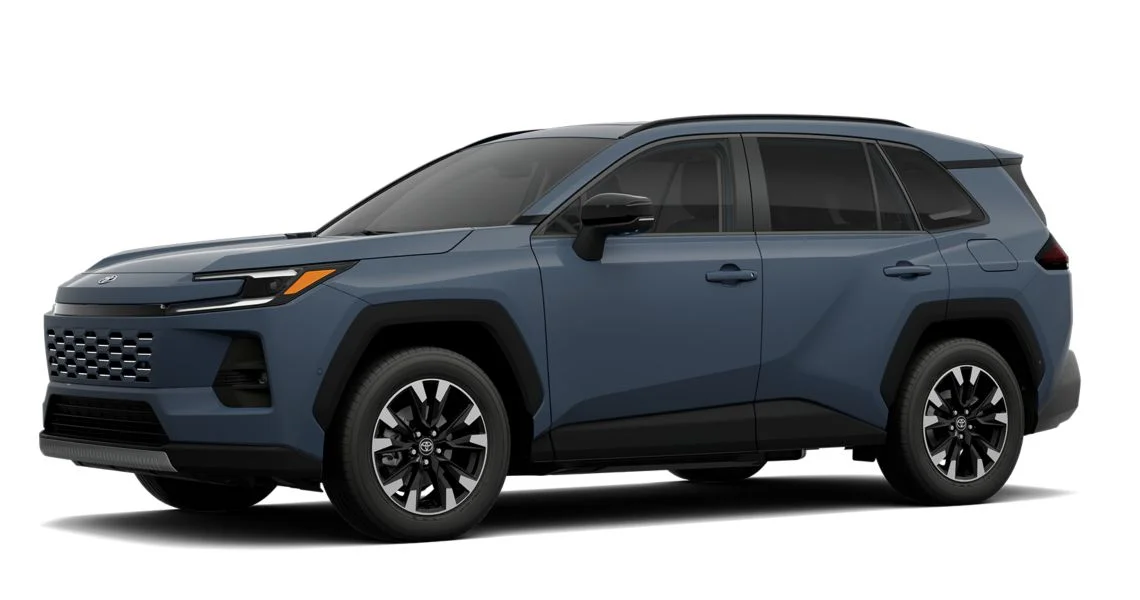
A hybrid, sometimes called a full hybrid or HEV, has a small battery (roughly 1 to 2 kWh) that the gas engine and regenerative braking charge on the fly. You never plug it in. The battery is there to let the engine shut off at low speeds, recover energy from braking, and fill in torque. The result is better fuel economy than a non-hybrid, but every mile still uses gasoline. The 2026 Toyota RAV4 Hybrid is rated 41 MPG combined on common AWD trims, the Lexus NX 350h lands at 40 MPG combined (FWD) or 39 (AWD), and the Lexus UX 300h at 43 MPG combined (fueleconomy.gov 2026 RAV4, fueleconomy.gov 2026 NX 350h).
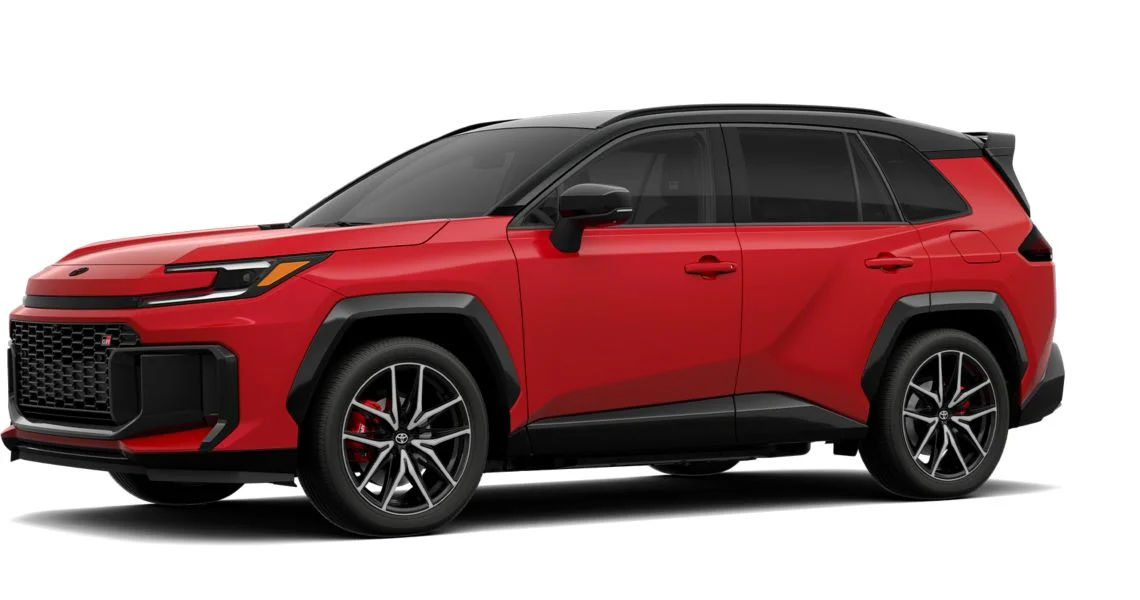
A plug-in hybrid, or PHEV, has a much larger battery, typically 13 to 18 kWh, that you charge from a wall outlet or a Level 2 charger. The battery is big enough to run the SUV on electricity alone for 30 to 45 miles before the gas engine takes over. The Toyota RAV4 Prime carries an 18.1 kWh pack and is EPA rated at 42 miles of electric range, 94 MPGe combined, and 37 MPG once the battery is depleted; the 2026 Hyundai Tucson Plug-In Hybrid uses a 13.8 kWh pack for 32 electric miles and 35 MPG combined thereafter (KBB 2026 Tucson Plug-In Hybrid specs); the Kia Sportage Plug-In Hybrid pairs the same 13.8 kWh pack with 34 miles of range and 84 MPGe (Edmunds Sportage Plug-In Hybrid).
Architecturally, that bigger battery changes two things. It adds weight, several hundred pounds in the case of the RAV4 Prime versus the RAV4 Hybrid. And it demands that you refill it from the wall for the efficiency math to work. If you never plug in, the battery is dead weight. If you plug in every night and your commute is short, the SUV can run most days without burning a drop of gas.
Do you need to charge a hybrid car?
No. A standard hybrid like the RAV4 Hybrid, Honda CR-V Hybrid, Hyundai Tucson Hybrid or Kia Niro Hybrid has no charging port. The small battery recharges itself from the engine and from regenerative braking during normal driving. You fill it with gasoline, and that is all. The 2026 RAV4 Hybrid carries an 8-year, 100,000-mile hybrid battery warranty per Toyota's published coverage.
A plug-in hybrid will technically also drive without ever plugging it in; it falls back to using its gas engine and the small usable top of its battery for regenerative assist, just like a conventional hybrid does. But its tuning assumes you are charging it. Skip the plug, and it becomes a heavier, less efficient full hybrid, which is the problem this guide keeps circling back to.
Is a PHEV worth it if you cannot charge at home?
Mostly no, and the math is specific. The EPA rates the 2026 RAV4 Prime at 37 MPG in hybrid mode once the battery is depleted. The 2026 RAV4 Hybrid, without the extra weight of the plug-in pack, is rated at 41 MPG combined on common AWD trims. If you drive 15,000 miles a year and never plug the Prime in, you will use roughly 405 gallons of gas; the RAV4 Hybrid will use about 366. At $3.50 a gallon, that is about $137 more per year in fuel in the Prime, on top of roughly a $9,600 MSRP premium up front (2026 RAV4 Hybrid vs Prime pricing, Gale Toyota). There is no scenario where that pencils out.
The PHEV argument only works once you add electric miles. If you can plug in at home each night and your daily driving is inside the electric range, you can run the SUV on grid electricity for the bulk of your mileage and reserve gasoline for trips. The 2022 National Household Travel Survey pegs the average US commute at 13.4 miles one way, roughly 27 miles round trip (NHTS 2022 Summary of Travel Trends), which fits inside the EV range of every PHEV compact SUV sold today. The question is not the commute, it is whether you can actually plug in overnight.
Home charging access is sharply split by housing type. Research published by Energy Innovation finds that up to 94 percent of US EV drivers in detached single-family homes have home charging access, while only about half of multi-unit dwellers do (Energy Innovation on multifamily charging). If you rent an apartment and park on the street, a PHEV is a worse deal than a hybrid in almost every direction.
How often do PHEV drivers actually plug in?
Even drivers who can charge do not always plug in on every cycle. The International Council on Clean Transportation analyzed trip and fuel data from nearly 1 million European PHEVs, as summarized by Carscoops, and found private PHEV owners drove about 45 to 49 percent of their miles on electricity, versus the 70 to 85 percent assumption baked into the WLTP rating; company-car drivers, who often get fuel reimbursed but not electricity, logged only 11 to 15 percent electric miles (Carscoops on real-world PHEV fuel use). The resulting real-world fuel burn ran more than three times the official number: an average of 6.12 L/100 km (about 38 MPG US) against an official WLTP average of 1.57 L/100 km (about 150 MPG US).
A Toyota Research Institute study of more than 6,000 Toyota and Lexus PHEV owners in the US and Canada painted a brighter picture: Toyota PHEV drivers plugged in on 7 of every 10 driving days, Lexus owners on 8 or 9, with only 9 percent of Toyota drivers and 4 percent of Lexus drivers rarely plugging in (InsideEVs on Toyota's PHEV study). Toyota's data skews toward owners who bought a PHEV deliberately and had home charging already lined up. Kia told The Autopian that 92.8 percent of Kia PHEV owners charge their vehicles regularly, with 7.2 percent not charging at all; that figure is aggregated across the lineup rather than broken out by model (The Autopian on Kia PHEV data).
Taken together, the evidence says: if you deliberately set up home charging and chose the PHEV for its electric range, you will realize most of the promised efficiency. If you bought it for the badge, the horsepower, or because a dealer had one in stock, your real-world fuel economy will land between a regular hybrid and the PHEV's sticker rating.
Is the RAV4 Prime better than the RAV4 Hybrid?
For a plug-in-capable driver, the RAV4 Prime is the more capable vehicle. It makes 302 combined horsepower from a 2.5-liter Atkinson-cycle engine and dual motors versus 236 for the RAV4 Hybrid's system, hits 60 mph in roughly 5.4 seconds, and can cover 42 EPA-rated electric miles before the gas engine wakes up. In EV mode it is quiet, instant, and uses no fuel. Our head-to-head coverage compares the numbers side by side: RAV4 Prime vs NX 350h vs RAV4 Hybrid.
For a driver who cannot or will not plug in regularly, the RAV4 Hybrid wins. It starts near $31,900 versus $41,500 for the Prime SE, a roughly $9,600 MSRP gap (Gale Toyota RAV4 Hybrid vs Prime). The RAV4 Plug-In Hybrid also no longer qualifies for the federal $7,500 clean-vehicle credit in 2026 because final assembly is in Japan, so there is no back-end incentive to close the gap (RAV4 Resource on tax credit eligibility). The Prime's 37 MPG hybrid-mode rating is also four lower than the RAV4 Hybrid's 41, so a never-plugged Prime burns more gas than a RAV4 Hybrid for more money.
There is also a safety wrinkle worth knowing. The RAV4 Prime scores IIHS Marginal on the updated moderate overlap front crash test, below the current Top Safety Pick threshold, and no 2026 RAV4 carries a Top Safety Pick designation. If a top safety score is a hard requirement, the Lexus NX 350h (an IIHS Top Safety Pick+ for 2026) or the Hyundai Tucson Hybrid (Top Safety Pick+, NHTSA 5-star) are stronger picks in either powertrain.
| Metric | RAV4 Hybrid | RAV4 Prime (PHEV) |
|---|---|---|
| Starting MSRP (2026) | ~$31,900 | ~$41,500 |
| EV-only range | 0 miles | 42 miles |
| Hybrid-mode MPG (gas only) | 41 combined (AWD) | 37 combined |
| Combined with electric | n/a | 94 MPGe |
| Horsepower | 236 hp | 302 hp |
| Battery | ~1 to 2 kWh | 18.1 kWh |
| Federal tax credit (2026) | None | None (final assembly in Japan) |
How to decide: three questions that settle it
Can you plug in where you sleep? Not aspirationally, but tonight. If you own a single-family home with a garage or driveway, a 120-volt outlet can refill a RAV4 Prime overnight; manufacturer and owner-oriented guidance puts the full charge at about 10.5 to 12 hours, which fits a workday-to-workday rhythm comfortably (RAV4 Resource charging guide). A Level 2 240-volt charger drops that to 2.5 to 4 hours but is not required. If you rent, share parking, or park on the street, a hybrid is the honest answer.
Is your daily driving inside the electric range? The average US round-trip commute at 27 miles fits comfortably inside every PHEV compact SUV's electric window. If you mostly drive long highway stretches of 60 miles or more a day, the PHEV premium buys you fewer electric miles per dollar, and a hybrid (or a full EV like the Chevrolet Equinox EV with 319 miles of range) is the better fit.
Do you need the performance? The PHEV versions of the RAV4 and the Lexus NX (the NX 450h+) are also the faster, more powerful variants. If you want the 300-horsepower character and the quiet EV mode, and you can plug in, that is a legitimate reason to pay the premium even before you count fuel savings. If you do not need the extra thrust and you are buying for efficiency alone, the regular hybrid returns a shorter payback.
Which hybrid or PHEV fits which driver?
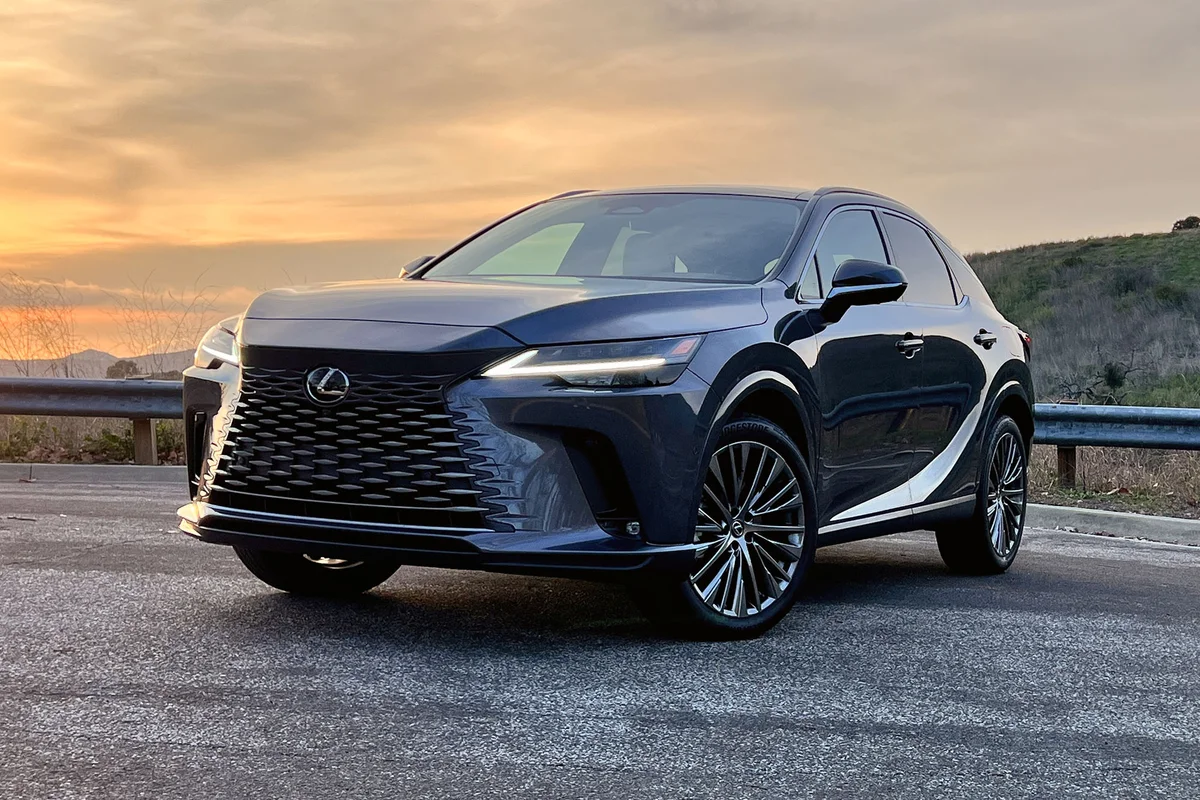
If you have home charging and a commute inside 40 miles, the Toyota RAV4 Prime is the strongest PHEV in this class on EV range and performance; the Tucson Plug-In and Sportage Plug-In are cheaper entries at 32 to 34 electric miles. The Lexus NX also offers a PHEV variant (the NX 450h+) with similar architecture to the Prime for buyers who want a luxury wrapper.
If you cannot charge at home, the RAV4 Hybrid, Honda CR-V Hybrid, Tucson Hybrid or Kia Niro Hybrid return 37 to 53 MPG with no behavior change required from you. The Niro is the mileage champ at 53 MPG combined but is front-wheel drive only.
If you want the Lexus feel with class-leading hybrid efficiency in the lineup, the Lexus UX 300h delivers 43 MPG combined, and the NX 350h delivers 40 MPG with a current IIHS Top Safety Pick+ rating. Our full ranking sits at Best Compact SUVs of 2026.
The short version
A hybrid works for every compact SUV buyer. A plug-in hybrid only works for a specific one: someone with reliable home charging and a daily drive inside the electric range. If you are that buyer, the RAV4 Prime is the deepest-engineered PHEV in the segment and will cover most days without fuel. If you are not, buy a hybrid. The 2026 RAV4 Hybrid, Tucson Hybrid, CR-V Hybrid, and Lexus NX 350h all return 37 to 43 MPG without asking you to think about a plug, and they are cheaper than the PHEV version of the same nameplate. Buying a PHEV and skipping the plug is the one choice that returns worse economics than either path on its own.
See Best Compact SUVs of 2026Questions people ask
Should I get a hybrid or plug-in hybrid SUV?+
Get a plug-in hybrid only if you can charge at home and your daily driving fits inside its electric range (30 to 45 miles for most PHEV compact SUVs). Otherwise get a hybrid: it is cheaper to buy, slightly more efficient when running on gas, and never asks you to find a plug.
Is the RAV4 Prime better than the RAV4 Hybrid?+
It is the better vehicle on paper (302 hp, 42 EV miles, 94 MPGe, quieter), but only if you plug it in. Without home charging the Prime runs 37 MPG versus the Hybrid's 41 MPG on common AWD trims and costs roughly $9,600 more to start, so the Hybrid is the better buy. As of 2026 the Prime no longer qualifies for the federal clean-vehicle credit.
What is the difference between a hybrid and a PHEV?+
A hybrid has a small self-charging battery (1 to 2 kWh) and no plug; you refuel it only with gasoline. A PHEV has a larger battery (13 to 18 kWh in compact SUVs), a charging port, and 30 to 45 miles of electric-only range before it falls back to acting like a hybrid.
Do I need to charge a hybrid car?+
No. Regular hybrids like the RAV4 Hybrid, CR-V Hybrid, Tucson Hybrid and Kia Niro Hybrid have no charging port. The battery charges itself through the engine and regenerative braking. You only put gas in it.
Is a PHEV worth it if I cannot charge at home?+
No. A PHEV that never gets plugged in is a heavier, more expensive hybrid that uses more fuel than the plain hybrid version of the same model. The RAV4 Prime without a plug returns about 37 MPG; the RAV4 Hybrid returns 41 MPG on common AWD trims and starts roughly $9,600 less.
How long does it take to charge a PHEV at home?+
On a 120-volt household outlet, roughly 10 to 12 hours to fill the RAV4 Prime's 18.1 kWh battery, or 6 to 8 hours for a 13.8 kWh pack like the Tucson Plug-In. A Level 2 240-volt charger cuts that to 2 to 4 hours but is optional; overnight Level 1 charging is enough for most commutes.
Do PHEV drivers actually plug in?+
It varies. A Toyota study of 6,000 US and Canadian PHEV owners found Toyota drivers plug in 7 of 10 driving days and Lexus drivers 8 to 9. European research that includes company-car drivers found much lower electric-driving shares, around 11 to 15 percent for company cars versus 45 to 49 percent for private owners.
Is a PHEV eligible for the federal tax credit in 2026?+
Depends on the model. The RAV4 Plug-In Hybrid no longer qualifies as of 2026 because final assembly is in Japan. Some North-American-assembled PHEVs still qualify. Always confirm current eligibility on fueleconomy.gov before you count the credit in your budget.
Sources
What this guide is based on. We research from published specifications, independent reviews and owner reports; we did not test these products ourselves.
- 1.Real-world usage of plug-in hybrid electric vehicles: Fuel consumption, electric driving, and CO2 emissions, International Council on Clean Transportation
- 2.Critics Say Nobody Plugs In Their Hybrid. A New Toyota Study Just Exposed The Reality, InsideEVs
- 3.Do People Actually Charge Their Plug-In Hybrids? Kia and Hyundai Data Revealed, The Autopian
- 4.PHEVs Promised Efficiency, Drivers Are Burning Three Times More Fuel, Carscoops
- 5.2022 National Household Travel Survey, US DOT / Oak Ridge National Laboratory
- 6.The State of Electric Vehicle Charging for Multifamily Housing, Energy Innovation
- 7.Does the RAV4 Plug-In Hybrid Qualify for a Federal Tax Credit? (2026), RAV4 Resource
- 8.Toyota RAV4 Prime Charging Guide (Costs, Cables, Times), RAV4 Resource
- 9.2026 RAV4 Hybrid vs RAV4 Plug-In Hybrid (Prime), Gale Toyota
- 10.2026 Hyundai Tucson Plug-in Hybrid Specs, Kelley Blue Book
- 11.2026 Kia Sportage Plug-In Hybrid Overview, Edmunds
- 12.Fuel Economy of 2026 Toyota RAV4, US EPA / US DOE
- 13.2026 Lexus NX 350h AWD EPA ratings, US EPA / US DOE
Products mentioned


More on compact suvs
Explainer
Does a Hybrid Compact SUV Actually Save You Money?
AAA's 2026 study found hybrid compact SUVs cost less per mile than gas or EV. See the real break-even math on the premium, model by model, at the mileage you actually drive.
Explainer
Compact SUV Cargo Space: Why the Number Manufacturers Advertise Is Misleading
Automakers lead with maximum cargo volume, measured with the rear seats folded flat. The behind-rear-seats number is the one that matters for everyday family use, and it narrows the gap between compact SUVs considerably.
Explainer
Do You Actually Need AWD in a Compact SUV?
Most compact SUV AWD systems run in front-wheel drive most of the time, cost about $1,300 to $2,000 extra, and lose to winter tires in independent braking tests. Here is when AWD actually earns its price.
Explainer
IIHS vs NHTSA Safety Ratings: Why the Same Car Can Score Differently on Both
IIHS and NHTSA run different crash tests on different scales. Here is what each one measures, why a 5-star SUV can earn IIHS Marginal, and how to read both when shopping a compact SUV.
Buying guide
How to Choose a Compact SUV: The Five Decisions That Actually Matter
The five structural decisions that separate the right compact SUV from the wrong one: powertrain, drivetrain, safety test literacy, five-year cost, and whether compact is even your size.