Buying guide
How to Choose a Compact SUV: The Five Decisions That Actually Matter
The five structural decisions that separate the right compact SUV from the wrong one: powertrain, drivetrain, safety test literacy, five-year cost, and whether compact is even your size.
Updated November 11, 2026 · Based on 20 sources · How we research
This guide is for someone who has already narrowed down to the compact SUV segment: RAV4, CR-V, Tucson, CX-5, Forester, Sportage and the twenty or so other crossovers that sit in that space. Most buyers fixate on brand loyalty or a specific trim walk, then spend months justifying the choice. That is the wrong order. The decisions that actually separate a good purchase from an expensive regret are structural, and they come before the test drive. What powertrain fits your driving life. Whether you need all-wheel drive or are paying for a placebo. How to read 2026 safety ratings now that the IIHS updated moderate overlap test is sorting the segment. What the vehicle will actually cost over five years once you include depreciation. And whether a compact is even the right size for the way you use a car. Get those five right and almost any mainstream pick will serve you. Get them wrong and the badge on the hood will not save you.
Is a compact SUV actually the right size for your life?
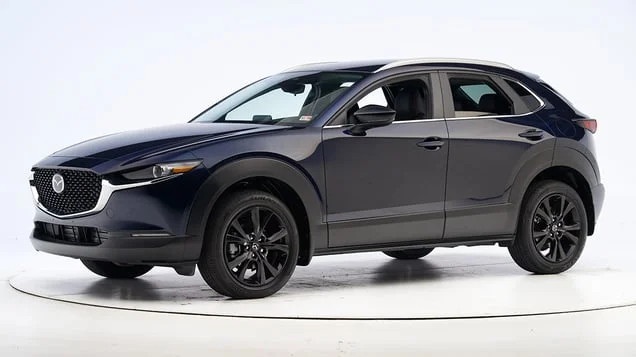
Before picking between a RAV4 and a CR-V, confirm you want a compact at all. The compact SUV class runs roughly 180 to 187 inches long. Subcompacts like the Mazda CX-30 2026, Subaru Crosstrek 2026, and Kia Niro Hybrid 2026 are shorter and give up roughly 10 to 25 cubic feet of cargo against a Toyota RAV4 Hybrid 2026 or Honda CR-V 2026. Midsize two-rows like the Honda Passport 2026 stretch past 190 inches, add more than 80 cubic feet of cargo, and bring real towing capability (5,000 pounds on the Passport versus 1,500 to 3,500 on most compacts).
CarMax frames the trade cleanly: a subcompact is enough if you commute alone in city traffic, while a compact becomes the baseline when you regularly carry four adults, haul a dog, or take multi-hour highway trips (CarMax SUV size guide). A useful test: measure the longest regular trip you take, not the extreme one. If the honest answer is stroller plus groceries plus two adults in back, a subcompact saves money and parking stress. If you are approaching 20 cubic feet of weekly cargo or tow more than 2,000 pounds, the compact is where you start.
Powertrain is the first real decision, and it narrows the field fast
Four powertrain options exist in the 2026 compact SUV segment: gas, hybrid (HEV), plug-in hybrid (PHEV), and full EV. Each has a different buyer profile and the math moves accordingly.
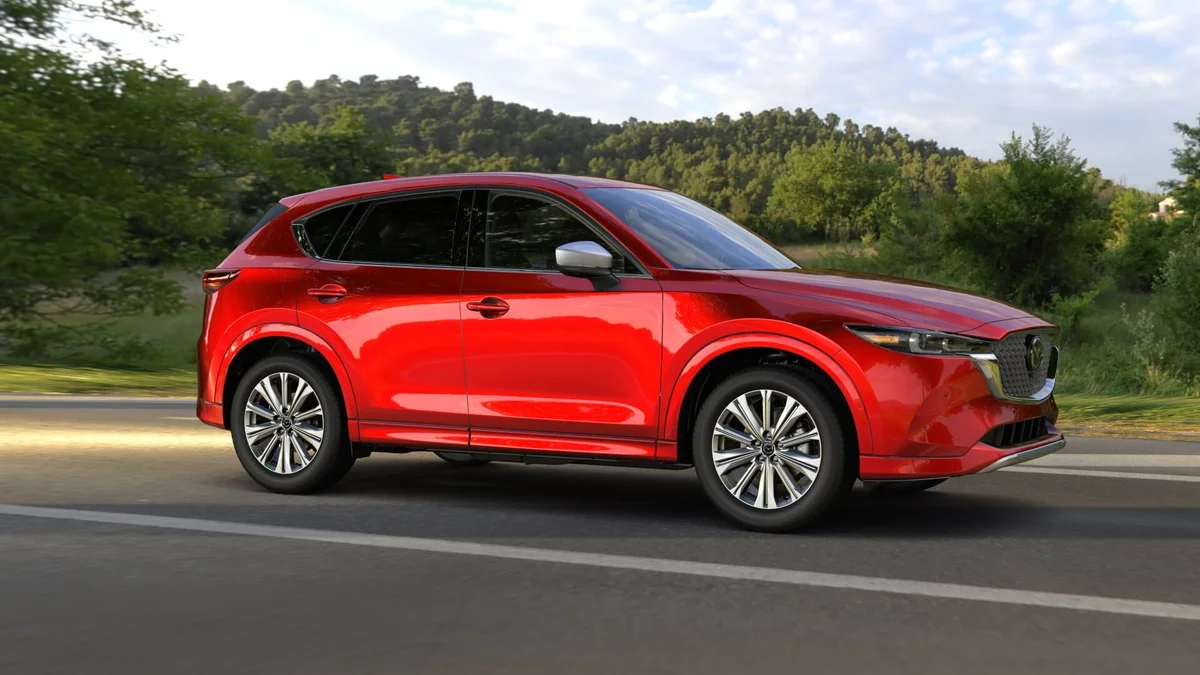
Gas is the cheapest sticker and the highest fuel cost. The Mazda CX-5 2025 at 28 mpg combined and the Hyundai Tucson 2026 at 28 mpg are canonical "I just want an SUV" picks. Hybrids are where the segment moves. The Toyota RAV4 Hybrid 2026 does 41 mpg combined, the Hyundai Tucson Hybrid 2026 38 mpg, the Lexus UX 300h 2026 43 mpg, and the Kia Niro Hybrid 2026 53 mpg per EPA. How-To Geek's run of the numbers on the 2026 CR-V Hybrid Sport FWD shows roughly $512.50 a year in fuel savings versus the gas sibling, which pays back the $2,480 hybrid premium in about 4.8 years at 15,000 miles a year; AWD stretches that to about 5.4 years, and higher trims push it past six (How-To Geek). Below 10,000 miles a year the fuel case for a hybrid may never pay back, so the premium has to justify itself on resale.
PHEVs and EVs are a different conversation because they assume home charging. The Toyota RAV4 Prime 2026 carries 42 miles of EV range before the hybrid engine takes over. Without a Level 2 charger at home, a PHEV is a heavy, expensive hybrid: you carry the battery weight without using the electric capacity. Full EVs like the Chevrolet Equinox EV 2026 (319 miles EPA), Volkswagen ID.4 2026 (291 miles), and Toyota C-HR 2026 (287 miles) only make sense if you can charge at home overnight and have a plan for road trips.
The federal §30D EV tax credit is no longer a factor for new purchases in 2026. The One Big Beautiful Bill Act, signed July 4, 2025, terminated the credit for vehicles acquired after September 30, 2025; only buyers who took delivery before that date can still claim it (Experian, iEVChina summary). That removes a $7,500 swing from the hybrid-versus-EV math that was still being quoted a year ago, and it has already shown up in used EV pricing.
| Powertrain | EPA range | Who it fits | Needs |
|---|---|---|---|
| Gas | 26 to 33 mpg | Lowest sticker, under 10k mi/year | Nothing |
| Hybrid | 37 to 53 mpg | 12k+ mi/year commuters | Nothing |
| PHEV | 40+ EV miles then hybrid | Short commute, occasional road trips | Home Level 2 ideal |
| EV | 287 to 319 EPA miles | Dedicated garage parker | Home Level 2 charger |
Do you actually need AWD, or are you paying for the wrong feature?
The reflex in colder states is to spec all-wheel drive on anything called an SUV. The testing data says that is a misread of what AWD does. AWD helps acceleration and some cornering grip on low-friction surfaces. It does not help you stop. Consumer Reports' 2015 snow testing showed an AWD Honda CR-V on all-season tires needed roughly 700 feet to stop from 60 mph on packed snow, while the same vehicle on dedicated winter tires stopped in about 300 feet; a front-wheel-drive Camry on winter tires matched it (Fox News / CR, Les Schwab). Crashes happen at the stop, not the start.
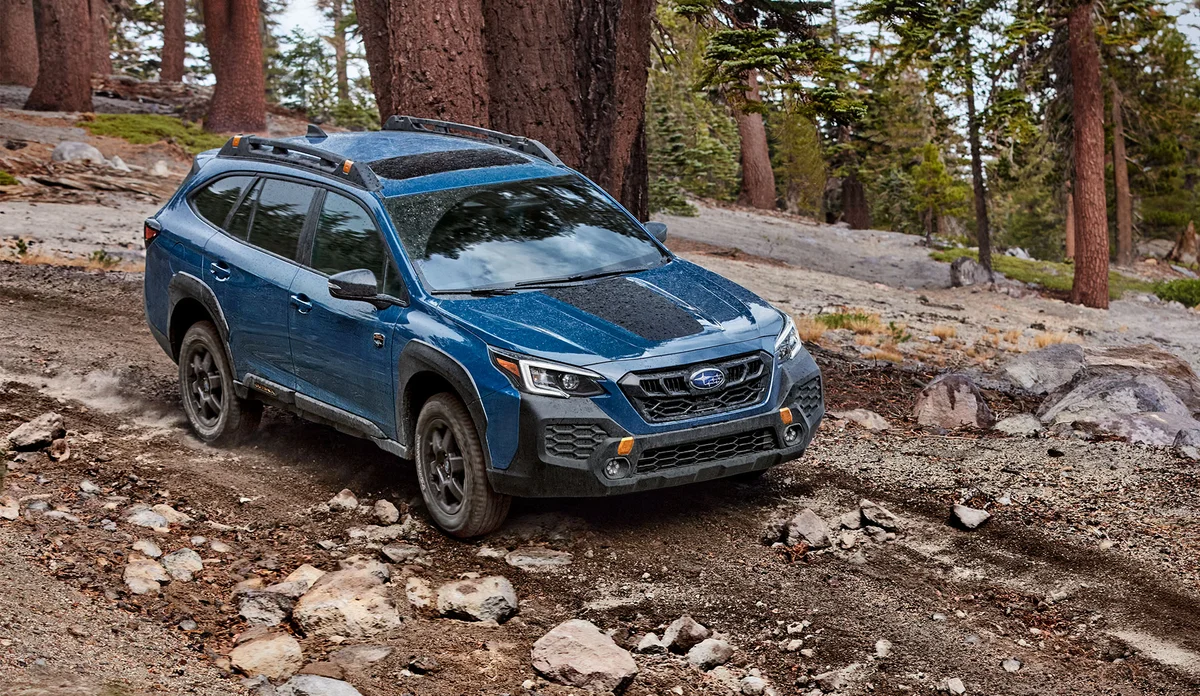
AWD still earns its keep in specific cases: unpaved driveways, steep inclines in snow country, trailering, more than roughly 10 heavy snow days a year, or any regular travel on gravel and rutted roads. The Subaru Forester 2025 and Subaru Crosstrek 2026 make a strong case here with standard symmetrical AWD and 8.7 inches of ground clearance. The Mazda CX-50 2026 adds a selectable Off-Road mode with i-ACTIV AWD. In dense suburbs on plowed roads, FWD plus a dedicated winter tire set is both cheaper and safer than AWD plus all-seasons (Edmunds).
Read the 2026 safety ratings properly, because the test is sorting the segment
The IIHS updated moderate overlap front crash test evaluates a dummy in the rear seat behind the driver. The redesigned protocol reveals seatbelt problems that did not show up before: shoulder belts riding up on rear occupants and higher head and chest forces. The result for 2026 is that several previously-safe crossovers lost their Top Safety Pick, while NHTSA ratings, which use a different protocol, remained high for the same vehicles.
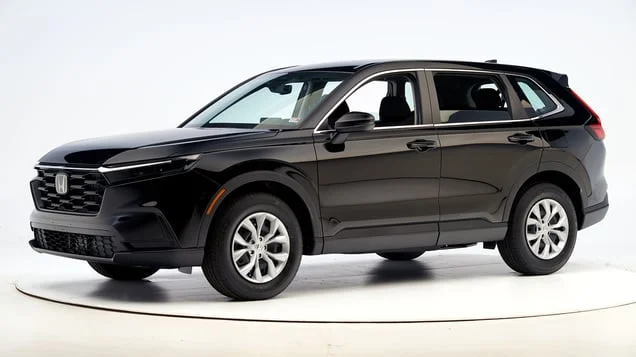
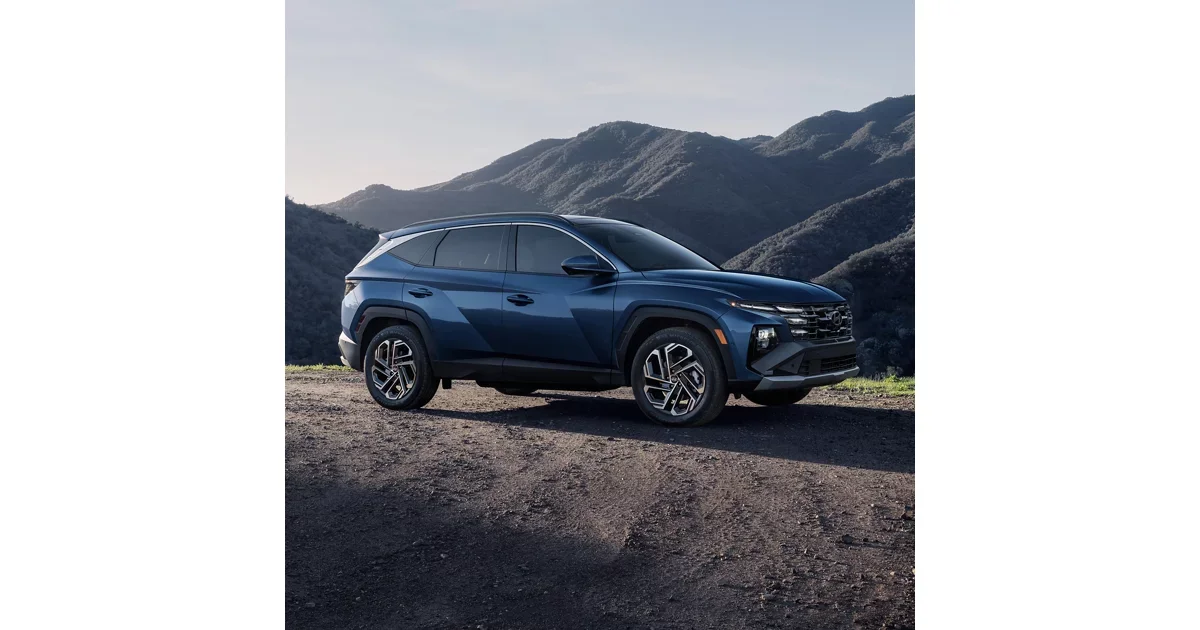
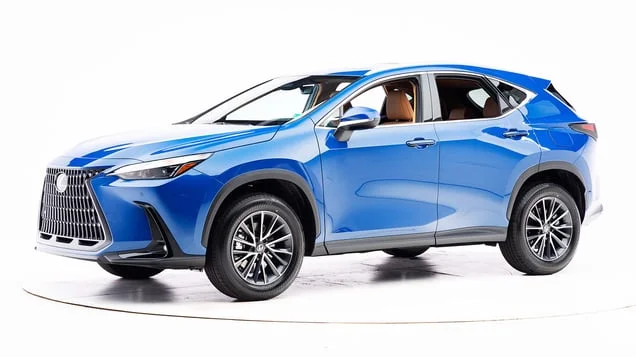
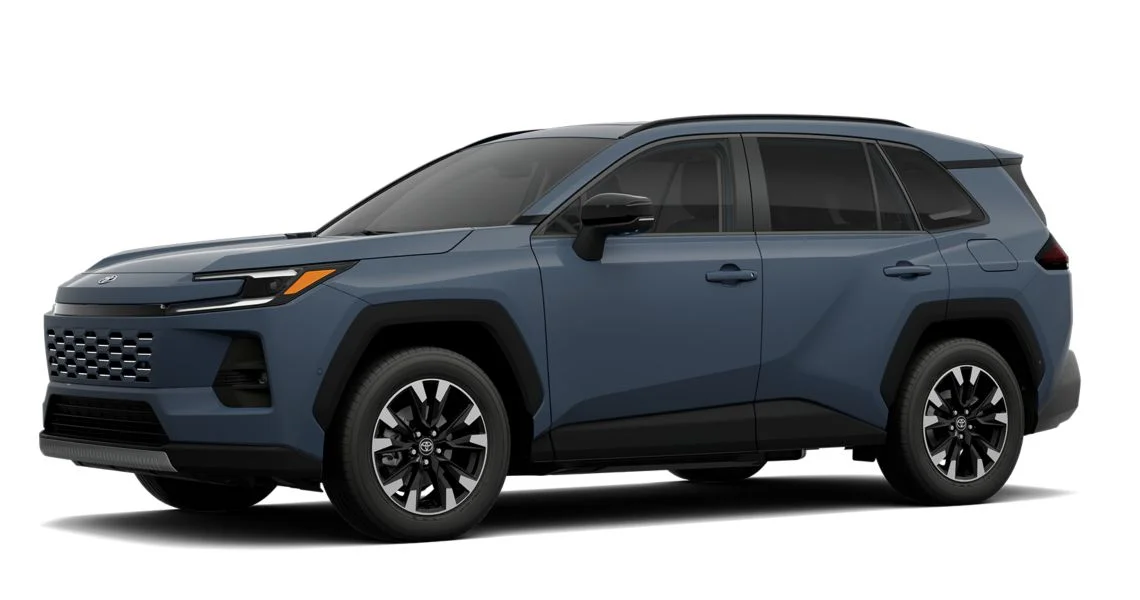
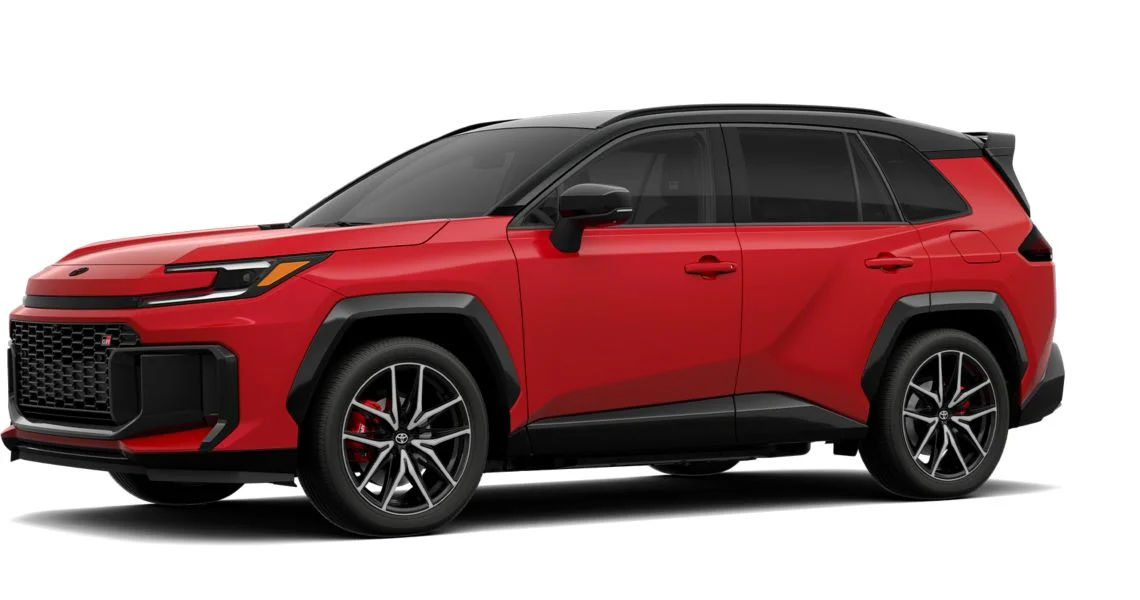
The redesigned Toyota RAV4 Hybrid 2026 now rates only Acceptable on the updated moderate overlap test; the RAV4 Prime 2026 scored Marginal, both missing any 2026 IIHS award despite 5-star NHTSA results (IIHS 2026 RAV4, Jalopnik). The Honda CR-V 2026 scored Poor on the same test, driven by seat bracket deformation and seatbelt shift (Cars.com). The Hyundai Tucson 2026, Tucson Hybrid 2026, Mazda CX-50 2026, Mazda CX-30 2026, Subaru Forester 2025, Lexus NX 350h 2026, and Honda Passport 2026 hold Top Safety Pick+ for 2026 (IIHS news, Consumer Reports).
The practical reading: a 2026 compact SUV with five-star NHTSA is not lying, but that score does not reflect rear-seat performance on the updated IIHS test. For rear-seat safety specifically, cross-reference both agencies. The gap between them is wider in 2026 than in any year since the IIHS small overlap test was introduced in 2012.
| Model | IIHS updated moderate overlap | 2026 IIHS award | NHTSA overall |
|---|---|---|---|
| Hyundai Tucson / Tucson Hybrid | Good | Top Safety Pick+ | 5-star |
| Mazda CX-50 | Good | Top Safety Pick+ | 5-star |
| Mazda CX-30 | Good | Top Safety Pick+ | 5-star |
| Subaru Forester | Good | Top Safety Pick+ | 5-star |
| Lexus NX 350h | Good | Top Safety Pick+ | 4-star front, 5-star side |
| Honda Passport | Good | Top Safety Pick+ | 5-star |
| Toyota RAV4 Hybrid | Acceptable | None | 5-star |
| Toyota RAV4 Prime | Marginal | None | 5-star |
| Honda CR-V | Poor | None | 5-star |
| Subaru Crosstrek | Marginal | None | 5-star |
The sticker price is the wrong number. Look at five-year cost.
Depreciation is typically 50 to 60 percent of what a compact SUV actually costs you over the first five years. A $45,000 crossover that retains 55 percent of value is cheaper to own than a $40,000 crossover that retains 40 percent, before you count fuel, insurance or maintenance. Kelley Blue Book pegs the 2026 Lexus NX five-year cost to own at $53,571, including $21,004 of depreciation; the Audi Q5 in the same price class comes in substantially higher (KBB Lexus NX, KBB 5-Year Cost to Own methodology). Same segment, same price class, a four- to five-figure swing driven largely by residual value and brand-specific maintenance.
Among mainstream compact SUVs the strongest three-year residuals belong to the Toyota RAV4 Hybrid 2026 and RAV4 Prime 2026 at roughly 55 to 60 percent, followed by the Tucson Hybrid 2026 at approximately 54 percent, the Mazda CX-50 2026 at 51 to 53 percent, and the Kia Sportage 2026 at around 52 percent. The Lexus UX 250h 2026 is an outlier at 65 to 70 percent retained after three years. EV residuals remain less certain: the Volkswagen ID.4 2026 is tracking at 45 to 50 percent over five years as competition intensifies and the end of the federal credit reshapes used pricing.
The hybrid premium is usually $1,500 to $3,500 over the gas sibling. At 15,000 miles a year the payback comes in roughly four to five years; at 8,000 miles a year it may never arrive, which means the hybrid only makes sense on resale value, not fuel savings (Consumer Reports via Quartz). When comparing two finalists, pull the five-year KBB cost-to-own number for both and lead with that, not the MSRP.
Features that actually matter, and features that are marketing
Once the five structural decisions are made, most feature choices are second-order. The things that move the needle on a compact SUV, in rough order of how often owners cite them two years into ownership: standard adaptive cruise with lane centering, a physical volume knob and climate controls, cargo width between the wheel wells (a factor in bike-and-stroller loading that the published cubic foot number hides), heated rear seats if you carry kids, and wireless Apple CarPlay or Android Auto that connects on the first try.
Things that matter less than the brochure implies: panoramic sunroofs, 360-degree cameras below the luxury tier (image quality varies wildly), head-up displays, and massive touchscreens that bury climate and audio inside menus. The Mazda CX-5 2025 and Mazda CX-30 2026 keep a rotary controller for exactly this reason. The Nissan Rogue 2026 ships a 12.3-inch screen on upper trims but still routes ProPilot Assist controls through physical buttons, which is the right design.
If you are considering a specific head-to-head, the RankGrids RAV4 Prime vs NX 350h vs RAV4 Hybrid comparison breaks down three of the most cross-shopped picks spec by spec, and Best Compact SUVs of 2026 ranks the segment on efficiency, safety, capability and value.
The short version
The compact SUV that fits you drops out of the five decisions, not the badge. For the lowest-stress family pick with a current Top Safety Pick+ and strong hybrid efficiency, the Hyundai Tucson Hybrid at roughly $32,200 is the clean answer. For 15,000-mile-a-year commuters who want the best resale in the segment, the RAV4 Hybrid, accepting its Acceptable IIHS result. For home-charger owners with a short commute, the RAV4 Prime or the Equinox EV at 319 EPA miles. For luxury residual value without BMW money, the Lexus NX 350h. For trail clearance with daily usability, the Subaru Forester. Make the five decisions in order, then test drive. Skip that order and you will end up paying for the wrong feature.
See Best Compact SUVs of 2026Questions people ask
How do I choose a compact SUV?+
Work through five decisions in order before you test drive: whether a compact is the right size (versus subcompact or midsize), which powertrain fits your driving (gas, hybrid, PHEV, EV), whether you need AWD or just winter tires, how to read 2026 IIHS versus NHTSA ratings (the updated moderate overlap test has lowered several previously-safe models), and what the five-year cost to own looks like after depreciation. Shortlist two or three vehicles, then compare on cost-to-own and safety, not MSRP and brand.
What should I look for when buying an SUV?+
Current IIHS rating on the updated moderate overlap test, five-year cost to own from Kelley Blue Book (not sticker price), EPA fuel economy for your powertrain type, cargo width at the floor between the wheel wells (not just the cubic foot figure), standard driver assist features that include adaptive cruise and lane centering, and warranty length. Hyundai and Kia's 10-year/100,000-mile powertrain warranty is a real differentiator against Toyota and Honda's 5-year/60,000-mile coverage.
What is the best compact SUV for me?+
It depends on which of the five decisions is binding. For families prioritizing safety and value under $35,000, the Hyundai Tucson Hybrid is a strong pick with a 2026 IIHS Top Safety Pick+ and 38 mpg combined. For maximum resale value and long-term ownership cost, the Toyota RAV4 Hybrid. For luxury without an Audi or BMW five-year cost, the Lexus NX 350h. For off-road clearance with daily usability, the Subaru Forester. For home-charger owners with a short commute, the Chevrolet Equinox EV at 319 EPA miles.
How do I decide between compact SUVs?+
Narrow to two or three finalists based on powertrain and drivetrain, then compare on IIHS updated moderate overlap rating, Kelley Blue Book five-year cost to own, and real cargo width at the load floor. The five-year cost number is the one most buyers skip and it can shift finalists by thousands of dollars in the compact segment. Test drive after narrowing, not before.
What features actually matter in a compact SUV?+
Standard adaptive cruise with lane centering, a physical volume knob and climate controls, heated seats if you drive in cold weather, cargo width between the wheel wells, wireless Apple CarPlay or Android Auto, and current IIHS crash performance on the updated moderate overlap test. Panoramic sunroofs, head-up displays, and oversized touchscreens that bury common functions matter less than the marketing suggests.
Is a hybrid compact SUV worth the extra cost?+
At 12,000 to 15,000 miles a year, usually yes: the $1,500 to $3,500 hybrid premium pays back in roughly three to five years through fuel savings. How-To Geek's run of the numbers on the 2026 CR-V Hybrid Sport FWD shows about $512.50 a year in fuel savings and a 4.8-year payback. Below 10,000 miles a year the payback may stretch past typical ownership; even then, hybrids like the RAV4 Hybrid and Tucson Hybrid hold resale value better than their gas siblings, which can justify the premium independently.
Do I actually need all-wheel drive in a compact SUV?+
Only in specific cases: unpaved driveways, steep inclines in snow country, regular trailering, more than roughly 10 heavy snow days a year, or gravel and rutted roads. For most suburban drivers, a front-wheel-drive crossover on dedicated winter tires out-brakes an AWD crossover on all-seasons by hundreds of feet from highway speed in Consumer Reports' testing. AWD helps acceleration, not braking.
Which compact SUV has the best safety rating for 2026?+
The Hyundai Tucson, Tucson Hybrid, Mazda CX-50, Mazda CX-30, Subaru Forester, Lexus NX 350h, and Honda Passport all hold IIHS Top Safety Pick+ for 2026 after the updated moderate overlap test. The 2026 Toyota RAV4 Hybrid, RAV4 Prime, Honda CR-V, and Subaru Crosstrek did not earn a 2026 IIHS award despite 5-star NHTSA ratings, because the updated test revealed rear-seat belt performance issues.
Does the federal EV tax credit still apply to a 2026 EV purchase?+
No. The One Big Beautiful Bill Act, signed July 4, 2025, ended the federal §30D credit for vehicles acquired after September 30, 2025. A new EV bought in 2026 does not qualify for the $7,500 credit. That removes a significant swing from the EV-versus-hybrid math that was still being quoted a year ago; confirm current status with a tax advisor if you took delivery close to the cutoff.
Sources
What this guide is based on. We research from published specifications, independent reviews and owner reports; we did not test these products ourselves.
- 1.Two additional models earn awards in latest IIHS ratings, IIHS
- 2.Safest New Cars of 2026, According to the IIHS, Consumer Reports
- 3.Why No Toyota SUV Earned an IIHS Top Safety Pick for 2026, Cars.com
- 4.2026 Toyota RAV4 4-door SUV ratings, IIHS
- 5.2026 Audi Q3 And Toyota RAV4 PHEV Underperform In IIHS Updated Moderate Overlap Crash Test, Jalopnik
- 6.How Safe Is the 2026 Honda CR-V?, Cars.com
- 7.Tucson 1, RAV4 0: Hyundai Wins The Crash Test Toyota Needed, CarBuzz
- 8.AWD vs. FWD: Is All-Wheel Drive Worth It?, Edmunds
- 9.Do You Really Need AWD in the Snow?, Fox News / Consumer Reports
- 10.Do I Need Snow Tires If I Have AWD?, Les Schwab
- 11.2026 Lexus NX Cost to Own, Kelley Blue Book
- 12.5-Year Cost to Own Awards Methodology, Kelley Blue Book
- 13.Toyota RAV4 Hybrid Resale Value and Depreciation, iSeeCars
- 14.How long does the 2026 CR-V Hybrid take to save you money, How-To Geek
- 15.The hybrids that save you the most money on gas in 2026, Quartz / Consumer Reports
- 16.Best Hybrid SUVs To Buy In 2026, InsideEVs
- 17.SUV Size Comparison Guide, CarMax
- 18.US EV Federal Tax Credit 2026 Final IRS Rules, iEVChina
- 19.Can You Still Get a Tax Credit for an Electric Car?, Experian
- 20.2026 Subaru Forester AWD Features, Subaru
Products mentioned


More on compact suvs
Explainer
Does a Hybrid Compact SUV Actually Save You Money?
AAA's 2026 study found hybrid compact SUVs cost less per mile than gas or EV. See the real break-even math on the premium, model by model, at the mileage you actually drive.
Explainer
Compact SUV Cargo Space: Why the Number Manufacturers Advertise Is Misleading
Automakers lead with maximum cargo volume, measured with the rear seats folded flat. The behind-rear-seats number is the one that matters for everyday family use, and it narrows the gap between compact SUVs considerably.
Explainer
Do You Actually Need AWD in a Compact SUV?
Most compact SUV AWD systems run in front-wheel drive most of the time, cost about $1,300 to $2,000 extra, and lose to winter tires in independent braking tests. Here is when AWD actually earns its price.
Explainer
IIHS vs NHTSA Safety Ratings: Why the Same Car Can Score Differently on Both
IIHS and NHTSA run different crash tests on different scales. Here is what each one measures, why a 5-star SUV can earn IIHS Marginal, and how to read both when shopping a compact SUV.
Explainer
Hybrid or PHEV: Which Powertrain Actually Fits Your Driving Life?
A hybrid works no matter where you park. A plug-in hybrid only pays off if you can charge at home. Here is how to tell which one fits your driving.