Explainer
Compact SUV Cargo Space: Why the Number Manufacturers Advertise Is Misleading
Automakers lead with maximum cargo volume, measured with the rear seats folded flat. The behind-rear-seats number is the one that matters for everyday family use, and it narrows the gap between compact SUVs considerably.
Updated November 11, 2026 · Based on 10 sources · How we research
The number on the window sticker, 80 cubic feet, 76.5, 70.4, is measured with every rear seat folded flat against the front seatbacks. If you drive with people in the back, which is most of what a family compact SUV does, that is not the number that applies to you. The number that applies is cargo volume behind the rear seats, and it is often less than half the headline figure. This guide is for anyone looking at a compact SUV spec sheet and trying to translate the big number into something about real life.
The advertised number is measured with the rear seats folded
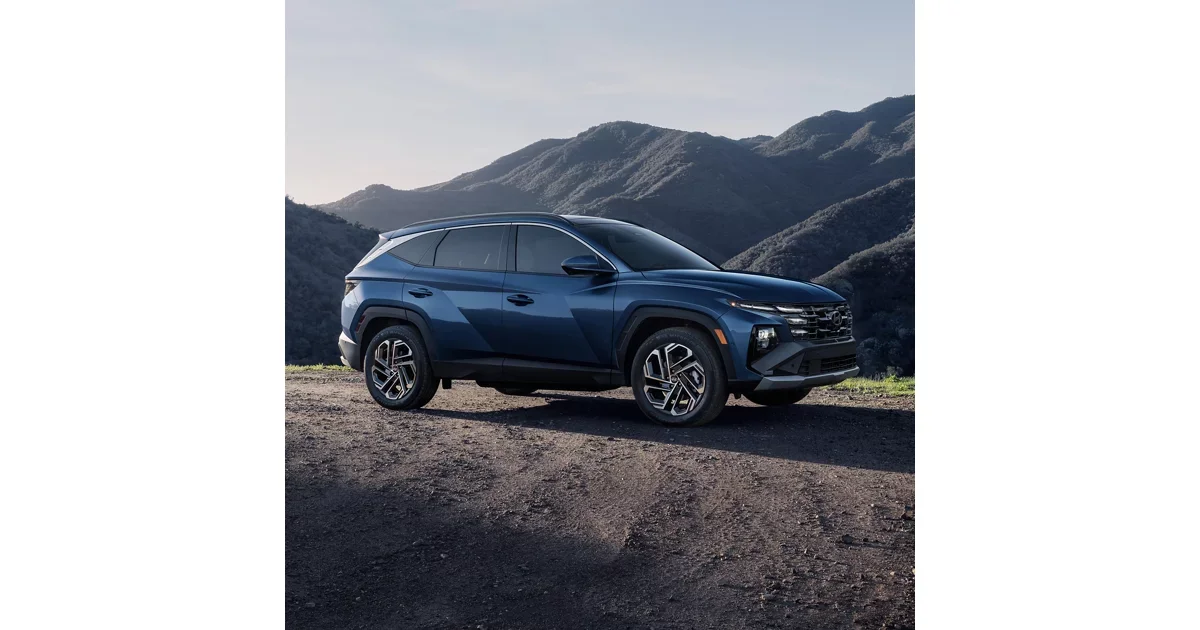
A compact SUV publishes two cargo figures. One is the volume behind the second-row seatbacks with the seats upright, the configuration you drive in most of the time. The other is maximum volume with the second row folded flat, turning the SUV into a two-seat hauler. The gap between them is substantial. For the 2026 Hyundai Tucson Hybrid, 38 cubic feet behind the seats grows to 80 cubic feet folded, roughly double. The 2026 Honda CR-V goes from 39.3 to 76.5 (US News). The 2026 Toyota RAV4 Hybrid, from 37.8 to 70.4. In each case the bigger number is the one in brochures, on the window sticker and in press releases.
Brands do not actually hide the smaller number. They quote it right next to the larger one on their spec pages. What is misleading is which number marketing leads with, which number sticks in web headlines, and which number a shopper remembers walking into a dealership. 80 cubic feet sounds like a distinguishing feature. Behind the seats, where most people load things while there are people in the back, the top compact SUVs cluster in a tight band, roughly 38 to 40 cubic feet. Whichever model you pick from the leaders, it likely has 90 percent of the behind-seats cargo of the class winner.
The SAE J1100 standard is not as standard as it sounds
Cargo volume is defined by SAE J1100, a measurement document first published in 1973 and revised many times since (SAE). For sedans, trunk volume is calculated by packing standardized blocks representing typical luggage. For SUVs and hatchbacks, volume is geometric, length times width times height, and for a vehicle classified as a multi-purpose vehicle the height runs all the way to the ceiling, not just to the top of the seatback. That ceiling allowance is a large part of why SUV cargo totals read as high as they do.
The bigger problem is that J1100 has been revised eight times between 1984 and 2009, and automakers have not updated in lockstep. Cars.com has reported that Toyota uses the 1975 version, Hyundai the 2002 version, Honda the 2005 version, and Chrysler, GM and Ford the 2009 version (Cars.com). There are no federal advertising rules that require a specific version. In the words of the engineer Cars.com interviewed, you can measure it any way you want and use it in your advertising.
Cars.com has built its own measurement method as a response. Rather than going to the ceiling of an SUV, Cars.com treats the cargo area as if a virtual trunk lid sits at the top of the folded-down rear seatback, since anything stacked higher blocks the driver's rearward view. Under that definition the 2026 Toyota RAV4, which Toyota publishes at 37.8 cubic feet behind the rear seats, measures 19.4 cubic feet (Cars.com). Neither side is wrong. They are two different questions: how much air sits behind the rear seats to the roof, versus how much cargo fits below window height.
80 cubic feet is about the size of a small closet
A standard airline carry-on, 22 inches by 14 by 9, is about 1.6 cubic feet (Online Cubic Feet Calculator). A folded full-size stroller is roughly 6 cubic feet. A standard golf bag with clubs is close to 3. A full 30-gallon trash bag of leaves is around 4. Thinking in those units makes the manufacturer numbers more concrete.
Behind the rear seats of a 2026 Honda CR-V, with its 39.3 cubic feet, you have roughly the volume of a stroller, a golf bag and about 18 carry-on suitcases stacked densely. In practice some of that volume sits near the headliner above window height, where a stroller does not fit on edge. The usable floor-level volume looks more like a stroller plus four to six carry-ons plus a few grocery bags, which lines up with what Cars.com reported when it physically loaded eight compact SUVs with standardized blocks (Cars.com).
Fold the back seats and the Tucson Hybrid's 80 cubic feet opens into something closer to the inside of a small closet, a box roughly 4.3 feet on a side. That is enough for a mattress in a box, a bicycle with the front wheel off, a chest of drawers from an estate sale, or a Costco run for a family of five. But every cubic foot above about 40 is available only with no second-row passengers aboard.
Which compact SUV has the most cargo space, by both numbers
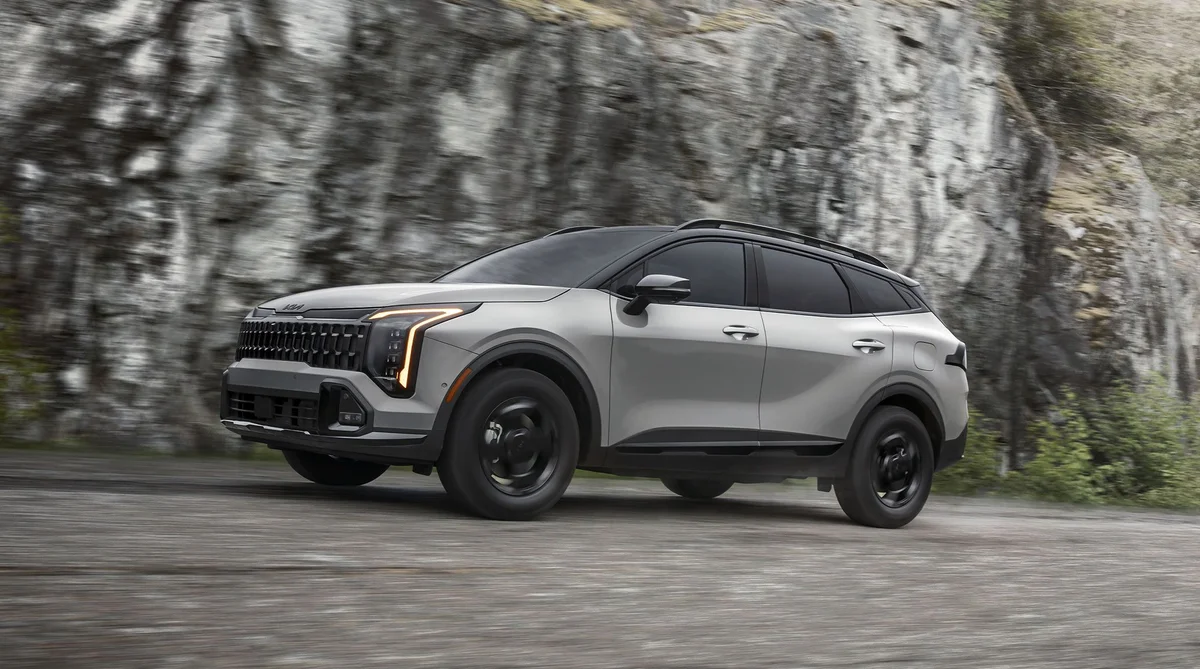
The answer depends on which number is being asked about. In the RankGrids best compact SUVs of 2026 ranking, the largest maximum cargo figure belongs to the Hyundai Tucson Hybrid at 80 cubic feet with the rear seats folded. The Honda CR-V at 76.5 and the gas Hyundai Tucson at 75 follow closely. The Toyota RAV4 Hybrid and the Kia Sportage round out the group above 70.
With the rear seats upright, the useful everyday figure, the order shifts. The Kia Sportage leads at 39.6 cubic feet behind the rear seats. The Honda CR-V follows at 39.3. The Hyundai Tucson sits at 39, with Hyundai's own sheet rounding to 38.7 (US News). The 2026 RAV4 Hybrid, at 37.8, is in the same conversation. The gap from first to fourth is less than two cubic feet, or roughly the volume of one carry-on bag. Marketing distinctions dissolve at that scale.
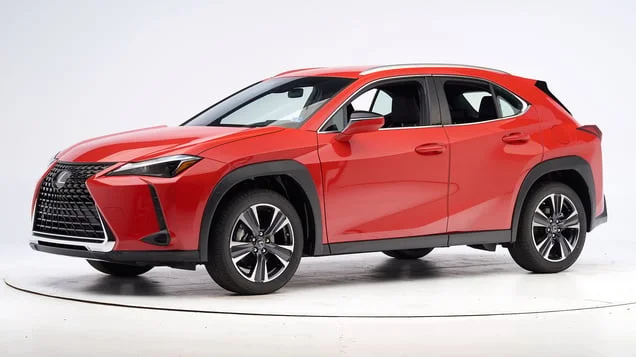
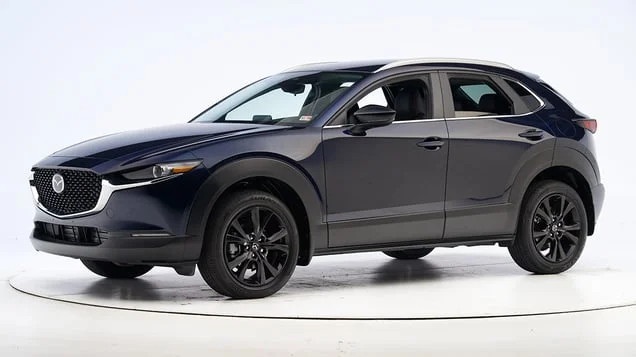
At the other end of the RankGrids list, the Lexus UX 300h and Lexus UX 250h publish 17.1 cubic feet behind the rear seats, less than half the leaders. The Subaru Crosstrek sits at 19.9 and the Mazda CX-30 at 20.2. Those are vehicles shaped like a compact SUV but closer in cargo to a tall hatchback. Total volume with the seats folded tells a less dramatic story: the UX 300h grows to 43.5 cubic feet, more than double the behind-seats figure, but still barely half what the Tucson Hybrid offers.
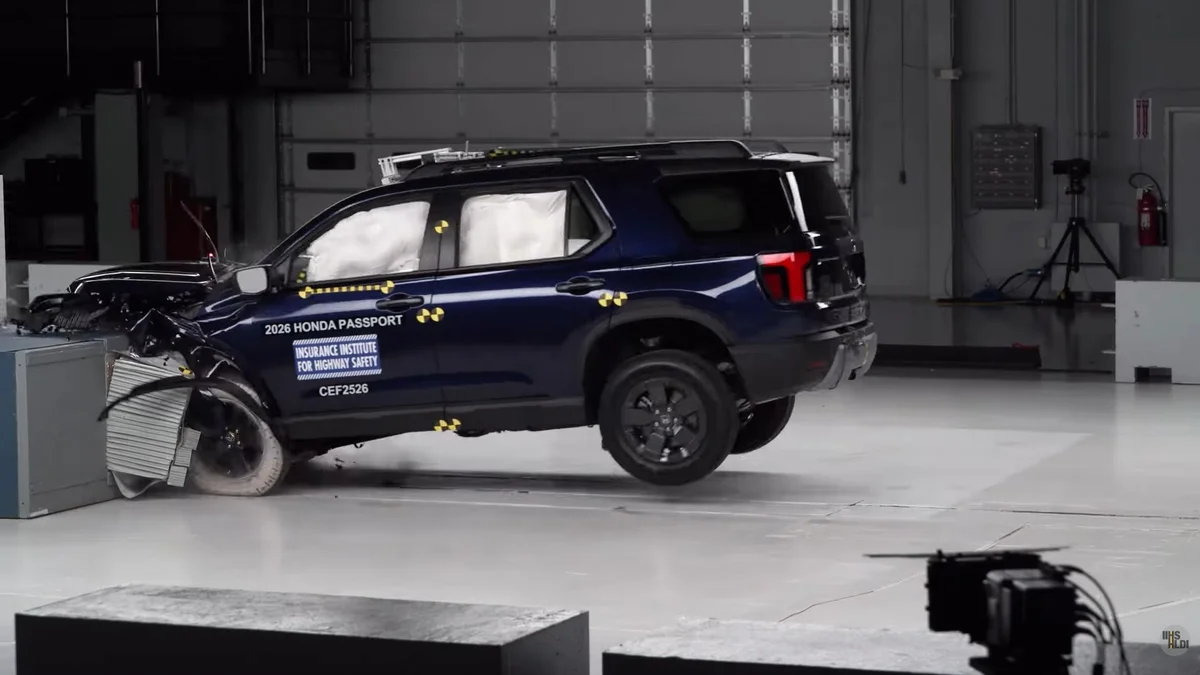
Not every model in the compact class belongs there. The Honda Passport, at 44 cubic feet behind the rear seats and 83.8 maximum, is really a midsize two-row SUV on a larger platform, closer to the Toyota 4Runner than to the CR-V. If pure cargo behind five passengers is the single priority and the budget allows it, a midsize two-row is usually a better buy than a compact. For the compact class proper, the band is 38 to 40 cubic feet at the top and 17 to 22 at the bottom.
| Model | Behind rear seats (cu ft) | Rear seats folded (cu ft) | Ratio |
|---|---|---|---|
| Hyundai Tucson Hybrid 2026 | 38.0 | 80.0 | 2.11x |
| Honda CR-V 2026 | 39.3 | 76.5 | 1.95x |
| Hyundai Tucson 2026 | 39.0 | 75.0 | 1.92x |
| Kia Sportage 2026 | 39.6 | 74.1 | 1.87x |
| Nissan Rogue 2026 | 31.6 | 74.1 | 2.34x |
| Toyota RAV4 Hybrid 2026 | 37.8 | 70.4 | 1.86x |
| Toyota RAV4 Prime PHEV 2026 | 33.5 | 70.4 | 2.10x |
| Subaru Forester 2025 | 27.5 | 69.1 | 2.51x |
| Mazda CX-50 2026 | 31.4 | 56.3 | 1.79x |
| Subaru Crosstrek 2026 | 19.9 | 54.7 | 2.75x |
| Mazda CX-30 2026 | 20.2 | 45.2 | 2.24x |
| Lexus UX 300h 2026 | 17.1 | 43.5 | 2.54x |
The seats-folded number matters, but less often than you think
Most of the time a compact SUV is driven with people in the rear seats. School runs, errands, airport trips, weekend outings. In those conditions the seats-folded figure is irrelevant. It matters only on occasions when one driver temporarily becomes a courier: picking up a chest of drawers from an estate sale, moving a child to college, dropping a mountain bike at the trailhead, loading plywood from a hardware store, driving home from a nursery with twelve pots of shrubs.
The honest question is how often those occasions happen each year, and whether they justify paying a premium for an extra 10 cubic feet of folded volume. For most buyers the answer is a few times a year, mostly rentable. A rental pickup truck available by the day carries more cargo than any compact SUV, folded or not, so a buyer who moves furniture twice a year should not buy a different SUV to avoid renting a truck.
Where the folded number does earn its keep: campers who sleep in their vehicle, dog owners with multiple large dogs, parents whose kids travel with hockey gear or marching band equipment. In those cases the real test is not maximum cubic feet, but how long and how flat the load floor is with the seats down. Length and flatness are not captured by any single volume number, and the published figures tell you nothing about them.
Three rules make cargo comparisons honest
Rule one: compare the behind-rear-seats figure first, not the folded maximum. That is the cargo space you actually carry the family's stuff in most days of the year.
Rule two: watch hybrid and plug-in hybrid versions losing cargo. The Toyota RAV4 Prime PHEV publishes 33.5 cubic feet behind the rear seats, 4.3 cubic feet less than the hybrid, because the battery sits under the cargo floor. Hyundai's Tucson PHEV loses nearly seven cubic feet of total cargo for the same reason (Jalopnik). Honda CR-V Hybrid Sport trims drop to about 36.3 cubic feet behind the seats, down from the gas model's 39.3 (US News). If a fuel-economy-driven hybrid is the top priority, ask which trim of which drivetrain the published number refers to.
Rule three: load the car yourself at the dealership. Bring your stroller, two carry-ons and a cart of boxes to the lot and see what fits. Cars.com's physical loading test of eight compact SUVs reported that the biggest cargo area had 54 percent more usable room than the smallest, and that the on-paper and on-the-floor rankings did not perfectly match (Cars.com).
The short version
The compact SUV with the most useful cargo space is whichever model fits your stroller, groceries and dogs with the back seats up. By published numbers the Kia Sportage, Honda CR-V, Hyundai Tucson and Toyota RAV4 Hybrid all cluster within two cubic feet of each other behind the rear seats, so the choice between them is really about hybrid availability, safety scores, warranty and resale, which are covered in the RankGrids compact SUV ranking. If you want maximum folded volume, the Tucson Hybrid and the CR-V lead. If you need meaningfully more room than any compact offers, step up to a midsize two-row like the Honda Passport. Either way, discount the sticker's biggest number as a tiebreaker. It describes a configuration most compact SUV owners rarely use.
See Best Compact SUVs of 2026Questions people ask
Which compact SUV has the most cargo space?+
It depends on the measurement. With the rear seats folded, the 2026 Hyundai Tucson Hybrid leads at 80 cubic feet, followed by the Honda CR-V at 76.5 and the gas Hyundai Tucson at 75. With the rear seats upright, which is how most owners drive, the Kia Sportage edges the group at 39.6 cubic feet, trailed by the Honda CR-V at 39.3, the Hyundai Tucson at 39, and the Toyota RAV4 Hybrid at 37.8. The top four are within two cubic feet of each other behind the seats.
Why does the cargo in my SUV feel smaller than advertised?+
The advertised number is measured with the rear seats folded flat and the volume calculated all the way to the ceiling. In normal use the rear seats are up and most people do not stack cargo higher than the seatback, since anything above that blocks the rearward view. Real daily cargo space is roughly 40 to 55 percent of the folded figure.
What is the difference between total cargo space and cargo behind the rear seats?+
Total cargo space, often called maximum cargo or with rear seats folded, measures the volume behind the front seats when the second row is folded flat. Cargo behind the rear seats measures only what sits behind the upright second-row seatbacks. The two numbers can differ by nearly double. The second one is what you can carry when passengers are in the back.
What does 80 cubic feet of cargo mean in an SUV?+
80 cubic feet is roughly a cube 4.3 feet on each side, about the inside of a small closet. It is enough for a mattress in a box, a disassembled bicycle, or a Costco run for a family of five. But reaching that figure requires folding the rear seats flat, so it is available only when nobody is sitting in the back row.
How much can I actually fit in a compact SUV?+
Behind the rear seats of a top-selling compact SUV, you can fit roughly a folded stroller, a golf bag and four to six carry-on suitcases, or a week of groceries for a family of four. Numerically that is about 38 to 40 cubic feet published, with roughly 20 to 25 of that below window height where loading is safe for rearward visibility.
Does a hybrid version lose cargo space?+
Often yes, because the hybrid battery occupies space under the cargo floor. The Toyota RAV4 Prime PHEV loses 4.3 cubic feet behind the rear seats compared to the hybrid. The Hyundai Tucson PHEV loses close to seven cubic feet of total cargo versus the gas model. The Honda CR-V Hybrid Sport drops to about 36.3 cubic feet behind the seats, down from 39.3 in the gas version.
Is SAE J1100 the same across all brands?+
No. SAE J1100 has been revised eight times between 1984 and 2009, and automakers choose different versions. According to Cars.com, Toyota uses the 1975 version, Hyundai the 2002 version, Honda the 2005 version, and the Detroit Three use the 2009 version. There are no federal advertising rules that require a specific version, so cross-brand comparisons at the first decimal place are not reliable.
Sources
What this guide is based on. We research from published specifications, independent reviews and owner reports; we did not test these products ourselves.
- 1.Why Cargo Specs Can Stretch the Truth, Cars.com
- 2.Compact SUV Cargo Space Compared: Which Is Biggest, Cars.com
- 3.Cargo Specs: Be Careful What You Compare, Cars.com
- 4.Interpretation of SAE J1100 Cargo Volume Indices, SAE International
- 5.2026 Honda CR-V Interior, Cargo Space and Seating, U.S. News
- 6.2026 Hyundai Tucson Hybrid Interior, Cargo Space and Seating, U.S. News
- 7.Compact SUVs With the Most Cargo Space in 2026, U.S. News
- 8.Why the Hyundai Tucson Loses Almost 7 Cubic Feet of Cargo Space in PHEV Form, Jalopnik
- 9.How Many Cubic Feet Is a Suitcase? US Size Guide, Online Cubic Feet Calculator
- 10.How Much Cargo Space Does the 2026 Toyota RAV4 Have?, Cars.com
Products mentioned

More on compact suvs
Explainer
Does a Hybrid Compact SUV Actually Save You Money?
AAA's 2026 study found hybrid compact SUVs cost less per mile than gas or EV. See the real break-even math on the premium, model by model, at the mileage you actually drive.
Explainer
Do You Actually Need AWD in a Compact SUV?
Most compact SUV AWD systems run in front-wheel drive most of the time, cost about $1,300 to $2,000 extra, and lose to winter tires in independent braking tests. Here is when AWD actually earns its price.
Explainer
IIHS vs NHTSA Safety Ratings: Why the Same Car Can Score Differently on Both
IIHS and NHTSA run different crash tests on different scales. Here is what each one measures, why a 5-star SUV can earn IIHS Marginal, and how to read both when shopping a compact SUV.
Explainer
Hybrid or PHEV: Which Powertrain Actually Fits Your Driving Life?
A hybrid works no matter where you park. A plug-in hybrid only pays off if you can charge at home. Here is how to tell which one fits your driving.
Buying guide
How to Choose a Compact SUV: The Five Decisions That Actually Matter
The five structural decisions that separate the right compact SUV from the wrong one: powertrain, drivetrain, safety test literacy, five-year cost, and whether compact is even your size.