Explainer
What the Towing Capacity Number on the Window Sticker Does Not Tell You
The max tow number on a pickup's window sticker is a laboratory figure tied to one trim, one driver, and an empty bed. Here is how payload, tongue weight, and GCWR actually set what your truck can pull.
Updated November 11, 2026 · Based on 13 sources · How we research
Tow numbers on window stickers are useful for comparing trucks and almost nothing else. They describe one theoretical configuration under one laboratory test, built around a 150-lb driver, a 150-lb passenger, an empty bed, and the lightest trim the manufacturer chose to certify. Once you put a third person in the cab, a toolbox in the bed, and a loaded trailer behind the hitch, the number that actually caps what you can tow is your truck's payload rating, printed on a yellow sticker inside the driver's door jamb. This guide is for anyone shopping a pickup to pull a boat, a camper, or a work trailer and wanting to know what that showroom math really means.
The window-sticker number is a laboratory result, not a promise
Since 2013, every major manufacturer selling light-duty pickups in the U.S. has rated towing under SAE J2807, a standard that defines exactly how the number is produced. For a light-duty full-size pickup, the Tow Vehicle Total Weight includes 150 pounds for the driver, 150 pounds for a front-seat passenger, and the tow equipment needed to hit the published figure, per Fifth Wheel Street's breakdown of the J2807 procedures. The truck then has to prove it on the Davis Dam grade on Arizona State Route 68, a climb of 3,500 feet over 11 miles starting at 100 degrees Fahrenheit with the A/C on full, holding at least 40 mph for single-rear-wheel trucks, as summarized in the SAE J2807 Wikipedia entry and documented by The Fast Lane Truck.
That is a real test, and it keeps the industry honest when ratings are compared across brands. What it does not do is describe your truck. The published max tow figure applies only to the single best-case configuration the manufacturer chose to certify. The 2026 F-150 headline 13,500-lb rating, for example, requires a SuperCrew 4x4 or 4x2 with the 6.5-foot bed on the 157-inch wheelbase, the 3.5L EcoBoost V6, the Tow/Haul Package, and the Max Tow Axle, per Cecil Honda's trim-by-trim summary of Ford's 2026 F-150 towing guide. Our top-ranked Ford F-150 Platinum SuperCrew with the PowerBoost hybrid is rated at 13,100. Our rank-three F-150 Raptor, built for high-speed desert running, is rated at 8,200. Same model, same showroom, three different ceilings.
The number that actually stops you is on the door jamb
Open the driver's door and look at the B-pillar. Below the tire pressure sticker, there is a yellow or white label titled Tire and Loading Information. It lists a single line that matters for towing: the combined weight of occupants and cargo should never exceed X lbs. That X is your payload. It is specific to your exact VIN, with the engine, cab, bed, and options already counted, as RV Towing Calc's door-jamb label guide explains. It is the only weight number in the cab that is yours alone.
Payload is what the truck can carry: everything inside and on top of it. Passengers, fuel beyond the half tank the manufacturer counted into curb weight, a bed cover, a toolbox, dogs, groceries, and, critically, the tongue or pin weight of a trailer. Tongue weight does not sit on the trailer. It presses down on the hitch, and the hitch is part of the truck. Payload is where it goes, as Checkmytow's payload-versus-towing-capacity guide spells out.
Payload usually runs out before tow capacity does, and the gap is widest on luxury trims. A base 2026 F-150 XL can carry up to 2,440 lb per the Cecil Honda trim breakdown. The Platinum we rank first, with insulation, electronics, and chrome that add curb weight, drops to 1,964 lb in the build we scored, nearly 500 fewer pounds on the same frame and hitch. The pattern holds across the lineup: the fancier the seats, the lower the payload.
Tongue weight is what connects the two numbers
Tongue weight is the downward force the coupler puts on the hitch when a trailer is attached. Weigh Safe's tongue-weight guide puts a conventional bumper-pull travel trailer or utility trailer between 10 and 15 percent of loaded trailer weight, and a fifth-wheel or gooseneck, where the coupler sits over the rear axle, at 15 to 25 percent.
The math only goes one way. A 7,000-lb bumper-pull at the middle of the recommended range (12 percent) puts 840 lb of tongue weight on the truck. A 12,000-lb fifth-wheel at 20 percent puts 2,400 lb on the hitch. Both of those numbers come straight out of payload. If your door-jamb sticker says 1,600 lb and your actual passengers and gear weigh 500 lb, you have 1,100 lb left for tongue weight. The fifth-wheel scenario is already over, before the trailer is loaded.
Most half-ton manufacturers require a weight-distribution hitch (WDH) once a trailer exceeds about 5,000 lb (7,000 lb for GM half-tons) or tongue weight passes about 500 lb, per Cars.com's half-ton WDH explainer and Equalizer Hitch. A WDH redistributes some of the tongue load back onto the trailer and truck front axles so steering stays planted, but the hardware itself is also payload: typical setups weigh over 100 lb. Any serious trailer on a half-ton carries that hidden tax.
GCWR is where the real ceiling lives
There are four weight numbers worth knowing, and they are easy to confuse. Curb weight is the empty truck with a half tank of fuel. GVWR (Gross Vehicle Weight Rating) is the maximum the truck itself can weigh, loaded. GCWR (Gross Combined Weight Rating) is the maximum the truck plus trailer can weigh together. Tow rating is GCWR minus the truck's J2807 curb weight.
Towing capacity is derived from GCWR, as Pacbrake's tow-ratings primer and USA Tow Finder both note. That is why it drops when the truck gets heavier: a higher-trim curb weight leaves less of the combined ceiling for trailer. You can be under your tow rating and over your GVWR at the same time, and in that case the truck is the one that is overloaded, not the trailer.
Chassis, brakes, and tires do not care which rating you broke. Either overweight condition puts the truck outside what the engineers certified, which is both a safety issue and, in a crash, a liability one. Insurers and state DOT officers look at posted weight ratings when apportioning blame on commercial tickets and at-fault claims.
| Term | What it covers | Where to find it |
|---|---|---|
| Curb weight | Empty truck, half tank of fuel, no passengers | Spec sheet or manufacturer towing guide |
| Payload | Everything you add to the truck, including tongue weight | Yellow sticker on driver's door jamb |
| GVWR | Maximum weight of the truck itself when loaded | Yellow sticker on driver's door jamb |
| GCWR | Maximum combined weight of truck plus trailer | Manufacturer towing guide |
| Tow rating | GCWR minus J2807 curb weight for that configuration | Window sticker, towing guide |
Running the real math on one of our top-ranked trucks
Start with our top pick, the 2026 F-150 Platinum SuperCrew. Published tow rating: 13,100 lb. Published payload: 1,964 lb.
Load it for a realistic family road trip. Driver at 200 lb, spouse at 160, two kids at 75 each, a 60-lb dog, 100 lb of gear in the bed, a 50-lb tonneau cover, and a 125-lb weight-distribution hitch assembly. That is 845 lb committed before the trailer is hooked up. What remains of payload: 1,119 lb.
That 1,119 lb is the ceiling on tongue weight. At 12 percent, the heaviest bumper-pull trailer the truck can legally and safely tow is 1,119 divided by 0.12, or about 9,325 lb. The showroom tow number is 13,100. You just lost roughly 29 percent to the combination of a loaded cab and an honest tongue-weight percentage, before adding a single camping chair.
Now run the same family through our rank-ten GMC Sierra 1500 AT4X with the 3.0L Duramax. Same 13,100 tow rating, but only 1,380 lb of payload. After the identical 845-lb load, only 535 lb remains for tongue weight. At 12 percent that caps the trailer at about 4,460 lb. The diesel can pull 13,100 lb on paper, and under 4,500 with your family in the cab. The number on the window sticker and the number you can actually use are not in the same league.
Trucks with high payload relative to their tow rating give you real headroom. The 2025 F-150 Lariat V8 with its 2,080-lb payload, or the 2026 Silverado 1500 LTZ at 2,000 lb, leave room for both passengers and a usable tongue weight. On lightly trimmed work builds, the F-150 XLT SuperCrew 4x4 at 1,640 lb is tighter but still workable for most family bumper-pulls.
Why your truck feels strained towing well under its rating
SAE J2807 certifies a pass/fail test. The truck has to maintain 40 mph on the Davis Dam grade at 100 degrees with the A/C on full, per the SAE J2807 Wikipedia summary. It does not promise a comfortable experience at that load, long transmission-fluid life at that load, or a relaxed cruise. Near the rating, the engine, transmission, and cooling system are working close to their limits by design.
The practical result is that stopping distances grow, the transmission hunts harder on grades, and heat builds in the drivetrain. The rating tells you where the engineers drew the line. It does not tell you where yours should be.
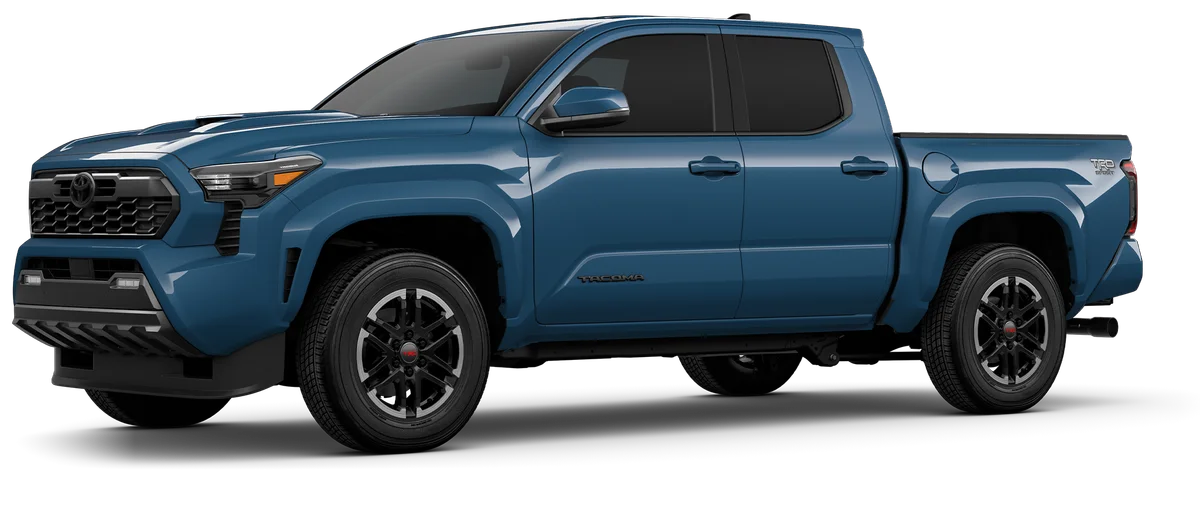
Midsize trucks like our Chevrolet Colorado Z71 and Toyota Tacoma TRD Off-Road run into the inverse problem. Tow ratings of 7,700 and 6,400 lb look generous on paper, but payloads of 1,587 and 1,525 lb mean a modern 7,000-lb trailer at 12 percent tongue weight (840 lb) leaves barely 700 lb for people and gear. The constraint is not engine, it is the space between curb weight and GVWR.
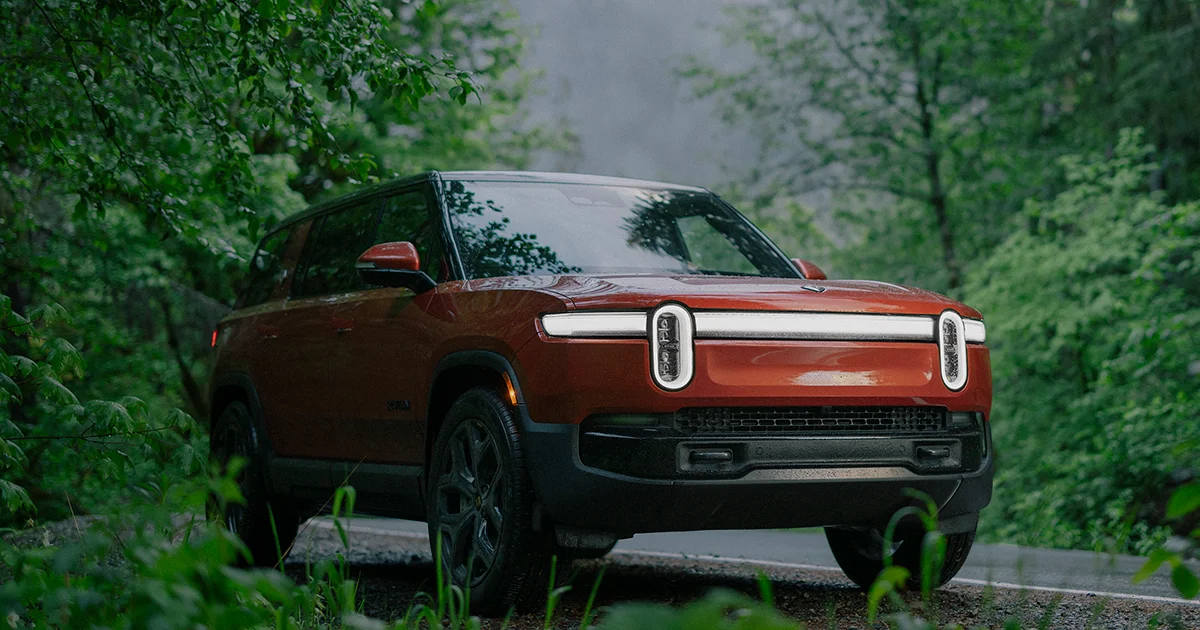
The Rivian R1T Adventure Dual Large adds a wrinkle electric-truck buyers have to plan around. Rivian rates the R1T at 11,000 lb and a 329-mile EPA range, but InsideEVs' summary of a real-world R1T tow trip reports roughly 137 to 144 miles of range pulling a 7,000-lb Airstream, with efficiency falling further on sustained climbs. Electric trucks hit their effective tow ceiling on range before they hit it on weight.
What to do with all this before you buy
The useful question is not what max tow a brochure quotes. It is how the specific truck in front of you behaves after you put your life in the cab. A short checklist keeps the math honest at the dealer.
- Ask to see the yellow Tire and Loading Information sticker on the exact VIN you are considering. If no one can produce it, walk away or step to another unit on the lot.
- Weigh the people, pets, and gear you actually bring on a typical trip, plus the hitch you plan to buy. Subtract that total from the sticker payload.
- Multiply the loaded trailer you want to pull by 0.12 for a bumper-pull or 0.20 for a fifth-wheel or gooseneck. That estimates tongue weight.
- If tongue weight plus your committed payload is above the door-jamb number, you need a different trim, a different cab or bed config, or a bigger truck class. Luxury trim is the most common thing to trade away.
- A 3/4-ton or 1-ton truck typically adds hundreds of pounds of payload over an equivalent half-ton at a similar tow rating. That is usually where buyers find real headroom.
- For a sortable starting list with payload and tow ratings in the same view, see our Best Pickup Trucks of 2026.
The short version
Towing numbers on window stickers are useful for comparing trucks, not for predicting what yours will pull. Before you sign, find the yellow door-jamb sticker, subtract the people and gear that actually travel with you, add the weight-distribution hitch if you need one, and apply tongue weight at 10 to 15 percent of a bumper-pull trailer or 15 to 25 percent of a fifth-wheel. What is left after that math is routinely 25 to 50 percent below the showroom number on luxury and off-road trims, and much more on diesel-heavy builds. Buyers chasing real headroom should pick trims with high payload relative to tow rating (the F-150 XLT or Lariat V8, the Silverado LTZ) or step up a truck class rather than up a trim.
See Best Pickup Trucks of 2026Questions people ask
Why can I not tow as much as my truck is rated for?+
Because the advertised rating is calculated with a single 150-lb driver, a 150-lb front passenger, an empty bed, and the lightest trim the manufacturer certified under SAE J2807. Add a family, gear, a tonneau and a weight-distribution hitch, and the remaining payload caps your real tow weight long before the engine does.
What is payload capacity and why does it matter for towing?+
Payload is the maximum weight your specific truck can carry: passengers, cargo, accessories, fuel above half a tank, and tongue weight from a trailer. It is printed on the yellow sticker in the driver's door jamb and is unique to your VIN. Because tongue weight comes out of payload, payload almost always caps what you can tow before the posted tow rating does.
What is tongue weight and how does it limit my trailer?+
Tongue weight is the downward force the trailer puts on the hitch, roughly 10 to 15 percent of loaded trailer weight for a bumper-pull and 15 to 25 percent for a fifth-wheel or gooseneck. Every pound of tongue weight is payload. If 1,000 lb of payload is already committed to passengers and gear, a half-ton with 1,600 lb of payload leaves only 600 lb for tongue weight, which caps a bumper-pull trailer around 5,000 lb regardless of the posted tow rating.
What does GCWR mean and how is it different from towing capacity?+
GCWR (Gross Combined Weight Rating) is the maximum weight of the truck plus the trailer together. Towing capacity is GCWR minus the truck's curb weight as J2807-tested. GCWR is the harder ceiling: heavier trim means less of that combined limit is available for the trailer, which is why a Platinum tows less than an XL built on the same frame.
How do I find my truck's real towing limit?+
Open the driver's door and read the yellow Tire and Loading Information sticker. Note the combined weight of occupants and cargo line. Subtract the weight of people, pets, gear, hitch hardware, and any permanent accessories. What remains is your available tongue weight. Divide by 0.12 for a bumper-pull or 0.20 for a fifth-wheel, and the result is the loaded trailer weight your specific truck can actually handle.
Is the max towing capacity on the window sticker accurate?+
Accurate as a test result, misleading as a buying guide. The number is SAE J2807-certified for one specific configuration with one 150-lb driver and one front passenger. Any heavier trim, extra passenger, or real cargo lowers it in practice, commonly by 25 to 40 percent in normal family use and more at luxury trims.
Why does my truck feel strained towing less than the rated limit?+
Because the rating is a pass/fail ceiling, not a comfortable cruising load. SAE J2807 only requires the truck to hold 40 mph up the Davis Dam grade at 100 degrees with the A/C running. At or near that rating, the engine, transmission, and cooling system are working close to their design limits, which is why towing feels more relaxed with meaningful payload in reserve.
Sources
What this guide is based on. We research from published specifications, independent reviews and owner reports; we did not test these products ourselves.
- 1.SAE J2807, Wikipedia
- 2.SAE J2807 Tow Tests, Fifth Wheel Street
- 3.SAE J2807 Towing Standard: How Pre-2013 Tow Ratings Were Inflated, Towrating.org
- 4.Here's How Your Truck is Tow Rated: Testing SAE J2807, The Fast Lane Truck
- 5.Exploring the 2026 Ford F-150 Towing Capacity by Trim from XL to Platinum, Cecil Honda
- 6.How to Read Your Truck's Tire and Loading Label (Door Jamb Sticker), RV Towing Calc
- 7.Payload vs Towing Capacity: which one actually stops you, Checkmytow
- 8.Ultimate Guide to Tongue Weight for Every Trailer Type, Weigh Safe
- 9.Half-Ton Trucks and Weight-Distribution Hitches: Why and When to Use, Cars.com
- 10.Do Half-Ton Trucks Need a Weight Distribution Hitch?, Equalizer Hitch
- 11.Understanding Tow Ratings: GVWR vs. GCWR vs. Payload vs. Tongue Weight, Pacbrake
- 12.Towing Capacity Explained: GVWR, GCWR, and Payload, USA Tow Finder
- 13.Rivian R1T Range When Towing: The Truth, InsideEVs
Products mentioned
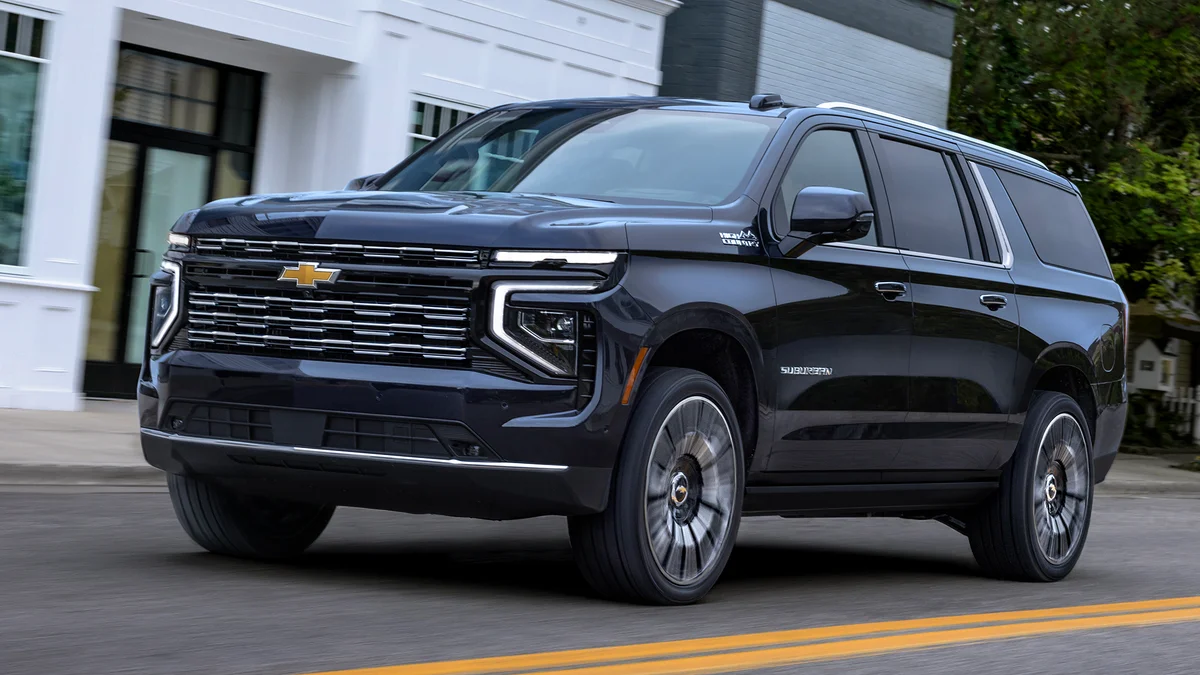 2025 Chevrolet Colorado Z71 Crew Cab 4WD2026 Chevrolet Silverado 1500 LTZ
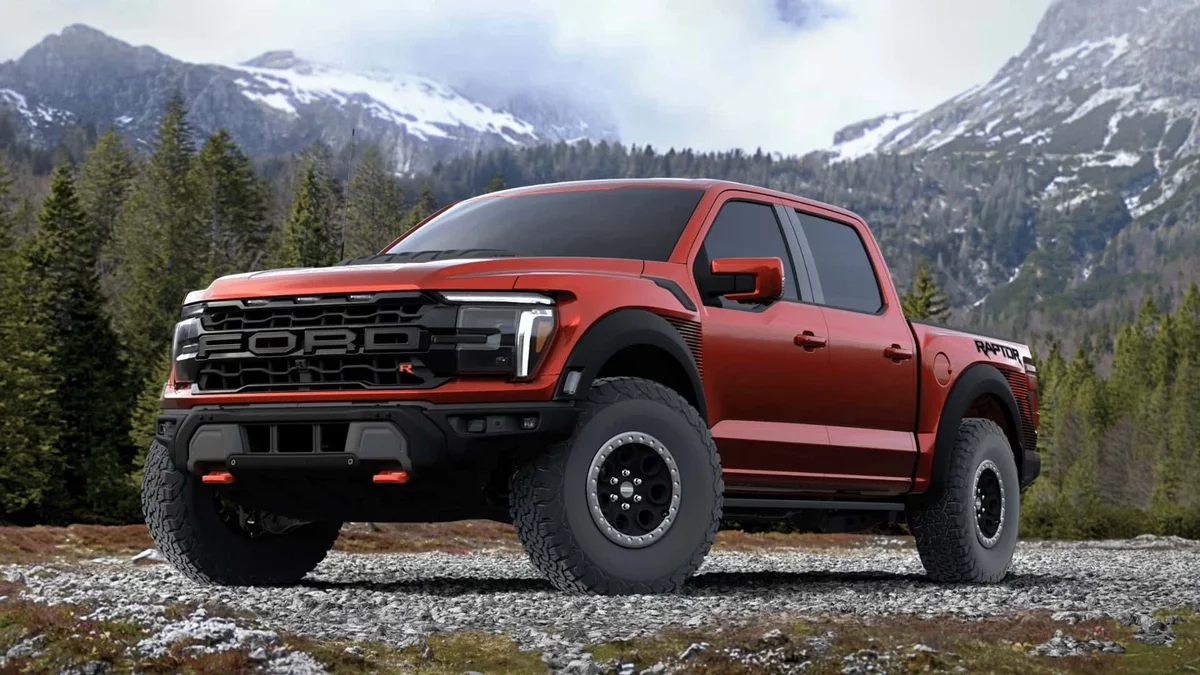 2025 Ford F-150 Lariat 4x4 SuperCrew2026 Ford F-150 Platinum SuperCrew 4x42026 Ford F-150 Raptor 4WD SuperCrew
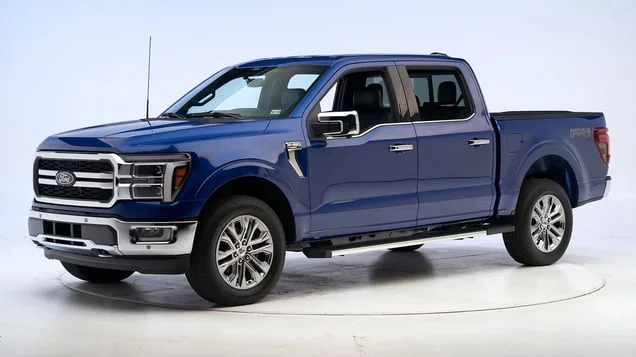 2026 Ford F-150 XLT SuperCrew 4x4
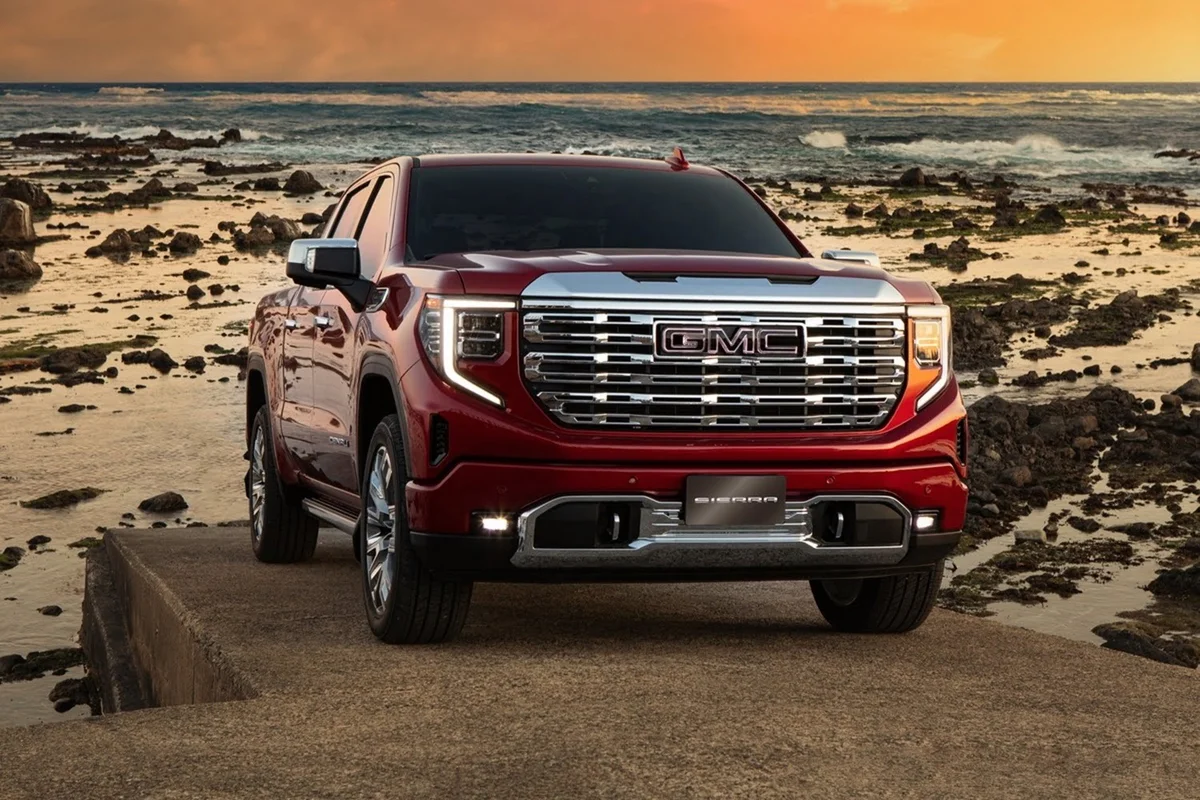 2026 GMC Sierra 1500 AT4X Crew Cab 4WD
 2025 Rivian R1T Adventure Dual Large
 2025 Toyota Tacoma TRD Off-Road Double Cab 4x4
More on pickup trucks
Explainer
Midsize vs Full-Size Pickup Truck: What You Actually Give Up and Gain
How the Toyota Tacoma, Chevy Colorado, Ford F-150, and Ram 1500 compare on towing, payload, size, fuel economy, and resale, with the numbers that actually decide which pickup you should buy.
Explainer
4WD vs AWD vs 2WD in Pickup Trucks: What the Labels Mean and When You Need Each
Pickup 4WD is a part-time, driver-selected system for loose surfaces, not daily driving. AWD is automatic. 2WD saves money, weight, and fuel. Here is what each system actually does, what it costs, and when to engage it.
Explainer
Half-Ton, 3/4-Ton, 1-Ton: What These Pickup Truck Classifications Mean in 2026
What half-ton, three-quarter-ton, and one-ton actually mean today, how much a modern half-ton really hauls, and when the step up to heavy duty is worth it.
Explainer
What Actually Happens to Electric Pickup Truck Range When You Tow
Real tow tests show electric pickups lose 40 to 60 percent of their rated range pulling a loaded trailer at highway speed. Here is what that means for anyone deciding whether to buy one.
Buying guide
How to Choose a Pickup Truck: Five Decisions in Order
Start from the heaviest thing you will ever tow or haul, then work through payload, cab, drivetrain, powertrain, and price. Each step eliminates trucks before you reach a dealer.