Explainer
Midsize vs Full-Size Pickup Truck: What You Actually Give Up and Gain
How the Toyota Tacoma, Chevy Colorado, Ford F-150, and Ram 1500 compare on towing, payload, size, fuel economy, and resale, with the numbers that actually decide which pickup you should buy.
Updated November 11, 2026 · Based on 14 sources · How we research
If you have narrowed your pickup search to two trucks, one midsize like the Toyota Tacoma and one full-size like the Ford F-150, the honest problem is that most comparisons online grade on the wrong curve. They line up a loaded Platinum against a base Tacoma, or treat the two as if they do the same job in different sizes. They do not. This page lines up published towing, payload, dimensions, fuel economy, and five-year resale against how you would actually use the truck, so you can see where paying for the bigger truck buys capability and where it mostly buys you a bigger truck.
The capability gap is wider than the badge suggests
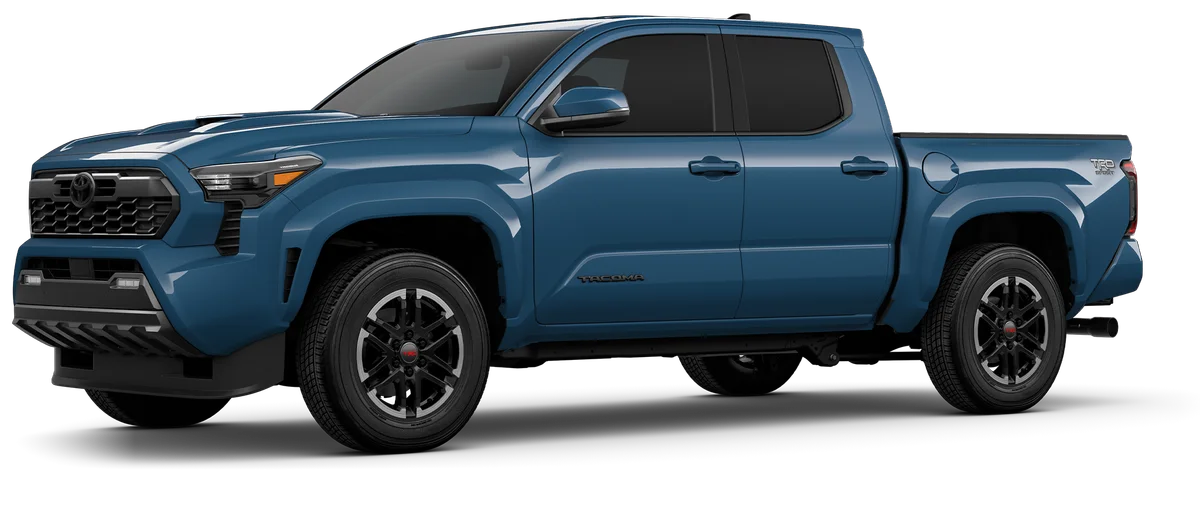
The 2025 Toyota Tacoma TRD Off-Road Double Cab on our Best Pickup Trucks of 2026 list tows 6,400 pounds and hauls 1,525 pounds of payload. The 2026 Ford F-150 Platinum SuperCrew tows 13,100 pounds and carries 1,964 pounds. That is more than double the towing capacity and about 29 percent more payload. The gap is not a marketing claim, it is a structural one: the F-150 rides on a longer, heavier frame with a bigger engine and axle ratings to match, as documented on Ford's F-150 pages.
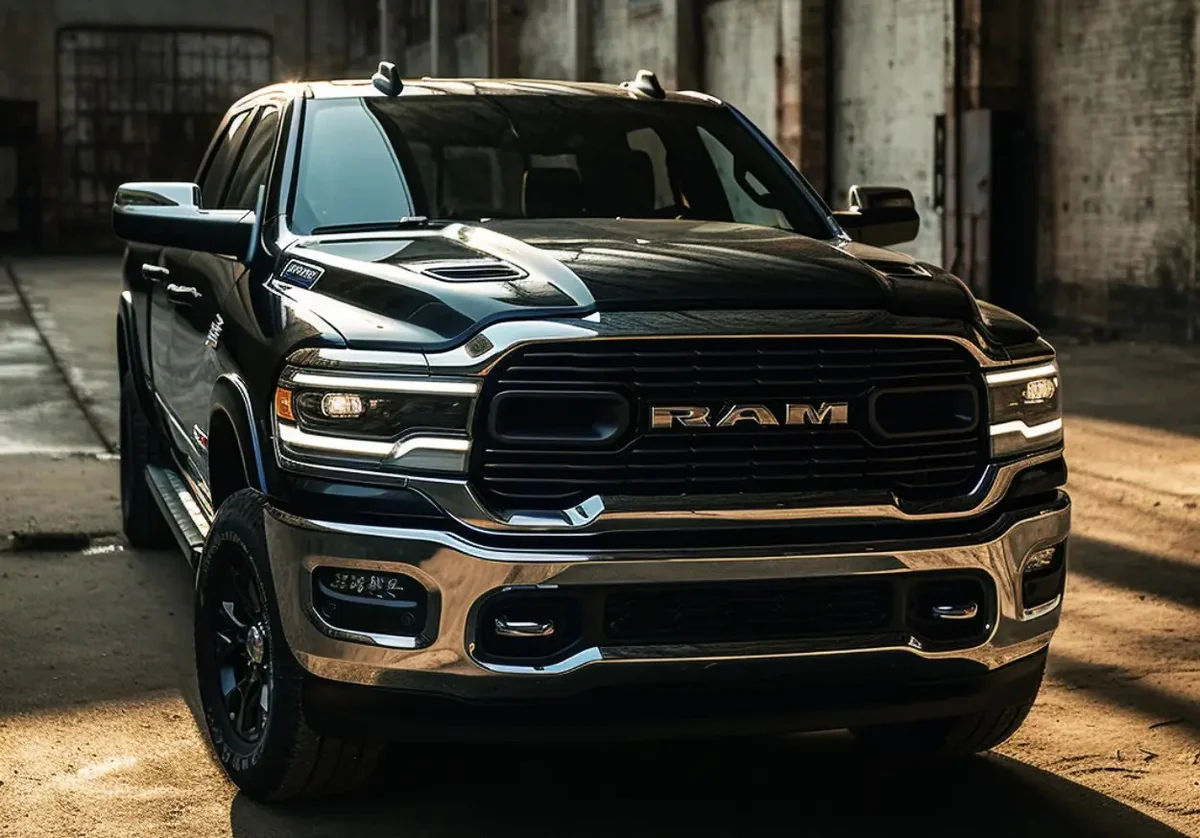
Within the midsize class, the Tacoma sits at the lower end of tow ratings. The 2025 Chevy Colorado Z71 tops out at 7,700 pounds, and Ford's current Ranger is rated to 7,500 pounds with the Trailer Tow Package per Ford. The full-size class varies too. The 2026 F-150 XLT SuperCrew 4x4 tows 10,100 pounds, the 2025 Ram 1500 Laramie tows 11,580 pounds, and the diesel Silverado High Country is rated at 13,300. In other words, a midsize at the top of its class and a full-size at the bottom overlap. If your trailer is in the 7,000 to 8,000 pound range, the choice is not as binary as the two categories imply.
Torque tells a related story. The Tacoma's 2.4-liter turbo-four produces 317 lb-ft. The F-150 Platinum's PowerBoost hybrid makes 570 lb-ft, and even the 2.7-liter EcoBoost V6 in the mid-trim F-150 XLT produces 400 lb-ft. With a trailer behind you, the full-size truck does not just tow more on paper, it climbs grades without the transmission hunting through gears.
| Spec | Tacoma TRD Off-Road 2025 | F-150 Platinum SuperCrew 2026 |
|---|---|---|
| Price | $42,200 | $72,600 |
| Towing | 6,400 lb | 13,100 lb |
| Payload | 1,525 lb | 1,964 lb |
| Length | 212.3 in | 231.9 in |
| Width | 76.9 in | 79.9 in |
| Bed | 5.0 ft (44.7 in wide) | 5.5 ft (50.6 in wide) |
| Rear legroom | 33.7 in | 43.6 in |
| MPG city/hwy | 20 / 24 | 24 / 24 |
| Seats | 5 | 6 |
| 5-yr depreciation | 19.5% | 38.6% |
A full-size truck is about 20 inches longer, not four feet
The 2024+ Tacoma Double Cab with the 5-foot bed measures 213 inches long with a 131.9-inch wheelbase, per the 2025 Tacoma listings on JDPower. The 2026 F-150 SuperCrew with the 5.5-foot bed is 231.9 inches long with a 145-inch wheelbase, per JDPower. That is roughly 19 inches of length and 3 inches of width between them. If you expected a visual gulf you could see from a parking space away, you will not get it.
Where the extra length shows up is low-speed maneuvering. The F-150 SuperCrew with the 5.5-foot box has a 47.8-foot curb-to-curb turning diameter per JDPower, and that climbs to 51.1 feet with the 6.5-foot box. The Tacoma's shorter wheelbase turns in noticeably less space. If your daily use involves a residential garage built before 1990, a downtown commute, or a steep private driveway, that difference matters more than any spec sheet number. If your truck lives in a modern garage and parks in oversized spaces, it does not.
Bed choice changes the equation further. Ford lists 5.5-, 6.5-, and 8-foot boxes for the F-150. Toyota lists 5- and 6-foot beds for the Tacoma per the 2026 pickup bed dimension chart. An F-150 XLT with the 6.5-foot bed stretches to 243.8 inches, and the 8-foot long-bed configurations run past 250 inches. If you pick a full-size, the bed length can be the real difference between a truck that fits your garage and a truck that lives on the street.
The cabin and bed are where the money shows up
The F-150 SuperCrew delivers 43.6 inches of rear legroom per Edmunds. The Tacoma Double Cab, the larger of its two cab options, gives you 33.7 inches. Ten inches is the difference between an adult sitting comfortably behind an adult driver and an adult sitting with knees pressed into the seatback. The F-150 Platinum also seats six with the front bench. Most Tacomas seat five.
Beds matter in the same way. More important than nominal length is the width between the wheel wells: 44.7 inches on the current Tacoma and 50.6 inches on the F-150, per the ArmorThane bed chart. A standard 4-by-8 sheet of plywood lies flat between the F-150's wheel wells. In a Tacoma, it rides on top of the wheel wells rather than on the floor. For anyone building, roofing, or hauling drywall, that difference ends the conversation.
Interior cargo volume follows the pattern. Ford publishes 52.8 cubic feet for the 5.5-foot bed, 62.3 for the 6.5-foot, and 77.4 for the 8-foot. Toyota does not publish Tacoma bed volume, but the 5-foot Tacoma box is roughly 60 inches long at the floor against 67.1 inches for the F-150's shortest box per ArmorThane, so the Tacoma bed is proportional and the F-150 bed is big enough to work out of.
Fuel economy differs less than the badges imply
The Tacoma non-hybrid 4WD is rated 20 city, 24 highway per fueleconomy.gov. The F-150 Platinum PowerBoost hybrid 4WD is 24 city, 24 highway per Ford. The full-size hybrid beats the midsize gas truck in the city cycle and ties on the highway. A V8 F-150 Lariat comes in at 16 city, 24 highway, which is where the common assumption of 'full-size drinks gas' comes from, and even that comparison gives the Tacoma only a 4 mpg city advantage.
Real-world numbers are usually worse than the sticker. Edmunds observed a Tacoma averaging 17.0 mpg against its 21 EPA combined rating in long-term testing, with the Colorado at 17.5 against 19 and the Ranger at 18.6 against 22, all behind sticker per Edmunds. The current midsize engines are small turbocharged fours working near their limit; owners and testers report they rarely deliver their EPA number in mixed driving. The F-150 hybrid has the opposite pattern: hybrids typically meet or slightly beat their city rating in stop-and-go traffic.
The upshot is that your fuel-cost difference between a midsize 4WD and a hybrid full-size is closer to one or two miles per gallon than the six or seven buyers often assume. If you are picking a midsize specifically to save at the pump, compare the specific trims you are cross-shopping, not the categories.
Can a Tacoma tow your boat or your camper?
A jet ski on its trailer tops out around 3,000 pounds loaded per Towing Service Hub. A typical bass boat and trailer combination runs 2,800 to 4,200 pounds loaded per Etrailer. Both sit comfortably inside the Tacoma's 6,400-pound tow rating with roughly 2,000 pounds of margin. For watersports and single-axle fishing boats, a midsize is enough.
Pop-up campers and small travel trailers stay in the same lane. Pop-ups run 1,500 to 3,500 pounds loaded. Small travel trailers under 18 feet usually stay below 5,000 pounds. A Tacoma handles those. A Colorado Z71 rated at 7,700 pounds handles them with more room.
The ceiling arrives fast after that. A 28-foot travel trailer averages 7,000 pounds dry and 8,400 pounds loaded per Black Series. That is over the Tacoma's rating and right at the Colorado's. If you want the 15 percent safety margin recommended in Camping World's RV towing guide, you need a full-size. Most fifth-wheel campers and travel trailers over 10,000 pounds require a full-size, and the heaviest cross into three-quarter-ton territory.
- Under 4,500 lb loaded (jet ski, bass boat, pop-up, utility trailer): any midsize works
- 4,500 to 6,000 lb (small travel trailer, aluminum fishing boat): Tacoma is fine, Colorado or Ranger is more comfortable
- 6,000 to 8,000 lb (mid-size travel trailer, heavier boat): Tacoma is at its limit, Colorado has margin, any full-size is comfortable
- 8,000 to 11,000 lb (28-foot travel trailer loaded, larger boats): full-size required
- Over 11,000 lb (fifth wheels, large travel trailers): full-size with max tow package or heavy-duty
The Tacoma keeps its value, the F-150 does not
iSeeCars reports a 80.5 percent five-year resale value for the Tacoma and 61.4 percent for the F-150, which works out to 19.5 percent depreciation versus 38.6 percent, roughly a 2-to-1 gap per iSeeCars. On a $42,200 Tacoma versus a $72,600 F-150, that is about $8,200 of depreciation versus roughly $28,000. The F-150 loses close to $20,000 more over five years, which offsets the bulk of the $30,400 up-front price difference between these two trims for buyers who sell before 10 years.
The reason is supply and reputation. Tacoma supply is tight, demand is high, and Toyota's reliability record props up used prices for years. The F-150 is the best-selling vehicle in America, which floods the used market and pressures resale downward. If you plan to keep the truck 10 years, this matters less, since both will be worn well past the five-year window. If you flip trucks every three to five years, it is the number that dominates every other spec on this page.
Which truck is right for you
Buy the midsize if your towing stays under 6,000 pounds loaded, you rarely carry rear-seat adults on long drives, your bed hauls gear rather than sheet goods, and you park in tight spaces. The Tacoma TRD Off-Road at $42,200 is the strongest resale case. The Colorado Z71 at $43,900 gives you an extra 1,300 pounds of tow rating and a less cramped cabin, at the cost of lower expected resale.
Buy the full-size if you tow over 7,000 pounds, regularly carry rear-seat adults, need a bed wider than a sheet of plywood, or want a hybrid that returns 24 mpg city. The F-150 XLT at $54,555 is the sensible work-grade pick, the F-150 Platinum at $72,600 makes the hybrid and luxury case, and the Silverado LTZ at $58,100 offers a 13,200-pound tow rating with a V8 for mid-trim money.
Buy neither if your truck needs are occasional. The 2026 Ford Maverick XLT AWD at $32,865 returns 40 mpg city and tows 2,000 pounds. For a buyer whose actual truck jobs are hauling mulch once a month and getting to a trailhead, that does the work at midsize pickup money with better fuel economy than either of the trucks above.
The short version
If your towing stays under 6,000 pounds and you value a tight turning circle and minimal depreciation, the Tacoma or Colorado is the better truck. If you tow over 8,000 pounds, regularly haul more than two adults in the back row, or need a bed that swallows a sheet of plywood flat, you need a full-size, and the F-150 hybrid closes most of the fuel-economy gap buyers assume works the other way. The overlap zone is a trailer between 6,000 and 8,000 pounds loaded, where a top-trim midsize and a mid-trim full-size both work on paper. There the deciding factors are cabin comfort on long drives, five-year resale, and whether your garage can hold 243 inches of truck.
See Best Pickup Trucks of 2026Questions people ask
Should I buy a midsize or full-size pickup truck?+
Buy a midsize if your towing stays under 6,000 pounds loaded, your rear seat is for kids or occasional adults, and you park in tight spaces. Buy a full-size if you tow over 7,000 pounds, carry rear-seat adults regularly, or need a bed wider than 48 inches. The 6,000 to 8,000 pound trailer range is the overlap zone where either works and resale, cabin space, and garage fit decide.
Is a Toyota Tacoma big enough or do I need an F-150?+
The Tacoma tows 6,400 pounds and seats five with 33.7 inches of rear legroom. The F-150 SuperCrew tows up to 13,100 pounds, seats six on bench configurations, and gives you 43.6 inches of rear legroom. If you tow bass boats, jet skis, or pop-up campers and your rear seat is kids, the Tacoma is big enough. If you tow a 28-foot travel trailer or carry two adults in the back row daily, you need the F-150.
What is the difference between a full-size and midsize truck?+
A full-size truck like the F-150 is about 19 inches longer and 3 inches wider than a midsize like the Tacoma, with roughly double the towing capacity, 30 percent more payload, and a bed about 6 inches wider between the wheel wells. Price difference at comparable trim is $15,000 to $30,000. Midsize trucks have shorter turning radii, better city maneuverability, and typically higher resale value.
Are midsize trucks easier to drive and park than full-size trucks?+
Yes, measurably. The Tacoma's 131.9-inch wheelbase turns in noticeably less space than the F-150 SuperCrew's 145-inch wheelbase, and the F-150's 47.8-foot curb-to-curb turning diameter on the 5.5-foot box makes tight parking lots and older urban garages genuinely difficult. The 6.5-foot box climbs to 51.1 feet. On highways and in modern lots, the difference disappears.
Do midsize trucks get better fuel economy than full-size trucks?+
Yes, but less than most buyers think. A Tacoma 4WD is rated 20 city, 24 highway. The F-150 Platinum hybrid returns 24 city, 24 highway, better in the city and tied on the highway. Only when compared against a V8 F-150 Lariat at 16 city does the midsize show a meaningful advantage, and Edmunds's long-term testing found the Tacoma averaged 17.0 mpg real-world against its 21 EPA combined rating.
Is a midsize truck enough for towing a boat or camper?+
For jet skis, bass boats, pop-up campers, and small travel trailers under 5,000 pounds loaded, a midsize is enough. The Tacoma handles 6,400 pounds and the Colorado 7,700 pounds. A 28-foot travel trailer averages 8,400 pounds loaded, which is over the Tacoma's rating and at the Colorado's limit; for that size and above you want a full-size, especially if you drive mountain passes or want a 15 percent safety margin.
How much does a midsize truck save on fuel over a full-size?+
Against a V8 full-size, roughly 3 to 4 mpg city and 0 to 4 mpg highway depending on the engine. Against a hybrid full-size like the F-150 PowerBoost, the midsize non-hybrid is actually worse in the city. Over 15,000 miles a year at $3.50 per gallon, the fuel difference between a Tacoma 4WD and an F-150 hybrid is a few hundred dollars, not thousands.
Which holds value better, a Tacoma or an F-150?+
The Tacoma, by a wide margin. iSeeCars reports 80.5 percent five-year resale value for the Tacoma and 61.4 percent for the F-150, which is 19.5 percent versus 38.6 percent depreciation. On a $42,200 Tacoma versus a $72,600 F-150, the F-150 loses roughly $20,000 more over five years, which offsets most of the $30,400 price difference for buyers who sell before 10 years.
Sources
What this guide is based on. We research from published specifications, independent reviews and owner reports; we did not test these products ourselves.
- 1.Ford F-150 Specifications and Capability, Ford
- 2.Ford Ranger Specifications, Ford
- 3.2025 Standard Pickup Trucks Gas Mileage, U.S. Department of Energy
- 4.2026 Ford F-150 Platinum 4WD SuperCrew 5.5' Box Specs, J.D. Power
- 5.2025 Toyota Tacoma TRD Sport Double Cab Specs, J.D. Power
- 6.Truck Bed Dimensions Chart for Every Pickup 2026, ArmorThane
- 7.Chevy Colorado, Ford Ranger and Toyota Tacoma Aren't Hitting Their Fuel Economy Numbers, Edmunds
- 8.2026 Ford F-150 vs 2026 Toyota Tacoma Car Comparison, Edmunds
- 9.How Much Does a Boat Trailer Weigh?, Towing Service Hub
- 10.How Much Does a Boat and Trailer Weigh?, Etrailer
- 11.Travel Trailer Weights by Trailer Type, Black Series
- 12.How to Find the Best Vehicle for Towing a Camper, Camping World
- 13.Best Resale Value Trucks 2026, iSeeCars
- 14.Midsize Vs Full-Size Pickup Trucks: 4 Things To Consider When Shopping, SlashGear
Products mentioned
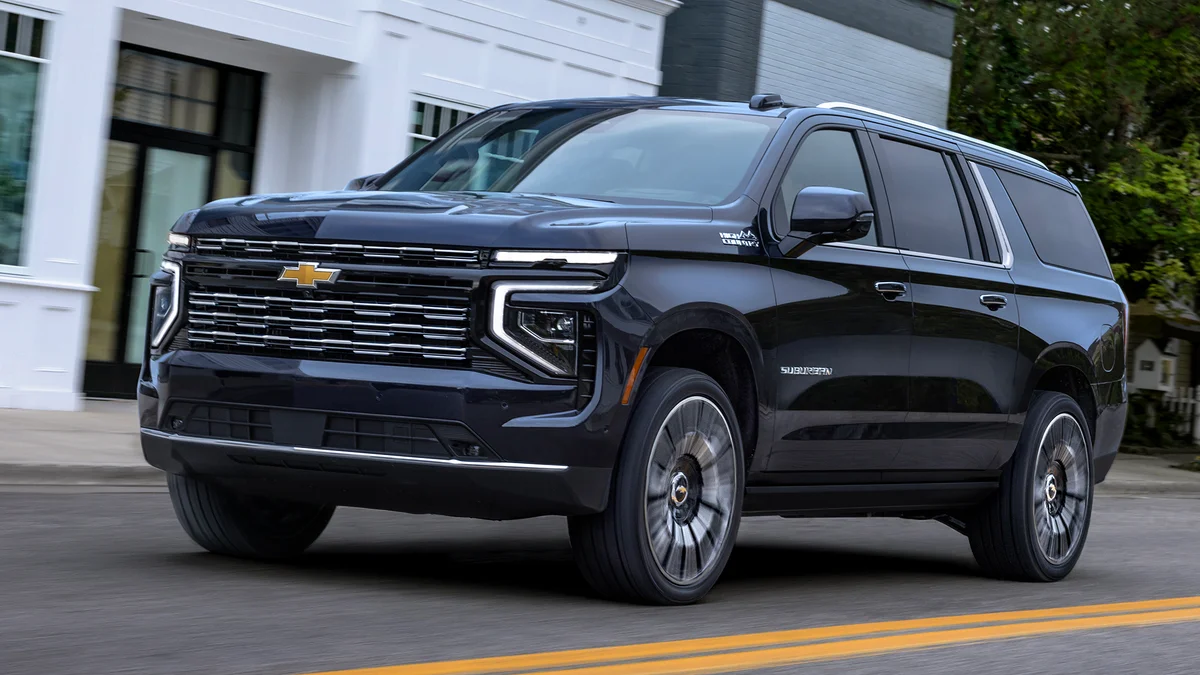 2025 Chevrolet Colorado Z71 Crew Cab 4WD2025 Chevrolet Silverado 1500 High Country Crew Cab 4WD2026 Chevrolet Silverado 1500 LTZ
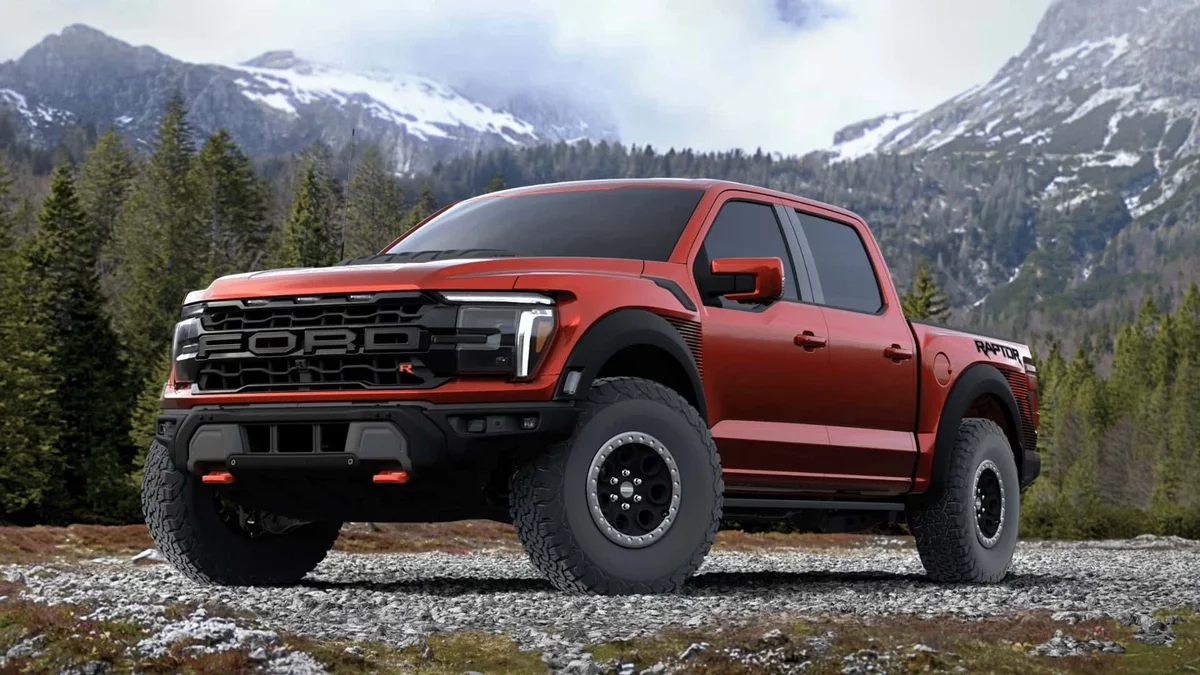 2025 Ford F-150 Lariat 4x4 SuperCrew2026 Ford F-150 Platinum SuperCrew 4x42026 Ford F-150 Raptor 4WD SuperCrew
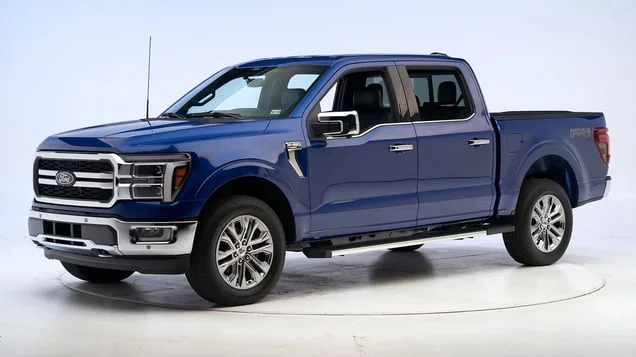 2026 Ford F-150 XLT SuperCrew 4x42026 Ford Maverick XLT AWD
 2026 GMC Sierra 1500 Denali
 2025 Ram 1500 Laramie 4x4 Crew Cab
 2025 Toyota Tacoma TRD Off-Road Double Cab 4x4
 2026 Toyota Tundra TRD Pro
More on pickup trucks
Explainer
4WD vs AWD vs 2WD in Pickup Trucks: What the Labels Mean and When You Need Each
Pickup 4WD is a part-time, driver-selected system for loose surfaces, not daily driving. AWD is automatic. 2WD saves money, weight, and fuel. Here is what each system actually does, what it costs, and when to engage it.
Explainer
Half-Ton, 3/4-Ton, 1-Ton: What These Pickup Truck Classifications Mean in 2026
What half-ton, three-quarter-ton, and one-ton actually mean today, how much a modern half-ton really hauls, and when the step up to heavy duty is worth it.
Explainer
What Actually Happens to Electric Pickup Truck Range When You Tow
Real tow tests show electric pickups lose 40 to 60 percent of their rated range pulling a loaded trailer at highway speed. Here is what that means for anyone deciding whether to buy one.
Explainer
What the Towing Capacity Number on the Window Sticker Does Not Tell You
The max tow number on a pickup's window sticker is a laboratory figure tied to one trim, one driver, and an empty bed. Here is how payload, tongue weight, and GCWR actually set what your truck can pull.
Buying guide
How to Choose a Pickup Truck: Five Decisions in Order
Start from the heaviest thing you will ever tow or haul, then work through payload, cab, drivetrain, powertrain, and price. Each step eliminates trucks before you reach a dealer.