Explainer
4WD vs AWD vs 2WD in Pickup Trucks: What the Labels Mean and When You Need Each
Pickup 4WD is a part-time, driver-selected system for loose surfaces, not daily driving. AWD is automatic. 2WD saves money, weight, and fuel. Here is what each system actually does, what it costs, and when to engage it.
Updated November 11, 2026 · Based on 17 sources · How we research
If you are shopping a half-ton or midsize pickup, the drivetrain line on the window sticker is doing more work than any other spec. It changes the purchase price by thousands, the curb weight by hundreds of pounds, the EPA combined rating by one to two mpg, and the payload rating by a few hundred pounds. Many buyers tick the 4x4 box out of habit, then never engage it. This guide is for someone trying to decide honestly. It explains the mechanical difference between truck 4WD, pickup AWD, and plain 2WD, where each actually helps, and the one thing most people get wrong: pickup 4WD is a part-time system that is designed to be driven on loose or slippery surfaces and is genuinely harmful to the drivetrain if you leave it engaged on dry pavement.
4WD, AWD, 4x4, 4x2: what the labels on a pickup actually mean
4x2 and 4x4 are the same idea as 2WD and 4WD. The first number is how many wheels the truck has; the second is how many of them the engine drives. A 4x2 pickup drives two wheels, almost always the rears. A 4x4 pickup can drive all four when the driver asks for it. On a full-size truck the standard layout is rear-wheel drive with an optional 4WD system added on top, which is why every pickup in our Best Pickup Trucks of 2026 list that is not a crossover-based model starts life as a rear-driver.
A conventional pickup 4WD system is part-time. The driver chooses 2H (rear wheels only), 4H (all four wheels, highway speeds, loose surfaces), or 4L (all four wheels with a low-range gear reduction for crawling). When you select 4H or 4L, a transfer case mechanically locks the front and rear driveshafts together so they turn at exactly the same speed, as off-road.com explains. There is no center differential. That lock is the whole point: it guarantees power goes to whichever axle has grip.
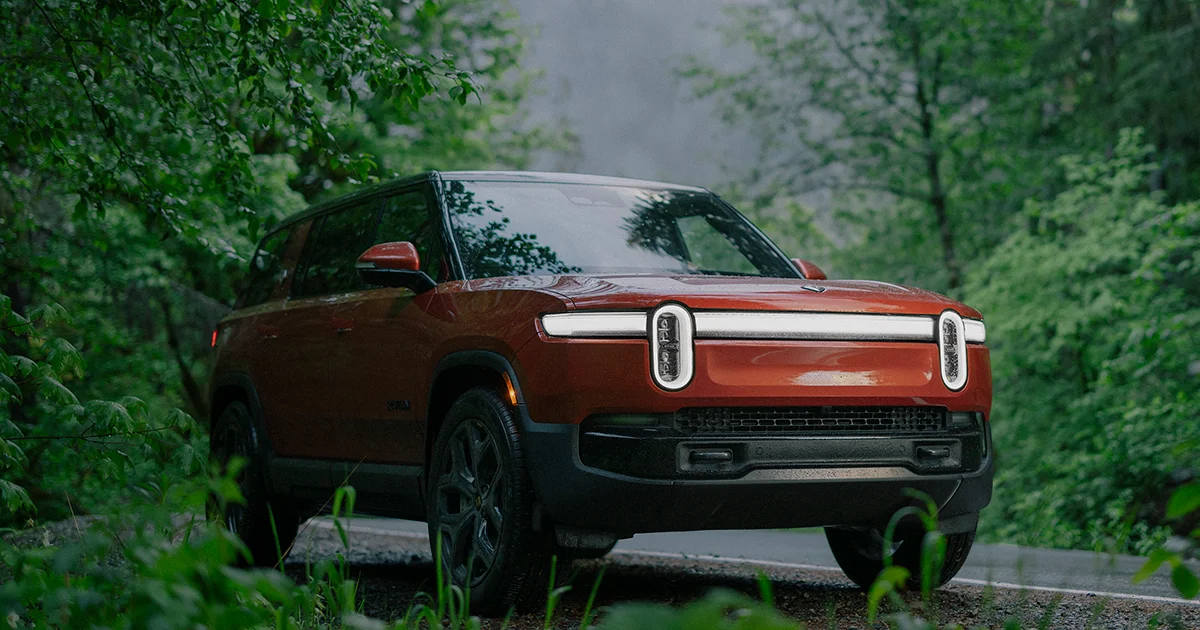
AWD on a pickup works the other way. The system drives all four wheels full-time or on demand, with either a center differential or an electronically controlled clutch that allows the front and rear to turn at slightly different speeds. The driver does not select it. The 2026 Ford Maverick XLT AWD uses an on-demand system from Dana with a power transfer unit and a twin-clutch rear drive unit that routes torque rearward when sensors detect or predict front-wheel slip, as Blue Oval Trucks documents. The 2025 Rivian R1T Adventure Dual Large does it differently again: two Enduro electric motors, one on each axle, with brake-based side-to-side torque vectoring handled in software (SlashGear's dual-motor review). There is no transfer case at all.
Why pickup 4WD is not meant for dry pavement
When a part-time 4WD transfer case is locked, the front and rear driveshafts are forced to turn at identical speeds. That works on snow, gravel, mud, sand, or a boat ramp because the tires can slip a little against the surface and absorb the geometry difference between an outside and an inside wheel path through a corner. On dry pavement they cannot slip, so the mismatch loads up as torque in the driveshafts, axles, U-joints, and transfer case internals. RealTruck's transfer case guide describes the result plainly: driveline bind that stresses the transfer case, driveshafts, differentials, and tires, with sustained use causing serious drivetrain damage. Wikipedia's transfer case article uses the same mechanical term, driveline windup, for the problem.
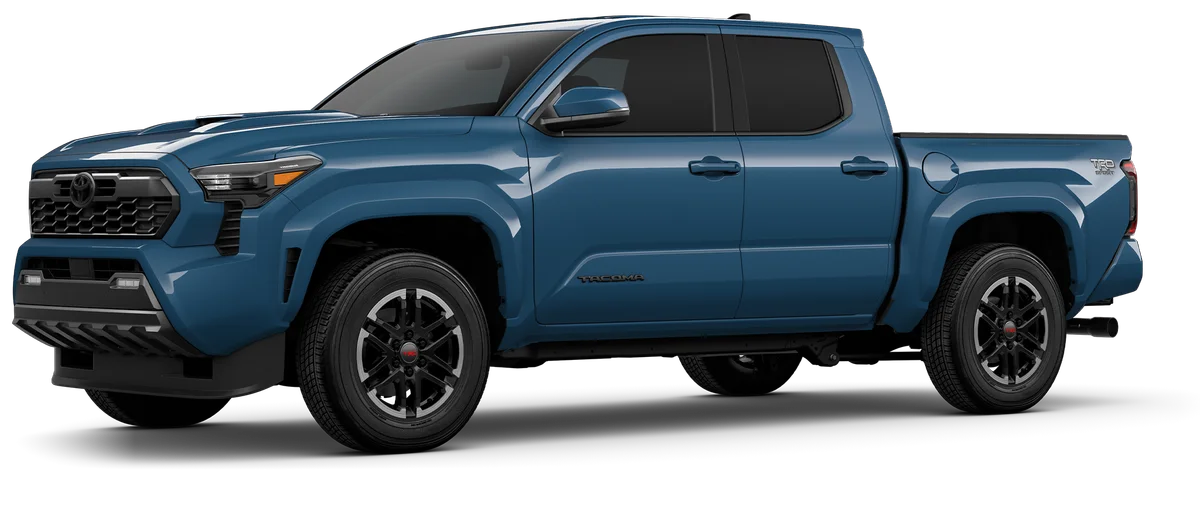
That is why the manual on a Toyota Tacoma, a Ford F-150 XLT, a Chevy Silverado 1500 LT, or a Ram 1500 Big Horn tells you to run 2H on paved roads and only engage 4H when the surface is loose or slippery. A 2025 Toyota Tacoma TRD Off-Road, for example, is a part-time system: it can shift between 2H and 4H on the fly if the wheels are pointed straight, but 4H is not meant to live on dry asphalt. Full-time 4WD systems with a center differential, by contrast, can run locked all day because the differential absorbs the speed difference.
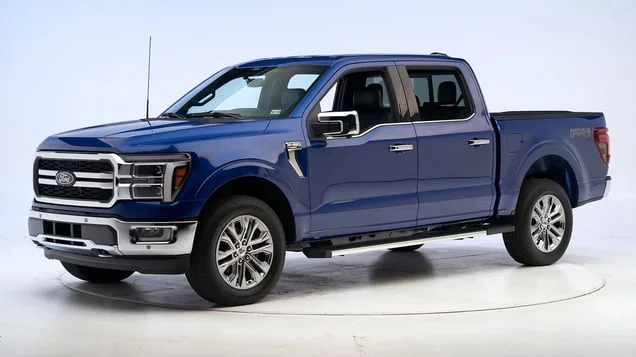
Some trucks add a hybrid option called 4-Auto or 4A. On the higher-trim F-150s like the 2026 Ford F-150 Platinum SuperCrew 4x4, the transfer case has an electronically controlled clutch pack that can slip, so 4A behaves like AWD: the rear wheels drive the truck normally, and the front axle is engaged automatically when sensors see slip. Go-Parts' teardown of the Ford transfer case explains that 4A is safe on any surface, including dry pavement, while 4H on the same truck is not. Owners who read the manual tend to leave 4A on in winter and never touch 4H until the surface actually demands it.
AWD in a pickup only shows up on unibody and EV platforms
In the pickup aisle, AWD is rare and usually signals a unibody or EV platform rather than a traditional body-on-frame truck. Of the twenty trucks in our Best Pickup Trucks of 2026 ranking, only two carry AWD on the spec sheet: the 2026 Ford Maverick XLT AWD, which is built on a car-based unibody platform, and the 2025 Rivian R1T Adventure Dual Large, which is an electric truck with no transfer case because each axle has its own motor. Everything else from the F-150 up through the one-ton duallies is 4WD or rear-drive only.
AWD matters because it changes how the system is used. On the Maverick, the driver does not do anything; the truck runs primarily in front-wheel drive and routes torque rearward when slip is detected or predicted (Blue Oval Trucks). On the Rivian R1T dual-motor, each axle has its own Enduro motor, and the software uses brake-based torque vectoring to shuffle power side to side at each axle, which is enough that reviewers rated it capable on rock-crawling and launch-ramp duty without a mechanical locking differential (InsideEVs).
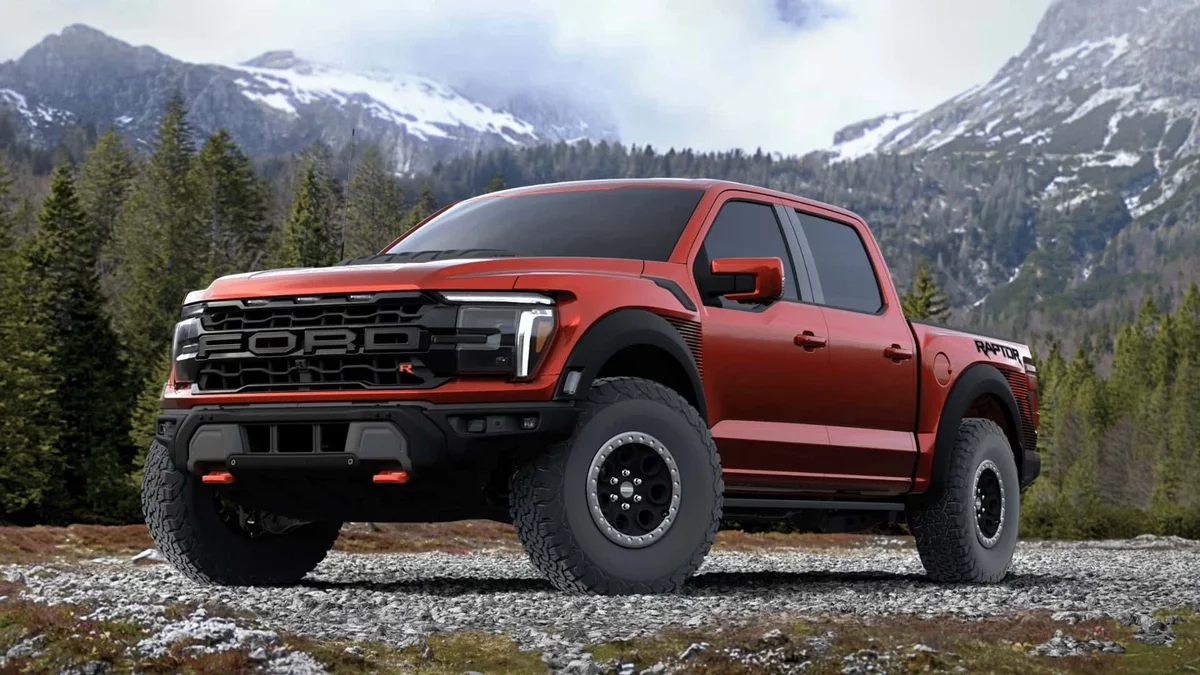
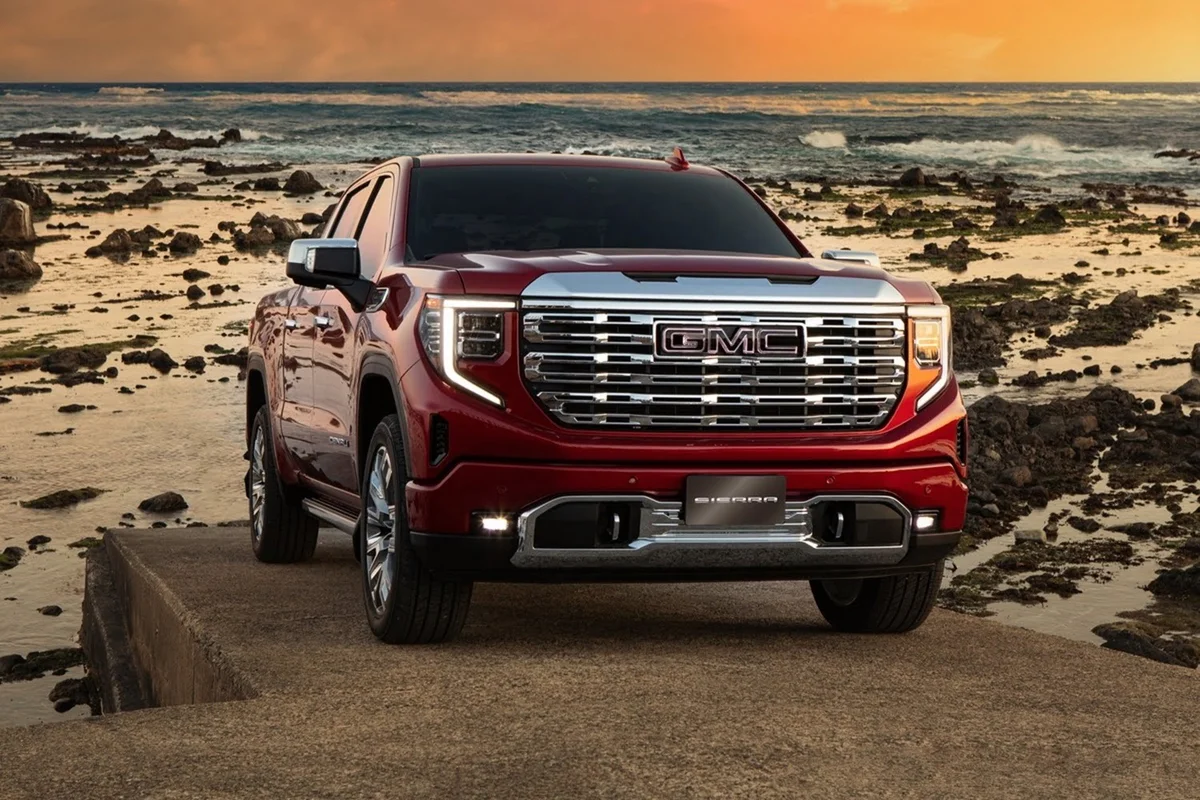
The practical limitation of AWD on a pickup is the hardware. AWD systems in the Maverick class do not have a low range, so they cannot multiply torque for towing a stuck boat up a steep ramp or crawling a technical trail at idle. A part-time 4WD truck with 4L, by contrast, can gear-reduce the output of the transmission by roughly 2.5 to 3 times, which is why serious off-road trim levels like the 2026 Ford F-150 Raptor and the 2026 GMC Sierra 1500 AT4X use part-time 4WD rather than AWD.
What 4WD actually costs you: sticker, weight, payload, mpg
4WD is not free. At MSRP, the typical premium for adding 4WD to a configurable trim is about $3,200 to $3,900 on a domestic full-size, and roughly $3,800 on a Ram 1500 (Car Independent). On a Toyota Tacoma, moving from a 2WD powertrain to a 4WD configuration can add north of $5,000. For a used truck at three years old the spread compresses to roughly $2,000 to $3,000. 4WD also holds its resale better than 2WD, which partly offsets the up-front cost.
The hidden cost is weight. Adding a front differential, driveshaft, transfer case, and the associated hardware is enough extra hardware that SlashGear notes 4WD trucks weigh more and give up payload and towing capacity to the drivetrain (SlashGear). Across comparable half-ton trims the penalty typically lands in the 200 to 400 pound range, which comes directly off payload because gross vehicle weight rating does not change when you add 4WD.
And then fuel economy. The EPA pattern is consistent: 4WD costs one to two combined mpg on a full-size pickup. The 2026 Chevrolet Silverado 1500 with the 2.7L turbo four is rated 22 combined mpg in 2WD and 20 combined in 4WD (Lash Chevrolet). The 2026 Ford F-150 with the 2.7L EcoBoost drops from 21 combined in 2WD to 20 combined in 4WD (Dave Arbogast Ford). Over 15,000 miles a year at $3.50 a gallon, that one-mpg swing is roughly $125 a year in fuel.
| Cost line item | 2WD | 4WD |
|---|---|---|
| Typical MSRP delta on a half-ton | Baseline | +$3,200 to $3,900 |
| Curb weight penalty | Baseline | +200 to 400 lb |
| Payload (same trim, same engine) | Higher | Lower by ~200 to 400 lb |
| EPA combined mpg penalty | Baseline | -1 to -2 mpg |
| Dry-pavement usability | Always safe | Only in 2H or 4A mode |
Do you need 4WD, or is 2WD good enough?
A 2WD pickup is not a lesser truck. It is a lighter truck with more payload, better fuel economy, and nothing to break in the front driveline. For a buyer who lives on paved roads, parks on a paved driveway, and uses the truck for a lumberyard run and a trailered utility trailer on weekends, there is no functional argument for 4WD. Modern stability control, four-channel ABS, and a decent set of all-season tires cover the overwhelming majority of weather a 2WD pickup will see in a year.
4WD becomes worth paying for when at least one of a short list is true. If you regularly drive on unpaved or gravel roads, especially uphill. If you live where unplowed snow or ice sits on the driveway or the road for days at a time. If you tow a boat down a steep or algae-coated launch ramp. If you work on jobsites with mud, construction aggregate, or deep ruts. If you hunt, camp, or trail-drive into country that stops being pavement. For those uses, the drivetrain insurance is worth the mpg and payload tax.
A buyer who falls between those two profiles has two sensible options. The first is to pick a trim with 4-Auto or AWD so the system can live on all the time with no risk, like the 4A-equipped 2026 Ford F-150 Platinum SuperCrew 4x4. The second is to pair a 2WD truck with proper winter tires: winter rubber grips snow and ice better than all-seasons regardless of how many wheels are driven. A 4WD truck on hard all-seasons is the worst combination, because the drivetrain gets the driver into corners the brakes cannot get out of.
- Live in a place where snow sits on the road for days: 4WD or AWD is worth it.
- Launch a boat, especially at low tide on a mossy or steep ramp: 4WD with a low range is worth it.
- Drive dirt, gravel, or two-track at speed: 4WD is worth it.
- Drive mostly paved roads with occasional light snow: 2WD with winter tires is often the smarter buy.
- Carry maximum payload: a 2WD configuration gives up the least capacity to its own hardware.
When to actually engage 4WD on a pickup
4H is the default off-pavement choice. It sends power to all four wheels and keeps the transmission in its normal gear range, which is appropriate for snow-covered roads, loose gravel, hard-packed dirt, light mud, and highway-speed driving on any surface with less than full grip. Shifting into 4H on most modern pickups, including the Toyota Tundra and Tacoma, can be done on the move as long as the wheels are pointed straight and not spinning (Toyota of Glendale). 4H is still part-time on most trucks, so disengage it when the pavement is dry.
4L is for crawl-speed work. It routes power through a low-range gear in the transfer case, roughly a 2.5x to 3x reduction, so the engine turns faster for the same wheel speed. Use it for a steep boat ramp (especially slippery, low-tide, or mossy ones that forum veterans warn about on The Hull Truth), for a rutted muddy campsite, for a long slow descent off a trail, and for anywhere torque matters more than speed. 4L requires a complete stop and often neutral to engage. It is not for highway driving under any circumstance.
Lockers are a separate conversation. A 4WD system without a locking differential still sends power to the easiest wheel at each axle to spin. A locker, like the one in the 2025 Toyota Tacoma TRD Off-Road or the dual lockers in the 2026 GMC Sierra 1500 AT4X, forces both wheels on an axle to turn together. On a trail with one tire off the ground, a locker is often what separates a truck that climbs the obstacle from one that just spins.
Does 4WD help when towing on the highway?
Short answer: no. A loaded trailer puts more weight over the rear axle of the tow vehicle, which actually increases rear-tire grip. On dry pavement at highway speeds, 2H gives the tow rig everything it needs, and running 4H would both lock up the transfer case on dry pavement (bad for the drivetrain) and burn more fuel from the added drag (etrailer, Four Wheel Trends). A towing capacity number does not go up or down because you selected 4H; the truck does not care.
4WD does help with towing on surfaces that are not dry pavement. A loaded gooseneck pulling out of a muddy jobsite, a travel trailer climbing out of a snow-covered campground loop, or a bass boat on a slick ramp are all situations where 4H or 4L provides the launch traction that 2H cannot. Some Toyota service advisors recommend running 4H plus Tow/Haul mode together when the ramp or the climb is slick, so the transmission holds gears while the transfer case handles grip (Torque News). The moment you are back on dry pavement, drop out of 4H.
There is one real asterisk. A 4A or AWD truck is the exception to the dry-pavement rule, because its transfer case can slip. If you are towing a travel trailer across a long stretch of highway where snow squalls come and go, a 4A-equipped F-150 or a Rivian R1T lets you stop worrying about when to engage and disengage. On a conventional part-time 4WD truck, you still have to make the call surface by surface.
The short version
Pick the drivetrain for the conditions you actually drive in, not the ones you imagine. If your truck lives on paved roads, 2WD is lighter, cheaper, more fuel-efficient, and carries more payload, and modern traction control plus winter tires covers more weather than most buyers expect. If you hit real snow, mud, gravel, or boat ramps, buy 4WD and learn to use 4H and 4L correctly: engage them when the surface is loose, disengage them the moment it is not. If you want the convenience of leaving the system on, pay for a trim with 4-Auto like the Ford F-150 Platinum, or move to an AWD platform like the Ford Maverick or the Rivian R1T. The worst outcome is a part-time 4x4 that the owner either never uses or leaves locked on dry pavement. Both waste money; one also breaks the truck.
See Best Pickup Trucks of 2026Questions people ask
What is the difference between 4WD and AWD in a pickup truck?+
4WD on a pickup is part-time and driver-selected. The driver chooses 2H, 4H, or 4L, and when 4H or 4L is engaged, the front and rear driveshafts are mechanically locked together. AWD runs all the time, automatically, with a differential or an electronic clutch that lets the front and rear turn at slightly different speeds so it can be left on even on dry pavement. Among pickups on sale today, AWD is rare: the Ford Maverick is unibody, and the Rivian R1T has an electric motor on each axle.
Do I need 4WD, or is 2WD good enough?+
If you drive mostly paved roads and parking lots, 2WD plus a proper set of all-season or winter tires is usually enough and buys you a few hundred pounds of payload, one to two mpg, and a few thousand dollars at the dealer. 4WD becomes worth paying for when you regularly deal with unplowed snow, gravel roads, mud, boat ramps, or trail driving. A buyer in between can split the difference with a trim that offers 4-Auto.
Does 4WD help when towing on the highway?+
On dry pavement, no. The added weight of a trailer loads the rear axle and increases rear tire grip, so 2H gives the truck everything it needs. Running part-time 4H on dry highway risks driveline bind and costs fuel. 4WD does help when the surface is slippery: snow-covered highways, muddy jobsite exits, and slick boat ramps are all cases where 4H or 4L is the correct choice.
What does 4x4 vs 4x2 mean on a pickup truck?+
The first number is the number of wheels, the second is the number of wheels the engine can drive. A 4x2 is a two-wheel-drive pickup (on almost all trucks, rear-wheel drive). A 4x4 is a four-wheel-drive pickup. The terms are interchangeable with 2WD and 4WD on a sticker or a build sheet.
How much does 4WD hurt fuel economy on a pickup truck?+
Roughly one to two mpg combined. On the 2026 Chevrolet Silverado 1500 with the 2.7L turbo four, EPA ratings go from 22 combined mpg in 2WD to 20 combined in 4WD. On the 2026 Ford F-150 with the 2.7L EcoBoost, from 21 to 20 combined. The hit comes from extra drivetrain drag and the 200 to 400 pounds of added hardware.
When should I actually engage 4WD in a pickup truck?+
Engage 4H when the surface is loose or slippery and you want highway-speed capability: snow, gravel, hard-packed dirt, loose mud, or a wet grassy field. Engage 4L when you need torque at crawl speed: a steep or slick boat ramp, a slow technical climb or descent, a deeply rutted muddy exit, or towing a heavy trailer out of a soft surface. Disengage both the moment you are back on dry pavement, unless your truck has 4-Auto.
Can I leave 4WD engaged all the time on a pickup?+
Only if your truck has 4-Auto or a full-time 4WD system with a center differential. On a standard part-time 4x4, leaving it in 4H on dry pavement causes driveline bind that will eventually damage U-joints, axles, and the transfer case. The newer F-150 trims with a 4A setting and the Rivian R1T with its per-axle motors can run all the time; a Tacoma TRD Off-Road or a base F-150 XLT cannot.
Is a 2WD truck fine in snow?+
It can be, with the right tires. A 2WD pickup on dedicated winter tires almost always out-grips a 4WD pickup on all-season tires in snow and ice, because traction comes from the rubber, not the drivetrain. 4WD helps you get moving; it does not help you brake or corner. Buyers in heavy snow country who stick with 2WD usually add winter tires and keep a couple of sand bags over the rear axle to improve weight distribution.
Sources
What this guide is based on. We research from published specifications, independent reviews and owner reports; we did not test these products ourselves.
- 1.AWD vs. 4WD: What Actually Separates the Two Systems, Off-Road.com
- 2.What Is a Transfer Case?, RealTruck
- 3.Transfer case, Wikipedia
- 4.2017-2025 F-150, Expedition & Navigator Transfer Case: Decoding 4A, 4H, and Hybrid Models, Go-Parts
- 5.Ford Maverick AWD vs 4WD, Blue Oval Trucks
- 6.Ford's Dana Twin-Clutch Axle AWD System, Blue Oval Trucks
- 7.Rivian R1 Dual-Motor First Drive: Cheaper R1S And R1T Debut EV-Maker's Secret Weapon, SlashGear
- 8.2023 Rivian R1T Dual Motor First Drive: Technically Less, But Still Capable, InsideEVs
- 9.Which Toyota Models Have 4WD or AWD and How Do You Shift?, Toyota of Glendale
- 10.Can I Tow With 4 Wheel Drive Engaged and Should I Tow In 4H or 4L, etrailer
- 11.Should You Use Four-Wheel Drive When Towing?, Four Wheel Trends
- 12.A Toyota Service Advisor Said to Tow a Camper in 4WD With Tow/Haul+, Torque News
- 13.Think of this as a slippery boat ramp test, The Hull Truth
- 14.Are There Any Benefits To Driving A 2WD Truck Instead Of A 4WD?, SlashGear
- 15.4WD vs 2WD Trucks: The Ultimate Decision Guide, Car Independent
- 16.2026 Chevy Silverado 1500 MPG and Fuel Economy by Engine, Lash Chevrolet
- 17.2026 Ford F-150 MPG and Fuel Economy Guide, Dave Arbogast Ford
Products mentioned
More on pickup trucks
Explainer
Midsize vs Full-Size Pickup Truck: What You Actually Give Up and Gain
How the Toyota Tacoma, Chevy Colorado, Ford F-150, and Ram 1500 compare on towing, payload, size, fuel economy, and resale, with the numbers that actually decide which pickup you should buy.
Explainer
Half-Ton, 3/4-Ton, 1-Ton: What These Pickup Truck Classifications Mean in 2026
What half-ton, three-quarter-ton, and one-ton actually mean today, how much a modern half-ton really hauls, and when the step up to heavy duty is worth it.
Explainer
What Actually Happens to Electric Pickup Truck Range When You Tow
Real tow tests show electric pickups lose 40 to 60 percent of their rated range pulling a loaded trailer at highway speed. Here is what that means for anyone deciding whether to buy one.
Explainer
What the Towing Capacity Number on the Window Sticker Does Not Tell You
The max tow number on a pickup's window sticker is a laboratory figure tied to one trim, one driver, and an empty bed. Here is how payload, tongue weight, and GCWR actually set what your truck can pull.
Buying guide
How to Choose a Pickup Truck: Five Decisions in Order
Start from the heaviest thing you will ever tow or haul, then work through payload, cab, drivetrain, powertrain, and price. Each step eliminates trucks before you reach a dealer.