Explainer
Half-Ton, 3/4-Ton, 1-Ton: What These Pickup Truck Classifications Mean in 2026
What half-ton, three-quarter-ton, and one-ton actually mean today, how much a modern half-ton really hauls, and when the step up to heavy duty is worth it.
Updated November 11, 2026 · Based on 15 sources · How we research
If you are trying to decide whether you need a half-ton, a three-quarter-ton, or a one-ton pickup, the names will mislead you. They are not current specifications. They are nicknames that stuck from an era when a half-ton truck did carry exactly 1,000 lbs of payload and no more. Today a half-ton Ford F-150 can be ordered with up to 2,440 lbs of payload, which is more than the original one-ton rating from the 1940s. The labels now describe a chassis size and a federal duty class, not the pounds you can actually put in the bed. This guide, built to feed into our Best Pickup Trucks of 2026, explains what those categories mean in 2026, how much a modern half-ton really hauls, and when stepping up to a heavy-duty truck pays for itself. The short version: most buyers who think they need an F-250 or Ram 2500 would be better served by a well-specced F-150 or Silverado 1500.
The names are left over from 1940s military trucks
The tonnage system traces back to the Dodge WC series, the Army's main half-ton truck in World War II. Per Wikipedia, the letter codes were a regular Dodge model code: W for the 1941 model year, C for a nominal half-ton payload rating. When Dodge reinforced and uprated the WC in late 1941 to a three-quarter-ton off-road truck, the WC model code was retained even though the payload no longer matched.
The nominal ratings were simple. A half-ton truck carried 1,000 lbs. A three-quarter-ton carried 1,500 lbs. A one-ton carried 2,000 lbs, per Cars.com's explainer on the classification system. Those numbers were accurate when a pickup was essentially a car chassis with a wooden bed bolted on.
Eighty years of better steel, stronger frames, stiffer leaf packs and bigger brakes later, the numbers have moved but the labels have not. Kelley Blue Book notes that the designations today are informal shorthand for a chassis class, not a literal payload promise.
Today the labels map to federal GVWR classes, not pounds
The federal classification that still has teeth is Gross Vehicle Weight Rating, the maximum the truck plus everything in it can legally weigh. The U.S. Department of Transportation groups trucks into eight weight classes, and pickups fall across three of them. Half-ton trucks sit in Class 2a (6,001 to 8,500 lbs GVWR). Three-quarter-ton trucks sit in Class 2b (8,501 to 10,000 lbs GVWR). One-ton trucks sit in Class 3 (10,001 to 14,000 lbs GVWR). Diesel Hub summarizes the ranges along with the duty labels.
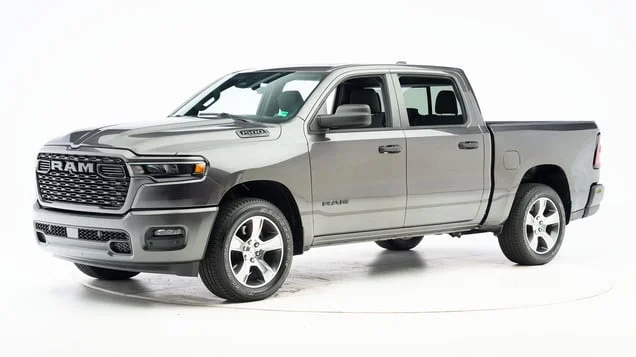
In model names, the shorthand is the second digit. Ford's F-150, Ram 1500, Chevrolet Silverado 1500, GMC Sierra 1500, Toyota Tundra, and Nissan Titan are all half-tons. Ford F-250, Ram 2500, Silverado 2500 HD, and Sierra 2500 HD are three-quarter-tons. F-350, Ram 3500, Silverado 3500 HD, and Sierra 3500 HD are one-tons, with single rear wheel or dual rear wheel (dually) variants available. Ford's F-450 and Ram 4500 are commercial-leaning chassis cabs that cross into medium duty.
The duty labels sort cleanly against the classes. Half-tons are light duty. Three-quarter-tons sit in what the trade calls light heavy duty. One-tons and above are heavy duty by any measure.
| Class | GVWR range | Nominal name | Example 2026 models |
|---|---|---|---|
| Class 2a | 6,001 to 8,500 lbs | Half-ton (1500) | F-150, Ram 1500, Silverado 1500, Tundra |
| Class 2b | 8,501 to 10,000 lbs | 3/4-ton (2500) | F-250, Ram 2500, Silverado 2500 HD, Sierra 2500 HD |
| Class 3 | 10,001 to 14,000 lbs | 1-ton (3500) | F-350, Ram 3500, Silverado 3500 HD, Sierra 3500 HD |
A modern half-ton carries more than the original one-ton
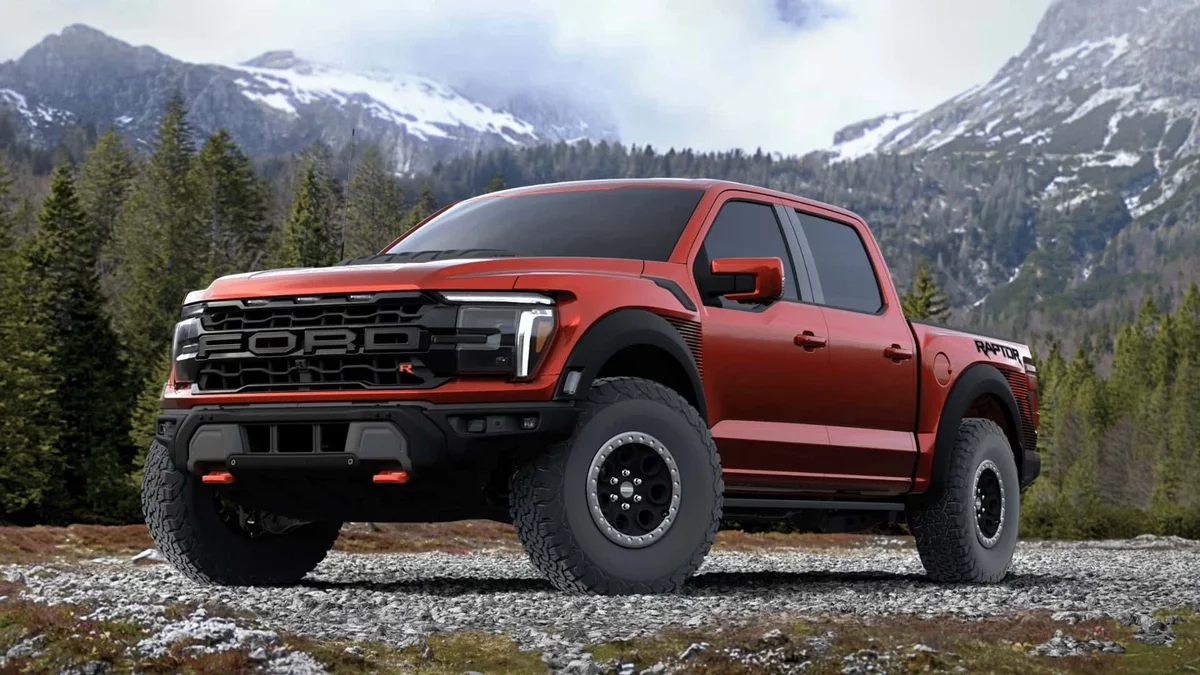
Ford publishes a maximum payload of 2,440 lbs on a properly configured 2026 F-150 with the 3.5L EcoBoost V6, per dealer specification summaries drawn from Ford's build data. The 5.0L V8 gets 2,235 lbs. The 2.7L EcoBoost gets 1,775 lbs. The hybrid PowerBoost carries 2,045 lbs. All four of those numbers are at or above the original one-ton standard.
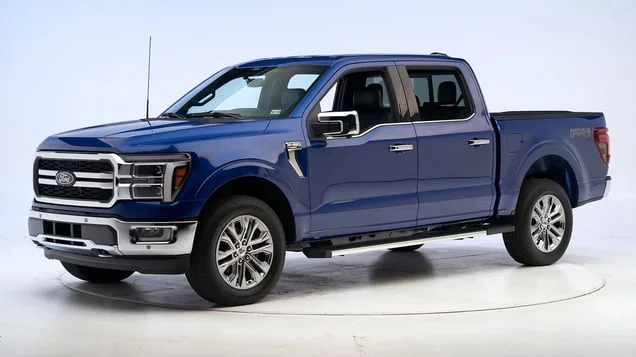
The pattern repeats across the segment. Our pick at the top of the full-size category, the 2026 Ford F-150 Platinum SuperCrew, tows 13,100 lbs and carries 1,964 lbs of payload. The 2026 Chevrolet Silverado 1500 LTZ tows 13,200 lbs and carries 2,000 lbs. The 2026 Ford F-150 XLT SuperCrew tows 10,100 lbs with 1,640 lbs of payload. The 2025 Ford F-150 Lariat reaches 2,080 lbs of payload with the 5.0L V8.
Advertised towing numbers run even higher than payload would suggest. The diesel Chevrolet Silverado 1500 High Country publishes a maximum of 13,300 lbs, and Ford's 4x4 F-150 reaches 13,500 lbs with the 3.5L EcoBoost and Max Trailer Tow package. These numbers are real but conditional: they assume a specific cab, bed, axle ratio, and often a stripped-down trim with a single 150-lb driver and nothing else aboard. Motor Biscuit argues that these window-sticker figures are best treated as ceilings, not promises, noting examples where a change in axle ratio alone drops the same engine's rating from 12,700 to 8,000 lbs.
The number that actually limits a half-ton is payload, not towing
Here is the trap most first-time buyers walk into. The towing capacity is the big headline number on the window sticker. The payload capacity, listed smaller on the door-jamb sticker, is what runs out first when you hitch a serious trailer.
Trailer hitch weight counts as payload. A conventional bumper-pull trailer typically puts 10 to 15 percent of its loaded weight on the hitch, the range SAE J2807 and hitch manufacturers use as the safe band, per JACO's tongue weight guide. A fifth-wheel or gooseneck puts roughly 15 to 24 percent of its loaded weight on the pin, per Camp Addict's towing math breakdown. That weight sits inside the bed of the truck, over the rear axle, and it subtracts from everything else you want to carry.
Run the numbers on a 12,000-lb fifth-wheel camper. Pin weight at 20 percent is 2,400 lbs. A hybrid F-150 Platinum has 1,964 lbs of payload total. Before you add a driver, a passenger, a dog, a cooler, or the hitch itself, you are already over by 436 lbs. The truck's 13,100-lb towing rating was never the limit. The rear axle and payload rating were.
This is why RV Life Magazine's towing guide recommends a three-quarter-ton for any fifth-wheel over roughly 10,000 lbs loaded, even when a half-ton's tow rating technically covers it. The half-ton can pull it. It cannot carry the pin weight within its rated limits.
Stepping up to a 3/4-ton buys rear axle and brakes, not sheet metal
The jump from a 1500 to a 2500 is mostly in the suspension and axles, not the sheet metal. A 2026 Ford F-250 stretches payload to a maximum of 4,240 lbs with the 7.3L gas V8 and Heavy-Duty Payload Package, per dealer specification pages drawing from Ford's fleet guide. Gooseneck towing reaches 23,000 lbs with the high-output diesel. Conventional towing tops 22,000 lbs.
Ram's 2026 2500 sits in the same neighborhood. Per RamTrucks.com, the 2500 carries up to 3,930 lbs of payload with the 6.4L HEMI gas V8 and up to 3,600 lbs with the 6.7L Cummins, and tows up to 20,000 lbs with the Cummins properly equipped. The pattern holds across GM's 2500 HD twins.
What you are actually buying at this level is rear axle capacity. A three-quarter-ton typically carries a 6,000 to 7,000-lb rated rear axle, enough to handle the 3,000 to 3,500-lb pin weight of a large fifth-wheel. The frame is boxed heavier, the rear brakes are bigger, and the leaf-spring pack is more aggressive. The powertrain, if you opt for diesel, adds roughly 400 lbs of iron up front and 400 to 500 lb-ft of torque, which is why gas engines actually out-payload the diesels on these trucks.
One-tons and duallies are for commercial-grade loads
The 3500 class is where pickup trucks start to overlap with what fleet operators and commercial haulers use. The 2026 Ford F-350 single rear wheel carries payload in the 4,000 to 4,300-lb range depending on engine. The dual rear wheel (DRW or dually) version pushes maximum payload to 8,000 lbs with the 6.8L gas V8, and tows up to 38,600 lbs via gooseneck with the 6.7L high-output Power Stroke diesel (40,000 lbs with the optional 40K Gooseneck Tow Package), per dealer summaries of Ford's Super Duty data.
The 2026 Ram 3500 is in the same tier. Per Ram's capability page, the high-output Cummins publishes a maximum of 36,610 lbs of fifth-wheel/gooseneck towing. Gas payload on the 3500 reaches 7,590 lbs. Diesel payload drops to 6,050 lbs because the engine itself is heavier.
These trucks exist for people who tow 15,000 lbs and up every week, haul truck campers that weigh 4,000 lbs dry, operate flatbeds and service bodies, or move livestock, horses, or construction materials for a living. The dually variants add a second set of rear wheels to spread the load across more tire contact patch, which is what enables the highest payload numbers. The trade-off is width (duallies are roughly 8 inches wider at the hips), tighter parking, and a ride that is noticeably stiffer when empty.
The decision rule, in one page
Buy a half-ton (1500/F-150) if: you daily drive the truck, you tow under 10,000 lbs conventional, you carry under 1,500 lbs of payload most of the time, you camp with a travel trailer rather than a fifth-wheel, your boat is under 9,000 lbs loaded, or you are a contractor hauling tools and the occasional pallet. This covers the great majority of personal and light-commercial buyers.
Buy a three-quarter-ton (2500/F-250) if: you tow a fifth-wheel over 10,000 lbs loaded regularly, you carry a slide-in truck camper, you tow horse trailers with multiple animals, your typical trailer weight is 12,000 to 18,000 lbs, or you want diesel torque for grades and heavier loads. Daily drivability is still acceptable, especially on the gas versions.
Buy a one-ton (3500/F-350), single rear wheel if: you regularly tow 15,000 to 22,000 lbs, you need higher payload for commercial bed accessories, or you tow a large fifth-wheel often enough that axle margin matters. Choose dual rear wheel if: your routine trailer exceeds 22,000 lbs, you haul a heavy truck camper, you run a hotshot operation, or you put a flatbed or utility body on the back.
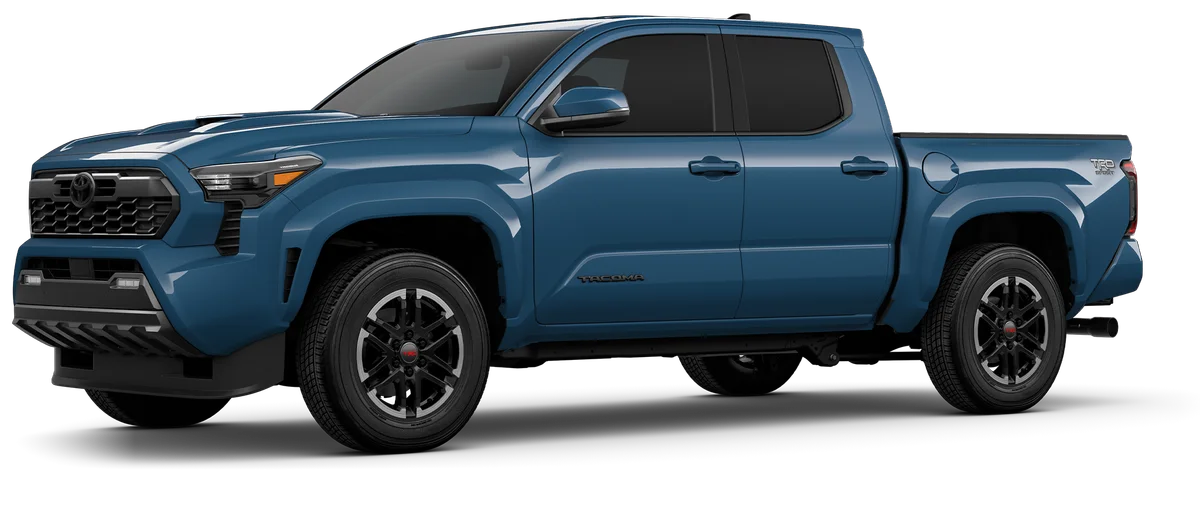
If you are a midsize buyer and none of the above applies, the 2025 Toyota Tacoma TRD Off-Road handles 6,400 lbs of towing and 1,525 lbs of payload, which already exceeds the original half-ton rating. The 2026 Ford Maverick XLT AWD manages 2,000 lbs of towing and 1,500 lbs of payload while returning 40 mpg city as a hybrid. Buyers who think they need a half-ton for occasional light work often fit a compact or midsize truck instead.
The short version
The tonnage names are history, not specifications. A 2026 half-ton can carry up to 2,440 lbs and tow 13,000 lbs or more, which covers almost every private buyer and most light commercial use. Step up to a three-quarter-ton when fifth-wheel pin weight, heavy loads, or daily big-trailer work would otherwise push a half-ton over its payload rating. Reserve a one-ton for genuine commercial-grade jobs. Buying more truck than you need costs you ride quality, fuel economy, and thousands at the dealer, and nothing in the heavy-duty category makes a better daily driver than a well-equipped 1500.
See Best Pickup Trucks of 2026Questions people ask
What does half-ton mean for a pickup truck?+
It is a nickname for a light-duty pickup that originally carried 1,000 lbs (half of a 2,000-lb ton) of payload. Today it describes a chassis size and a federal Class 2a GVWR range of 6,001 to 8,500 lbs. Actual payload on modern half-tons like the F-150 and Silverado 1500 ranges from about 1,600 lbs to 2,440 lbs depending on engine and trim.
What is the difference between a half-ton and a 3/4-ton truck?+
A 3/4-ton (Ford F-250, Ram 2500, Silverado 2500 HD) uses a heavier frame, a bigger rear axle rated around 6,000 to 7,000 lbs, larger brakes, and stiffer leaf springs. Payload roughly doubles (up to 4,240 lbs on a 2026 F-250) and towing rises past 20,000 lbs with the diesel. The ride is firmer when unloaded and fuel economy drops.
Do I need a heavy-duty truck or will a half-ton work?+
Most buyers do not need heavy duty. A modern half-ton handles trailers up to roughly 10,000 lbs, travel trailers with tongue weight under 1,000 lbs, and payloads under 1,500 lbs without strain. You only need heavy duty if you tow a fifth-wheel over about 10,000 lbs loaded, carry a slide-in truck camper, or tow large horse trailers regularly.
What is a light-duty vs heavy-duty pickup truck?+
Light-duty refers to half-ton trucks in Class 2a (6,001 to 8,500 lbs GVWR). Heavy-duty refers to 3/4-ton (Class 2b, 8,501 to 10,000 lbs GVWR) and 1-ton (Class 3, 10,001 to 14,000 lbs GVWR) trucks. The categorization is set by Gross Vehicle Weight Rating and drives emissions rules, EPA fuel-economy label requirements, and in some states registration or driver's-license treatment.
When should I actually buy a 3/4-ton or 1-ton truck?+
Step up to a 3/4-ton when your regular trailer is 10,000 lbs or heavier loaded, when pin weight on a fifth-wheel would exceed your half-ton's payload, or when you want diesel torque for grades. Step up to a 1-ton (single rear wheel) above about 15,000 lbs of regular towing, and to a 1-ton dually above 22,000 lbs or when you need commercial-grade payload above 6,000 lbs.
Can a half-ton truck tow more than 1,000 pounds?+
Yes, by a large margin. A 2026 Ford F-150 is rated to tow up to 13,500 lbs with the 3.5L EcoBoost and Max Trailer Tow package, and base trims routinely tow 7,000 to 10,000 lbs. The 1,000-lb figure referred to original 1940s payload, not towing, and no modern pickup is limited to anything close to it.
Is a diesel 3/4-ton better than a gas one?+
Diesel wins on torque, towing capacity, and fuel economy under load. Gas wins on payload (the engine is lighter), purchase price (roughly $9,000 to $11,000 less at order), and routine maintenance. Diesel adds DEF, bigger oil changes with 10 to 15 quarts, and more expensive filters. Choose diesel if you tow heavy regularly; choose gas if you mostly haul.
Why does a loaded half-ton tow rating seem higher than a 3/4-ton's payload would allow?+
Advertised tow ratings assume a stripped-down specific configuration (single driver, no passengers, no cargo, specific axle ratio) and ignore that the trailer's tongue or pin weight has to fit within the truck's payload. The headline number is a ceiling. The real-world limit is almost always payload, not tow rating. Pull the door-jamb sticker on the specific truck you are considering.
Sources
What this guide is based on. We research from published specifications, independent reviews and owner reports; we did not test these products ourselves.
- 1.What Does Half-Ton, Three-Quarter-Ton, One-Ton Mean When Talking About Trucks?, Cars.com
- 2.Quick Facts About 1/2-Ton, 3/4-Ton, and 1-Ton Trucks, Kelley Blue Book
- 3.Dodge WC series, Wikipedia
- 4.Truck Classifications: Light vs Medium vs Heavy Duty, Diesel Hub
- 5.Ford F-150 Weight: 2026 Curb Weight, Payload, GVWR, Sneed Ford
- 6.2026 F-250 Towing Capacity and Payload, Greg Hubler Ford
- 7.2026 Ram 2500 Capability, Ram Trucks
- 8.2026 Ram 3500 Capability, Ram Trucks
- 9.2026 F-350 Towing Capacity & Payload Ratings, T&S Ford
- 10.Towing With a Half-Ton or Three-Quarter-Ton, RV Life Magazine
- 11.RV Towing Capacity Explained: Payload, GVWR, GCWR, and Tongue Weight Math, Camp Addict
- 12.Tongue Weight Explained: Balance Your Trailer Safely, JACO
- 13.Behind the Wheel: Heavy-Duty Pickup Trucks, Consumer Reports
- 14.The Real Cost of Owning a Diesel, VeHQ
- 15.Serious Truck Buyers Don't Care About Half-Ton Pickups' Advertised Towing Capacity, MotorBiscuit
Products mentioned
More on pickup trucks
Explainer
Midsize vs Full-Size Pickup Truck: What You Actually Give Up and Gain
How the Toyota Tacoma, Chevy Colorado, Ford F-150, and Ram 1500 compare on towing, payload, size, fuel economy, and resale, with the numbers that actually decide which pickup you should buy.
Explainer
4WD vs AWD vs 2WD in Pickup Trucks: What the Labels Mean and When You Need Each
Pickup 4WD is a part-time, driver-selected system for loose surfaces, not daily driving. AWD is automatic. 2WD saves money, weight, and fuel. Here is what each system actually does, what it costs, and when to engage it.
Explainer
What Actually Happens to Electric Pickup Truck Range When You Tow
Real tow tests show electric pickups lose 40 to 60 percent of their rated range pulling a loaded trailer at highway speed. Here is what that means for anyone deciding whether to buy one.
Explainer
What the Towing Capacity Number on the Window Sticker Does Not Tell You
The max tow number on a pickup's window sticker is a laboratory figure tied to one trim, one driver, and an empty bed. Here is how payload, tongue weight, and GCWR actually set what your truck can pull.
Buying guide
How to Choose a Pickup Truck: Five Decisions in Order
Start from the heaviest thing you will ever tow or haul, then work through payload, cab, drivetrain, powertrain, and price. Each step eliminates trucks before you reach a dealer.