Explainer
EPA Range vs. Real-World Range: What You Will Actually Get
EPA ratings are measured at 75 degrees with mild driving. Highway speed, cold weather, and towing can each cut real EV range 20 to 60 percent. Here is how to estimate yours.
Updated November 11, 2026 · Based on 16 sources · How we research
If you are shopping for an electric car and treating the window-sticker EPA range as a promise, this guide is for you. The EPA number is a blended lab average, not a highway rating, and it was measured at 75 degrees with climate control barely working. On a January interstate at 75 mph, a 400-mile EV can deliver well under 250 miles, and towing a tall travel trailer can cut it in half again. The good news: once you understand the three variables that dominate real-world range, speed, temperature, and load, you can predict within about 10 percent what any given EV will do on your commute, your road trip, or your tow weekend.
The EPA label is a lab average, not a highway promise
The EPA range you see on a window sticker comes from two dynamometer tests. The UDDS city cycle averages 21.2 mph with frequent stops, and the HWFET highway cycle averages 48.3 mph with no sustained speeds above 60 mph (EPA test procedures for EVs). The combined label weights city results at 55 percent and highway at 45 percent, then applies a blanket 0.7 adjustment factor meant to stand in for climate-control use and aggressive driving (GreenCars on EPA range).
The flip from gas cars matters here. Combustion cars are least efficient in stop-and-go city driving, so their city MPG number is lower than their highway number. EVs are the opposite. Regenerative braking and the absence of idling make city driving their best environment, while sustained highway speeds expose aerodynamic drag that no amount of regen can offset. The EPA's combined number therefore flatters EVs for buyers whose daily commute is mostly interstate (Green Car Reports).
How big is the overall gap? The BEV Database's 2026 analysis of 1,678 electric vehicles found that real-world estimates averaged about 10.5 percent below the EPA label in the United States, with much wider spreads at highway speed and in cold weather (BEV Database range gap report).
Highway speed is the single biggest controllable factor
The physics are unforgiving. Aerodynamic drag force rises with the square of speed, and the power needed to overcome that drag rises with the cube (The Truth About Cars). Going from 65 to 75 mph adds roughly a third more drag force and about 50 percent more drag power. In practice that translates to 15 to 20 percent of range recovered just by slowing down 10 mph on a long drive.
Consumer Reports put real numbers on this. In its 70 mph highway test of 22 EVs, nearly half fell short of their EPA ratings. The Ford F-150 Lightning Lariat Extended Range came up 50 miles short; a Tesla Model S Long Range managed 366 miles against a 405-mile rating, a 39-mile shortfall; and a Lucid Air Touring missed by 40 miles (Consumer Reports press release, Motor1 on the Consumer Reports test). A few efficient sedans beat their ratings. Trucks and SUVs rarely did.
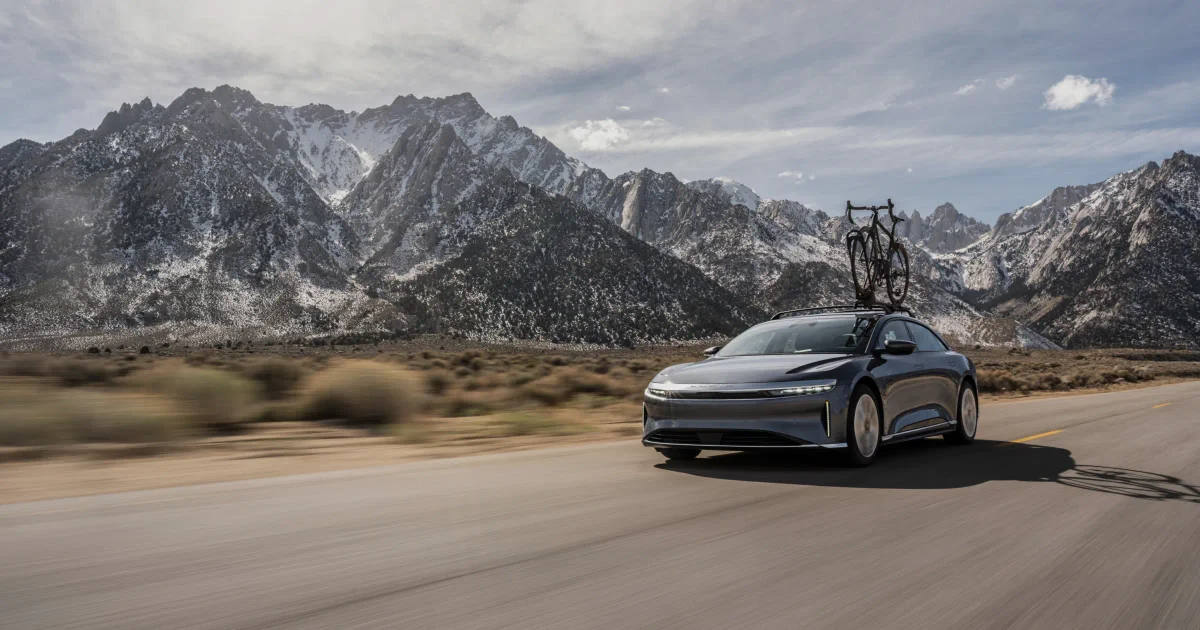
Efficiency separates the pack. In an InsideEVs 70 mph highway test, a 2026 Lucid Air Grand Touring on 19-inch wheels covered 463 miles against a 516-mile EPA rating, still the longest highway run in the database (InsideEVs Lucid Air GT highway test). Most other EVs cannot touch that because Lucid's drivetrain draws about 240 Wh per mile at highway cruise, where a heavier, less aerodynamic SUV can draw 380 Wh per mile or more.
Cold weather cuts the deepest, and the heater, not the battery, is the real cost
Recurrent's winter analysis of real-world data from more than 10,000 EVs across 13 popular models found that electric cars retain about 78 to 80 percent of normal range at 32 degrees, with much wider variation between models at lower temperatures (Recurrent winter range study). AAA's 2026 cold-chamber dynamometer study produced a more extreme figure: a 39 percent range reduction at 20 degrees with the heater on, with public-charging costs rising to match (Autoblog on AAA cold-weather study).
The two studies agree on the mechanism. AAA found that cold battery chemistry alone, with no heat or defrost, reduced range only about 12 percent. The remaining 27 percentage points came from cabin heating, defrost, and battery conditioning (NPR on how AAA tests EV winter range). In practical terms, a 400-mile EV in your driveway is a 240-mile EV at 20 degrees with the heater running, and dropping below zero takes you lower still.
The variation between models is wide. In Recurrent's data, the best cold-weather performer, a Tesla Model X, kept 89 percent of range at freezing, while the worst, a Volkswagen ID.4, kept only 63 percent. Hardware choices, mainly whether the car has a heat pump, explain most of the gap.
Heat pumps and preconditioning shrink the winter penalty
The single most important cold-weather feature is a heat pump, which moves heat from ambient air and the drivetrain into the cabin instead of generating it from scratch with a resistive element. Recurrent's data shows EVs with heat pumps lose on average 13 percent of range in the cold against 28 percent for cars without, worth about 10 percentage points of retained range (Recurrent on heat pumps). Within the same model line, a Tesla Model 3 with a heat pump lost 13 percent of range in the cold while a pre-heat-pump Model 3 lost 21 percent (InsideEVs on heat pump cold-weather data).
Tesla, Hyundai and Kia (E-GMP cars), BMW, Lucid, Volvo, and Rivian all ship heat pumps on current models. If you shop for an EV in a cold climate, treat the heat pump as non-negotiable. The 2026 Hyundai IONIQ 5 N and the rest of Hyundai-Kia's E-GMP cars use a vapor-injection scroll compressor that owners consistently report as effective in freezing conditions.
The matching behavior is preconditioning: warming the cabin and the battery while the car is still plugged in so the wall absorbs the energy instead of the driving battery. Doing that before a January morning commute can save 10 to 15 percent of range and will also unlock faster DC fast-charging when you arrive at a station.
Towing collapses the EPA number faster than anything else
Towing stacks three penalties, mass, rolling resistance, and above all aerodynamic frontal area, and above about 55 mph the aerodynamic one dominates. Rivian itself tells buyers to expect about half the non-towing range at maximum capacity (Teslarati on Rivian R1T towing). Independent tests confirm the ballpark. A 2026 Rivian R1T Dual Large hauling about 9,000 pounds lost 45 percent of its driving range in a Motor Trend test, and Consumer Reports' run with a five-ton box trailer extrapolated to a maximum of just 85 miles, less than a third of the EPA 329-mile rating (KBB on electric truck towing).
Shape matters more than weight. A low, teardrop-profile trailer at 2,500 pounds may cost only 25 to 30 percent of range, while a tall, boxy enclosed travel trailer behind the same truck can cost 55 to 70 percent. The 2026 Chevrolet Silverado EV LT Extended Range exists in part because the only way to produce credible trailer range in an EV today is a very large battery. Its 170-kWh pack is more than twice the size of a Tesla Model Y's, and it is rated for 12,500 pounds of towing.
Add cold weather to a tall trailer at 70 mph and the penalties compound. Plan on 35 percent of EPA range in that worst case, which is why experienced EV towers plan charge stops every 100 miles or so rather than trusting a trip computer.
How to estimate the range you will actually get
For most drivers, a simple derating approach lands within 10 percent of real-world results. Start with the EPA number, then multiply by the row that matches your conditions. The table below is calibrated against the Consumer Reports, Recurrent, AAA, and Edmunds results cited in this guide.
| Scenario | Multiplier on EPA range |
|---|---|
| Mild weather (50-80F), 65 mph highway, no load | 0.90 |
| Mild weather, 75 mph highway, no load | 0.80 |
| 30F, heater on, 70 mph, heat pump plus preconditioning | 0.75 |
| 20F, heater on, 70 mph, no heat pump | 0.60 |
| Any temperature, towing 4,000 lb low-profile trailer at 65 mph | 0.55 |
| Below 30F, towing a tall travel trailer at 65 mph | 0.35 |
Worked examples with cars from our ranking
A 2026 Lucid Air Grand Touring rated at 512 miles EPA works out to about 410 miles at 75 mph in summer, roughly 384 miles at 30 degrees with its heat pump on, and about 180 miles towing a tall travel trailer at 20 degrees. The highway estimate is consistent with InsideEVs' 70 mph test, which returned 463 miles (InsideEVs).
A 2026 Tesla Model Y Long Range AWD rated at 327 miles works out to about 260 miles at 75 mph, about 245 miles at 30 degrees with preconditioning, and roughly 115 miles if you ask it to tow a tall trailer in the cold, which is why Tesla rates the Model Y at 3,500 pounds and discourages heavier loads.
A 2026 Rivian R1T Dual Large rated at 329 miles will do roughly 265 miles on the highway unladen, drops to about 160 miles with a 5,000-pound trailer, and closer to 120 miles with a heavy fifth-wheel in the cold. The Chevrolet Silverado EV LT Extended Range, with 61 kWh more battery, produces meaningfully more tow range even though its EPA figure is not far above the Rivian's.
Which EVs in our rankings hold up best
Range retention follows three design choices: a heat pump, strong aerodynamics (a drag coefficient around 0.22 or lower), and a drivetrain tuned for efficiency rather than peak power. In the best electric cars of 2026 ranking, three cars stand out for how little they punish real-world conditions.
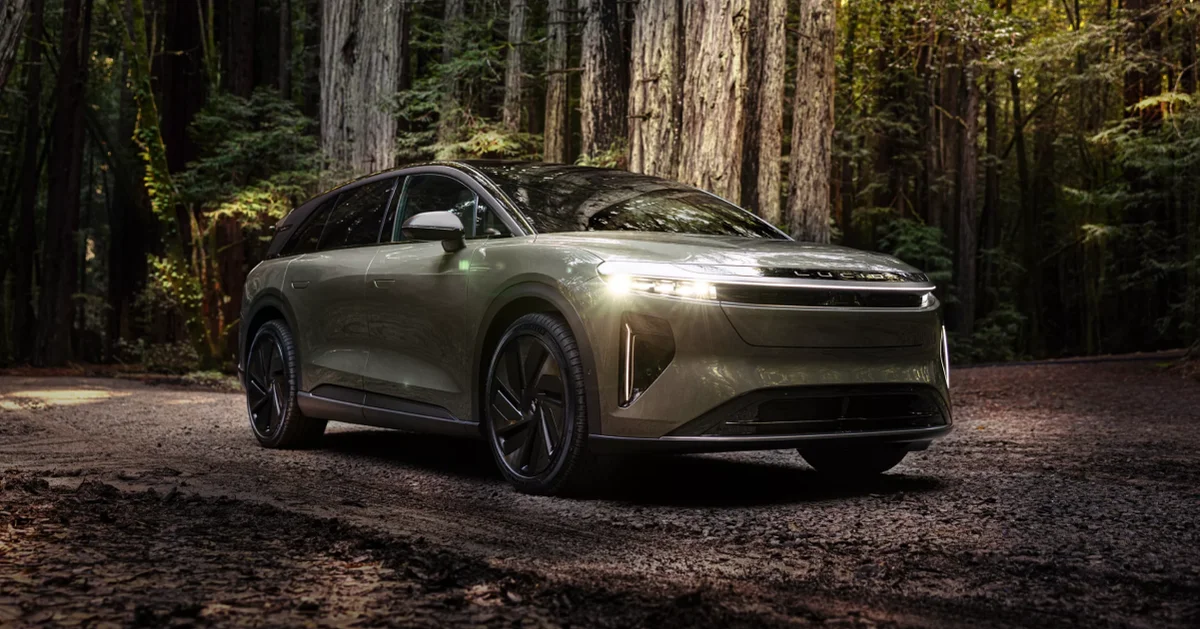
The Lucid Air Grand Touring is the clearest case. Its 516-mile EPA figure on 19-inch wheels is backed by an InsideEVs 70 mph test that returned 463 miles, well above anything else tested at the same speed. The Tesla Model S Long Range at 405 miles EPA loses more at steady 70 mph (366 in Consumer Reports' test) but benefits from Tesla's heat pump and the Supercharger network, which matters more than quoted range for most long trips. For families, the Lucid Gravity Grand Touring pairs 407 miles of EPA range with a heat pump and 400-kW charging, the practical combination for fast winter recoveries.
If you tow regularly, prioritize battery size over EPA range. The Chevrolet Silverado EV LT Extended Range with 170 kWh and the Rivian R1T Dual Large with 108.5 kWh are the two in the ranking with the biggest packs for producing usable tow range with a trailer attached. On paved loops at 40 mph average, efficient sedans like the Mercedes EQS 450+ can beat EPA (464 miles against a 390-mile rating in Edmunds' leaderboard, Edmunds), which is a reminder that in gentle conditions the lab figure is survivable. On the interstate at 75 in January, it is not.
The short version
Treat the EPA range as a ceiling, not a target. For a daily driver in a mild climate, buy an EV whose EPA rating is roughly 1.4 times your worst-expected round trip. In a cold climate without reliable home charging, aim for 1.7 times. If you tow or carry heavy loads often, EPA numbers are almost irrelevant: look at usable battery capacity in kWh and at independent tow-range tests from outlets like Motor Trend or Consumer Reports. A 512-mile Lucid Air is a genuinely different animal from a 266-mile hot hatch, but both will disappoint if you ignore the physics.
See Best Electric Cars of 2026Questions people ask
Is the EPA range accurate for electric cars?+
Partially. The BEV Database's 2026 analysis of 1,678 EVs found US models deliver on average 10.5 percent less than their EPA rating under real-world conditions, with much larger gaps at highway speed or in cold weather. Some efficient designs, including the Lucid Air and the current Mercedes EQS 450+, have beaten their EPA ratings in Edmunds' mixed-loop testing. Most trucks and SUVs fall well short at 70 mph on the highway.
Why does my EV get less range than advertised?+
The EPA label is a weighted average of a low-speed city cycle (21.2 mph) and a moderate-speed highway cycle (48.3 mph), run at 75 degrees with minimal climate load. Real driving at 70 or 75 mph, in cold or hot temperatures, or with cargo or passengers is simply harder work than the test. Highway speed and cabin heating are the two biggest factors.
How much range do electric cars lose in winter?+
On average about 20 percent at freezing (32F), per Recurrent's analysis of more than 10,000 EVs across 13 popular models. AAA's 2026 dynamometer study measured a 39 percent loss at 20F with the cabin heater running. Vehicles with heat pumps lose roughly 10 percentage points less than those without, and preconditioning while plugged in recovers another 5 to 10 percentage points.
Does highway driving use more range than city driving in an EV?+
Yes, which is the opposite of gasoline cars. Regenerative braking and the absence of idling make city driving efficient for EVs, while sustained highway speed exposes aerodynamic drag. The power needed to overcome drag rises with the cube of speed, so most EVs are 15 to 25 percent more efficient in city driving than on the interstate.
What is real-world EV range?+
It is the distance your car will actually travel in your conditions, your typical speed, your climate, and your load, rather than the EPA's lab blend. A practical estimate is EPA range times about 0.80 for summer highway driving, 0.75 for winter highway with a heat pump, 0.60 for cold without one, and 0.35 or less when towing a tall trailer in the cold.
How much range will I actually get in cold weather?+
Expect about 78 to 80 percent of EPA at freezing and, with the heater running at 20F, as little as 60 percent per AAA's dynamometer work. Preconditioning the cabin and battery while plugged in, keeping the car garaged, and running the heater at a lower setting while using heated seats and steering wheel can claw back 5 to 10 percentage points. A heat pump is worth roughly another 10.
Do any EVs beat their EPA range?+
Yes, some. Edmunds' standardized 60-percent-city, 40-percent-highway loop has recorded the Mercedes EQS 450+ at 464 miles against a 390-mile rating, and the Lucid Air routinely ranks near the top of that leaderboard. At steady 70 mph, however, only a handful of efficient sedans beat EPA, and almost no SUVs or trucks do.
Should I buy more EPA range than I think I need?+
In cold climates and for drivers without reliable home charging, yes. Budget 1.5 to 1.7 times your worst-case round trip. If you have home Level 2 charging and a mild climate, 1.3 times is usually enough. If you tow regularly, ignore EPA range and plan around battery kWh and the DC fast-charger map on your route.
Sources
What this guide is based on. We research from published specifications, independent reviews and owner reports; we did not test these products ourselves.
- 1.EPA Test Procedures for Electric Vehicles and Plug-in Hybrids, US EPA / fueleconomy.gov
- 2.How EPA Estimated Range Is Calculated, GreenCars
- 3.Reminder: Most EVs don't deliver EPA range at 70 mph, Green Car Reports
- 4.Nearly Half of EVs in Our Highway-Only Range Test Fell Short of Their EPA Estimates, Consumer Reports
- 5.Consumer Reports Says Nearly Half Of EVs Tested Fall Short Of EPA Range Estimates, Motor1
- 6.Real Range for Electric Cars by Temperature and Weather, Recurrent
- 7.AAA Finds EV Range Drops 39% in Cold Weather and Costs Jump, Autoblog
- 8.A giant treadmill in a freezer: How AAA tests the winter range of EVs, NPR
- 9.Here's How Much Range These Popular EVs Lose In The Cold, InsideEVs
- 10.Lucid Air Grand Touring Highway Range Test: Nothing Beats This, InsideEVs
- 11.Rivian R1T's first real-world towing test shows range loss, Teslarati
- 12.How Far Can an Electric Truck Tow?, Kelley Blue Book
- 13.EV Range Explained: Speed, Drag and Heating, The Truth About Cars
- 14.Real-World EV Range Gap Report 2026: WLTP/EPA vs BEVDB Estimates, BEV Database
- 15.Newest EV Range Tests Added to Edmunds' Leaderboard, Edmunds
- 16.Fuel Economy and EV Range Testing, US EPA
Products mentioned
More on electric cars
Explainer
How Much Range Do You Lose Towing With an Electric Vehicle?
What real tow tests on Rivian, Chevrolet Silverado EV, Ford F-150 Lightning and Tesla show about range loss, and how to plan a towing trip on a battery.
Explainer
Can You Own an Electric Car Without Home Charging?
A straight look at EV ownership without a driveway or garage: who makes it work in 2026, what it costs, and when to skip electric entirely.
Explainer
Does DC Fast Charging Damage Your EV Battery?
What large fleet studies say about DC fast charging and long-term EV battery health, when the 80 percent rule matters, and the habits that actually move the needle.
Explainer
EV Charging Levels Explained: Level 1, Level 2, and DC Fast Charging
Level 1, Level 2, and DC fast charging all deliver different speeds, and your car's acceptance rate caps how fast each one goes. Here is what each level actually adds per hour, what your car's spec sheet controls, and how to pick a home and road setup.
Buying guide
How to Choose an Electric Car: A Decision Framework for 2026
Four questions about your own driving decide which EV is right. Range, charging, towing, and ownership length, with real numbers and which specs are marketing.