Explainer
Why Rolls-Royce, Bentley, and Lamborghini Have No NHTSA or IIHS Safety Ratings
A $400,000 SUV with no crash test rating is not exempt from federal safety law. It is simply too rare for public labs to buy and destroy. Here is what that gap actually means.
Updated November 17, 2026 · Based on 17 sources · How we research
If you are spending between $245,000 and $435,000 on an SUV, the car has to meet every Federal Motor Vehicle Safety Standard that applies to a $35,000 Toyota. That is not where the gap is. The gap is in what you can look up. A Rolls-Royce Cullinan, Bentley Bentayga, or Lamborghini Urus has no NHTSA star rating and no IIHS Top Safety Pick, so the usual shortcut buyers use to judge safety simply is not there. The common explanation is that these cars are "exempt" from testing. They are not. They are just not chosen for testing. That distinction is what this guide unpacks, and it changes how you should read the empty safety field on a spec sheet.
The short answer: nobody has crashed one
The 2026 NHTSA New Car Assessment Program buy list runs to the Acura MDX, Audi Q4 e-tron, BMW X5, Chevrolet Equinox, Jeep Grand Cherokee, Nissan Rogue, and similar mainstream nameplates. Rolls-Royce, Bentley, and Lamborghini SUVs never appear on it. NHTSA buys test cars anonymously from dealer lots and chooses models that are "new, potentially popular, redesigned with structural changes, or have improved safety equipment," and its test fleet is sized to cover roughly 87% of the new-vehicle market by sales (NHTSA, 2026 Model Year Vehicles Selected for Testing; Federal Register, New Car Assessment Program). Ultra-luxury SUVs sit squarely in the remaining 13%. For scale, Rolls-Royce delivered 5,664 cars worldwide across its entire range in 2025, down 0.8% year-over-year (Korea BizDaily, Rolls-Royce 2025 deliveries). NHTSA is not going to destroy three Cullinans at roughly $432,000 each to add a rating that affects a few thousand U.S. buyers.
IIHS makes its own picks, is funded by the insurance industry, and covers more ground, around 80% of mainstream models and about 97% of passenger vehicles by sales (Consumer Reports, Some Cars Will Never Be Crash-Tested). It crash-tests the Porsche Cayenne line, the Audi Q7, the BMW X7, and the Range Rover. It has not put a Cullinan, Bentayga, or Urus on the barrier, and neither has Autoblog's data feed from third-party crash databases (Autoblog, 2023 Bentley Bentayga Safety Ratings). That is a budget choice, not a legal one.
The "low-volume exemption" most buyers describe does not exist
The phrase gets repeated on manufacturer FAQ pages, forum threads, and even some product listings. The implication is that there is a clause in federal law that lets small-volume automakers skip crash standards. There is not. NHTSA's own position, stated plainly in its interpretation file, is that "there is no exclusion from the Federal motor vehicle safety standards (FMVSS) based upon the volume produced by the manufacturer. All motor vehicles must comply with all FMVSS, unless the agency has exempted them from one or more of the standards" (NHTSA Interpretation 0566).
The one actual low-volume carve-out in U.S. law is the Low Volume Motor Vehicle Manufacturers Act of 2015, which NHTSA operationalized through its 2022 replica vehicle rule (Federal Register, Replica Motor Vehicles Final Rule; Wikipedia, Low Volume Motor Vehicle Manufacturers Act of 2015). It applies only to "replica" vehicles, defined as cars designed to look like a model at least 25 years old, and it caps the exemption at 325 vehicles per year per manufacturer, with the underlying manufacturer limited to 5,000 or fewer vehicles globally. That is what gets a small Shelby Cobra builder on the road under current-year emissions. It does not touch Rolls-Royce, Bentley, or Lamborghini. The RankGrids item page for the Rolls-Royce Cullinan Series II 2026 reflects the testing status, not a legal exemption that would apply.
How a Cullinan actually meets U.S. safety law
The U.S. is a self-certification system. The manufacturer declares, by affixing a certification label to the doorjamb, that the vehicle complies with every applicable FMVSS, and NHTSA spot-audits by buying cars and running its own compliance tests (NATC, Automotive FMVSS Testing and Compliance). The certifier is not even required to run the agency's exact test procedures. NHTSA's interpretation file is explicit: "A manufacturer must have a reasonable basis for its certification, but there is no legal requirement that it test according to the procedures set out in the FMVSS" (NHTSA Interpretation 10425). Computer simulation, engineering studies, component testing, and parent-company crash data can all constitute a reasonable basis.
That system means two things at once. First, every Cullinan, Bentayga, and Urus sold in the U.S. was built against the same frontal, side, rollover, roof-crush, restraint, and airbag standards as every other new SUV on the road. Second, you have no published evidence of how it performed under those tests, because internal certification data is not released. Recalls fill in some of the gaps when a problem reaches customers. In March 2026, BMW of North America recalled 102 Rolls-Royce Cullinans built between 2020 and 2026 because fixing bolts for the rear seat-belt anchors and backrest locking brackets had not been tightened to specification, and owners were told to stop using the rear seats and luggage area until the fix was installed (Carscoops, Rolls-Royce Cullinan recall, March 2026; NHTSA Recall 26V143). That is what the self-certification system catching a defect downstream actually looks like.
The MLB Evo cousins: indirect evidence on two of the big names
The Bentley Bentayga and Lamborghini Urus share their core architecture, suspension mounting points, firewall geometry, and front crash structure with vehicles that have been publicly tested. Both ride on Volkswagen Group's MLB Evo platform, alongside the Audi Q7, Audi Q8, Porsche Cayenne, and VW Touareg (Wikipedia, Volkswagen Group MLB platform; Wikipedia, Lamborghini Urus; Wikipedia, Bentley Bentayga). Each brand tunes its air suspension, drivetrain, and interior differently, but the hard points of the body in white are common.
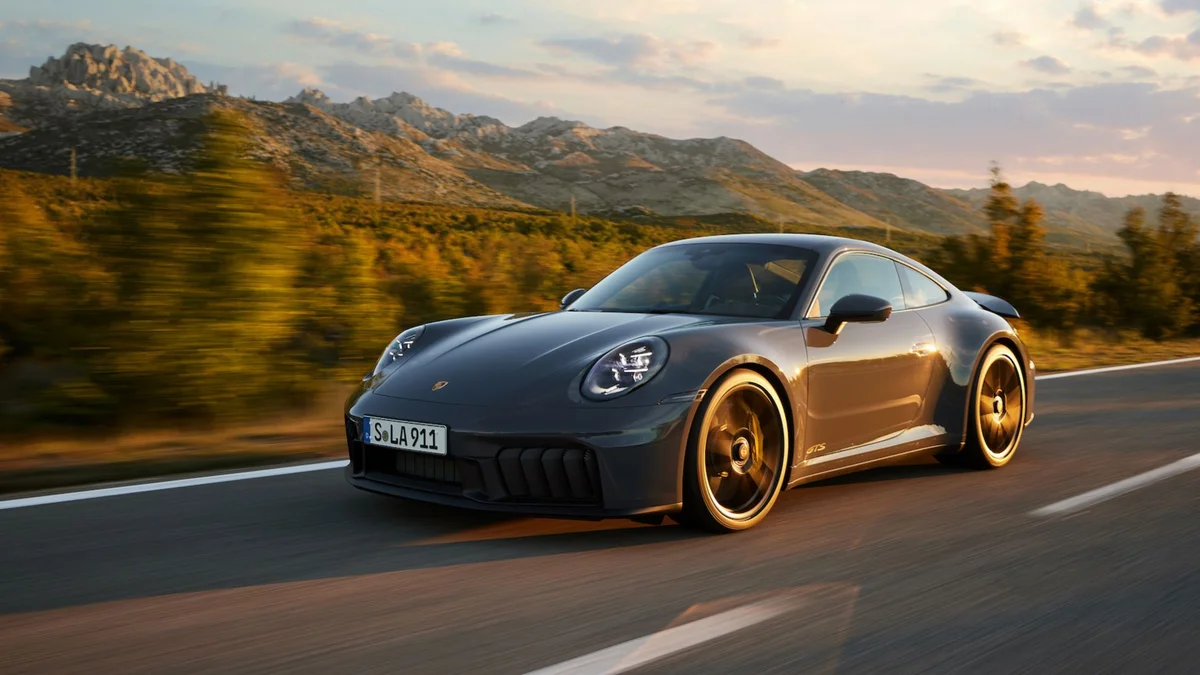
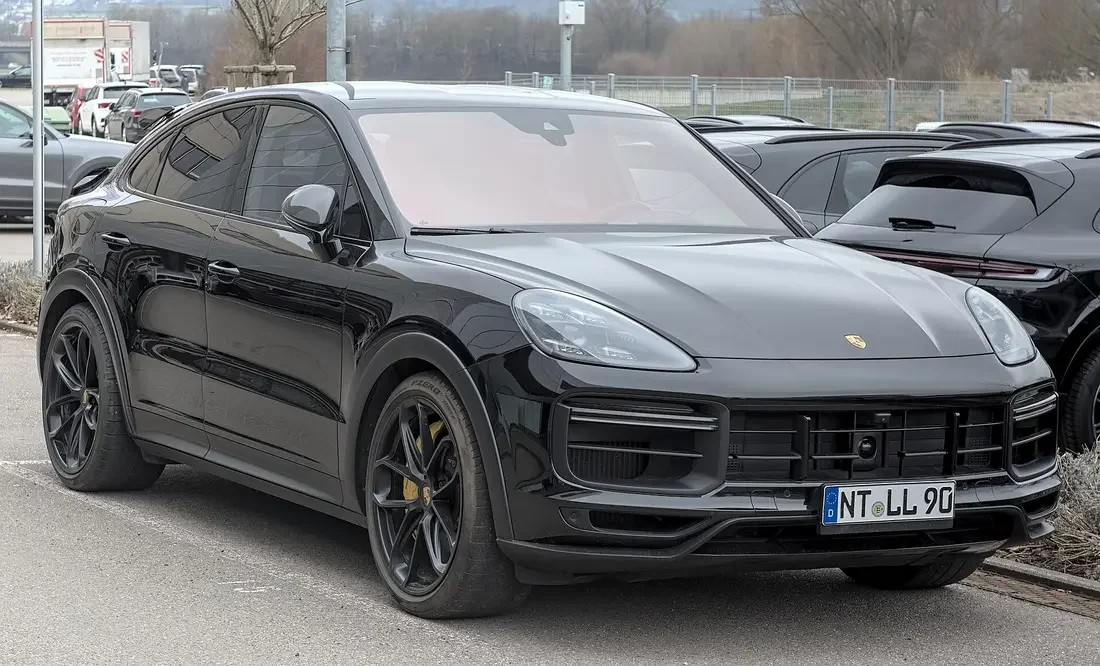
Of the cousins, the Porsche Cayenne has been through Euro NCAP's five-star assessment, with 91% adult occupant protection and a stable passenger compartment in the frontal offset test (Euro NCAP, Porsche Cayenne). The Audi Q7 earned IIHS Top Safety Pick+ for the 2023-24 model year, with Good ratings in the driver and passenger small-overlap front tests, the moderate overlap test, and the updated side test (IIHS, better-aimed headlights boost Audi Q7 to Top Safety Pick+). That is circumstantial rather than proof. Bentley adds 180 kg (about 400 pounds) of sound-deadening material, triple-layer acoustic glass, and self-closing doors to the Bentley Bentayga Speed 2026, and Lamborghini retunes everything for stiffness on the Lamborghini Urus SE 2026. But the underlying body has survived current-protocol testing in two brand variants, which is the closest third-party evidence available for either car.
The Rolls-Royce Cullinan is a different situation. It sits on BMW Group's aluminium spaceframe shared with the Phantom and Ghost sedans, and no car on that platform has been publicly crash-tested anywhere. For the Cullinan, the only safety evidence outside BMW's internal testing is the recall record on nhtsa.gov and HLDI insurance loss data.
What the missing rating actually costs you as a buyer
It is worth naming precisely what the absence of a rating prevents you from knowing. There are specific pieces of information a $55,000 Audi Q5 buyer can look up in five minutes and a $430,000 Cullinan buyer simply cannot:
- A small-overlap front result at IIHS's updated protocol. This is the test that failed roofs on many SUVs a decade ago and drove structural redesigns across the segment. There is no public small-overlap number for the Cullinan, Bentayga, or Urus.
- A side-pole result at IIHS's updated higher-energy side test. The current protocol is meaningfully more severe than the older one, and designs that passed the old test have struggled at the new one.
- A headlight rating. IIHS rates luminance and glare by trim level, and in the ultra-luxury segment hardware varies widely between a base car and a loaded one.
- An ADAS evaluation. Pedestrian automatic emergency braking at night, lane-departure prevention, and blind-spot intervention are now rated independently by IIHS. The ultra-luxury trio equip assistance systems, but none has a public test score.
| Vehicle | NHTSA | IIHS | Euro NCAP |
|---|---|---|---|
| Rolls-Royce Cullinan Series II | Not tested | Not tested | Not tested |
| Bentley Bentayga Speed | Not tested | Not tested | Not tested |
| Lamborghini Urus SE | Not tested | Not tested | Not tested |
| Porsche Cayenne (platform cousin) | 5-star overall | Top Safety Pick+ (2024, Cayenne S) | 5-star, 91% adult |
| Audi Q7 (platform cousin) | 5-star overall | Top Safety Pick+ (2023-24) | 5-star |
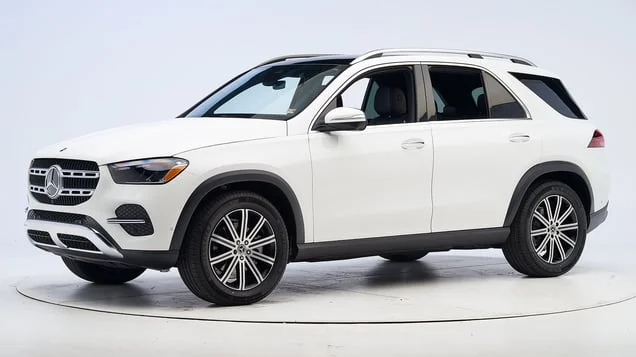
| Mercedes-Benz GLE 450 | Tested | Top Safety Pick+ 2026 | Tested |
Is a $400,000 SUV without a crash rating actually unsafe?
Probably not, and the reasoning is unglamorous. These are heavy vehicles, well over 5,000 pounds in curb weight, which in a two-vehicle collision favors the occupants. They carry the standard package of federally required restraints: multi-stage front airbags, side-curtain airbags, pretensioners, and load limiters. On the ADAS side, standard equipment on the Cullinan Series II spans adaptive cruise with stop-and-go, lane departure warning, blind-spot alert, night vision with pedestrian detection, and surround cameras, and the Urus SE lists automated emergency braking and a 360-degree camera among its standard driver aids.
Owner-reported insurance data partially fills the independent-evidence gap. HLDI, the IIHS research arm, publishes claim frequency and severity by model, and for low-volume vehicles the sample is thin but directional. Insurers quoting a Bentayga or Cullinan already price that in. If your quote on a $432,000 Cullinan runs the way it usually does, part of what you are paying for is the insurer's own statistical view of how the car crashes, pieced together from real claims rather than barrier tests (Consumer Reports, Some Cars Will Never Be Crash-Tested).
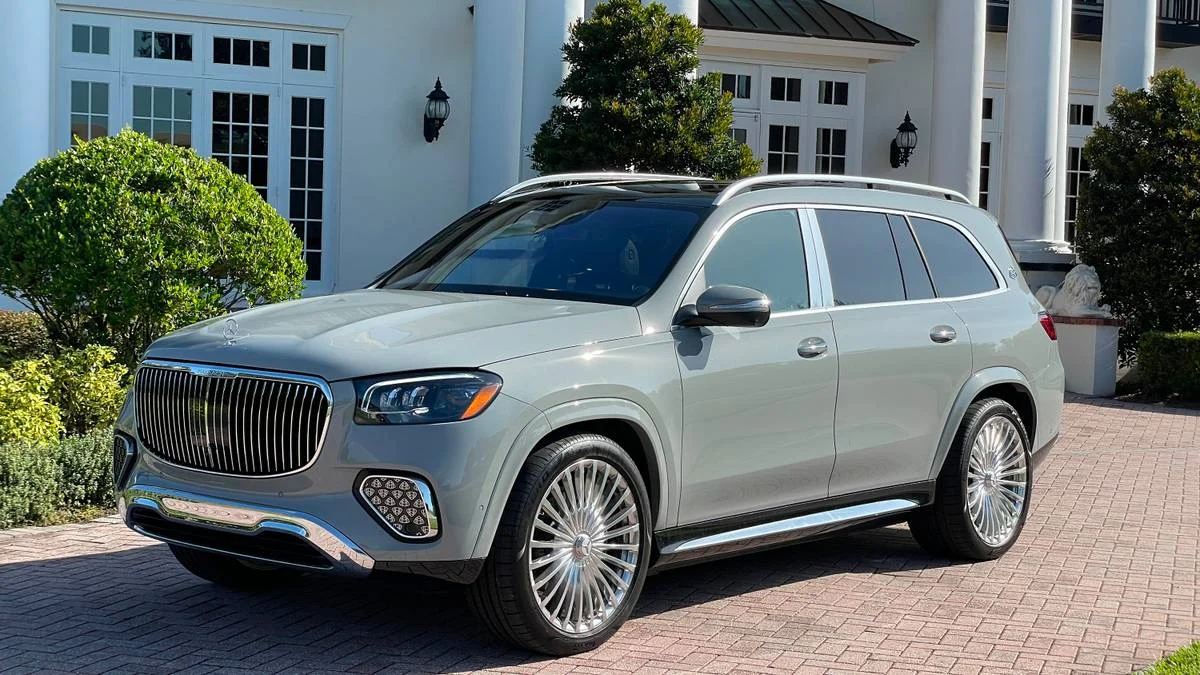
The honest caveat is that "probably safe" is doing real work in that sentence. You are relying on the manufacturer's engineering, federal self-certification, a shared body with a tested cousin where applicable, and the car's mass. You are not relying on a published rating from an independent lab. Buyers who want that published rating should compare their shortlist against the three-way Cullinan vs Maybach GLS vs Bentayga head-to-head, where the Maybach GLS 600 inherits the GLS platform rated Good in IIHS's 2025 cycle.
What to ask instead of looking for a star rating
If you are set on an ultra-luxury SUV, treat the missing rating as a prompt to do work in different places rather than as a disqualifier. Five things are worth checking before you sign.
- Pull the exact model's recall record on nhtsa.gov. It is open, searchable by VIN, and covers every car sold in the U.S. The March 2026 Cullinan rear-belt recall is on there in full.
- Look up HLDI collision, bodily injury, and medical payment relativities for the model year you are buying. These are published and based on real crashes, not barrier tests.
- If the SUV shares a platform with a tested cousin, read Euro NCAP's detailed scorecard for that cousin. The Cayenne page is more informative than a one-line NHTSA summary.
- Confirm the specific driver-assistance hardware on the car in front of you. Pedestrian AEB at night, in particular, is not legally required for U.S. certification and some trims add or remove it.
- Price the alternative. The Mercedes-Benz GLE 450 4MATIC, BMW X7 xDrive40i, and Genesis GV80 3.5T all carry current IIHS Top Safety Pick or Top Safety Pick+ status in the same segment.
The short version
If independent, published crash evidence is the top priority, buy the rated SUV. The Mercedes-Benz GLE 450, BMW X7, Genesis GV80, and Audi Q7 all sit in the luxury segment with current NHTSA and IIHS data on file, and the full RankGrids luxury SUV ranking weights that data accordingly. If the brand, the bespoke program, or the driveline matters more and the budget is there, a Cullinan, Bentayga, or Urus is not demonstrably less safe. It is just less transparent. Buy it knowing you are trading public evidence for product you cannot get any other way.
See Best Luxury SUVs of 2026Questions people ask
Why does the Rolls-Royce Cullinan not have an NHTSA safety rating?+
NHTSA picks its test fleet from models that are new, popular, or redesigned, buys them anonymously from dealers, and covers roughly 87% of the new-vehicle market. Rolls-Royce delivered 5,664 cars worldwide across its entire range in 2025, so the Cullinan sits well outside the cutoff and never gets bought for testing. The car is not legally exempt from federal crash standards; it is just not selected.
Are Bentley and Lamborghini SUVs actually safe if they have not been crash tested?+
The Bentayga and Urus share Volkswagen Group's MLB Evo platform with the Porsche Cayenne and Audi Q7. Euro NCAP gave the Cayenne a five-star rating with 91% adult occupant protection, and IIHS named the 2023-24 Audi Q7 a Top Safety Pick+. That is indirect evidence, not a certified result, but the underlying body structure has been tested in two variants. Both cars also meet every applicable Federal Motor Vehicle Safety Standard by self-certification.
What is the low-volume vehicle exemption from crash testing?+
There is no general low-volume exemption from federal crash standards. The Low Volume Motor Vehicle Manufacturers Act of 2015 created a narrow program for up to 325 replica cars per year per manufacturer, where a replica is designed to look like a model at least 25 years old, and the underlying manufacturer is itself limited to 5,000 or fewer vehicles globally. That program does not apply to Rolls-Royce, Bentley, or Lamborghini. NHTSA has stated plainly that there is no FMVSS exclusion based on production volume.
Does no safety rating mean a luxury SUV is unsafe?+
No. A missing rating means the car was not selected for public testing, not that it failed one. The Cullinan, Bentayga, and Urus were all certified by their manufacturers as meeting the same federal crash standards that apply to every other new SUV sold in the U.S. The absence of a star rating is a transparency problem, not a safety verdict.
How do ultra-luxury SUVs meet safety requirements without public crash tests?+
The U.S. uses a self-certification system. The manufacturer declares compliance with every applicable FMVSS, supported by its own crash tests, computer simulations, and engineering data. NHTSA audits by buying cars and running spot-check tests. Manufacturers do not have to use NHTSA's exact test procedures as long as they have a reasonable basis for certification. Recalls, including the March 2026 Cullinan rear seat-belt recall, backstop the system when a defect reaches customers.
Should I worry that my luxury SUV has no IIHS or NHTSA score?+
Treat it as a prompt to look for other evidence rather than as a red flag. Check the recall record, look up HLDI insurance loss data for the exact model year, read Euro NCAP's scorecard for the closest platform cousin, and confirm the specific driver-assistance hardware on the car you are buying. If published independent evidence matters more to you than brand, choose a rated alternative in the same segment.
Does Euro NCAP test any ultra-luxury SUVs?+
Euro NCAP has tested the Porsche Cayenne, Range Rover, and other high-end SUVs but has not tested the Rolls-Royce Cullinan, Bentley Bentayga, or Lamborghini Urus. European testing uses manufacturer-provided or lab-purchased vehicles under similar selection logic to NHTSA and IIHS, and ultra-low-volume ultra-luxury models rarely make the cut.
Can a manufacturer request an IIHS crash test?+
Yes. IIHS normally buys its own test cars anonymously but can accept manufacturer-requested tests in limited cases. Rolls-Royce, Bentley, and Lamborghini have not requested testing of their SUVs, and the economics are unforgiving at volumes measured in thousands of units per year.
Sources
What this guide is based on. We research from published specifications, independent reviews and owner reports; we did not test these products ourselves.
- 1.2026 Model Year Vehicles Selected for Testing by NHTSA, NHTSA
- 2.New Car Assessment Program, Federal Register, U.S. Federal Register
- 3.Some Cars Will Never Be Crash-Tested, Leaving Consumers in the Dark, Consumer Reports
- 4.2023 Bentley Bentayga Safety Ratings, Autoblog
- 5.Rolls-Royce Tells Owners To Stop Using Their Rear Seats And Trunk Until May, Carscoops
- 6.NHTSA Recall 26V143: Rolls-Royce Cullinan Rear Seat Belt Anchor, NHTSA
- 7.NHTSA Interpretation 0566: Volume-Based FMVSS Exclusion, NHTSA
- 8.NHTSA Interpretation 10425: Reasonable Basis for Self-Certification, NHTSA
- 9.Replica Motor Vehicles Final Rule, U.S. Federal Register
- 10.Low Volume Motor Vehicle Manufacturers Act of 2015, Wikipedia
- 11.Automotive FMVSS Testing and Compliance, NATC
- 12.Porsche Cayenne Euro NCAP Assessment, Euro NCAP
- 13.Better-aimed headlights boost Audi Q7 to Top Safety Pick+, IIHS
- 14.Volkswagen Group MLB platform, Wikipedia
- 15.Lamborghini Urus, Wikipedia
- 16.Bentley Bentayga, Wikipedia
- 17.Rolls-Royce Delivers 5,664 Units in 2025, Korea BizDaily
Products mentioned
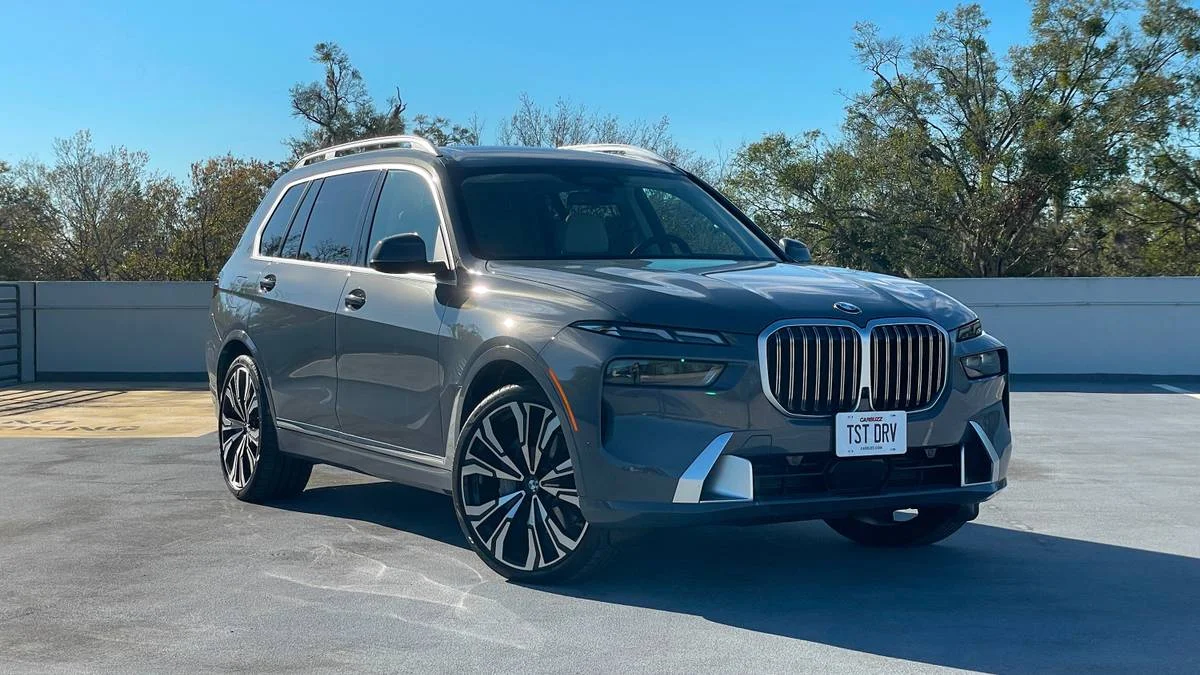 BMW X7 xDrive40i 2026
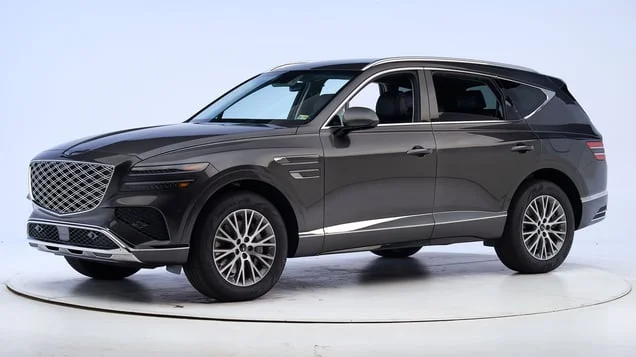 Genesis GV80 3.5T AWD 2026
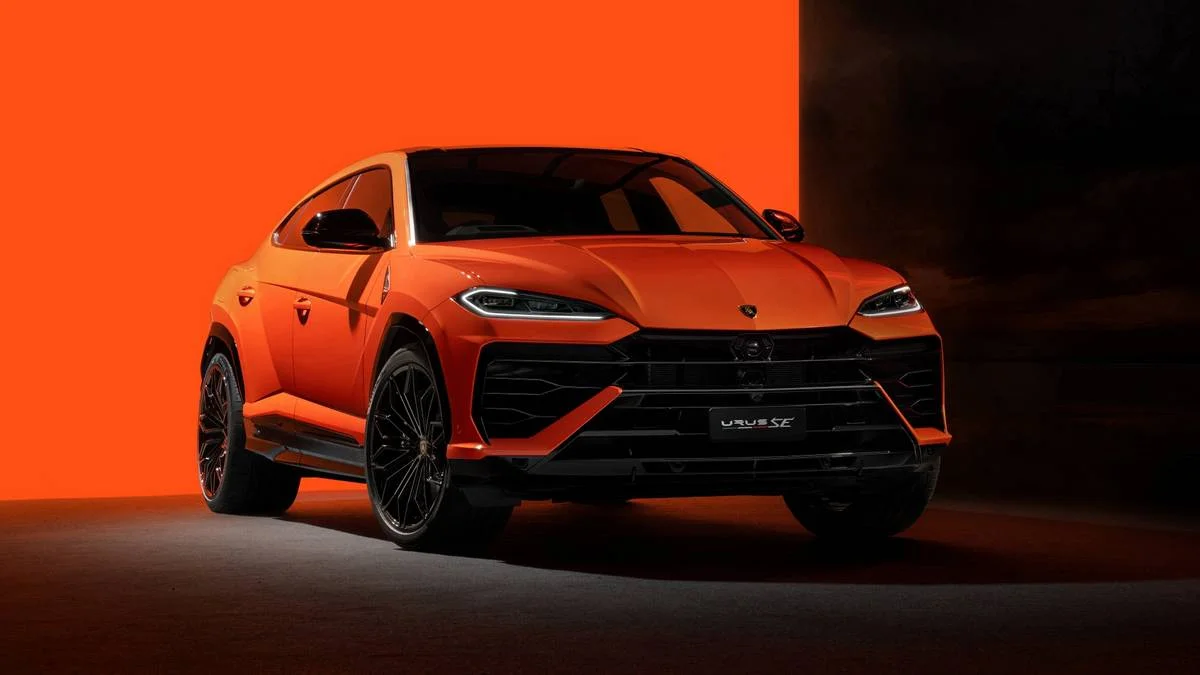 Lamborghini Urus SE 2026Land Rover Range Rover P530 V8 2026
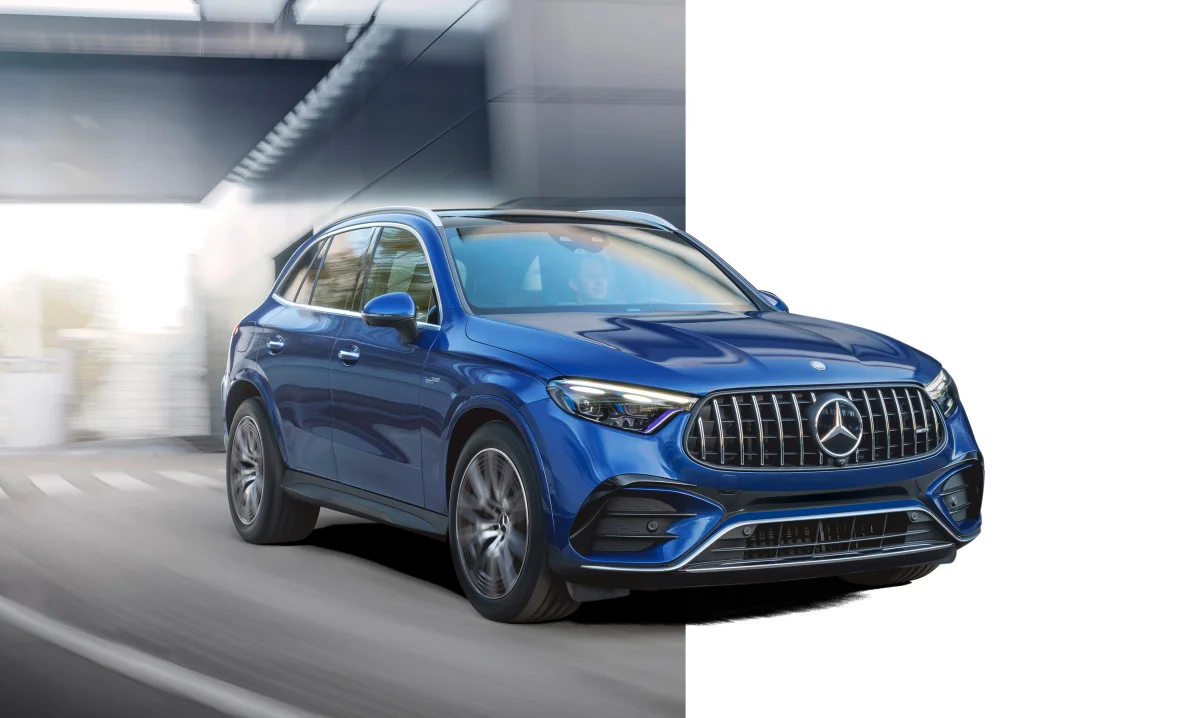 Mercedes-Benz G 550 2026
 Mercedes-Benz GLE 450 4MATIC 2026Mercedes-Benz GLS 580 4MATIC 2026
 Mercedes-Maybach GLS 600 4MATIC 2026
 Porsche Cayenne S 2026
 Porsche Cayenne Turbo GT 2026Rolls-Royce Cullinan Series II 2026
More on luxury suvs
Explainer
The True Cost of a Luxury SUV: What Depreciation, Maintenance, and Insurance Add to the Sticker Price
Depreciation, maintenance, and insurance routinely push a luxury SUV's five-year cost to 1.5 to 2 times its sticker. Here is what each line actually costs, by brand.
Explainer
PHEV vs. Petrol in a Luxury SUV: Does the Electric Range Actually Change Ownership?
When a Cayenne E-Hybrid, Urus SE, or Range Rover PHEV earns back the premium over a petrol V8, when it does not, and what charging behavior actually decides it.
Explainer
What Bespoke Actually Gets You: Rolls-Royce, Mulliner, Manufaktur, and SV Bespoke Compared
A plain-language map of what each luxury SUV bespoke program lets you change, what it costs above base, and how long it takes to deliver.
Explainer
Air Suspension in Luxury SUVs: What It Does, What It Costs to Fix, and When It Is Worth It
What air suspension does on a luxury SUV, what reviewers and owners report about long-term reliability, the typical cost of compressor and airbag failures, and when the comfort payoff is worth the repair risk.
Buying guide
How to Choose a Luxury SUV: The Seven Decisions That Actually Separate the Right Vehicle from the Wrong One
A practical framework for luxury SUV buyers: tier, driver versus rear-seat priority, two-row versus three-row, powertrain, off-road, bespoke, and real cost of ownership.