Explainer
PHEV vs. Petrol in a Luxury SUV: Does the Electric Range Actually Change Ownership?
When a Cayenne E-Hybrid, Urus SE, or Range Rover PHEV earns back the premium over a petrol V8, when it does not, and what charging behavior actually decides it.
Updated November 17, 2026 · Based on 13 sources · How we research
This explainer is for a buyer looking at a Porsche Cayenne E-Hybrid, Lamborghini Urus SE, Range Rover P510e, or similar luxury plug-in SUV in the $100,000 to $250,000 range, who wants to know whether the electric side of the powertrain will change anything about ownership. The thing most shoppers get wrong is treating the EPA electric range or MPGe label as a fuel-bill forecast. Published ICCT fleet research on roughly 9,000 European PHEVs shows private owners drove about 45 to 49 percent of their miles on electricity, and company-car drivers only 11 to 15 percent. Whether you charge almost every day decides whether the plug-in system pays back the roughly $11,000 it costs over a comparable petrol version, or whether you simply paid for a heavier version of the same V6.
The one variable that decides whether a luxury PHEV pays off
A PHEV only beats a straight petrol SUV on fuel bills to the extent you actually drive on electrons. The industry term for this is the utility factor: the share of total miles driven in electric mode. Type-approval tests assume you plug in predictably and cover most short trips on battery. An ICCT analysis of real-world data from about 9,000 PHEVs in Europe, published in 2022, found private owners drove 45 to 49 percent of their miles on electricity, while company-car drivers, who often have fuel paid for them and less incentive to plug in, hit only 11 to 15 percent.
The practical consequence is that the published combined-fuel-economy figure, 48 MPGe for the Urus SE or 53 MPGe for the Cayenne E-Hybrid, is a ceiling, not an average. The ICCT's follow-on finding is more useful: the deviation from the official utility factor was mostly explained by charging behavior. If you charge nightly and your commute fits inside the battery, you can approach the official numbers. If you charge once a week because you forget or the charger is awkward, you will not.
Treat the EV range as a working budget, not a brochure number, and ask yourself one honest question before you pay the premium: will I plug this in four or five nights a week for the next five years? If yes, read on. If not, skip to the petrol section and save about $11,000.
What the electric range actually is on a Cayenne E-Hybrid, Urus SE, and other luxury plug-ins
The EPA all-electric range on the 2026 Porsche Cayenne E-Hybrid lineup runs from 24 miles on the Turbo E-Hybrid up to 28 miles on the base E-Hybrid, per Edmunds' Cayenne MPGe tables. Edmunds instrumented a 2026 Cayenne Turbo E-Hybrid and saw 24 miles of real electric range, exactly on the EPA sticker. The 2026 Lamborghini Urus SE is rated at 35 EPA miles; CAR magazine's reviewer saw closer to 30 in mixed use, and notes the electric motor is tuned for torque fill rather than efficiency.
Two caveats matter. First, cold weather. The cabin heater draws on the same high-voltage battery that moves the car, and winter range in a cold-climate state can fall 20 to 30 percent below the EPA number. Second, driving mode: pressing hard on the throttle past a kickdown threshold fires the combustion engine even in E-Power mode on both the Cayenne and the Urus, so range collapses fast if you drive these cars the way the badges invite.
The genuine long-range luxury PHEVs are bigger-battery cars. Autocar reported the Range Rover P510e uses a 38.2 kWh pack for a 70-mile WLTP figure, and Top Gear's first drive found real-world electric range closer to the mid-50s on UK roads. Volvo's press release claims America's longest EPA electric range for a plug-in hybrid on the new long-range XC60 and XC90, well above the previous T8's 32 miles. The 2026 BMW XM Label is rated at 30 EPA miles per Edmunds' spec page.
| Model | Rated EV range | Real-world observation | Combined MPGe |
|---|---|---|---|
| Porsche Cayenne E-Hybrid 2026 | 28 mi EPA | not independently tested | 53 |
| Porsche Cayenne Turbo E-Hybrid 2026 | 24 mi EPA | 24 mi observed (Edmunds) | 47 |
| Lamborghini Urus SE 2026 | 35 mi EPA | ~30 mi (CAR magazine) | 48 |
| Range Rover P510e 2026 | 70 mi WLTP | ~54 mi (Top Gear) | not EPA MPGe rated in UK |
| BMW XM Label 2026 | 30 mi EPA | Published figure | 47 |
What happens to fuel economy if you never plug in
Once the pack is depleted and you have not recharged, a PHEV becomes a heavy hybrid. The battery and electric motor add roughly 400 to 700 pounds over a comparable petrol version, and the car hauls that weight all day. Edmunds' tested 2026 Cayenne Turbo E-Hybrid returned 22 mpg combined in gasoline-only driving. The Urus SE's EPA figure in hybrid drive mode with a depleted battery is 18 combined, per Autoblog's spec summary. On a long motorway run in hybrid mode, CAR magazine returned about 32 mpg UK, which is respectable for a 789 hp SUV but a long way short of the 48 MPGe label.
The broader pattern was reported by electrive.com summarizing European fleet studies: real-world PHEV consumption of 2 to 4 times the approval figure across company-car fleets. In plain English: if you never plug in a PHEV and only ever burn gasoline, you are not getting a petrol SUV with a battery bonus. You are paying an $11,000 premium to haul an unused battery around.
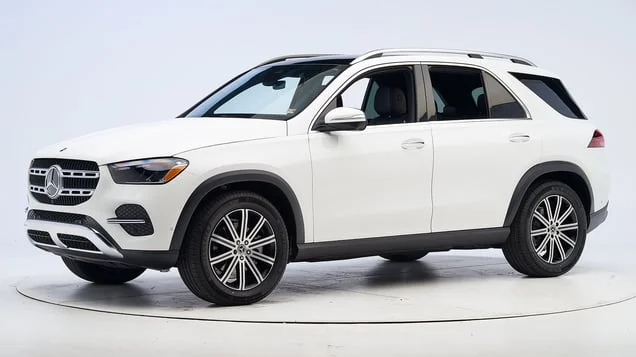
A 48V mild hybrid like the Mercedes-Benz GLE 450 4MATIC uses a small integrated starter-generator that costs nothing at the pump and does not change your charging routine, which is the more honest choice for a buyer who will not plug anything in. The same logic favors the straight petrol Range Rover P530 V8 for someone who wants real power and air suspension refinement without a charging obligation.
The $11,300 question: is the Cayenne E-Hybrid worth it over the base Cayenne?
The 2026 Porsche Cayenne E-Hybrid starts at $101,200 MSRP per Edmunds' pricing page; the base V6 2026 Cayenne starts at $89,900. The hybrid premium is about $11,300 before options or destination charge. Our ranked Porsche Cayenne S at $108,300 sits in the same price band but swaps the plug-in motor for a 468 hp twin-turbo V8 and a 4.4 second 0 to 60.
For the hybrid to earn the premium back purely on fuel, you need to recover that $11,300. At gasoline $4.00 a gallon, 15,000 miles a year, and a realistic 50 percent EV share, you save roughly 375 gallons a year versus the base V6, or around $1,500. Payback: just over seven years, before tires and brake-fluid service. Stretch the EV share to 70 percent with aggressive plugging and the number shortens to about five and a half years. Never charge, and the straight V6 is cheaper to own.
What actually buys the hybrid Cayenne its reputation is not fuel savings, it is the way it drives. The electric motor delivers immediate torque from zero rpm, which smooths the first 20 mph of every trip and makes the car feel markedly less diesel-y than the base V6 around town. If low-speed refinement and silent neighborhood departures matter more than brochure MPG, that is the honest argument. Buyers who want to track the car or run it to 100,000 highway miles are better off with the Cayenne S or the Cayenne Turbo GT.
You do not need a Level 2 charger, but you do need a plug
The Cayenne E-Hybrid uses a 25.9 kWh pack and, per Porsche's technical briefing, carries an 11 kW onboard AC charger that fills the battery in about two hours and forty minutes on a 240V Level 2 wall unit. A standard 120V Level 1 household outlet adds roughly 3 to 5 miles of range per hour, so a parked-overnight car has 12 hours to recoup 36 to 60 miles, well in excess of the 24 to 28 mile battery.
The implication is that most single-family-home buyers do not need to spend $1,500 on a dedicated wall unit to make the plug-in useful. They need a reliable outlet in the garage and the discipline to use it. Buyers in condo buildings, street-parking apartments, or shared garages without owned outlets face a different problem. If your charger is a public DC fast charger at a grocery lot you visit once a week, you are the company-car case the ICCT studied: you will not plug in often enough to realize the fuel-economy advantage, and you should buy the petrol version. Condo owners should push the HOA for a shared Level 2 unit with load-sharing and billing, and should price the installation before signing the car's purchase paperwork.
Highway driving: when a petrol V8 or a mild hybrid wins
The one place a PHEV loses to both a petrol V8 and a conventional hybrid is a long, sustained highway run. The battery is tuned for low-speed commuting, and at 75 mph you can watch the EV mode drain inside 20 miles. From that point, the engine does all the work and the extra weight is pure drag. Reviewers commonly see 2 to 4 MPG below the EPA highway figure on PHEVs run at interstate speeds with a drained battery, including the depleted-battery numbers Edmunds reported on the Cayenne Turbo E-Hybrid.
For a Tampa-to-Washington D.C. run, the straight-petrol Cayenne S or the Range Rover P530 V8 covers the distance on fuel economy roughly equal to a drained Cayenne E-Hybrid, and does it without the extra weight affecting ride, tires, and brakes. If your driving is 70 percent interstate and 30 percent local, do not buy the PHEV. Pick a regular petrol SUV or a mild hybrid like the Mercedes-Benz GLE 450 4MATIC. If the ratio runs the other way around, with daily commuting on local roads and occasional road trips, the plug-in system is the better financial and acoustic choice, provided you charge.
The 2026 tax credit answer: there is not one
Several buyers come in expecting a federal rebate to soften the hybrid premium. For luxury PHEVs it has not existed for over a year. The federal Clean Vehicle Credit under §30D capped SUV MSRPs at $80,000, which excluded the Cayenne E-Hybrid at $101,200, the Urus SE at $246,495, and the Range Rover P510e Autobiography well above $140,000. On top of that, a summary by FedLaws notes the One Big Beautiful Bill Act signed July 4, 2025 terminated the credit for any vehicle acquired after September 30, 2025.
Buyers in the 2026 market cannot claim it regardless of price. Some states still run modest incentives (Colorado's state EV tax credit and New York's Drive Clean Rebate are the most meaningful, though both have income caps and amounts an order of magnitude smaller than the retired federal figure). Build your luxury-PHEV decision on fuel savings and driving experience, not on a rebate that is not coming.
The short version
Buy the plug-in version if you can plug in at home or at work most weekdays and your daily driving fits inside 20 to 35 miles. Owners in that situation will cover most commutes without touching gasoline, and the quieter low-speed driving is a genuine luxury upgrade over the base V6. Skip it if you lack a reliable outlet, drive mostly highway miles, or are shopping the car primarily for performance, since the Cayenne S V8 or Cayenne Turbo GT will be cheaper to fuel in long highway use and faster where you will actually use the power. The Urus SE is the exception: Lamborghini has retired the gas-only Urus S and Performante, so the PHEV powertrain is the only way into a new Urus, and the electric mode there is more about low-speed stealth and torque fill than fuel savings.
See Best Luxury SUVs of 2026Questions people ask
Is the Porsche Cayenne E-Hybrid worth it over the regular Cayenne?+
Only if you plan to plug in most nights. The hybrid premium is about $11,300 over the base V6 Cayenne MSRP; fuel-cost recovery takes roughly five and a half to seven and a half years at 15,000 miles a year and $4.00 gas, assuming a realistic 50 to 70 percent EV share. If you want the car for performance rather than refinement, the Cayenne S V8 at $108,300 is quicker and cheaper to run on highway trips.
How much does a PHEV luxury SUV save on fuel in real life?+
For an owner who charges four to five nights a week and does moderate daily driving, roughly $1,500 to $2,100 a year in fuel versus a straight petrol version. ICCT fleet data on roughly 9,000 PHEVs showed private owners drove 45 to 49 percent of their miles on electricity and company-car drivers only 11 to 15 percent, so the 48 MPGe on the Urus SE and 53 MPGe on the Cayenne are ceilings, not averages.
Do I need a home charger to make a plug-in hybrid luxury SUV worthwhile?+
Not a dedicated Level 2 unit, but you do need a reliable 120V outlet you control. A standard household outlet adds 3 to 5 miles per hour and refills a 25.9 kWh Cayenne E-Hybrid pack overnight. If you street-park or live in a condo without dedicated charging, skip the PHEV: you will not plug in often enough.
What happens to a PHEV luxury SUV's fuel economy if I never plug it in?+
It is worse than the petrol version. Edmunds' tested Cayenne Turbo E-Hybrid returned 22 mpg combined in gas-only driving; the Urus SE's hybrid-mode EPA figure is 18 mpg combined per Autoblog. The 400 to 700 lb battery penalty costs an extra 2 to 4 MPG at sustained highway speeds compared to a 48V mild hybrid.
What is the real-world electric range of a luxury PHEV SUV?+
Cayenne E-Hybrid 24 to 28 EPA miles, with Edmunds matching the 24-mile EPA figure on the Turbo E-Hybrid. Urus SE 35 EPA miles, CAR magazine saw about 30. Range Rover P510e about 54 real miles against a 70-mile WLTP figure (Top Gear). BMW XM Label 30 EPA miles. Winter and spirited driving cut these by 20 to 30 percent.
Does a PHEV luxury SUV qualify for a tax credit?+
Not in 2026. The federal Clean Vehicle Credit capped SUV MSRPs at $80,000, which already excluded the Cayenne E-Hybrid, Urus SE, and Range Rover P510e. The One Big Beautiful Bill Act terminated the credit entirely for vehicles acquired after September 30, 2025. A few state programs continue, but amounts are small and most have income caps.
Is a hybrid or a petrol better for a luxury SUV if I do mostly highway driving?+
Petrol, or a 48V mild hybrid like the Mercedes-Benz GLE 450 4MATIC. PHEVs deplete inside about 20 miles at 75 mph and then haul 400 to 700 lb of battery weight for the rest of the trip, costing 2 to 4 MPG versus an equivalent non-plug-in. A Cayenne S V8 or Range Rover P530 V8 will be cheaper to run on long interstate drives.
Sources
What this guide is based on. We research from published specifications, independent reviews and owner reports; we did not test these products ourselves.
- 1.Tested: 2026 Porsche Cayenne Turbo E-Hybrid Is a Delightfully Irrational Choice, Edmunds
- 2.2026 Porsche Cayenne Plug-in Hybrid Prices, Reviews, and Pictures, Edmunds
- 3.2026 Porsche Cayenne MPGe and Electric Range Data, Edmunds
- 4.The hybrid technology in the new Cayenne, Porsche Newsroom
- 5.Lamborghini Urus SE hybrid (2026) review, CAR magazine
- 6.2026 Lamborghini Urus Review, Specs, Pricing, and Warranty, Autoblog
- 7.Real-World Usage of Plug-in Hybrid Vehicles in Europe, International Council on Clean Transportation
- 8.PHEV: Real-world consumption 2-4 times higher than approved, electrive.com
- 9.Range Rover P510e review, Top Gear
- 10.New Range Rover PHEV brings 70-mile EV range, Autocar
- 11.Volvo Cars unveils America's longest electric range plug-in hybrids: the new XC60 and XC90, Volvo Cars
- 12.2026 BMW XM Label Specs and Features, Edmunds
- 13.Do Hybrids Qualify for Tax Credits? Who Can Still Claim It, FedLaws
Products mentioned




More on luxury suvs
Explainer
The True Cost of a Luxury SUV: What Depreciation, Maintenance, and Insurance Add to the Sticker Price
Depreciation, maintenance, and insurance routinely push a luxury SUV's five-year cost to 1.5 to 2 times its sticker. Here is what each line actually costs, by brand.
Explainer
What Bespoke Actually Gets You: Rolls-Royce, Mulliner, Manufaktur, and SV Bespoke Compared
A plain-language map of what each luxury SUV bespoke program lets you change, what it costs above base, and how long it takes to deliver.
Explainer
Why Rolls-Royce, Bentley, and Lamborghini Have No NHTSA or IIHS Safety Ratings
A $400,000 SUV with no crash test rating is not exempt from federal safety law. It is simply too rare for public labs to buy and destroy. Here is what that gap actually means.
Explainer
Air Suspension in Luxury SUVs: What It Does, What It Costs to Fix, and When It Is Worth It
What air suspension does on a luxury SUV, what reviewers and owners report about long-term reliability, the typical cost of compressor and airbag failures, and when the comfort payoff is worth the repair risk.
Buying guide
How to Choose a Luxury SUV: The Seven Decisions That Actually Separate the Right Vehicle from the Wrong One
A practical framework for luxury SUV buyers: tier, driver versus rear-seat priority, two-row versus three-row, powertrain, off-road, bespoke, and real cost of ownership.