Explainer
Three-Row SUV Cargo Numbers Explained: What the Specs Don't Tell You
Three-row SUVs advertise huge cargo figures, but those numbers require folding every rear seat. Here is what each measurement means and how much space you really have once the family is in the car.
Updated November 11, 2026 · Based on 19 sources · How we research
If you are shopping for a three-row SUV because you need to seat seven or eight people and carry their luggage, the spec sheet is set up to mislead you. The big number on the brochure, often 85 to 145 cubic feet, assumes every row behind the driver is folded flat. With the third row up and everyone buckled in, the usable space shrinks to something closer to a midsize sedan's trunk. This guide breaks down the three cargo numbers you will see quoted, shows how dramatically they change by configuration, and names the specific models where the third-row trunk is actually usable.
Every three-row SUV publishes three cargo numbers, not one
Open any three-row SUV spec page and cargo is listed in three ways. Behind the third row is what you can stash when every seat is occupied. Behind the second row is what you get when the back bench folds and the vehicle carries four or five people. Maximum cargo means every rear seat is folded, so the SUV is now effectively a two-seater with a van-like cargo bay. The three figures always differ by a large multiple.
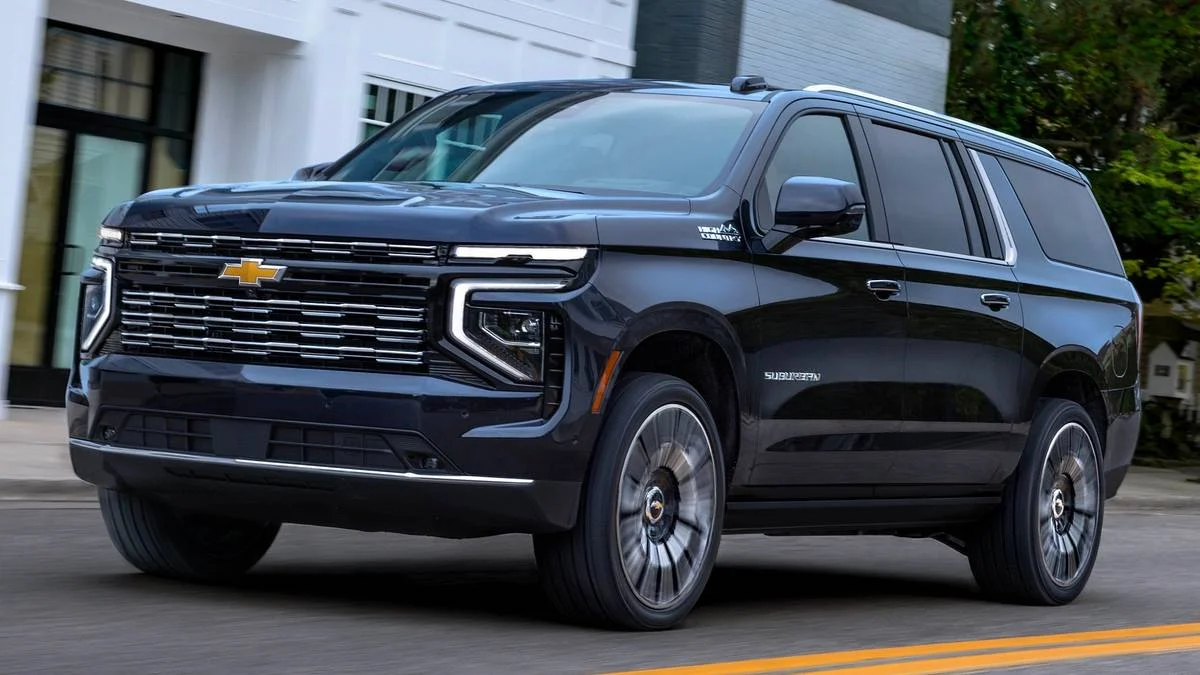
Chevrolet publishes 41.5 cubic feet behind the third row of the 2026 Suburban, 93.8 with the back bench folded, and 144.5 with both rear rows down. The 2027 Kia Telluride runs 22.3, 48.7, and 89.3 across the same three configurations. The 2026 Honda Pilot is 18.6, 48.5, and 83.9. Across almost every model, the maximum figure is four to seven times the behind-third-row figure. That is why the maximum gets quoted most often and the behind-third-row number gets buried on page 14 of the brochure.
| Model | Behind 3rd row (cu ft) | Behind 2nd row (cu ft) | Max cargo (cu ft) |
|---|---|---|---|
| Chevrolet Suburban | 41.5 | 93.8 | 144.5 |
| GMC Yukon XL | 41.5 | 93.6 | 144.5 |
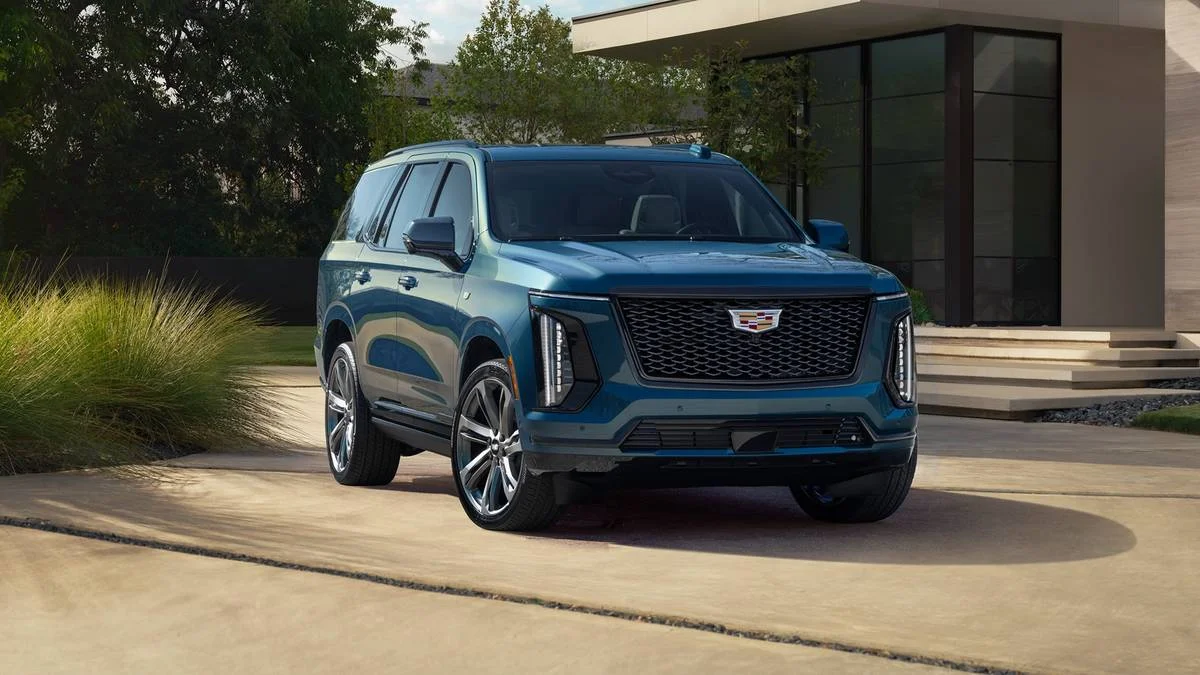
| Cadillac Escalade (std) | 25.5 | 72.9 | 121 |
| Ford Expedition (std) | 22.9 | N/A | 108.5 |
| Lincoln Navigator (std) | 22.9 | N/A | 107 |
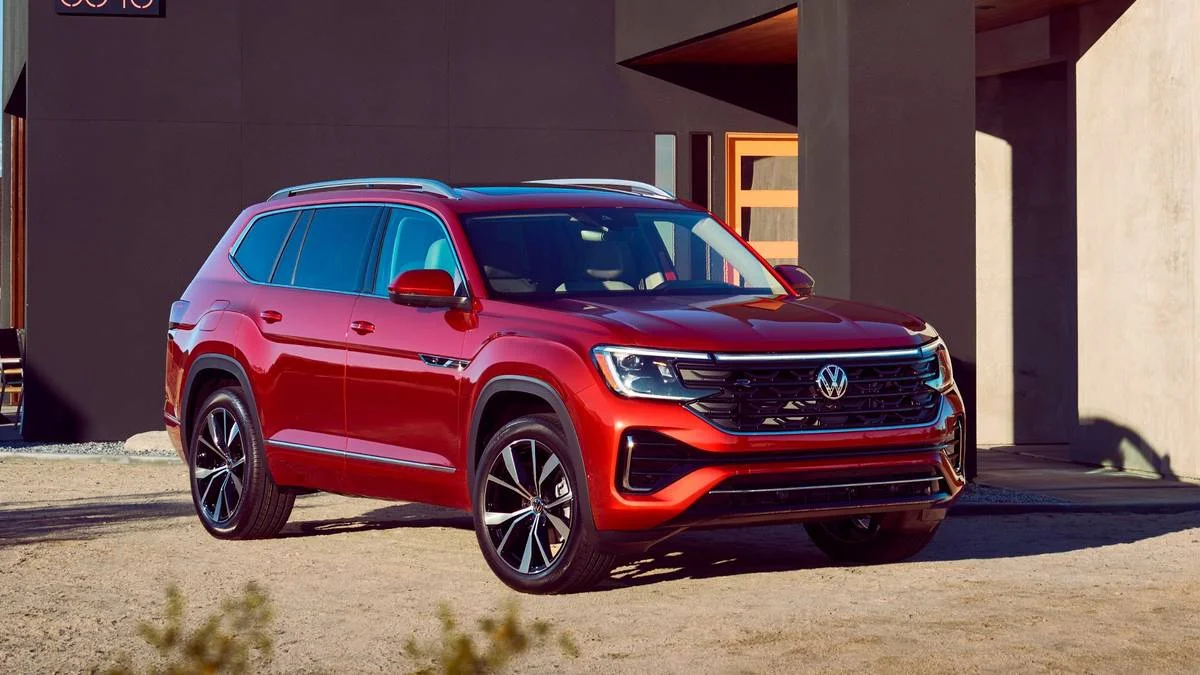
| Volkswagen Atlas | 20.6 | 55.5 | 96.6 |
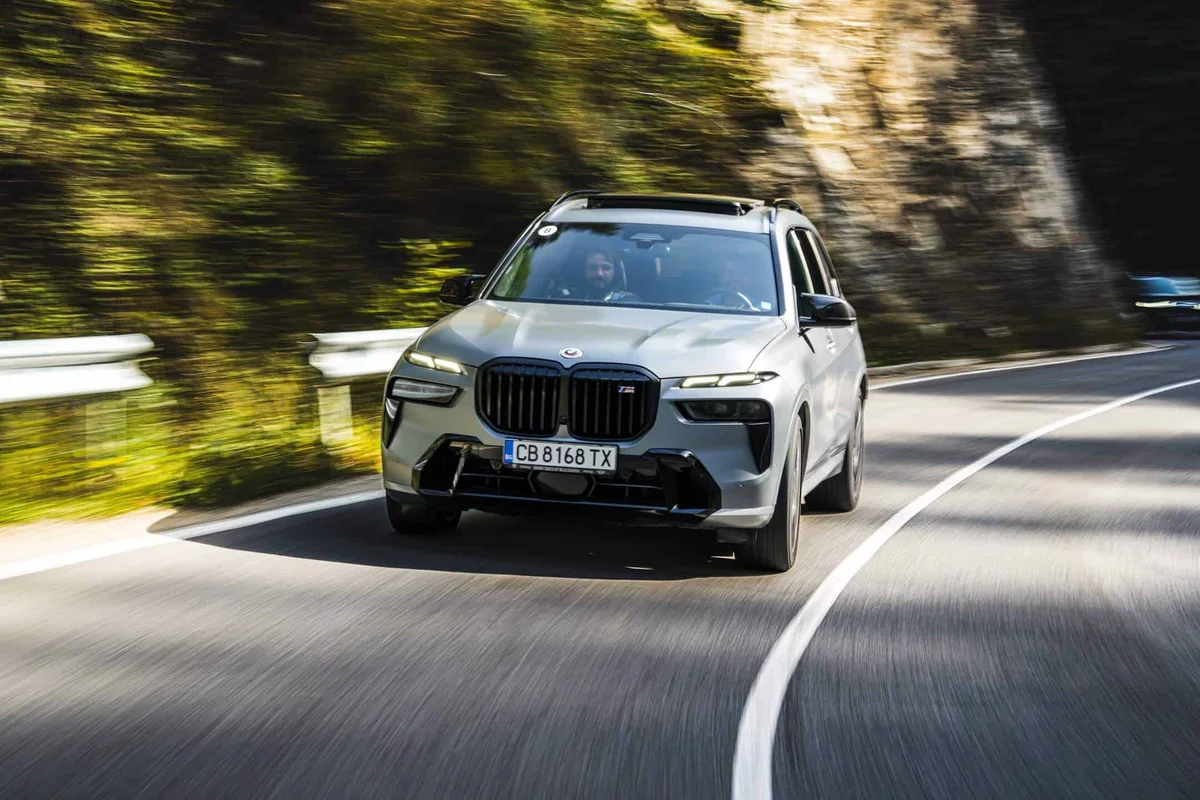
| BMW X7 | 12.8 | 48.6 | 90.4 |
| Kia Telluride | 22.3 | 48.7 | 89.3 |
| Hyundai Palisade | 19.1 | 46.3 | 86.7 |
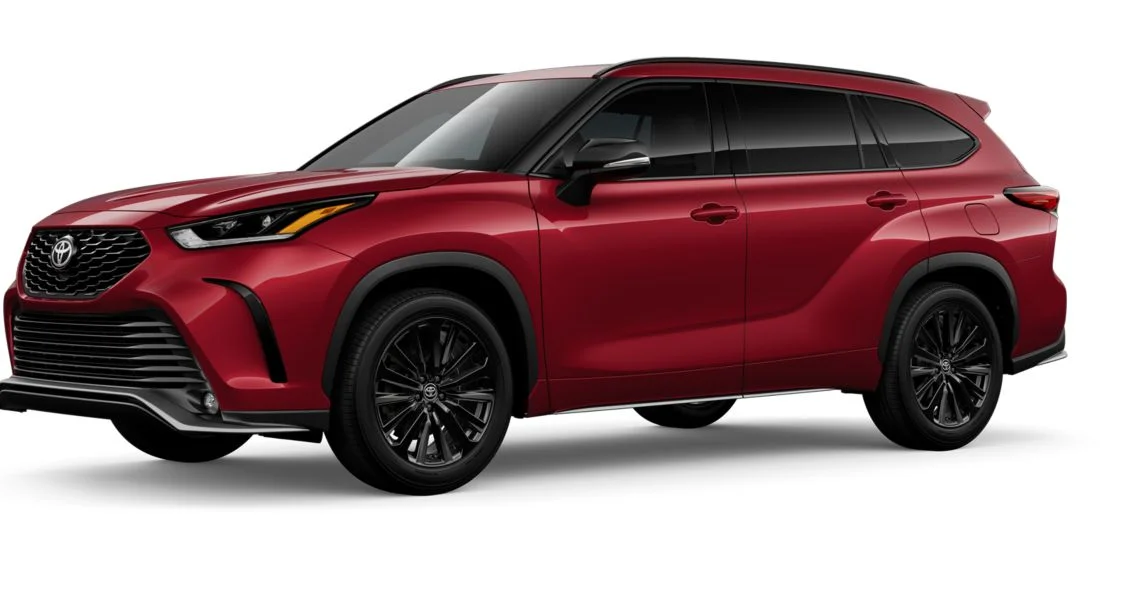
| Toyota Highlander | 16.0 | 48.4 | 84.3 |
| Audi Q7 | 14.2 | 35.7 | 69.6 |
The big number on the brochure assumes nobody is in the back of the car
Maximum cargo is the figure automakers highlight because it is the largest. On an eight- or nine-seat vehicle, it is also the figure that leaves the fewest seats usable. The 2026 GMC Yukon XL advertises 144.5 cubic feet max, but reaching that requires folding six of its nine seats. The 2026 Cadillac Escalade publishes 121 cubic feet max with both rear rows folded, leaving two seats up front.
That configuration is useful for a Home Depot run, a long-distance move, or driving to the airport with one other person. It is not the configuration you use on a vacation with the family. For a Scout troop headed to a weekend trip, those big numbers are irrelevant because every seat is occupied. The honest way to read the brochure: maximum cargo is for solo trips and furniture hauls, behind-second-row is for four- to five-passenger daily use, and behind-third-row is for the full-family road trip the vehicle was ostensibly bought to handle.
Behind the third row is the number families actually live with
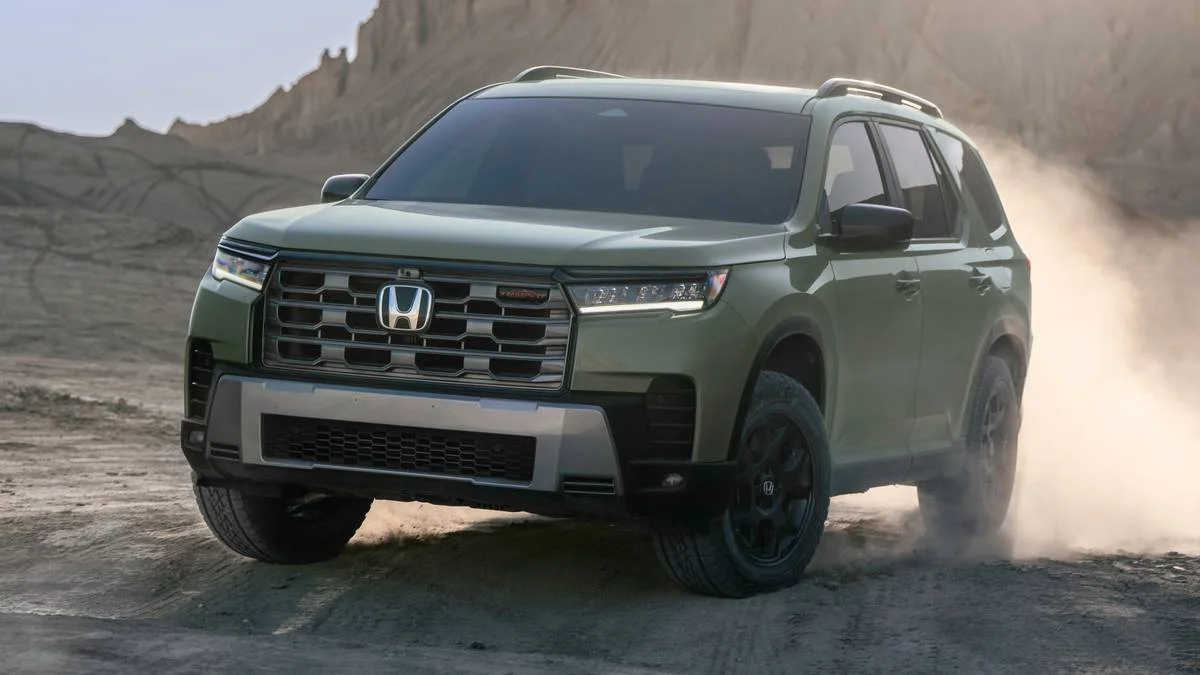
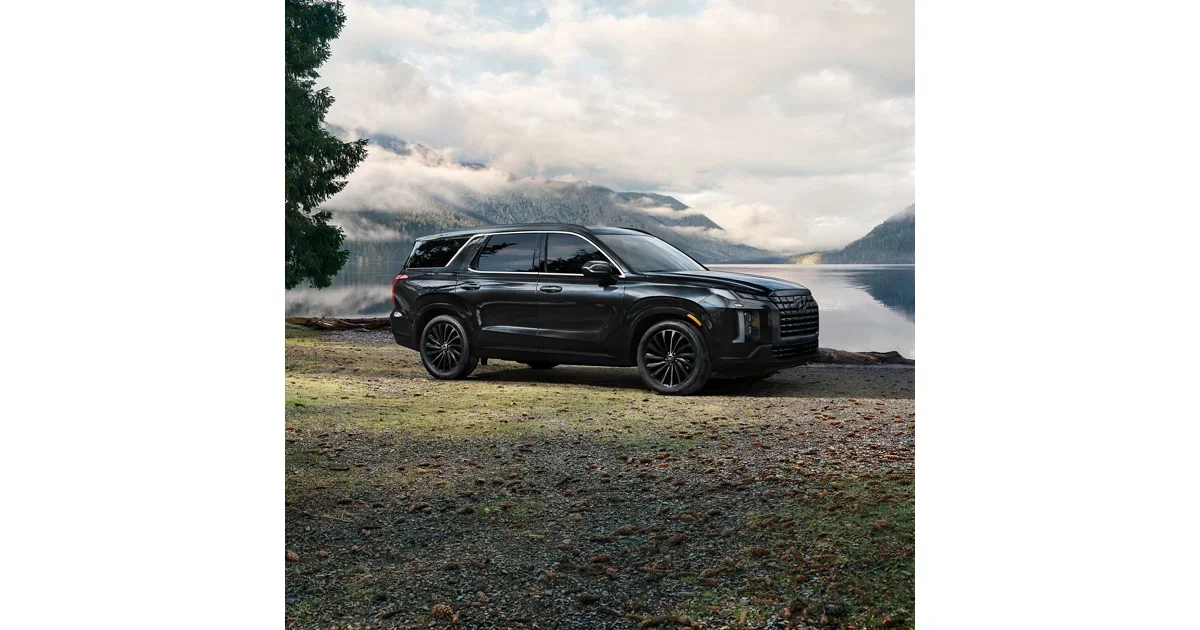
This is the usable trunk when every passenger is seated. For most midsize three-row crossovers, it falls between 12 and 23 cubic feet, which is roughly the size of a midsize sedan's trunk. Honda publishes 18.6 cubic feet for the 2026 Pilot, Toyota lists 16 for the 2026 Highlander per Autoblog, BMW publishes 12.8 for the X7, and Hyundai claims 19.1 for the 2026 Palisade per Edmunds.
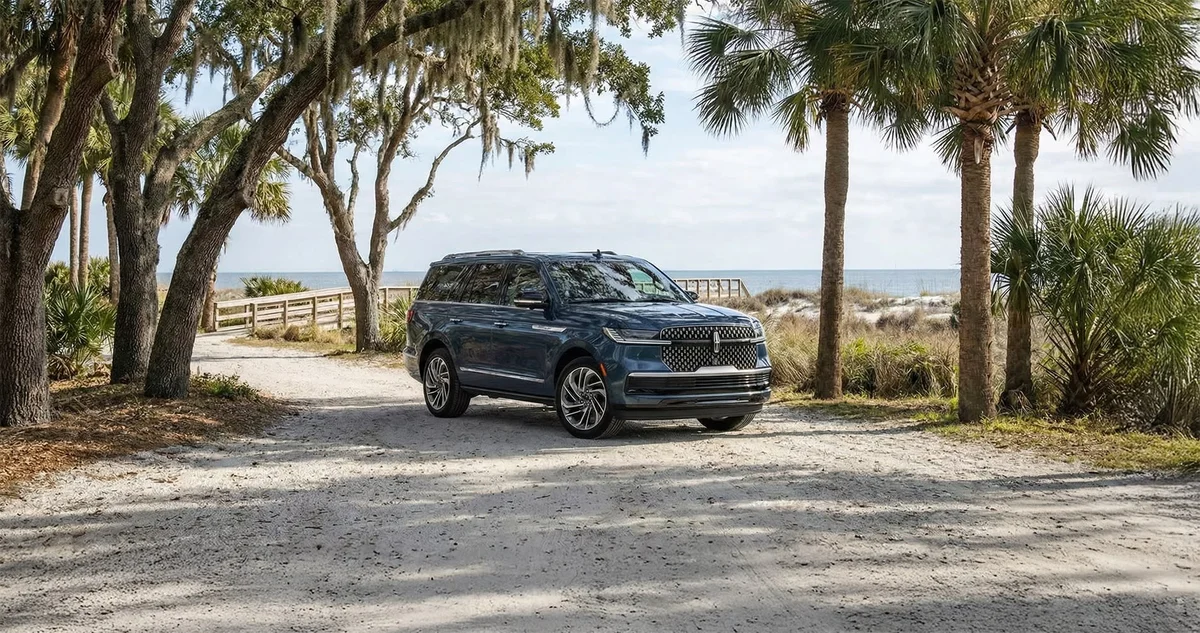
The three-row SUVs with a genuinely useful trunk behind row three are the full-size body-on-frame vehicles and the extended-wheelbase variants. The Chevrolet Suburban and GMC Yukon XL both deliver 41.5 cubic feet. The Ford Expedition is 22.9 in standard wheelbase and 37.4 in the MAX, per Ford. The Cadillac Escalade is 25.5 or 41.5 depending on length. The Lincoln Navigator is 22.9 or 37.4, per Lincoln.
The gap between a crossover and a full-size SUV in this measurement is bigger than almost any other spec. A Suburban has more cargo behind its third row than a Honda Pilot has behind its second. For a family that actually fills every seat on road trips, this gap is the single most meaningful number on the comparison grid.
SAE J1100 is a loose standard, and the automakers know it
Cargo volumes are supposed to follow SAE J1100 Motor Vehicle Dimensions, a methodology from the Society of Automotive Engineers that has governed interior measurement for decades, per the archived standard. The catch, as Cars.com has reported, is that compliance is voluntary and multiple versions of the standard exist. Cars.com documented that Toyota uses the 1975 version, Hyundai the 2002 version, Honda the 2005 version, and Chrysler, GM and Ford the 2009 version. An SAE representative told the publication that manufacturers can measure cargo any way they want and use it in advertising because SAE is not a governing body.
The result is that cargo numbers can inflate without the actual load floor getting any bigger. When Acura redesigned the MDX for 2014, it began listing two maximum cargo figures, 68.4 cubic feet by the SAE standard and 90.9 cubic feet using an expanded measure that includes floor space between the first and second rows with the front seats slid forward, per Cars.com. Even the SAE-standard 68.4 is not directly comparable to the 2013 MDX's 83.5 because Acura changed which version of J1100 it used.
J1100 also measures cargo in an SUV to the ceiling rather than to the seatback line. That accounts for real usable volume if you were to stack cargo to the roof. In practice, cargo stacked above the headrests is unsafe in a crash because it can become projectile, so independent testers at Cars.com and Edmunds measure only up to the seatback. The gap between the published figure and a crash-safe figure is one reason luggage counts come in lower than spec sheets.
Real luggage tests show the spec sheet is directional, not literal
Edmunds runs a luggage test on most new three-row SUVs, loading a standard set of carry-ons and checked bags behind the raised third row until nothing more fits, then reporting the actual volume. In the Lincoln Navigator cargo test, Edmunds reports 21.6 cubic feet of usable space behind the standard Navigator's third row, against the 22.9 cubic feet Lincoln publishes. The Chevy Traverse test yielded 22.9 cubic feet. The Hyundai Ioniq 9 EV came in at 21.9, and the Cadillac Escalade IQ at 23.7.
Cars.com measured seven three-row crossovers head-to-head using the same luggage set up to the seatback. The Volkswagen Atlas led with 18.1 cubic feet behind the third row, then the Chevrolet Traverse at 15.2, Hyundai Palisade at 14.2, Kia Telluride at 13.8, Honda Pilot at 13.0, Subaru Ascent at 11.6, and Ford Explorer last at 9.4. These numbers are smaller than the manufacturer figures because the independent testers stopped measuring at the window line. Both numbers are honest. They answer different questions. The spec sheet says: if you stacked cargo to the ceiling, this is the volume. The Cars.com figure says: if you packed only to the top of the rear seat, this is what fits.
Some three-row SUVs quietly lose cargo volume to batteries and mechanicals
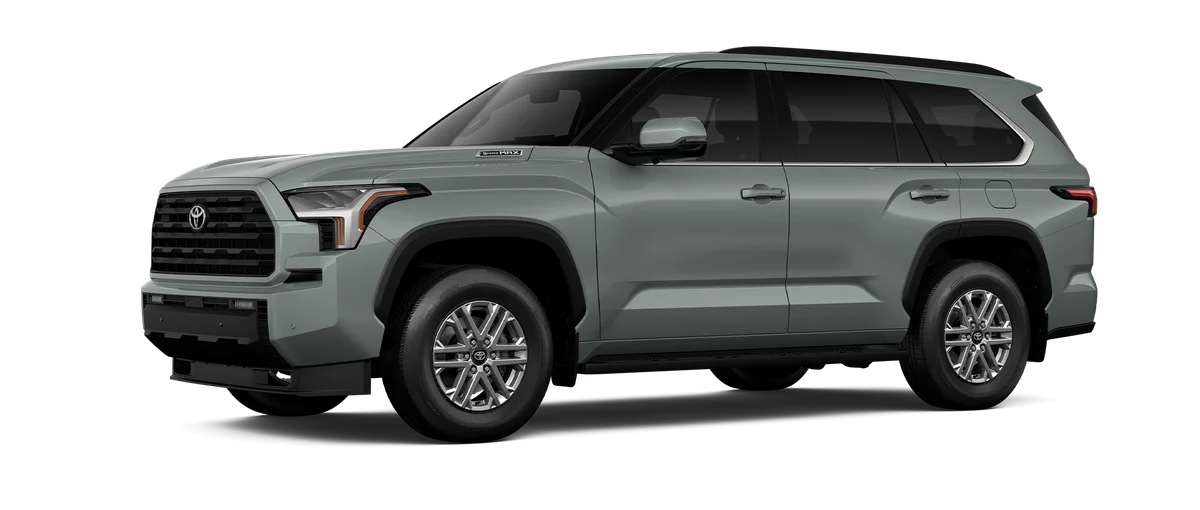
A cargo figure assumes the seats fold flat and the floor is flat. Not every three-row SUV does both. The 2026 Toyota Sequoia is the most-cited example. Its i-FORCE MAX hybrid battery sits under the cargo floor, so the third row does not drop into the floor pan. It folds to a position that sits on top of the load deck, creating a step that reviewers at The Torque Report and Edmunds have called out specifically. Sequoia owners can raise the adjustable cargo shelf to get a flat deck, but doing so steals vertical cargo space.
The Sequoia publishes 86.9 cubic feet maximum per US News, but the deck geometry means a long flat object, a surfboard, a disassembled bed frame, a sheet of plywood, will not sit cleanly on the floor. Hybrid three-rows across the segment share this tradeoff in milder forms: the battery has to go somewhere, and the cargo floor is where it most often lands.
Another quiet caveat: the behind-third-row figure is sometimes measured with the second row slid all the way forward, which compresses second-row legroom. When you compare specs across brands, make sure the seat positions are the same. A larger behind-third-row number that costs you four inches of second-row legroom is not actually a bigger car.
How to read a cargo spec sheet when you are shopping
Decide which configuration your family actually drives in most of the time, then read the matching number. If the third row is folded for daily commuting and only comes up on road trips, the behind-second-row figure is the one that matters. It is also the figure most families end up comparing in person at the dealer.
If the third row is up on long trips with every seat occupied, the behind-third-row number is the one. Treat a posted figure without an independent luggage test as directional. A posted 20 cubic feet with no verification is less trustworthy than a posted 16 that has been checked with actual suitcases by Edmunds or Cars.com.
If maximum cargo truly matters, which really only comes up for hauling furniture or bulky equipment solo, body style determines the answer. The full-size body-on-frame SUVs win by a wide margin. Among the vehicles ranked in Best Three-Row SUVs of 2026, the Suburban and Yukon XL top the class at 144.5 cubic feet, the Escalade ESV follows, and nothing in the unibody three-row class comes close. For the head-to-head across the luxury full-size trio, see our BMW X7 vs Escalade vs Navigator breakdown.
The short version
For most families, the number to look at is behind the third row for trips with everyone aboard, and behind the second row for the daily driving you actually do. The maximum cargo figure, which is the one plastered on the brochure, assumes a configuration you will rarely use. If you regularly travel with all seats full and luggage, a full-size body-on-frame SUV like the Chevrolet Suburban, GMC Yukon XL, Ford Expedition MAX, or Cadillac Escalade ESV gives you a real trunk behind row three. If the third row is usually folded, almost any midsize three-row crossover will serve, and the behind-second-row figure is what to compare. The vehicle for the family that insists on both at once, eight people and their bags, is a short list.
See Best Three-Row SUVs of 2026Questions people ask
How much cargo space does a three-row SUV really have?+
With every seat up, the typical midsize three-row has 12 to 23 cubic feet behind the third row, which is roughly a midsize sedan's trunk. Full-size body-on-frame three-rows like the Chevrolet Suburban and GMC Yukon XL have 41.5 cubic feet in that same position. The advertised 85 to 145 cubic feet figures require folding the rear rows flat.
What do three-row SUV cargo specs actually mean?+
Manufacturers publish three numbers: behind the third row (every seat up), behind the second row (third row folded, four or five passengers), and maximum cargo (both rear rows folded, two seats up front). Each measures a different real-world configuration. The spec sheet almost always leads with the largest of the three.
How much trunk space is there with the third row up?+
It varies widely by model. BMW X7: 12.8 cubic feet. Audi Q7: 14.2. Toyota Highlander: 16. Honda Pilot: 18.6. Hyundai Palisade: 19.1. Volkswagen Atlas: 20.6. Kia Telluride: 22.3. Ford Expedition: 22.9. Lincoln Navigator: 22.9. Cadillac Escalade: 25.5. Chevy Suburban and GMC Yukon XL: 41.5.
Why is the cargo space in my SUV so small when everyone is seated?+
Because the manufacturer's biggest advertised number assumes you fold both rear rows. With the third row up, you only have the shallow area between the seatback and the liftgate. On a midsize crossover that gap is 12 to 23 cubic feet, not 80 or 90. The car is doing what the spec sheet technically says, you were just looking at the wrong number.
What is the difference between max cargo and behind-the-third-row cargo?+
Max cargo folds both rear rows flat, converting the SUV into effectively a two-seater with a van-like bay. Behind-the-third-row is the trunk area with every seat still usable. The two numbers can differ by a factor of four to seven. A Toyota Highlander's max is 84.3 cubic feet, but behind the third row it is 16.
Are published cargo numbers reliable across brands?+
Only directionally. The SAE J1100 standard is voluntary and exists in multiple versions, so cross-brand comparisons can mislead. Cars.com has documented cases where a redesign added cargo volume on paper because the automaker switched J1100 versions, not because the cargo bay got bigger. Independent luggage tests from Edmunds and Cars.com are better for apples-to-apples comparisons.
Which three-row SUV has the most usable cargo with all seats up?+
Among 2026 models, the GMC Yukon XL and Chevrolet Suburban tie at 41.5 cubic feet behind the third row, with the Cadillac Escalade ESV matching them. The Ford Expedition MAX and Lincoln Navigator L both come in at 37.4. All of these are full-size body-on-frame SUVs. No unibody three-row crossover comes within 12 cubic feet of them.
Does the third row fold flat in every three-row SUV?+
No. The 2026 Toyota Sequoia's third row sits on top of the hybrid battery instead of folding into the floor, which creates a stepped cargo deck that reviewers have called out specifically. Many hybrid three-rows give up some floor flatness to accommodate batteries. Always look at a photo of the folded configuration, not just the cubic-foot number.
Sources
What this guide is based on. We research from published specifications, independent reviews and owner reports; we did not test these products ourselves.
- 1.Why Cargo Specs Can Stretch the Truth, Cars.com
- 2.2015 Acura MDX Real-World Cargo Space, Cars.com
- 3.3-Row SUVs With the Best Cargo Areas, Cars.com
- 4.Lincoln Navigator Cargo Test: How Much Fits Behind the Third Row?, Edmunds
- 5.Kia Telluride Cargo Test: How Much Can You Fit Behind the Third Row?, Edmunds
- 6.Ford Expedition Cargo Test: How Much Stuff Can Ford's Largest SUV Haul?, Edmunds
- 7.Hyundai Ioniq 9 Cargo Test: How Much Fits Behind the Third Row?, Edmunds
- 8.Chevy Traverse Cargo Test, Edmunds
- 9.Cadillac Escalade IQ Cargo Test, Edmunds
- 10.2026 Toyota Sequoia Tested: Still Great After All These Years?, Edmunds
- 11.2026 Hyundai Palisade: Driven, Tested, Rated, Edmunds
- 12.2026 Toyota Highlander Review, Specs, Pricing, and Warranty, Autoblog
- 13.2026 Honda Pilot Review, Specs, Pricing, and Warranty, Autoblog
- 14.2026 Ford Expedition SUV, Ford
- 15.2026 Lincoln Navigator Large Luxury SUV, Lincoln
- 16.2026 Toyota Sequoia Interior, Cargo Space & Seating, US News
- 17.2026 Toyota Sequoia Review: Plenty of Power, Not Enough Cargo Space, The Torque Report
- 18.SAE J1100: Motor Vehicle Dimensions, SAE International
- 19.2026 Chevrolet Suburban Z71, Kelley Blue Book
Products mentioned
More on three row suvs
Explainer
Hybrid vs. Gas Three-Row SUV: Is the Fuel Savings Worth the Price Premium?
A payback calculator for hybrid three-row SUVs: how long each model takes to recover its price premium at current gas prices, and the buyers for whom gas still wins.
Explainer
Body-on-Frame vs. Unibody: What Platform Choice Does to a Three-Row SUV
Full-size three-row SUVs on a truck frame tow more and handle rough roads differently than unibody crossovers, at a real cost in fuel economy, handling, and interior packaging. Here is what that choice actually changes.
Explainer
Three-Row SUV vs. Minivan: The Honest Trade-Off
What the specs actually say: minivans beat three-row SUVs on cargo, legroom, MPG, and sliding doors. SUVs win on towing, ground clearance, and AWD. Here is which numbers decide.
Explainer
Which Three-Row SUVs Have a Third Row Adults Can Actually Use?
A plain-language guide to the third-row legroom threshold that separates adult-usable SUVs from kid-only back benches, with specific 2026 models that clear the bar.
Buying guide
How to Choose a Three-Row SUV
Five real decisions that separate three-row SUVs: full-size body-on-frame or midsize unibody, third-row use, towing, hybrid or gas, and seat layout.