Explainer
Body-on-Frame vs. Unibody: What Platform Choice Does to a Three-Row SUV
Full-size three-row SUVs on a truck frame tow more and handle rough roads differently than unibody crossovers, at a real cost in fuel economy, handling, and interior packaging. Here is what that choice actually changes.
Updated November 11, 2026 · Based on 16 sources · How we research
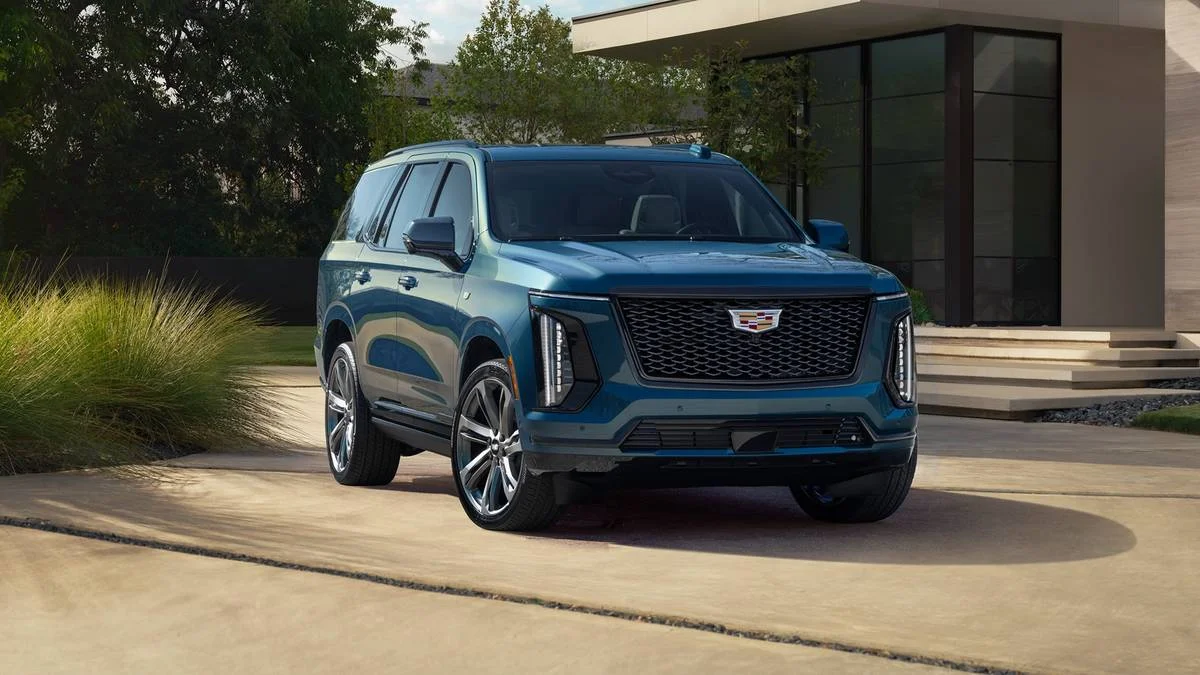
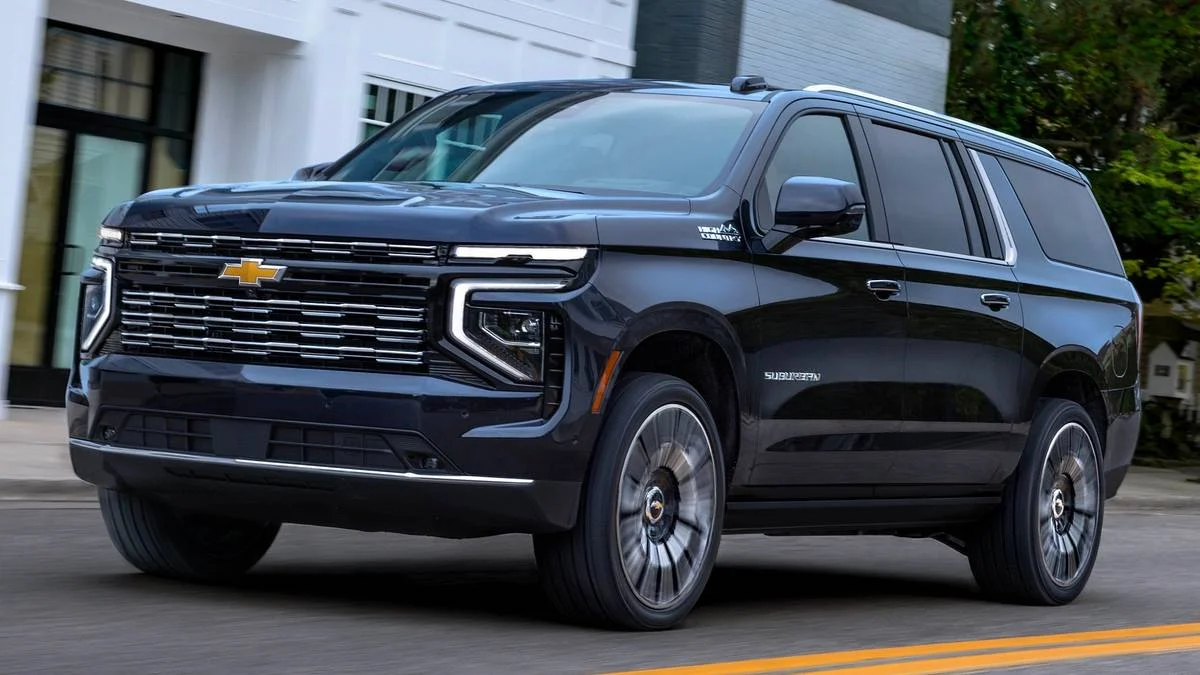
If you are weighing a $69,495 Chevy Suburban against a $39,190 Kia Telluride, the quietest decision baked into that choice is construction. Every three-row SUV is built one of two ways: on a steel ladder frame like a pickup, or as a single welded shell like a sedan. That one choice drives towing ceiling, fuel economy, interior shape, and how the vehicle settles over a frost heave at 70 mph. What most buyers get wrong: they assume body-on-frame means a jarring ride and unibody means weak towing. Both are now less true than they used to be. The 2026 Cadillac Escalade, Chevy Suburban, Ford Expedition, and Infiniti QX80 all ride on body-on-frame platforms with independent rear suspension, and reinforced unibody rigs like the Mercedes GLS 580 and Land Rover Discovery tow north of 7,500 pounds. The real gaps still matter, just not where they used to.
SUVs are built two ways: ladder frame or welded shell
In a body-on-frame SUV, two long steel rails run the length of the vehicle, braced by cross-members. The powertrain bolts to the frame, the body bolts on top, and the two are engineered as separate pieces. In a unibody, the floor pan, pillars, roof, and crumple zones are welded into a single shell that is both the body and the structural chassis. Carfax describes a unibody as integrating frame and body into one unit, while body-on-frame keeps them as distinct components bolted together (Carfax). The simplest way to picture it: a shipping container bolted to a flatbed trailer versus a boat hull where the sides and floor are one molded piece.
The historical divide was tidy. Trucks and truck-based SUVs used ladder frames. Cars and crossovers used unibodies. That line has blurred. Wikipedia's definition of a crossover still hinges on unibody construction shared with passenger cars, contrasted against traditional SUVs built like pickups (Crossover SUV, Wikipedia), but in 2026, body-on-frame rigs like the Suburban now carry independent rear suspensions once reserved for crossovers (Lithia Chevrolet Redding on the 2026 Suburban IRS), and unibody rigs like the Land Rover Defender use purpose-built aluminum monocoques stiff enough to tow over 8,000 pounds (Repairer Driven News on the D7x platform). The labels still tell you something, just less than they once did.
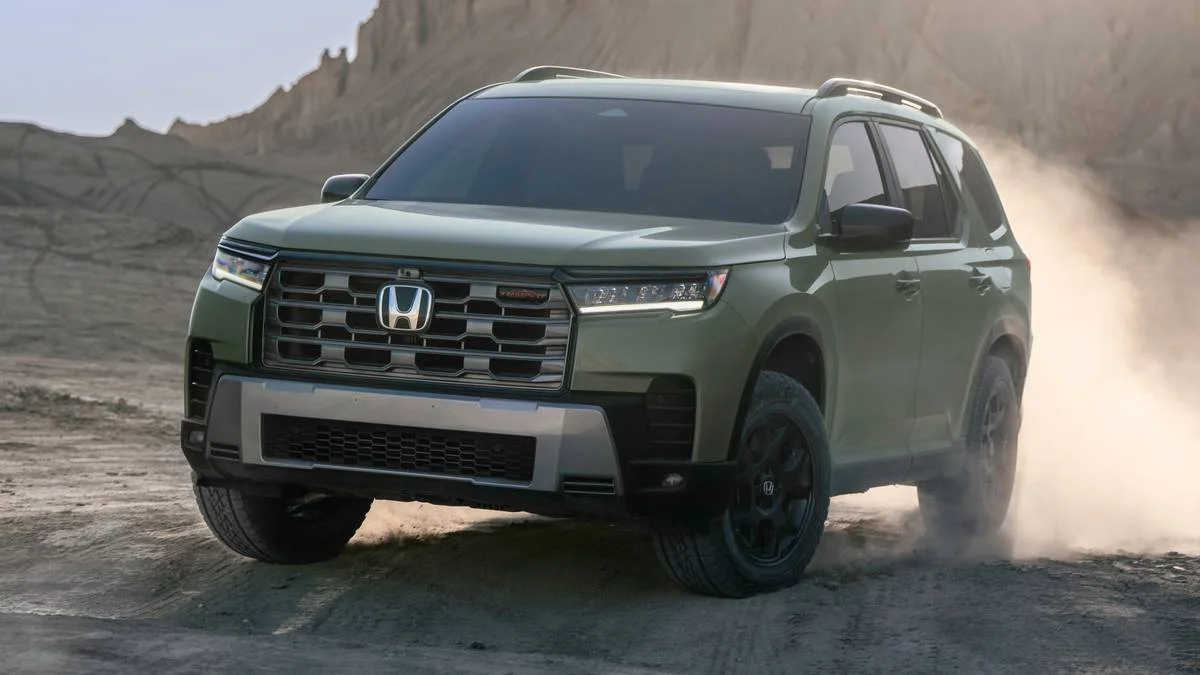
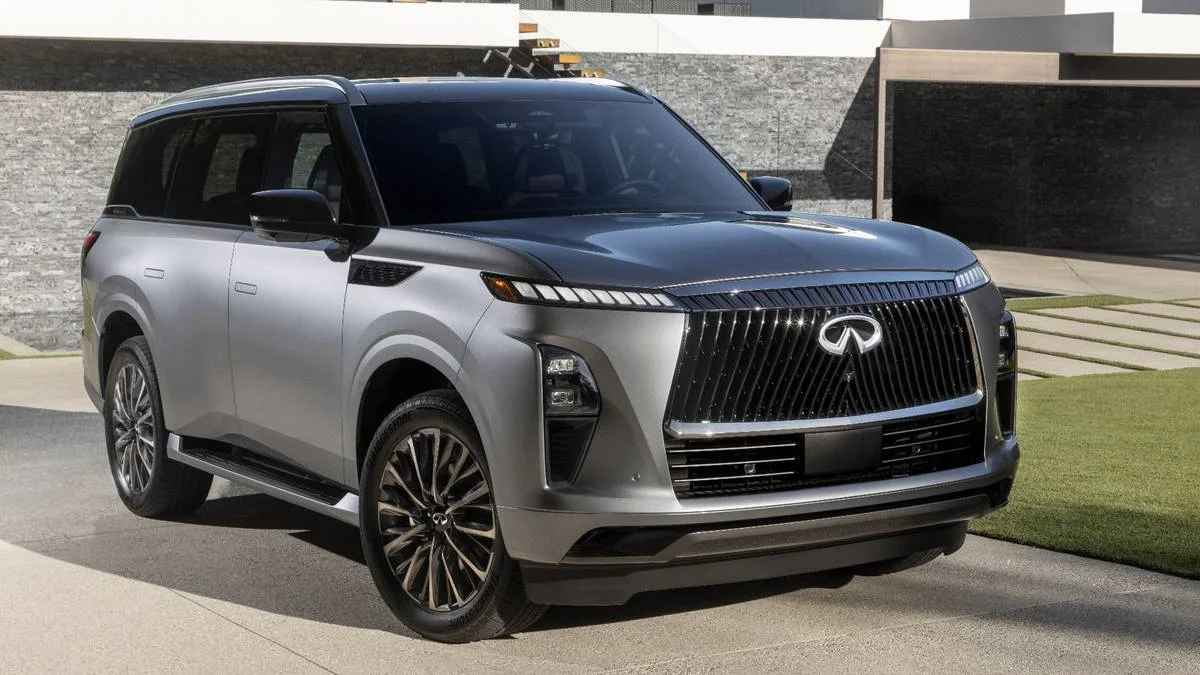
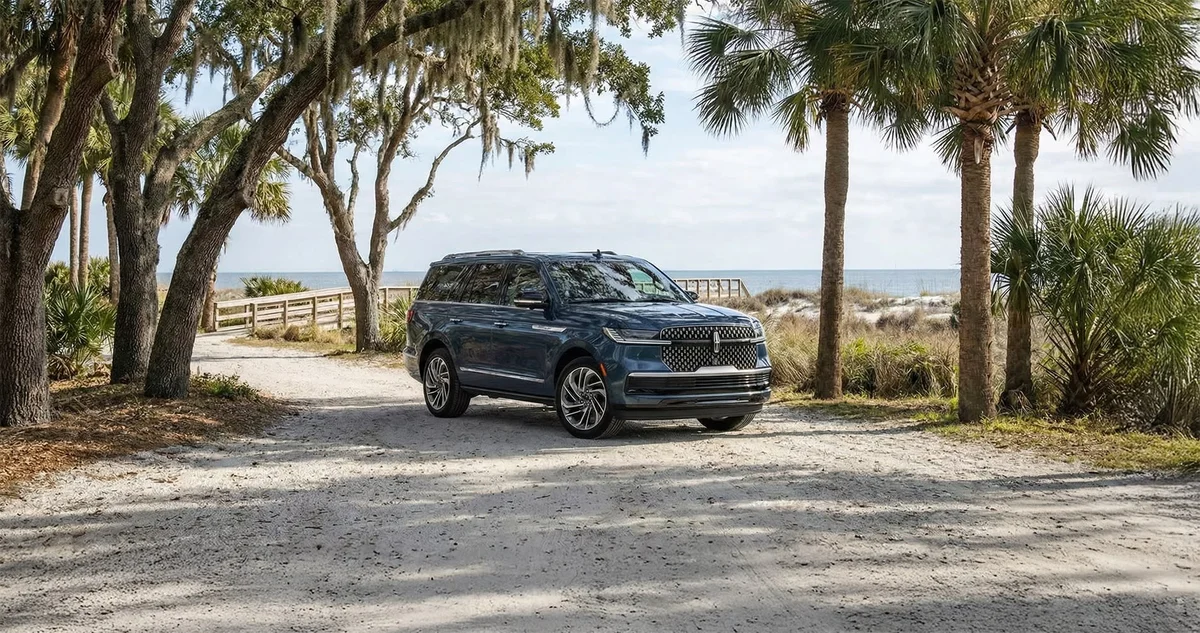
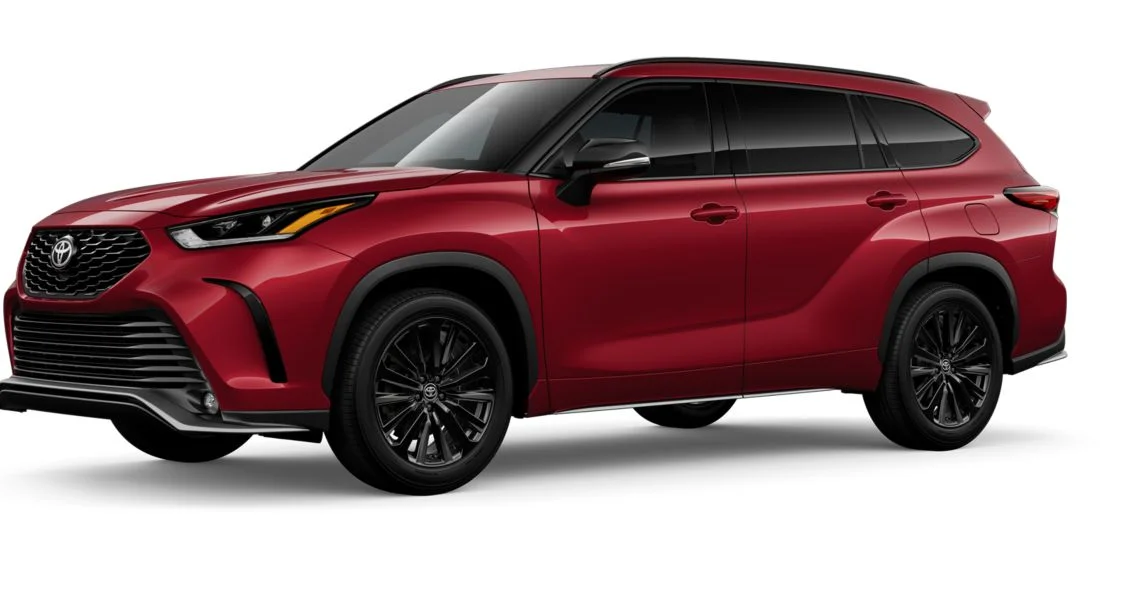
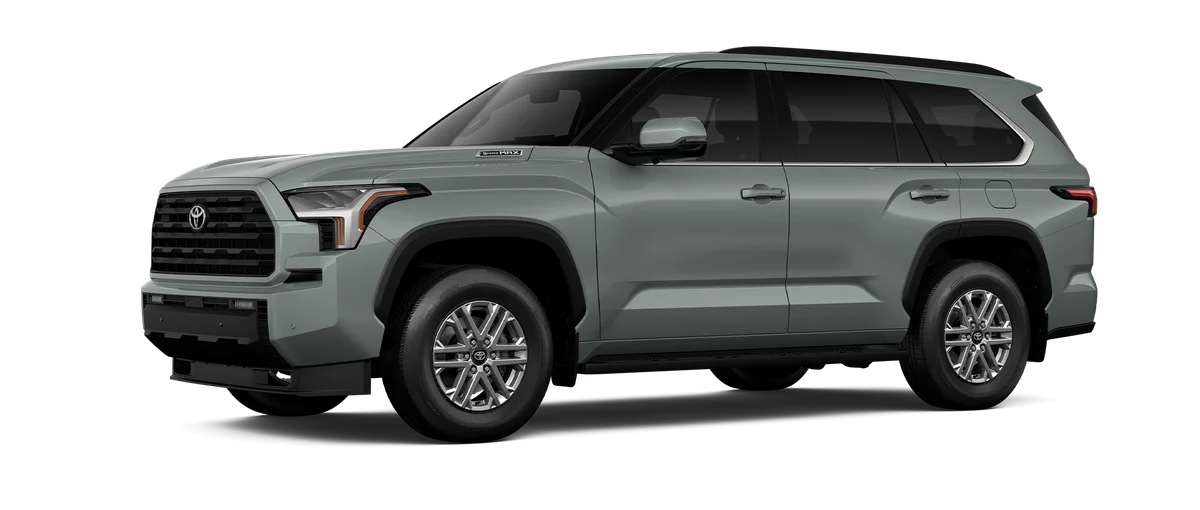
On our list, the body-on-frame camp is the Cadillac Escalade, Lincoln Navigator, Chevy Suburban, GMC Yukon XL, Infiniti QX80, Ford Expedition, and Toyota Sequoia. The unibody camp includes the BMW X7, Mercedes GLS 580, Volvo XC90, Land Rover Discovery, Defender 130, Audi Q7, Lincoln Aviator, Acura MDX, Honda Pilot, Hyundai Palisade, Kia Telluride, Toyota Highlander, and VW Atlas.
Why full-size body-on-frame SUVs tow so much more than midsize crossovers
Towing load goes through the hitch, into the rear of the vehicle, and then has to resist twisting the whole structure. With a ladder frame, that load path runs through continuous steel rails: the engine pulls the frame, and the frame pulls the trailer (SlashGear on the construction trade-off). On a unibody, the hitch loads apply to the entire welded shell. A unibody can be engineered to take heavy loads, but it takes more reinforcement, usually more weight, and typically a V8 and heavy-duty cooling to go with it.
The practical gap on our list is wide. Full-size body-on-frame SUVs tow 8,100 to 9,600 pounds. The Ford Expedition tops the list at 9,600 pounds when properly equipped with the Heavy-Duty Trailer Tow Package (Ford's 2026 Expedition specs), followed by the Toyota Sequoia at 9,520 pounds, the Lincoln Navigator at 8,700 pounds, and the QX80 at 8,500. Mainstream unibody crossovers cluster at 5,000 pounds: the Palisade, Telluride, Pilot, Highlander, Atlas, Aviator, MDX, and XC90 all share that ceiling. The Audi Q7 is lower still at 4,400 pounds.
Two unibody outliers prove the rule can bend. The Mercedes GLS 580 pairs a 510-horsepower V8 with a reinforced unibody and tows 7,700 pounds (Mercedes-Benz dealer confirming the rating), and the Land Rover Discovery and Defender 130 tow 8,200 and 8,201 pounds, respectively, on Land Rover's aluminum-intensive D7x architecture. That architecture claims three times the torsional rigidity of a traditional ladder frame (Repairer Driven News). So unibody is not a towing dead end. It just takes expensive engineering to catch up.
Full-size body-on-frame SUVs also win on tow ratings for reasons beyond the frame itself. Kelley Blue Book's towing roundup credits the usual full-size advantages: longer wheelbases for trailer stability, bigger engines, upgraded brakes, and heavy-duty cooling systems (KBB: Best SUVs for Towing). The frame is the floor of that capability. Everything else is piled on top.
| SUV | Construction | Max tow (lbs) | Combined MPG |
|---|---|---|---|
| Ford Expedition | Body-on-frame | 9,600 | 19 |
| Toyota Sequoia (hybrid) | Body-on-frame | 9,520 | 22 |
| Lincoln Navigator | Body-on-frame | 8,700 | 17 |
| Infiniti QX80 | Body-on-frame | 8,500 | 18 |
| Chevrolet Suburban | Body-on-frame | 8,200 | 17 |
| GMC Yukon XL | Body-on-frame | 8,200 | 17 |
| Cadillac Escalade | Body-on-frame | 8,100 | 17 |
| Land Rover Defender 130 | Aluminum unibody | 8,201 | 19 |
| Land Rover Discovery | Unibody | 8,200 | 21 |
| Mercedes-Benz GLS 580 | Unibody | 7,700 | 17 |
| BMW X7 | Unibody | 7,500 | 22 |
| Kia Telluride, Honda Pilot, Palisade, Highlander, Atlas, Aviator, MDX, XC90 | Unibody | 5,000 | 20 to 26 |
| Audi Q7 | Unibody | 4,400 | 22 |
Body-on-frame costs you 3 to 9 mpg combined
Body-on-frame SUVs are heavy. A ladder frame adds structural steel the unibody does not need, and the full-size dimensions that come with it add glass, sheet metal, and tires. SlashGear's roundup of body-on-frame downsides puts weight and fuel economy at the top of the list (SlashGear: 5 Downsides of Body-on-Frame SUVs). The EPA combined ratings in RankGrids data bear that out: the Escalade, Navigator, Suburban, Yukon XL, and GLS 580 all return 17 mpg combined. The QX80 runs 18. The Expedition manages 19.
Unibody three-rows cluster higher. The gas Pilot, Telluride, Atlas, Q7, and X7 all land at 22 mpg combined, the Highlander at 24, and the XC90 at 26. The one body-on-frame hybrid on the list, the Sequoia, returns 22 mpg combined with its i-FORCE MAX setup, which is genuinely impressive for 9,520-pound tow capacity but still trails lighter unibodies.
Over 15,000 miles a year, the 3 mpg gap between a Suburban (17 mpg) and a Palisade (20 mpg) works out to roughly 130 extra gallons. At around $3 a gallon that is close to $400 a year, nearly $4,000 over a decade. If you never tow more than 5,000 pounds, that is pure penalty.
Ride and handling: the gap has narrowed, not closed
The old reputation body-on-frame SUVs have for a trucklike ride came from solid rear axles, not ladder frames. Most 2026 full-size body-on-frame SUVs have replaced the live axle with independent rear suspension. The Escalade combines its multilink setup with standard Magnetic Ride Control and available air suspension (Consumer Reports 2026 Escalade overview). Chevy did the same on the Suburban, and GMC on the Yukon XL. The redesigned QX80 pairs its new independent rear suspension with available adaptive air springs, which Hagerty reports delivers a ride dramatically improved over the previous solid-axle generation (Hagerty's 2026 QX80 review).
Air suspension is now available on most of this body-on-frame segment: Escalade, Navigator (Perfect Position air suspension), Yukon XL Denali, QX80, and Land Rover Discovery and Defender 130 as standard. On smooth pavement, a loaded Navigator or Escalade feels closer to a GLS or X7 than it does to a 2010 Yukon, according to the same reviewers.
Handling is the honest remaining gap. A unibody is lighter and stiffer per pound, so a BMW X7 or XC90 changes direction more crisply on a twisty road. Weight matters: Motor1 notes that a body-on-frame three-row typically runs several hundred pounds heavier than a comparable unibody (Motor1 on body-on-frame weight). Body-on-frame SUVs also have more mass up high because the floor sits above the frame, which raises center of gravity. On winding roads and emergency maneuvers, that shows up.
On rough gravel, unpaved forest roads, and genuine off-road terrain, body-on-frame still has the edge. US News notes that ladder frames flex in a way that lets the body remain stable while the wheels articulate over obstacles (US News: Why Off-Road SUVs Use Body-on-Frame). The 6.3-inch suspension travel listed for the Suburban and QX80 and 9.4-inch ground clearance on the Defender 130 reflect that priority.
Interior packaging: external size does not translate
This is where body-on-frame costs you something less obvious than fuel. A ladder frame sits under the cabin, which raises the floor and eats into interior height and useable volume. The clearest case comes from Toyota's own lineup: Autoblog reports that the body-on-frame Sequoia measures nearly seven inches longer than the unibody Grand Highlander yet offers less maximum cargo volume (86.9 vs 97.5 cubic feet) (Autoblog: Sequoia vs Grand Highlander).
The reason full-size body-on-frame SUVs still offer massive interior room is simply that they are far bigger outside. The Suburban gives you 144.5 cubic feet of cargo and 36.7 inches of third-row legroom. The Navigator offers 36.5 inches of third-row legroom, essentially tied with the Expedition at 36.5 and a touch behind the Suburban and Yukon XL at 36.7. A unibody Telluride offers 89.3 cubic feet and 31.4 inches of third-row legroom. The Highlander is tighter still at 28 inches of third-row legroom, which is adult-uncomfortable on anything but a short hop.
The take-away: if you need a third row an adult can sit in on a cross-country drive, full-size body-on-frame SUVs still do it best. If you want maximum interior volume per outside dimension, unibody wins. The Volkswagen Atlas is a telling middle case, a unibody that stretches to 33.7 inches of third-row legroom, more than some full-size luxury rigs.
A crossover is unibody; a truck-based SUV is body-on-frame
A truck-based SUV is a body-on-frame SUV that shares a platform with the maker's full-size pickup. Carbuzz points out that the Lincoln Navigator rides on the same ladder frame as the Ford F-150 (Carbuzz on the Navigator and F-150 frame); the Expedition shares the same underpinnings, the Suburban and Tahoe share with the Silverado, the Sequoia shares with the Tundra, and the Escalade shares with the Silverado and Sierra. That genealogy is why they tow 8,000-plus pounds and clear 8 inches of ground.
A crossover SUV is a unibody vehicle built on a car-like platform with raised ground clearance, tuned for ride and fuel economy rather than hauling and crawling. The term, per Wikipedia, specifically refers to the unibody construction shared with passenger cars (Crossover SUV, Wikipedia). The Pilot, Highlander, Palisade, Telluride, Atlas, MDX, Aviator, Q7, X7, GLS, XC90, Discovery, and Defender 130 are all crossovers under that strict definition, even though several of them cost six figures and few shoppers would call a GLS a crossover in conversation.
Body-on-frame frames can be straightened; unibodies more often total
Body-on-frame vehicles can be easier to repair after serious damage. AutoBodyShopNear reports that a replacement truck frame typically costs under $2,000 before labor, and minor frame misalignment can often be straightened for $600 to $2,500 (AutoBodyShopNear: Frame Damage Repair Cost 2026). On a unibody, a bent structural rail often means cutting and welding into the shell itself, with ADAS sensor recalibration piled on top, which pushes severe collisions toward total-loss territory. Insurers typically total a vehicle when repair costs exceed 60 to 70 percent of value.
Longevity is the other side of the same coin. Carbuzz makes the case that the Lincoln Navigator outlasts its German luxury rivals in part because its underlying F-150 ladder frame is designed for commercial-truck duty cycles (Carbuzz on Navigator durability). That said, unibody three-rows from makers with strong reliability records also age well. The Telluride and Highlander carry excellent reliability ratings in RankGrids data, and the Pilot and Palisade rate high, all without a ladder frame.
Which platform actually fits which buyer
Three decisions, in order. First, what you will tow. If the answer is a boat, camper, or trailer over 5,000 pounds, you need body-on-frame or one of the heavy-tow unibody exceptions (GLS 580, Discovery, Defender 130). If your maximum load is a pop-up camper, a utility trailer with a lawn tractor, or a 20-foot runabout, nearly any unibody three-row does it.
Second, how many adults will ride in the third row and how often. If the answer is "regularly, and on long drives," you are looking at full-size: the Expedition, Suburban, Yukon XL, or Navigator deliver 36-plus inches of third-row legroom. If the third row is a Costco overflow seat for kids a few times a month, a unibody crossover works.
Third, what your annual mileage and fuel budget look like. If you drive 20,000 miles a year of pavement, the fuel economy gap is real money. A Highlander at 24 mpg combined (and considerably higher in hybrid form) costs meaningfully less to run than a 17-mpg body-on-frame full-sizer. If you are towing hard twice a year and commuting the rest of the time, the hybrid Sequoia is the pointed compromise: 22 mpg combined with a 9,520-pound tow rating. It is the only three-row on the list that refuses the usual trade-off.
The full RankGrids ranking of 20 three-row SUVs with their towing, cargo, and third-row stats is at Best Three-Row SUVs of 2026, and the Escalade vs Navigator vs X7 head-to-head is a clean three-way on exactly the platform question: two body-on-frame luxury flagships versus one unibody.
The short version
Body-on-frame construction is the right answer if you tow heavy, haul eight adults long distances, or drive off pavement. You pay for that in fuel (17 to 19 mpg across the segment) and in handling that does not match a lighter unibody. Unibody is the right answer for almost everyone else, including buyers who plan to tow up to 5,000 pounds. The two exceptions worth knowing: the hybrid Toyota Sequoia breaks the fuel penalty for body-on-frame tow capability, and the Mercedes GLS 580, Land Rover Discovery, and Defender 130 break the unibody tow ceiling. Start with towing need and third-row usage. The construction choice follows from there.
See Best Three-Row SUVs of 2026Questions people ask
What is the difference between a body-on-frame and a unibody SUV?+
Body-on-frame SUVs have a separate steel ladder frame that the body bolts onto, like a pickup truck. Unibody SUVs integrate the frame and body into a single welded shell, like a sedan. Body-on-frame tends to tow more and handle rough terrain better. Unibody is lighter, gets better fuel economy, and packages interior space more efficiently per outside inch.
Do I need a body-on-frame SUV to tow a boat or trailer?+
Not for most trailers. Unibody three-row SUVs like the Palisade, Telluride, Pilot, Highlander, Atlas, MDX, and XC90 are rated to 5,000 pounds, enough for a 20-foot runabout, a pop-up camper, or a utility trailer with a lawn tractor. You need body-on-frame (or one of the heavy-tow unibody exceptions like the Mercedes GLS 580 or Land Rover Discovery) if your trailer exceeds 5,000 pounds.
Why do full-size SUVs tow more than midsize ones?+
Three reasons stack together. First, ladder frames carry trailer loads through continuous steel rails, which resist twisting better than a shell structure. Second, full-size SUVs share platforms with half-ton pickups, so they inherit heavy-duty cooling, bigger brakes, and tougher transmissions. Third, longer wheelbases make trailers more stable at speed. The 2026 Ford Expedition tows 9,600 pounds for exactly these reasons.
Is a truck-based SUV better than a car-based SUV?+
Better at different jobs. Truck-based (body-on-frame) SUVs tow more, carry more adults in the third row, and handle serious off-road use. Car-based (unibody) SUVs ride and handle better on pavement, typically return 20 to 50 percent better combined fuel economy, and often offer more interior volume per external inch. If you tow under 5,000 pounds and drive mostly on roads, car-based is usually the better buy.
What is a crossover SUV versus a truck-based SUV?+
A crossover is a unibody SUV built on a car-like platform with raised ride height. A truck-based SUV uses body-on-frame construction and shares a platform with the maker's pickup. The Lincoln Navigator rides on the Ford F-150 frame, and the Sequoia shares its chassis with the Toyota Tundra. The Honda Pilot and Kia Telluride are crossovers. The line between the terms has blurred, but construction is the strict technical difference.
Does body-on-frame always mean a rougher ride?+
Not anymore. The 2026 Cadillac Escalade, Chevy Suburban, GMC Yukon XL, Ford Expedition, Lincoln Navigator, and Infiniti QX80 all pair body-on-frame construction with independent rear suspension, and most offer adaptive dampers or air springs. The ride gap versus unibody has narrowed substantially. The handling gap on winding roads is still real because body-on-frame SUVs are heavier and taller.
Are body-on-frame SUVs cheaper to repair after a crash?+
Sometimes, for minor damage. A separate frame can be pulled, straightened, and measured without cutting into the body. Replacement frames also tend to be cheaper and more widely available than full unibody shells. Severe collisions can still total either type when repair costs exceed roughly 60 to 70 percent of vehicle value, especially once ADAS sensor recalibration is added.
Can a unibody SUV tow heavy loads?+
Yes, with enough engineering. The Mercedes-Benz GLS 580 tows 7,700 pounds on a reinforced unibody with a 510-horsepower V8. The Land Rover Discovery tows 8,200 pounds and the Defender 130 tows 8,201 pounds, both on Land Rover's aluminum-intensive D7x monocoque. These are exceptions that cost over $70,000 and prove the rule: unibody can tow heavy, but it takes a premium platform to get there.
Sources
What this guide is based on. We research from published specifications, independent reviews and owner reports; we did not test these products ourselves.
- 1.Unibody vs. Body-on-Frame: Which Is Better?, SlashGear
- 2.Unibody vs. Body-on-Frame Construction, Carfax
- 3.Why Off-Road-Ready SUVs and Capable Work Trucks Use Body-on-Frame Construction, US News
- 4.Is Body-On-Frame Really Better For Off-Roading?, Motor1
- 5.5 Downsides of Body-On-Frame SUVs, SlashGear
- 6.Crossover SUV, Wikipedia
- 7.2026 Ford Expedition Specifications, Ford
- 8.2026 Cadillac Escalade Overview, Consumer Reports
- 9.2026 Infiniti QX80 Sport 4WD: 1500 Miles in a Not-Escalade, Hagerty
- 10.Toyota Sequoia vs Grand Highlander: The Smaller SUV Is Roomier and Cheaper, Autoblog
- 11.Next-generation Defender won't be body-on-frame, Repairer Driven News
- 12.The Lincoln Navigator Outlasts Every German Luxury SUV Because It's Really An F-150 Underneath, Carbuzz
- 13.2026 Mercedes-Benz GLS Towing Capacity, Mercedes-Benz of Milwaukee North
- 14.2026 Chevrolet Suburban: How the Independent Rear Suspension Improves Comfort, Lithia Chevrolet Redding
- 15.Frame Damage Repair Cost: Safety and Total Loss Guide 2026, AutoBodyShopNear
- 16.Best SUVs for Towing in 2026, Kelley Blue Book
Products mentioned

More on three row suvs
Explainer
Hybrid vs. Gas Three-Row SUV: Is the Fuel Savings Worth the Price Premium?
A payback calculator for hybrid three-row SUVs: how long each model takes to recover its price premium at current gas prices, and the buyers for whom gas still wins.
Explainer
Three-Row SUV Cargo Numbers Explained: What the Specs Don't Tell You
Three-row SUVs advertise huge cargo figures, but those numbers require folding every rear seat. Here is what each measurement means and how much space you really have once the family is in the car.
Explainer
Three-Row SUV vs. Minivan: The Honest Trade-Off
What the specs actually say: minivans beat three-row SUVs on cargo, legroom, MPG, and sliding doors. SUVs win on towing, ground clearance, and AWD. Here is which numbers decide.
Explainer
Which Three-Row SUVs Have a Third Row Adults Can Actually Use?
A plain-language guide to the third-row legroom threshold that separates adult-usable SUVs from kid-only back benches, with specific 2026 models that clear the bar.
Buying guide
How to Choose a Three-Row SUV
Five real decisions that separate three-row SUVs: full-size body-on-frame or midsize unibody, third-row use, towing, hybrid or gas, and seat layout.