Explainer
Robot Vacuum Suction Pa Numbers Explained: What They Measure and Why They Don't Tell the Whole Story
A plain-language explainer on what a robot vacuum Pa rating actually measures, why numbers have ballooned without better cleaning, and how much Pa you really need for hard floors, carpet, and pet hair.
Updated November 17, 2026 · Based on 10 sources · How we research
If you are shopping for a robot vacuum, the biggest number on the box is usually a Pa rating. A couple of years ago, low-end robots advertised 2,000 to 4,000 Pa and premium flagships topped out around 10,000 Pa, according to TechRadar's professional reviewer. In 2026 flagships from Roborock and Dreame claim 35,000 Pa and the cheapest listings on Amazon print 40,000 or more. The honest answer is that above roughly 10,000 Pa, the headline Pa number tells you very little about how much hair, grit, or litter the robot will actually pull off your floor. Pa is a lab reading at the motor with the inlet sealed, not a performance measure at the carpet, and there is no mandatory standard forcing anyone to measure it the same way. This guide walks through what the number really means, where it stops mattering, and what to look at instead.
A Pa rating is a sealed-inlet motor spec, not a floor suction measurement
Pa is the SI unit of pressure. One Pascal equals one newton of force spread over one square meter. For a vacuum, Pa describes the pressure drop the motor can produce between its inlet and the outside air when that inlet is sealed with no air flowing through it. The higher the number, the harder the motor can theoretically pull. The key word is theoretically. The test that produces a Pa figure uses a blocked port, a clean filter, an empty bin, and a fresh battery, and the number is read at the motor, not at the floor nozzle. That is the standard engineering definition of static pressure, explained by RobotReviewed, and spelled out further by TestMyVacuum, which notes Pa is measured with the inlet completely blocked and no air moving.
Nothing about that test resembles cleaning. When the robot drives across your rug, air has to flow through the floor nozzle, past the brush, down the duct, through a partially filled bin and a filter, and only then into the motor. Every one of those steps costs pressure. Independent bench testing by VacuumWars put the Dreame L40 Ultra Gen 2, advertised at 25,000 Pa, at 0.79 kPa of actual measured suction pressure. That is roughly three percent of the headline figure. The lower-Pa Dreame L40s Ultra on the same bench measured 0.54 kPa with identical 16 CFM airflow. Most of the apparent advantage of the bigger number evaporates the moment air starts moving.
How the headline number got from around 10,000 Pa to 35,000 Pa in two years
When TechRadar's reviewer started testing robovacs nearly two years ago, low-end models were 2,000 to 4,000 Pa and premium flagships sat around 10,000 Pa. Flagships from Roborock and Dreame now list 35,000 Pa. The underlying motors did not get three times better in two years. The specs did.
There is no regulated test for Pa on a robot vacuum. IEC 60312-1, the international household vacuum standard, specifies dust pickup, airflow and pressure under defined conditions, but it is written for mains-powered household vacuums and does not cover battery-operated robots in its primary scope (ANSI reference). What that means in practice: Brand A can measure at the motor with a short straight duct, Brand B can measure at the inlet with the brush chamber removed, and both can print their biggest number on the box. CMGM, writing from the China sourcing side, documents several of the inflation tactics: swapping units, quoting peak-mode figures as if they were standard-mode, and pulling numbers from component supplier sheets rather than finished-product testing.
Manufacturers also mix units. kPa, Pa, Air Watts and CFM all look like suction to shoppers but measure different things. Pa and kPa measure pressure. CFM measures how much air per minute actually moves through the system. Air Watts combines airflow and pressure into one figure using the formula (CFM × water lift) ÷ 8.5, as RobotReviewed and VacuumDeals both lay out. Pressure without airflow does not move debris, which is why a Pa number read alone is a weak predictor of cleaning.
Cleaning is agitation plus airflow, not just pressure
A vacuum removes dirt in two steps. First, something, usually a rotating brush, has to break the debris free from the floor or the carpet pile. Then, airflow carries it up the duct and into the bin. Pa helps a little with step two and does essentially nothing for step one. HouseholdRobot puts it plainly: brush design has a bigger impact on real-world performance than suction, because the brush is what touches the floor.
Hair woven into medium-pile carpet does not come out because the pressure differential at the motor got larger. It comes out because a stiff rubber roller agitates the pile and drags the hair loose, and the suction then moves it. If you double the pressure at the motor but leave the brush unchanged, the hair stays in the carpet. VacuumWars' bench test shows this directly: the 25,000 Pa Dreame L40 Ultra Gen 2 picked up 69% of flattened pet hair, while the lower-Pa L40s Ultra on the same test reached 91%. The Gen 2 actually measured higher pressure at the inlet. The lower-Pa model still won on carpet because its brush and hair handling were better.
Brush contact, bin seal and airflow path are harder to market than a five-digit Pa number, so most spec sheets bury them. When you see DuoRoller, ZeroTangle or anti-tangle brushroll listed in the specs, that is usually the part doing the actual cleaning work on carpet. Pa is just the fuel gauge.
Why our top-ranked flagships run 10,000 to 12,000 Pa, not 35,000
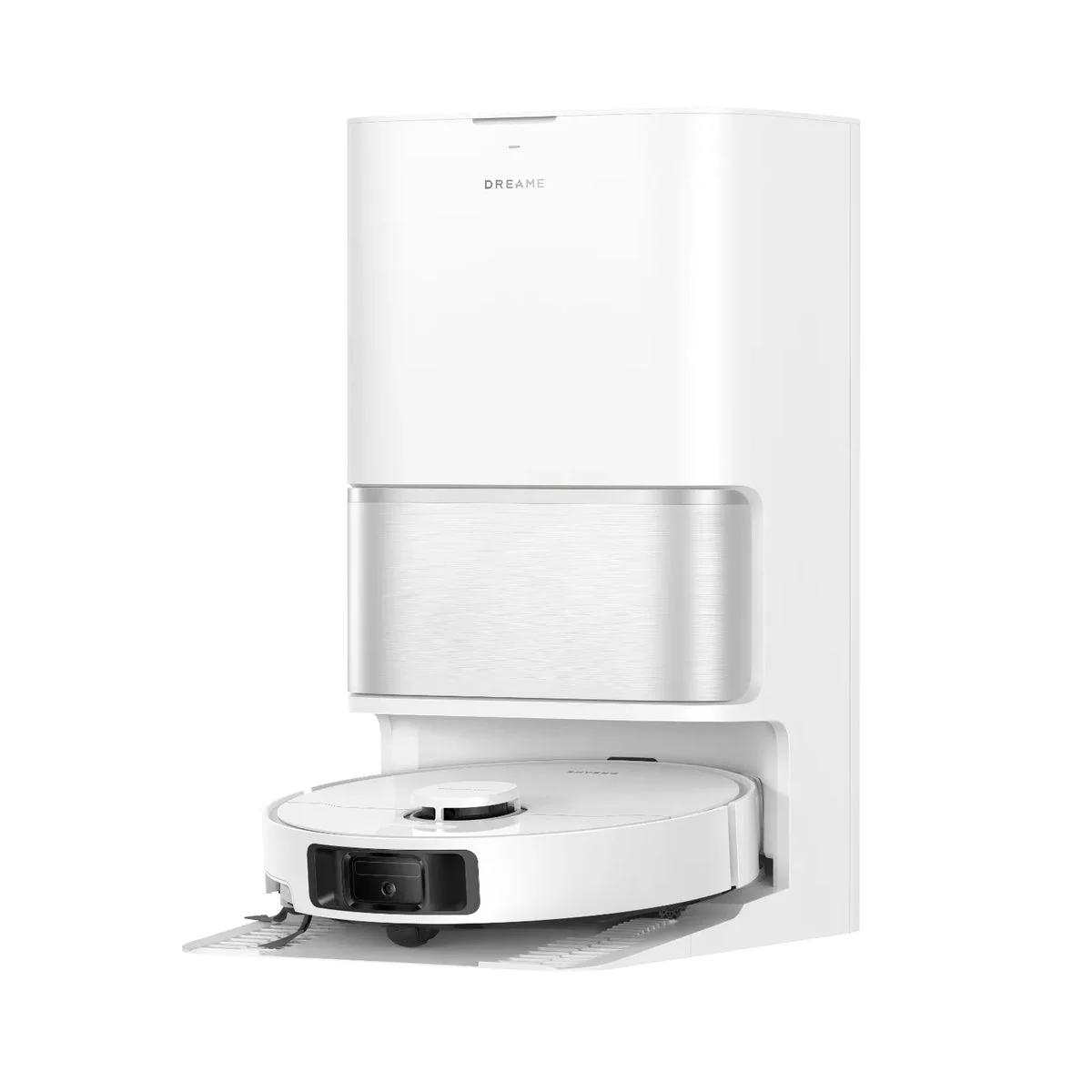
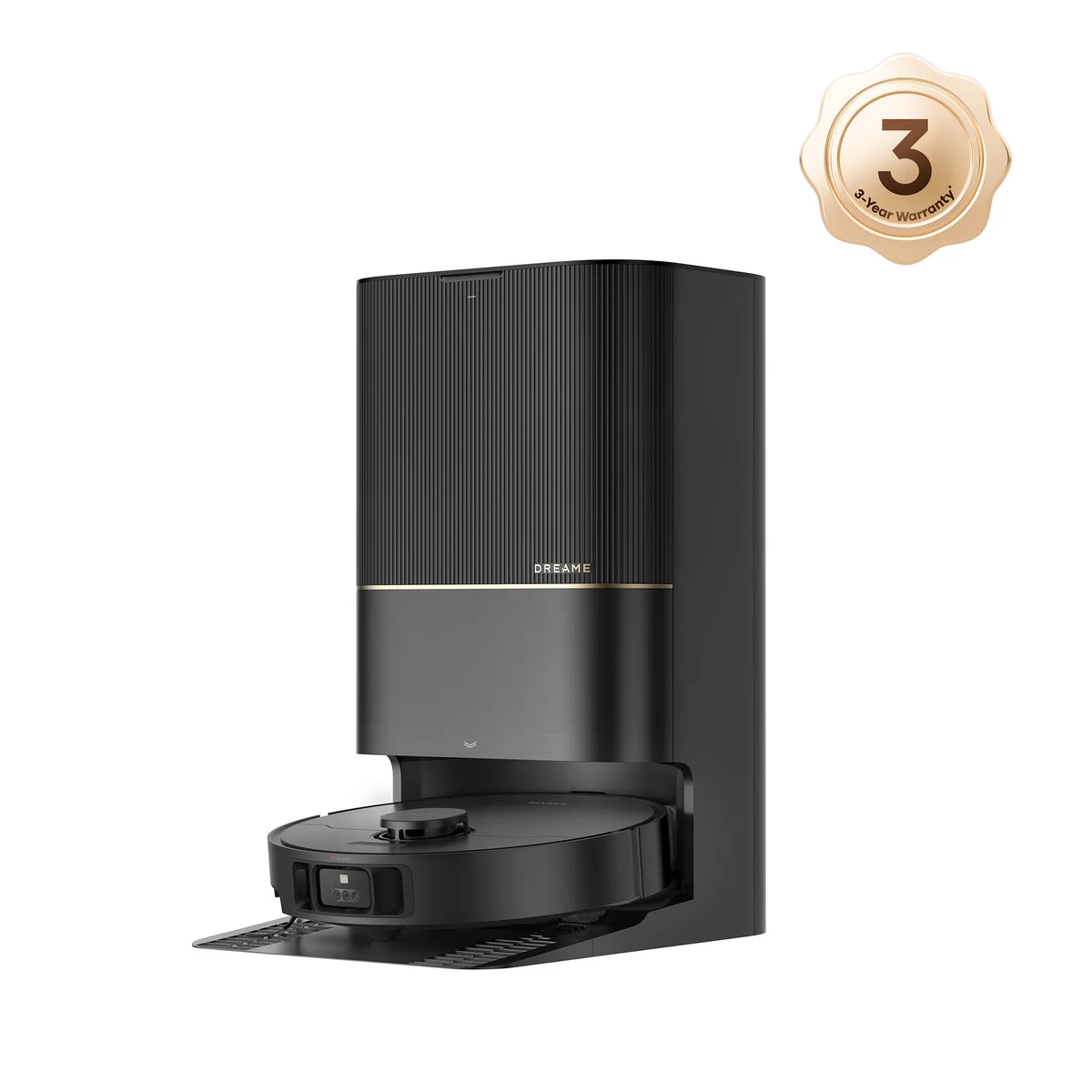
Our Best Robot Vacuums of 2026 puts the Dreame X40 Ultra first at 12,000 Pa and the Roborock S8 MaxV Ultra second at 10,000 Pa. The Roborock Qrevo Master sits at number three with the same 10,000 Pa rating. The Dreame L40 Ultra Gen 2, advertised at 25,000 Pa, ranks fifth. The ordering is not arbitrary.
Modern Castle's objective test of the X40 Ultra scored it 96.0% on low-pile carpet and 95.8% on high-pile carpet by weight. VacuumWars' bench test of the L40 Ultra Gen 2 found it picked up 69% of flattened pet hair against 91% for the lower-Pa L40s Ultra, with identical 16 CFM airflow. More Pa on the label, worse pet hair result on the carpet. The difference was the brush and hair handling, not the pressure.
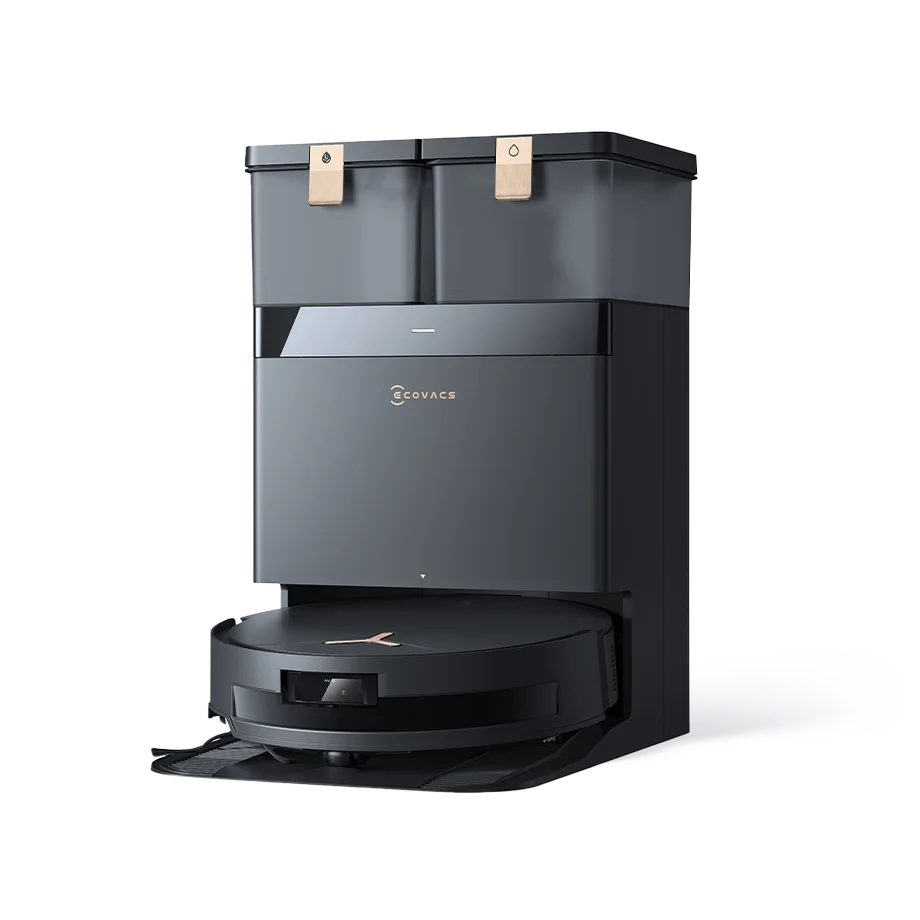
The same pattern repeats across the ranking. The Ecovacs Deebot T50 Max Pro Omni claims 18,500 Pa and lands at number seventeen. The Roborock Qrevo 2 Pro lists 20,000 Pa and ranks twelfth. The Roborock Q5 Pro+, with 5,500 Pa and a DuoRoller anti-tangle brush, ranks eighth and is the budget pick for pet owners. Rank follows navigation, dock automation, brush design and published reviewer results, and only loosely tracks the Pa number.
How much Pa you actually need
TechRadar's reviewer notes that the robots with the highest Pa are not always the best cleaners, and cites the Roborock Q5 Pro+ (5,500 Pa in Roborock's spec sheet) as a model that sailed through their cleaning tests. RobotVacuumLab's guide suggests 8,000 Pa is a reasonable target for hard floors and 15,000 Pa for mixed flooring with medium carpet, and warns that effective cleaning power depends on brush, chassis sealing and battery endurance, not peak Pa alone.
Battery is the other reason not to overbuy. The number on the box is the maximum-mode value. Most robots only hit it when carpet detection fires, and running maximum mode empties the battery faster than quiet mode. The L40 Ultra Gen 2's 231-minute runtime figure is for quiet-mode vacuum-only operation, not for 25,000 Pa on the whole floor.
| Floor type | Realistic Pa range | What matters more than Pa |
|---|---|---|
| Bare hard floors only | 4,000 to 7,000 Pa | Edge brush reach and mop quality |
| Hard floors plus low-pile rugs | 7,000 to 10,000 Pa | Auto carpet boost on detection |
| Mixed home with medium-pile carpet | 10,000 to 15,000 Pa | Rubber dual-roller brush |
| Heavy-shedding pets on medium pile | 10,000 to 15,000 Pa | Anti-tangle brush and strong agitation |
Why a cheap robot can list a bigger number than a $1,600 flagship
Reputable brands quote a Pa figure they can at least defend internally. No-name listings on Amazon face no accountability at all. A sub-$200 robot claiming 40,000 Pa is either measuring with a protocol no one else uses, re-exporting a motor spec sheet from the component supplier, or simply printing whatever number sells. CMGM, writing for overseas buyers sourcing from Chinese factories, documents three recurring tactics: swapping units between Pa, kPa and Air Watts to make numbers look bigger, quoting peak-mode Pa interchangeably with standard-mode Pa, and lifting Pa figures from component supplier sheets rather than finished-product testing. CMGM also cites examples of robots claiming 48,000 Pa that deliver 58 to 160 real cleaning watts.
Peak Pa claims are measured at the motor inlet, not the floor, so real-world suction at the brush is a small fraction of the advertised figure even on reputable models, as RobotVacuumLab and TestMyVacuum both explain. On unreputable models, the headline is often the only number the manufacturer has, and when the number is the only number, the number is the product.
What to compare instead of the Pa headline
If you only read one spec, make it the brush. Rubber dual-roller systems like Roborock's DuoRoller, Ecovacs' ZeroTangle 2.0, Dreame's hair-cutting brushroll and Narwal's SGS-certified tangle-free system are the single biggest predictor of carpet and pet-hair performance across our 2026 ranking. Every top-ten pick on that list uses some form of anti-tangle brushroll, and the top three all pair that brush with 10,000 to 12,000 Pa rather than the biggest headline number on the market.
After brush, look for a published auto-carpet-boost behavior (nearly all LiDAR robots have this), an edge brush or arm reach if you have skirting boards and furniture legs, and at least one independent review that measured carpet pickup as a percentage rather than reprinting the spec sheet. Modern Castle, VacuumWars and TechRadar run those kinds of tests; most spec-sheet aggregators do not.
Finally, treat the dock as part of the cleaning system. A self-empty dock keeps dustbin fill low, which keeps actual sustained suction closer to the motor's maximum. Premium flagships like the Roborock Qrevo Master and the Ecovacs Deebot T30S Combo hold weeks of auto-empty capacity, and that matters more for day-to-day pickup than another 5,000 Pa on the label.
The short version
Pa is a real motor measurement, but the version printed on the box is measured under conditions that have almost nothing in common with vacuuming a house. Above about 10,000 to 12,000 Pa the headline number stops predicting results, and brush design, airflow, bin seal and anti-tangle hardware decide whether hair comes out of your carpet. If you have hard floors with occasional rugs, 7,000 to 10,000 Pa is plenty. If you have pets and medium-pile carpet, prioritize a dual rubber-roller brush and a robot with auto carpet boost; Pa in the 10,000 to 15,000 range on a well-engineered flagship like the Dreame X40 Ultra or Roborock S8 MaxV Ultra will outperform a 25,000 Pa model with a weaker brush. Shop the hardware, not the headline.
See Best Robot Vacuums of 2026, Top 10 RankedQuestions people ask
Is higher Pa always better in a robot vacuum?+
No. Pa is measured at the motor with the inlet sealed and the brush unloaded, so the number does not scale with cleaning performance on your floor. Above about 10,000 to 12,000 Pa, brush design and airflow decide pickup, not pressure. VacuumWars' bench test of the 25,000 Pa Dreame L40 Ultra Gen 2 found it picked up less flattened pet hair than the lower-Pa Dreame L40s Ultra on the same rig.
What does Pa mean on a robot vacuum?+
Pa is the SI unit of pressure, one newton per square meter. On a robot vacuum spec sheet, Pa is the maximum pressure differential the motor can produce between its inlet and the outside air when the inlet is sealed and no air is flowing. It is a motor specification measured in a lab, not a cleaning measurement taken at the floor.
How much suction power do I actually need?+
For bare hard floors, 4,000 to 7,000 Pa is enough. Mixed hard floors with low-pile rugs work well at 7,000 to 10,000 Pa with carpet auto-boost. Heavy-shedding pets on medium-pile carpet need roughly 10,000 to 15,000 Pa paired with a rubber dual-roller brush. Buying above about 15,000 Pa rarely improves real-world pickup.
Why do some cheap robot vacuums list higher Pa than expensive ones?+
There is no mandatory third-party test for robot vacuum Pa ratings. Low-cost brands can measure under favorable conditions, quote peak-mode values, re-export component spec sheets, or simply print a number that sells. Reputable brands tend to stay within a defensible range for their motor hardware. A sub-$200 robot claiming 40,000 Pa is almost always marketing, not engineering.
Is 25,000 Pa better than 10,000 Pa for carpet?+
Not reliably. VacuumWars measured the 25,000 Pa Dreame L40 Ultra Gen 2 at 0.79 kPa of actual pressure with 16 CFM airflow, and it picked up 69% of flattened pet hair on their bench. The lower-Pa Dreame L40s Ultra reached 91% in the same test. Carpet performance is set mostly by the brush, carpet auto-boost and bin seal, not by headline Pa.
Are robot vacuum suction numbers just marketing?+
The motor spec behind the number is real, but how it is measured and reported is largely unregulated. Advertised figures have roughly tripled in two years without the motors tripling in capability, mostly because manufacturers can measure differently and no one enforces a common standard. Treat Pa as a rough category tier, not a performance measurement.
What Pa is good enough for pet hair on carpet?+
About 10,000 to 15,000 Pa is enough for most homes with pets on medium-pile carpet, provided the robot has an anti-tangle rubber dual-roller brush and auto carpet boost. The Dreame X40 Ultra at 12,000 Pa and the Roborock S8 MaxV Ultra at 10,000 Pa both score well on independent carpet tests. Going higher mostly buys marketing, not pickup.
Sources
What this guide is based on. We research from published specifications, independent reviews and owner reports; we did not test these products ourselves.
- 1.Vacuum Cleaner Suction Power Explained: Pa vs kPa vs Air Watts vs CFM, RobotReviewed
- 2.Sourcing Robot Vacuums from China: The Pa Rating Problem, CMGM
- 3.The 3 biggest lies robot vacuum brands are telling us, by a professional tester, TechRadar
- 4.Dreame L40 Ultra Gen 2 Review: Great Mopping, Major Drawbacks, VacuumWars
- 5.Dreame X40 Ultra Review - 15 Objective Cleaning Tests, Modern Castle
- 6.Robot Vacuum Suction Power Explained: The Pa Guide That Saves You Money, RobotVacuumLab
- 7.Vacuum Suction Power: CFM, Air Watts and Pa Explained, VacuumDeals
- 8.How Vacuum Suction Actually Works (Pa, Air Watts and CFM Explained), TestMyVacuum
- 9.Robot Vacuum Brushes Explained: Bristle, Rubber, Dual, Anti-Tangle, HouseholdRobot
- 10.IEC 60312-1 Ed. 1.1: Vacuum cleaners for household use - Methods for measuring the performance, ANSI Webstore
Products mentioned

More on robot vacuums
Explainer
Robot Vacuum Dock Features Explained: Self-Empty to Auto-Refill
What each dock layer (self-empty, auto-wash, hot water, auto-refill, auto-dry) actually removes from your chore list, what it costs, and what you still maintain.
Explainer
Does Robot Vacuum Mopping Actually Clean, or Is It Just a Wet Wipe?
What robot mopping really does, how vibrating, spinning and roller pads compare, and when you still need a real mop.
Buying guide
How to Choose a Robot Vacuum: The Four Decisions That Actually Matter
Skip the suction Pa arms race. Match a robot vacuum to your floors, your mopping needs, your dock tolerance, and your pets.