Explainer
What 12K, 18K and 24K Carbon Mean on a Padel Racket (And What They Don't)
The K on a padel racket counts filaments per tow in the carbon weave, not stiffness or quality. This guide separates what carbon grade actually changes from what it doesn't.
Updated November 12, 2026 · Based on 7 sources · How we research
Padel marketing has turned the K number into a status ladder. 12K is fine, 18K is better, 24K is best. That reading is wrong, and reading it that way will steer you toward rackets that do not match your game. The K on a face label counts filaments inside one tow of carbon yarn, which is a textile detail, not a performance rating. This guide is for players comparing frames in the 150 to 400 dollar range who want to know what the K number does change, what it does not, and what actually drives power and feel. We will name specific rackets from the RankGrids Best Padel Rackets of 2026 list and show where the K number and the ranking disagree.
The K on your racket label is a filament count, not a quality grade
K is textile shorthand for thousands of carbon filaments bundled into one tow of yarn. Padeli describes it plainly: 3K carbon has around 3,000 filaments per tow, 12K about 12,000, 18K about 18,000, and 24K about 24,000. The number says nothing about how much carbon is in the racket. It describes the thread used to weave the top sheet of the face.
This is why labels like TriCarbon 18K on the Bullpadel Hack 04 2026 or 12K Alum XTREM on the Nox AT10 Luxury Genius 12K 2026 describe the visible surface, not the whole face. Different brands mean slightly different things by the same K number. Padeli notes that Nox markets its own 12K Alum Xtrem as more rigid, while its 18K is sold as a solid and comfortable feel, so even inside one brand the same K label is tuned to different targets.
Why 24K is not automatically stiffer than 12K
Here is the counterintuitive part. Lower K numbers use thinner tows that weave more tightly, with more crossings per square centimeter. Higher K numbers use wider, flatter tows that weave more loosely, with fewer crossings in the same area. Padel Browser and Padel Trade both describe 3K as a dry, firm, crisp surface and 18K or 24K as more elastic in feel, which is the opposite of what the marketing ladder implies.
The physics behind this: stiffness in a composite comes from fiber modulus, resin content, and how the plies are oriented, not from how many filaments share a tow. Padeli is explicit that a 3K and a 12K tow made from the same modulus fibre are equally stiff, filament for filament. That is why the same Nox 12K and 18K faces, from one manufacturer, are described with opposite feel language.
Not every reviewer agrees with the counterintuitive version. Temple of Padel presents the opposite hierarchy, saying 18K and 24K deliver exceptional stiffness and maximum power. That reading is widespread in retail copy. The safer summary is the one JG Rackets gives: a higher K number automatically meaning a stiffer racket is a myth, and resin and build variations between brands shape the final stiffness as much as the weave does.
What actually sets the power and the feel
If K is not the answer, what is? Four specs do most of the work: core hardness, core density, balance point, and head shape. JG Rackets treats the carbon face as the skin and the EVA core as the muscle, and sums the interaction up: hard carbon on a hard foam maximizes power, while the same face on a softer foam plays like a more forgiving racket.
Compare two rackets at the top of the Best Padel Rackets of 2026 list. The Bullpadel Paquito 04 2026, ranked first for pure smash power, uses a 12K face. It has an EVA Hard core, a 273mm balance point, a diamond head, and 375g of total mass. The Head Delta Pro 2026, ranked third, uses an 18K face but the same EVA Hard core, a near-identical 274mm balance, the same diamond shape, and 372g. Two different K numbers, same hard core, same shape, same ballpark balance, and both rated by their makers for very high power. The combination of core, balance and head shape hits the ball hard, not the K of the top sheet.
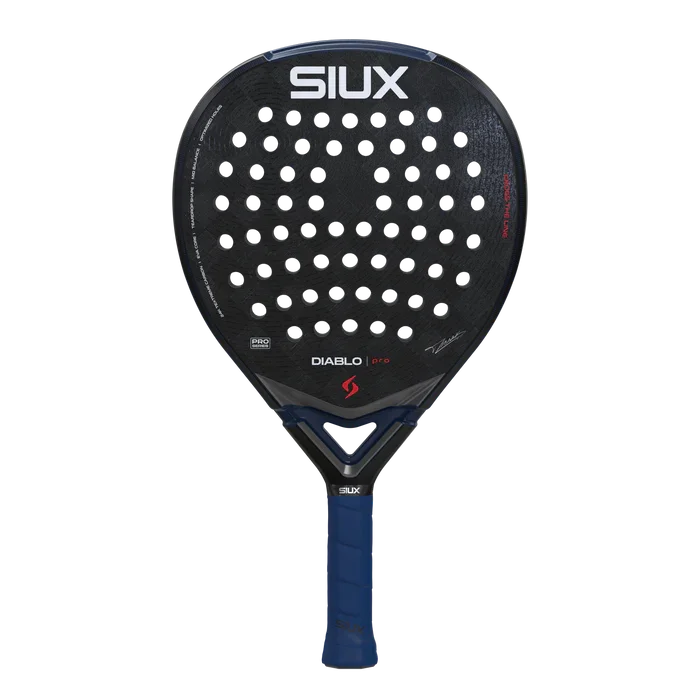
Now compare that to the Siux Diablo Pro 2026, which uses an 18K TeXtreme face, a medium density EVA core, and a 260mm head-light balance. That build plays softer and more forgiving than the 12K Paquito 04. The higher K number does not make it a bigger hitter. Shape, balance and core do.
Why cheap rackets also say 12K carbon
Walk through any sporting goods aisle and you will find 80 dollar rackets with 12K carbon on the label. There is no contradiction. 12K tow is cheap to produce because the fiber mills bundle more filaments per pass. Padeli summarizes the economics bluntly: relative fiber cost falls as K rises, with 1K the most expensive and 24K the cheapest.
So 12K on a budget racket is not a lie. It is the same yarn category as 12K on a 300 dollar racket. The difference is what sits underneath. A premium frame layers multiple plies of unidirectional carbon, uses a toughened epoxy resin, and bonds everything under precise pressure and heat. A budget frame might run a thin 12K veneer over fiberglass, with a softer resin and a less consistent cure. Both Padel Browser and Padel Gear Finder make the same point: a 3K racket from a top brand can outperform a budget 18K because the build around the weave matters more than the weave.
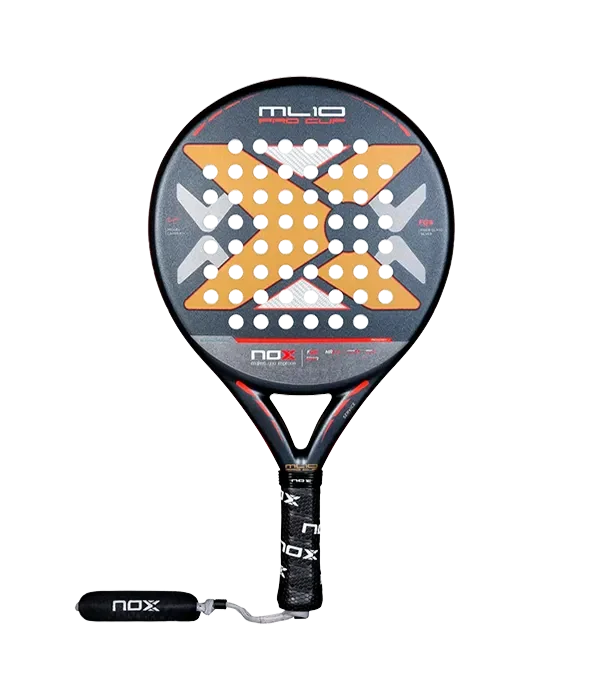
Also worth naming: some rackets described as having a 3K or 12K face are actually fiberglass, not carbon. The Nox ML10 Pro Cup Rough Surface 2025 lists a 3K fiberglass face, which flexes more than any carbon weave and is tuned for feel. The Nox Equation 2024 combines 3K carbon with fiberglass. The K number on a label does not tell you the fiber is carbon unless the word carbon is next to it.
Where the K number actually sits in the RankGrids rankings
Our Best Padel Rackets of 2026 list draws on manufacturer specifications, verified retail pricing, independent review consensus, and professional tour validation. The K number did not drive the ranking, and the ranking shows why.
The first-ranked frame, the Bullpadel Paquito 04 2026 at 395 dollars, uses 12K carbon. The second, the Bullpadel Hack 04 2026 at 297 dollars, uses 18K. The third, the Head Delta Pro 2026 at 389 dollars, also uses 18K. All three are rated by their makers for very high power output. The 12K Paquito sits at the top because of the EVA Hard core, the 273mm balance, and the diamond head shape, not because the weave is finer.
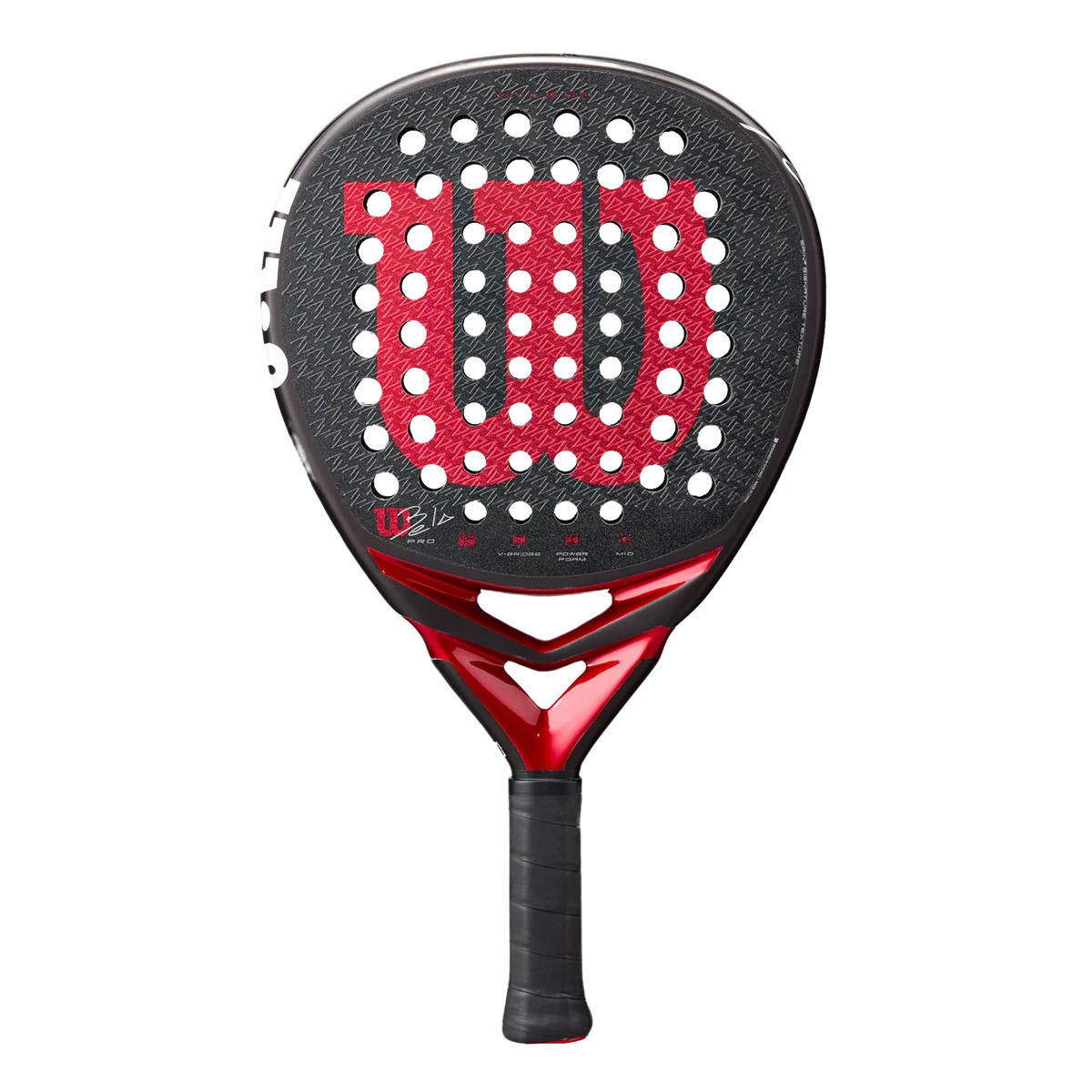
The highest K number in the list is the Wilson Bela Pro V3 2025 at 399 dollars, with a 24K carbon face and a Spin2 rough-texture surface. PadelCourtsFinder scores the frame 6.7 out of 10 overall, praises the 24K surface for precision, and says it punishes off-center hits because of its firm core and head-heavy build. It ranks ninth in our list. 24K buys a slightly different feel at contact, not a better racket overall.
| Racket | Face | Core | Balance | Rank |
|---|---|---|---|---|
| Bullpadel Paquito 04 2026 | 12K carbon | EVA Hard | 273mm | 1 |
| Bullpadel Hack 04 2026 | 18K TriCarbon | MultiEVA Dual | 264mm | 2 |
| Head Delta Pro 2026 | 18K carbon | EVA Hard | 274mm | 3 |
| Nox AT10 Luxury Genius 12K | 12K Alum XTREM | HR3 EVA | 265mm | 4 |
| Wilson Bela Pro V3 2025 | 24K carbon | Power Foam RA 68 | 265mm | 9 |
| Siux Diablo Pro 2026 | 18K TeXtreme | Medium EVA | 260mm | 12 |
How to read a padel spec sheet without getting fooled by the K number
Start with core hardness. JG Rackets emphasizes that the EVA core is as important as the face material. Hard EVA returns the ball faster with less dwell time. Soft EVA grips the ball longer for touch and dampens vibration. The EVA Hard core on the Bullpadel Paquito 04 2026 is what makes it an aggressive frame, and the HR3 medium-soft core on the Nox ML10 Pro Cup Rough Surface 2025 is what makes it a control-first one.
Second, read the shape. A diamond head puts the sweet spot high and loads mass behind smashes. A teardrop centers the sweet spot and plays as a balanced frame. A round head shifts the sweet spot low and widens the forgiving zone. Shape dictates where the racket hits best and how much margin for error you get, not the K number of the top veneer.
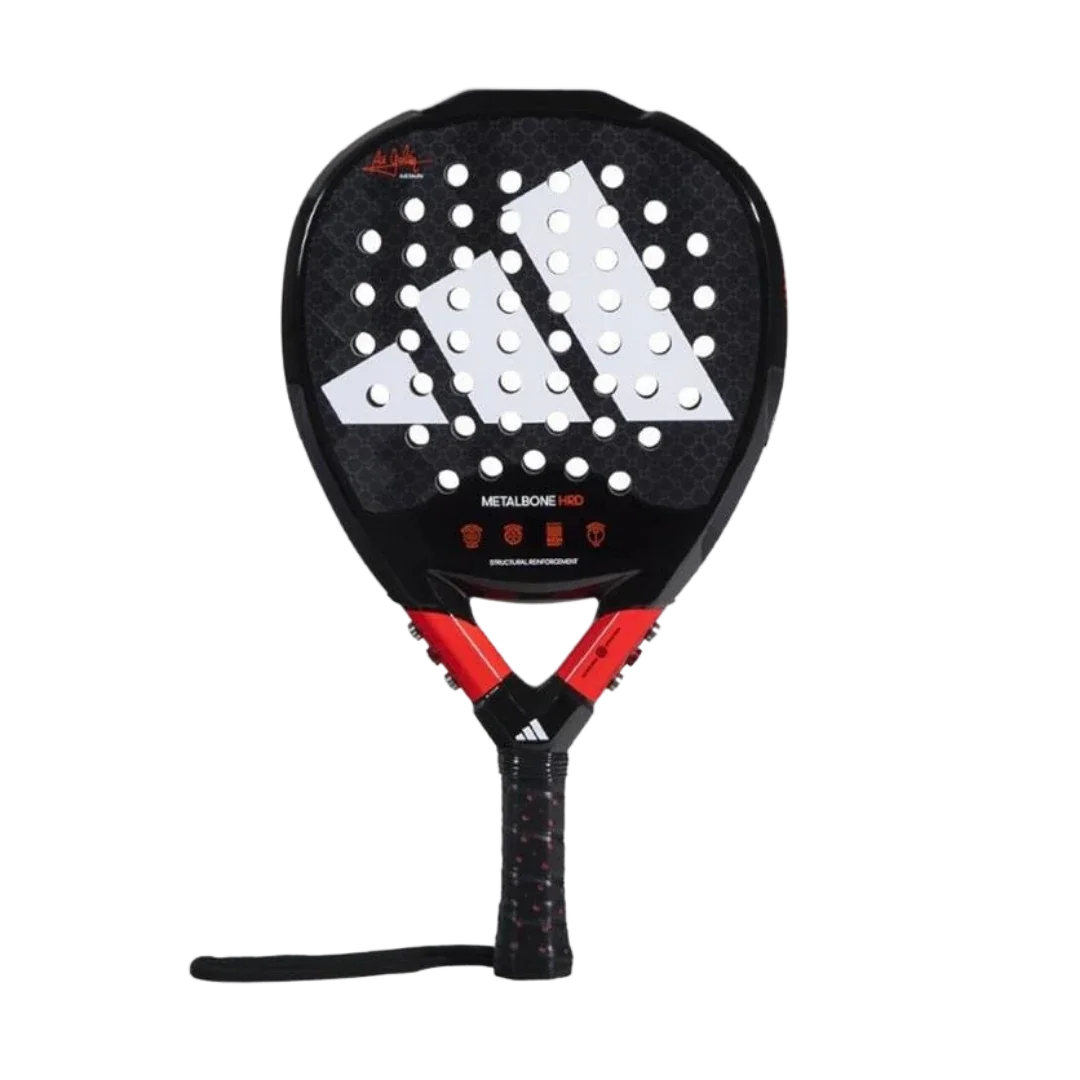
Third, balance point. Anything above 270mm is head-heavy and amplifies swing weight into the ball. Below 265mm is head-light and favors quick exchanges and defensive retrieval. The Adidas Metalbone HRD+ 3.3 2024 carries a 280mm balance and is rated 10 out of 10 for power in the independent performance testing cited on its spec sheet. Shape, balance and core do that work, not an Aluminized Carbon face rating on its own.
Treat the K number as a surface description. If you know you want a crisp, drier contact feel, 3K is a reasonable signal, with the caveat that different brands tune resin and core differently. If you want slightly more flex at the contact point, 18K or 24K is a reasonable signal in the same direction, per Padel Browser. Beyond that, the K number should be the last spec you weigh, not the first.
The short version
The K number counts carbon filaments, not quality. A 12K face on a top-tier build out-hits a 24K face on a weaker one, and the current Best Padel Rackets of 2026 ranking shows it: the 12K Bullpadel Paquito 04 2026 sits at number one and the 24K Wilson Bela Pro V3 2025 sits at number nine. Among 12K, 18K and 24K faces, 12K tends to feel the crispest at contact, 18K and 24K tend to feel slightly softer and more elastic. The core, the balance and the shape decide how the racket actually plays. Do not buy any of them because of the K number alone.
See Best Padel Rackets of 2026Questions people ask
Is 18K carbon better than 12K in a padel racket?+
No. 18K and 12K describe different weaves on the top sheet of the face, not a quality upgrade. Padel Browser notes 18K often feels slightly softer because of wider, flatter tows. The RankGrids top-ranked frame, the Bullpadel Paquito 04 2026, uses 12K, and several 18K frames rank below it. Core hardness, balance and shape drive the playing difference, not the K number.
What does 12K, 18K or 24K mean on a padel racket?+
K is textile shorthand for thousands of carbon filaments bundled into one tow of yarn. 12K is about 12,000 filaments per tow, 18K about 18,000, and 24K about 24,000. Padeli explains that K describes only the visible woven face of the racket, not the resin, the plies underneath, or how much carbon the frame actually contains.
Does a higher K number mean more power?+
No. Power comes from the core hardness, balance point, head shape and total mass of the racket, not the K of the face sheet. The 12K Bullpadel Paquito 04 2026 is rated for maximum smash power. The 18K Siux Diablo Pro 2026 is rated for balanced all-court play. The higher K is the less powerful of the two, because its build is tuned differently.
Is 24K carbon the best material for padel?+
No. 24K is a wider, more loosely woven tow that mills can produce cheaply, per Padeli. The Wilson Bela V3 review on PadelCourtsFinder scores the racket 6.7 out of 10 and recommends skipping it unless your technique is already clean. 24K is one possible design choice for the top sheet, not a ladder step above 12K or 18K.
Why do some cheap rackets also say 12K carbon?+
Because 12K tow is cheap to buy. Padeli notes that fiber cost falls as K rises, so a 12K veneer costs a factory less than a 3K veneer. A budget 12K racket uses the same category of surface weave as a premium 12K, but typically with fewer carbon plies underneath, a softer resin, and a less precise cure. The label is honest. It just does not mean what the retail copy implies.
Is 3K better than 12K because it is more expensive to make?+
Sometimes, but not always. 3K is a tighter weave with finer threads and usually feels drier and firmer at contact, per Padel Browser. Padel Gear Finder says a 3K racket from a top brand can outperform a budget 18K, but a premium 24K build with a well tuned core will beat a mid-tier 3K. The build around the weave matters more than the weave itself.
What should I look at instead of the K number when buying a padel racket?+
Start with core hardness, head shape, balance point and total weight, in that order. Hard EVA with a 270mm or higher balance and a diamond head is a power configuration. Medium or soft EVA with a balance below 265mm and a round or teardrop head is a control configuration. The K of the face sheet is a tiebreaker, not a selection criterion.
Do manufacturers agree on what K means?+
No. Padeli catalogs conflicting claims across brands, noting that Nox calls its 12K Alum Xtrem more rigid and its 18K solid and comfortable. Temple of Padel presents the opposite hierarchy in which higher K means stiffer and more powerful. That disagreement is the strongest signal that the K number alone does not describe how a racket plays.
Sources
What this guide is based on. We research from published specifications, independent reviews and owner reports; we did not test these products ourselves.
- 1.Padel Racket 12K vs 18K vs 3K: Carbon Explained (2026), Padeli
- 2.3K vs 12K vs 18K Carbon in Padel Rackets Explained, Padel Browser
- 3.Demystifying Carbon: The JG Rackets Guide to Padel Materials, JG Rackets
- 4.3K, 12K, 18K and 24K Carbon Padel Racket: What's the Difference?, Padel Trade
- 5.3K vs 12K vs 18K Carbon Padel Rackets Explained, Padel Gear Finder
- 6.Understanding the Different Types of Carbon Used in Padel Rackets, Temple of Padel
- 7.Wilson Bela V3 Review (2026): Is 24K Carbon Worth 399 Dollars?, PadelCourtsFinder
Products mentioned

More on padel rackets
Explainer
Padel Racket Weight vs Balance Point: Why the Grams on the Label Don't Tell the Full Story
Total weight is one spec on the box. Balance point and swing weight explain why two rackets at the same grams play nothing alike, with examples from today's frames.
Explainer
Padel Rackets and Arm Pain: Which Specs Actually Reduce the Risk
Elbow injuries are the most common padel complaint. Here is which racket specs (core hardness, face stiffness, balance, shape) measurably change how much shock reaches your arm.
Buying guide
How to Choose a Padel Racket
Shape, core hardness, and balance point do the real work when a padel racket feels fast or forgiving. Brand and price matter less than most buyers think.