Explainer
Padel Rackets and Arm Pain: Which Specs Actually Reduce the Risk
Elbow injuries are the most common padel complaint. Here is which racket specs (core hardness, face stiffness, balance, shape) measurably change how much shock reaches your arm.
Updated November 12, 2026 · Based on 8 sources · How we research
Padel's growth has arrived with an elbow problem. A published survey of amateur players places the elbow as the most-affected upper-limb location, and the dominant diagnosis is lateral epicondylitis, the same tendinopathy tennis players know as tennis elbow. The sport is harder on the arm than tennis for a mechanical reason: a padel racket has no strings. There is no mesh to flex and spread the impact over milliseconds. Energy travels from the face, through the foam core, through the frame, into the hand, fast. Most 'anti-vibration' marketing talks around that fact. The spec-sheet terms that actually move the needle on how much shock reaches your arm are core hardness, face stiffness, shape and balance point, roughly in that order. Weight matters too, but counterintuitively: too light can be worse than slightly heavy. This guide walks through what each lever does, uses the rackets from our 2026 ranking to show the trade-offs, and answers the questions players ask when the elbow starts complaining.
Can a padel racket cause tennis elbow?
Yes, and often enough that clinicians have started using 'padel elbow' as shorthand for the same lateral epicondylitis tennis players get. A cross-sectional survey of 482 amateur padel players published in Healthcare found the elbow was the most affected location, accounting for about 35% of upper-limb injuries, with tendon injuries dominating that category. A clinical data compilation summarized at the Tennis Elbow Oracle puts lateral elbow injury prevalence at 18 to 24% in padel players versus 10 to 14% in tennis, with padel players presenting on average 14 months after starting the sport compared with 4.2 years for tennis.
Three mechanical reasons show up in the clinical sources. First, no strings: a padel racket is a solid-core composite, so shock from every ball contact transmits more directly into the forearm tendons, as Padel Revive sets out. Second, shot mix: padel is dominated by volleys, bandejas and smashes, which recruit the wrist extensors eccentrically. Third, grip tightness: squeezing the racket hard amplifies the vibration that a stringless frame is already transmitting.
The racket does not create the injury on its own. It sets how much of each contact gets absorbed by foam and how much reaches your tendons.
What is actually happening at impact
When the ball hits the racket, a shock wave travels through the face, into the core, through the frame, down the handle and into the hand. Energy that stays in the racket does not reach you. Energy that leaves the racket within milliseconds does. The specs determine the ratio.
Softer EVA foam compresses further on contact. That lengthens dwell time, the window the ball sits on the face, which spreads the impact force and lowers the peak. A 2026 arm-friendly buying guide at Palandos reports that modern dampening systems and soft materials can absorb up to roughly 50% of the vibrational energy. The exact figure depends on the construction, but the direction is well-established: softer foams damp more.
Face stiffness works the opposite way. A woven 18K or 24K carbon face flexes very little on impact, so energy transfers directly. A 3K carbon or fiberglass face flexes more and absorbs some of the impulse before the core compresses. That is why the stiff hitters at the top of Best Padel Rackets of 2026 carry a 'Low' arm-friendliness rating in our data, while softer-faced models in the same ranking read as 'Good' or 'Very good'.
Balance and shape then determine how much extra torque reaches your forearm when you miss the sweet spot. A head-heavy diamond with a small, high sweet spot swings the frame harder in your wrist on every off-center hit. A round head with a central sweet spot swings less and recruits less compensatory muscle.
Ranking the specs by how much they matter
The table below is the order the available epidemiology and padel-focused buying guides converge on: core compression and face flex do most of the work, shape and balance amplify or dampen off-center errors, and weight is a secondary variable that is easy to get wrong in either direction.
Independent buying site Padel.fyi warns that lightweight rackets 'will increase vibrations,' and the arm-friendly rackets it recommends cluster at 368 to 370 grams rather than sub-350. A heavier head takes more energy to move, which means more of the ball's kinetic energy ends up accelerating the ball rather than rattling through a half-decelerated frame. That has to be balanced against the Healthcare survey finding that frames at 350 grams or more correlate with more injuries at amateur level: the sensible zone is mid-weight, not extreme in either direction.
| Spec | Arm-friendly setting | Harsh setting | Why it matters |
|---|---|---|---|
| Core hardness | Soft or medium EVA | Hard EVA (RA 65+) | Longer dwell time lowers peak impact force |
| Face material | 3K carbon or fiberglass | 18K or 24K woven carbon | Face flex absorbs impulse before the core compresses |
| Shape | Round or neutral teardrop | Diamond | Lower, larger sweet spot means less twist on off-center hits |
| Balance point | 255 to 265 mm | 270 to 280 mm | Less rotational mass to decelerate at contact |
| Weight | Mid-range, roughly 355 to 370 g | Under 340 g or over 375 g | Too light vibrates more, too heavy fatigues the extensors |
| Grip and overgrip | Thicker, replaced often | Thin, worn flat | Reduces required grip pressure, dampens residual vibration |
Should I use a soft or hard core if I have arm problems?
Soft or medium. If you already have arm pain, go soft. The trade-off is power, and for anyone building back from a flare, that trade is the right one.
Hard EVA cores (sometimes labeled 'Hard' or quoted at RA 65 and up) like the one in the Bullpadel Paquito 04 2026 and Head Delta Pro 2026 are what professional attackers use at the net. They rebound fast, keep dwell time short, and transfer nearly all of the swing's kinetic energy into ball speed. That is why both rackets carry a 'Low' or 'Low-to-moderate' arm-friendliness rating in our ranking data, and why the Delta Pro's profile explicitly flags it against players with existing elbow or shoulder concerns.
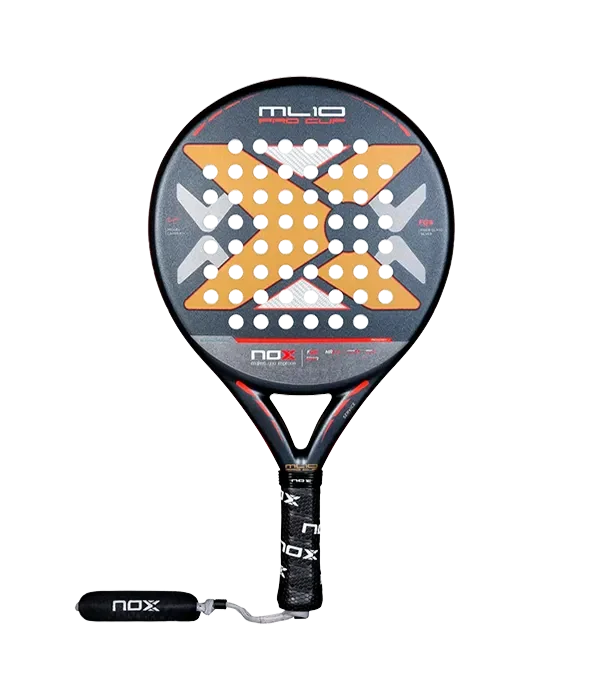
Soft or medium EVA cores compress more, dwell longer, and sacrifice some peak ball speed for a lower impact spike. The Nox ML10 Pro Cup Rough Surface 2025 uses a medium-soft HR3 compound with a 3K fiberglass face and lands at 'Very good' on arm-friendliness. In our data, it is the single most forgiving racket in the top 20.
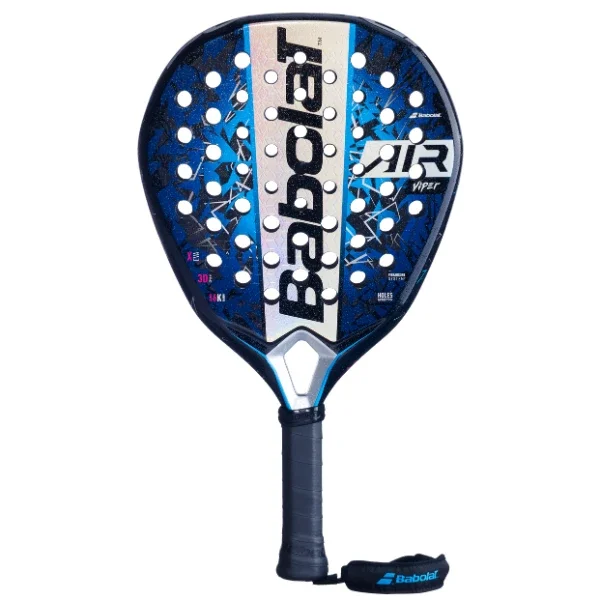
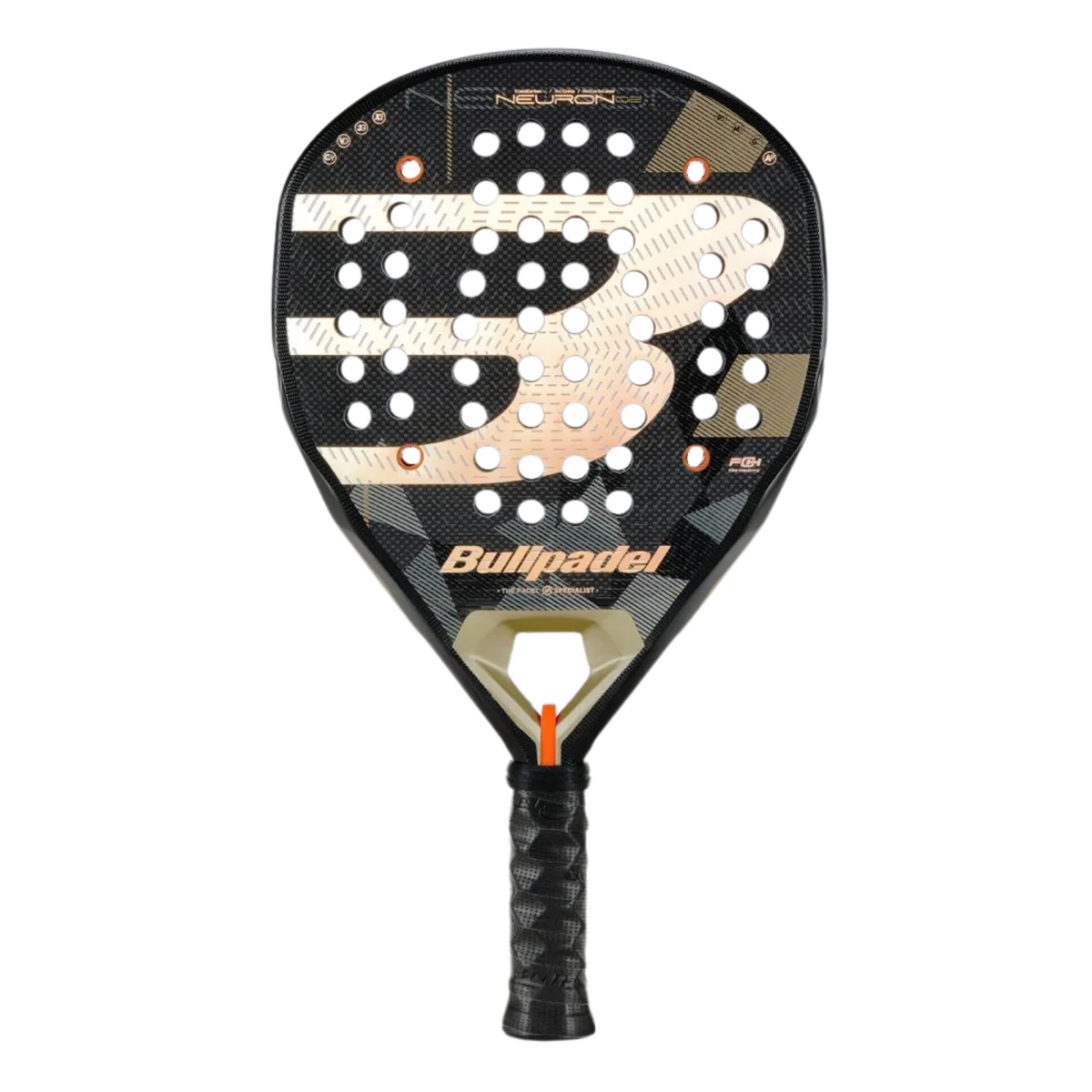
A useful middle path is the dual-density approach. The Bullpadel Hack 04 2026 and Bullpadel Neuron 02 2026 run a softer outer layer over a firmer inner core, keeping power in the striking zone while cushioning off-center contacts. If you need pop but your tendons are protesting, that geometry buys back some margin. Babolat's multi-layer X-EVA, used in the Babolat Air Viper 2025, is a similar idea.
Is a round racket better for my elbow than a diamond?
Yes, for arm-sensitive players, almost without exception. Padel Bears and Padel Point both converge on the same recommendation.
Three things make round rackets gentler. The sweet spot sits lower and larger, so clean contacts are more common and off-center hits are less off-center. The balance point is lower on a round head, meaning less swing weight and less rotational torque at impact. And the frame distributes vibration over a wider area of the face.
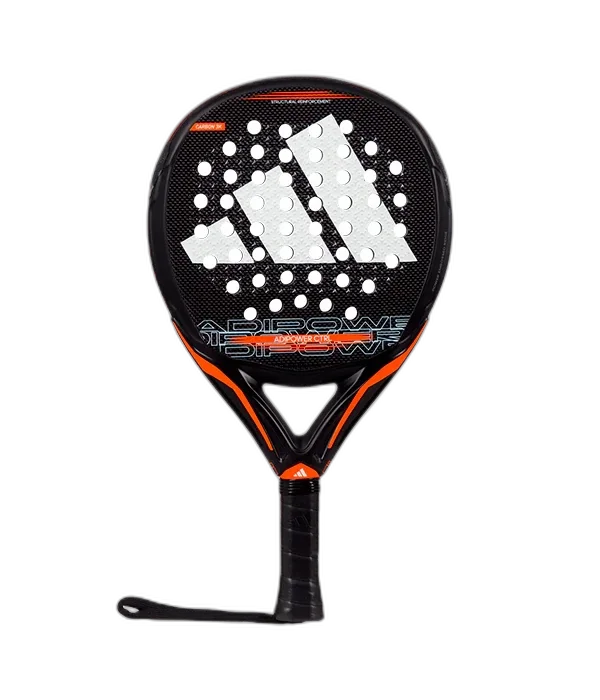
Diamond rackets invert all three. The sweet spot is small, concentrated at the top of the head, and designed to reward overhead smashes rather than forgive mishits. Balance points on diamond frames in our top 20 mostly sit at 272 to 280 mm (the Adidas Metalbone HRD+ 3.3 2024 runs at 280). The round frames in the ranking, the Nox ML10 Pro Cup and the Adidas Adipower CTRL 3.3 2024, sit at 260 mm.
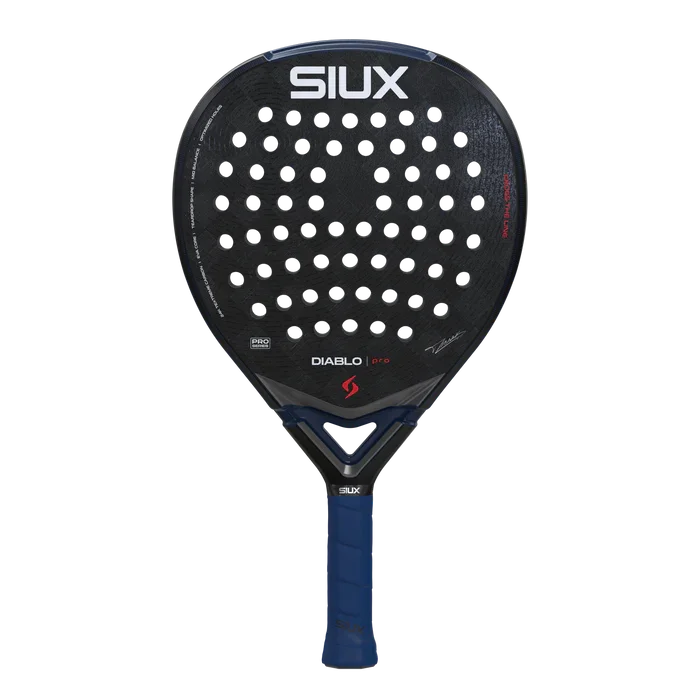
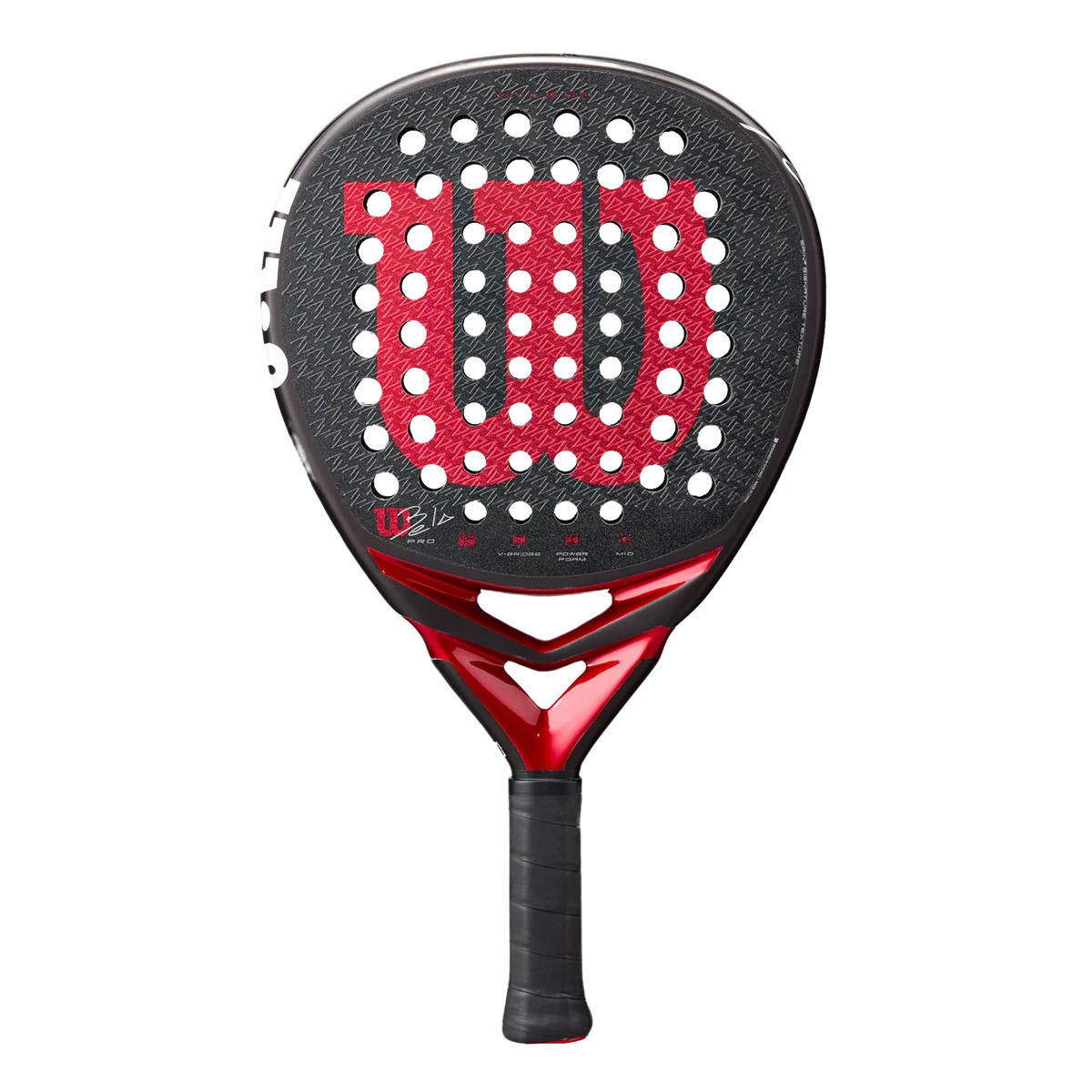
Teardrop is the middle ground. A soft-cored teardrop can be arm-friendly (the Bullpadel Neuron 02 2026 at 263 mm with a MultiEva dual-density core, or the Siux Diablo Pro 2026 at 260 mm with a medium EVA rated 55 out of 100 for stiffness). A stiff-cored teardrop like the Wilson Bela Pro V3 2025, which uses Power Foam at RA 68 ('among the firmest EVA cores available' in its profile), is closer to diamond territory in how it loads the elbow.
A round, soft-cored racket will not reward your hardest smashes. It will also not keep punishing you the day after a two-hour session. If the elbow is complaining, that is the right side of the trade.
Which racket in our ranking is best for elbow pain?
Among the rackets in Best Padel Rackets of 2026, four stand out for an arm-sensitive buyer.
The Nox ML10 Pro Cup Rough Surface 2025 is the single most arm-friendly option in the top 20. Round head, HR3 medium-soft core, 3K fiberglass face (not carbon), 368 grams. The combination means the longest dwell time and the lowest effective face stiffness in the ranking. The trade is power, rated around 6 out of 10. If you want to play without pain and build back, this is the frame.
The Adidas Adipower CTRL 3.3 2024 is the other round option. Medium EVA Soft Performance core, 3K carbon face, 260 mm head-light balance, 368 grams. Slightly more pop than the Nox because the face is carbon rather than fiberglass, with a dual exoskeleton frame and the top sweet-spot rating in the Adidas 2024 range per our data.
The Siux Diablo Pro 2026 is for players who want a teardrop and some pace. Medium-density EVA rated 55 out of 100 for stiffness, 18K TeXtreme carbon, 260 mm balance. The stiffness rating puts it between soft recreational cores and pro-hard cores: a reasonable compromise for someone with occasional twinges rather than active injury.
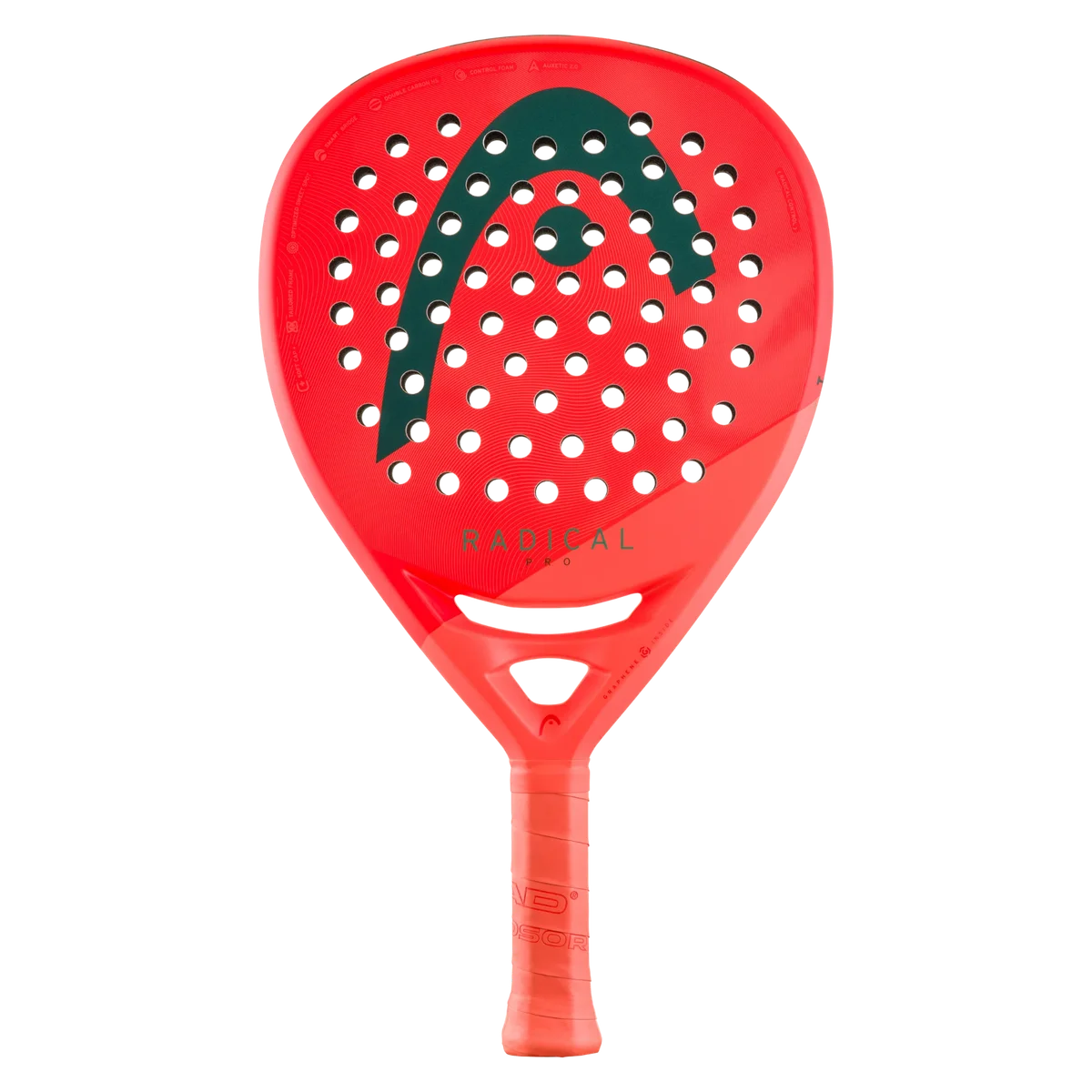
The Head Radical Pro 2026 uses Head's softer Control Foam core, a 260 mm head-light balance, and double-layer carbon rather than 18K or 24K. Rated 'Good' for arm-friendliness, with Auxetic 2.0 dampening at the yoke and grip bar.
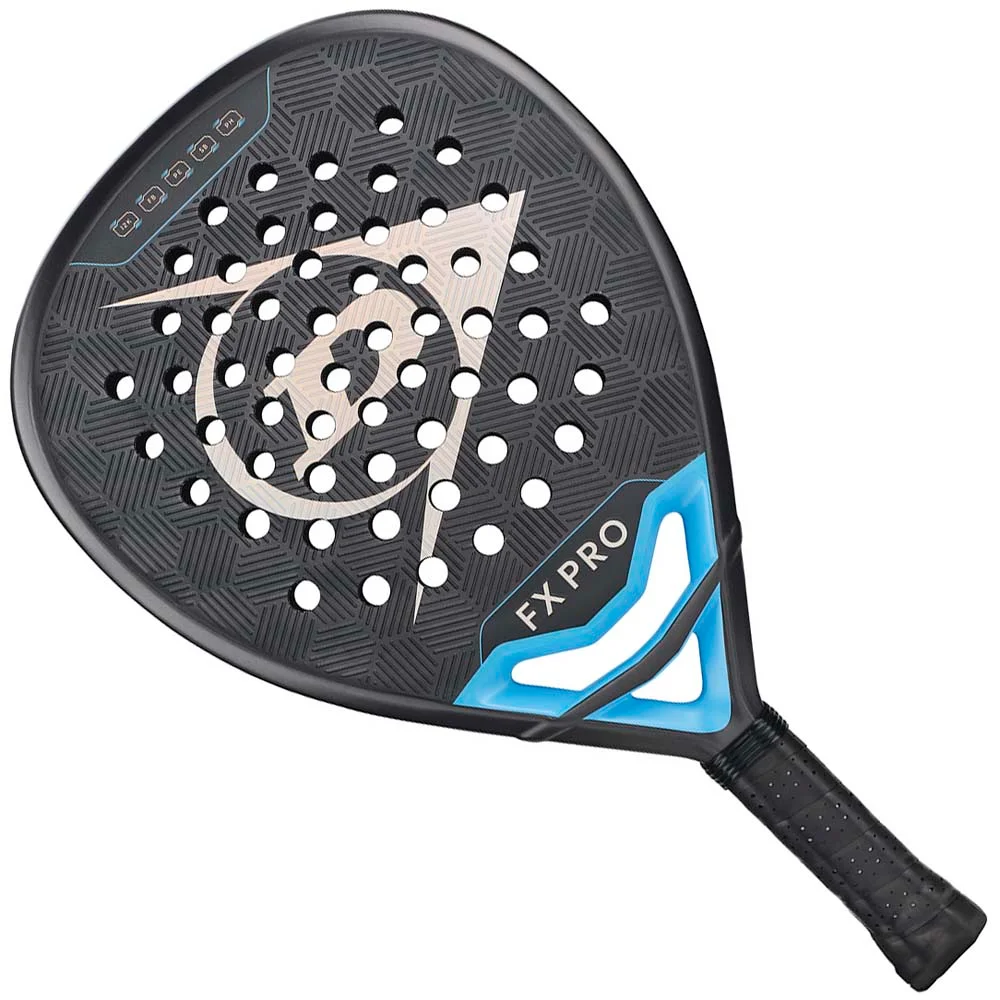
The frames to avoid if your elbow is already complaining are the hard-core, high-carbon diamonds at the top of the ranking. Two carry explicit arm-sensitive warnings in our profiles: the Head Delta Pro 2026 is flagged against players with existing elbow or shoulder concerns, and the Siux Fenix Pro 2026 is described as not suitable for arm-sensitive players. The Bullpadel Paquito 04 2026 and Dunlop FX Pro 2026 stop short of that language but still demand clean technique with their hard EVA cores and 12K carbon faces.
What the racket cannot fix
A kinder racket lowers the impulse your tendons take per shot. It does not change how many shots you take, how tight you grip, or how you decelerate on bandejas. The amateur epidemiology in the Healthcare study flagged weekly playing time above six hours as one of the strongest correlates of injury. Dose and technique matter alongside any piece of equipment.
Three practical levers compound with racket choice. Grip pressure: Padel Revive's prevention guide recommends keeping grip tension around 3 to 4 out of 10 during rallies and only clamping down to 7 to 8 at contact, since constant bracing raises baseline wrist extensor activation. Overgrip thickness: adding a layer increases the effective handle diameter, which reduces the grip force your fingers need to apply, and worn-flat overgrips should be replaced rather than played on. Dose: spreading the same weekly volume across more sessions, or capping it when the elbow talks back, matters as much as racket choice.
If elbow pain has lasted more than two weeks or does not clear with rest, see a physio. Eccentric loading programs for the wrist extensors have 6 to 8 week timelines and far better evidence than any racket switch.
The short version
If your elbow is healthy and you play a power game, the hard-core 18K and 24K diamonds at the top of our ranking will give you the pop you want. If your elbow has started to complain, prioritize a round or soft-teardrop frame with a medium-soft core, a balance in the 255 to 265 mm band, a face in 3K carbon or fiberglass rather than 18K or 24K, and a mid-range weight around 355 to 370 grams. In our ranking, the Nox ML10 Pro Cup Rough Surface 2025 is the clearest fit, with the Adidas Adipower CTRL 3.3 2024 and Head Radical Pro 2026 as carbon-faced alternatives. Then fix the grip, cap the weekly hours, and see a physio if the pain outlasts a two-week rest.
See Best Padel Rackets of 2026Questions people ask
Can a padel racket cause tennis elbow?+
Not directly, but it can accelerate it. Padel elbow is the same condition as tennis elbow (lateral epicondylitis of the ECRB tendon), and the data compilation at Tennis Elbow Oracle puts its prevalence at roughly 18 to 24% of padel players versus 10 to 14% of tennis players. The amateur Healthcare survey flagged rackets at 350 grams or heavier and more than six weekly playing hours as significant injury correlates. Grip tightness and technique load the tendon more than the racket does.
Which padel racket is best for elbow pain?+
In our ranking, the Nox ML10 Pro Cup Rough Surface 2025 is the most arm-friendly option: round head, medium-soft HR3 core, 3K fiberglass face, 368 grams, low balance point. The Adidas Adipower CTRL 3.3 2024 and Head Radical Pro 2026 are carbon-faced alternatives that still carry softer cores and large sweet spots.
What makes a padel racket arm-friendly?+
In order of influence: a softer EVA core (longer dwell time absorbs peak impact), a less stiff face (3K carbon or fiberglass rather than 18K or 24K), a round or neutral-teardrop shape with a large central sweet spot, a balance point in the 255 to 265 mm range, and a mid-range weight around 355 to 370 grams. Dual-density cores like Bullpadel's MultiEva or Babolat's X-EVA are a reasonable compromise if you want more power.
Should I use a soft or hard core racket if I have arm problems?+
Soft or medium. Hard EVA cores transfer more impact energy to the hand because they compress less and shorten dwell time. In our ranking data, the hardest frames (the Head Delta Pro 2026 and Siux Fenix Pro 2026) carry explicit arm-sensitive warnings in their arm-friendliness profiles. If power matters, dual-density constructions (softer outer, firmer inner) are the middle ground.
Is a round racket better for my elbow than a diamond?+
Yes. Round rackets have larger, lower sweet spots and lower balance points, which means fewer off-center hits and less rotational torque at impact. Diamonds reward overhead power and punish mishits. Teardrops sit between the two, and a soft-cored teardrop like the Bullpadel Neuron 02 2026 or Siux Diablo Pro 2026 is a valid compromise.
Does a heavier racket really help with elbow pain?+
Only to a point. Padel.fyi notes that lightweight rackets 'will increase vibrations' and require more grip force to stabilize. But the Healthcare survey of amateur players also flagged frames at 350 grams or heavier as correlated with more injuries. The mid-range, roughly 355 to 370 grams, is where arm-focused guides tend to land.
Can grip size or overgrips fix arm pain?+
They help, but they are not a substitute for the right core and shape. A thicker handle reduces the grip force your fingers have to apply, which lowers baseline wrist extensor activation. Padel Revive's prevention guide recommends adding an overgrip layer as one of the simplest interventions for elbow prevention, alongside keeping rally grip pressure at 3 to 4 out of 10.
Sources
What this guide is based on. We research from published specifications, independent reviews and owner reports; we did not test these products ourselves.
- 1.Incidence of Upper Body Injuries in Amateur Padel Players, Healthcare (PMC)
- 2.Padel Elbow vs Tennis Elbow: The Real Difference (2026), Padel Revive
- 3.The Padel Elbow Epidemic: 2026 Injury Data for Racket Sport Players, Tennis Elbow Oracle
- 4.Padel Elbow Prevention, Padel Revive
- 5.Best Padel Rackets for Tennis Elbow (Epicondylitis): Alleviate Pain, Enhance Your Game, Padel.fyi
- 6.Arm-Friendly Padel Rackets: The Best Rackets for Arm Pain in 2026, Palandos
- 7.The Best Padel Rackets for Elbow Pain: Pablo's Complete Guide, Padel Bears
- 8.How does racket choice influence the appearance of elbow pain?, Padel Point
Products mentioned

More on padel rackets
Explainer
Padel Racket Weight vs Balance Point: Why the Grams on the Label Don't Tell the Full Story
Total weight is one spec on the box. Balance point and swing weight explain why two rackets at the same grams play nothing alike, with examples from today's frames.
Explainer
What 12K, 18K and 24K Carbon Mean on a Padel Racket (And What They Don't)
The K on a padel racket counts filaments per tow in the carbon weave, not stiffness or quality. This guide separates what carbon grade actually changes from what it doesn't.
Buying guide
How to Choose a Padel Racket
Shape, core hardness, and balance point do the real work when a padel racket feels fast or forgiving. Brand and price matter less than most buyers think.