Buying guide
How to Choose a Padel Racket
Shape, core hardness, and balance point do the real work when a padel racket feels fast or forgiving. Brand and price matter less than most buyers think.
Updated November 12, 2026 · Based on 12 sources · How we research
Most padel racket buying advice starts with brand and ends with price. That is backwards. Three specs change how a racket plays before anything else does: the shape of the head, which decides where the sweet spot sits and how forgiving mishits are; the hardness of the foam core, which decides whether the racket hits soft or hard for the same swing; and the balance point, which decides whether the racket feels fast or heavy in your hand. Get those three right and brand, color, and signature line stop mattering much. Get them wrong and no amount of carbon fiber will fix how the racket plays. This guide is for players picking a first or second racket and wanting to spend the money well.
Shape decides more than any other spec
Padel rackets come in three head shapes: round, teardrop, and diamond. The shape moves the sweet spot up or down the face, and that single change rewires how forgiving the racket is and what shots it rewards. Round rackets keep the sweet spot centered and low, near your hand. Teardrops push it into the middle of the face. Diamonds move it high, near the tip. Macron and Playtomic frame the three shapes the same way.
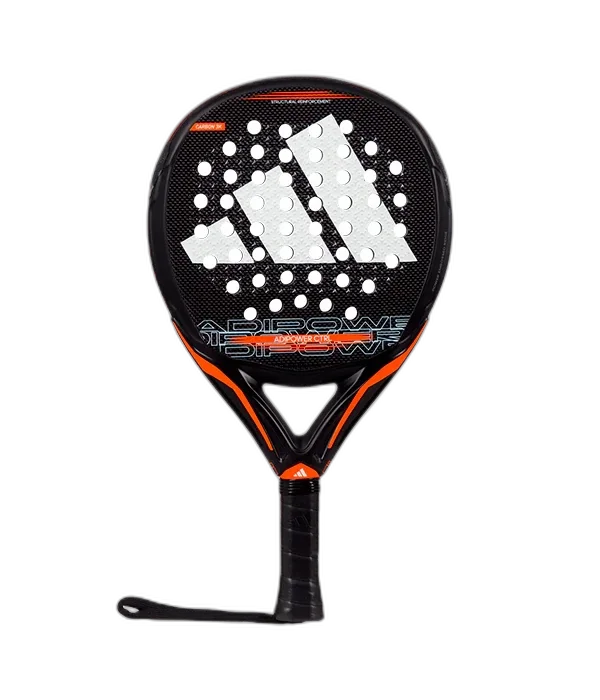
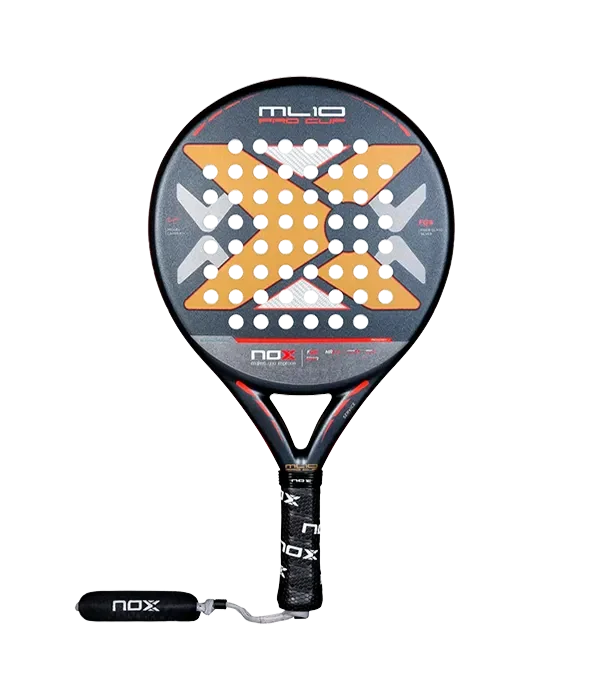
Round rackets are the most forgiving shape sold. The low sweet spot and head-light balance punish mishits less, swing faster, and give up some peak power in return. The Nox ML10 Pro Cup Rough Surface 2025 is the archetype at club level: a round head, a medium-soft HR3 core, and a fiberglass face that retails at $153. The Adidas Adipower CTRL 3.3 2024 is a slightly firmer round option with a 3K carbon face and a 260mm head-light balance for players who want a cleaner feel without giving up the forgiving zone.
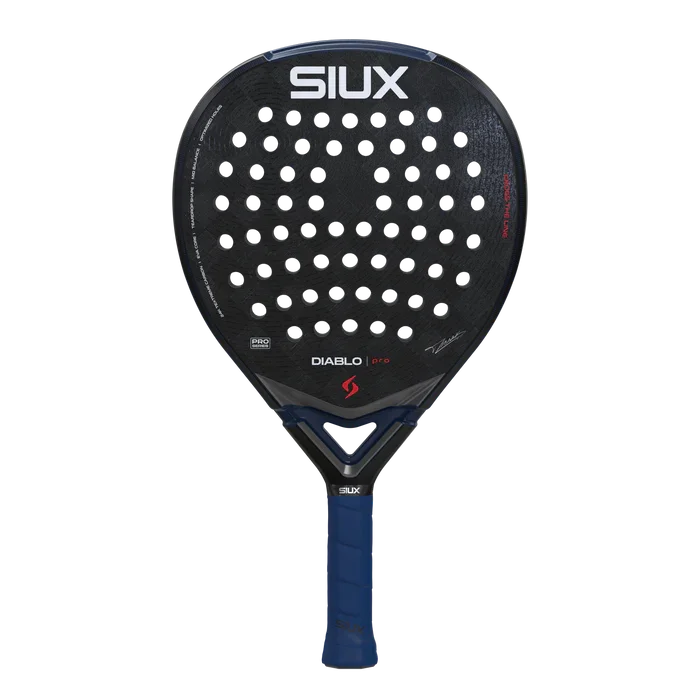
Teardrops are the all-court shape. They give up some of the round's forgiveness in exchange for a bigger power ceiling when you catch the ball cleanly. The Nox AT10 Luxury Genius 12K 2026, Agustin Tapia's signature frame, is built on this logic: a teardrop head, a hard HR3 Black EVA core, and a 265mm balance that keeps swing speed up. The Siux Diablo Pro 2026 is a more forgiving teardrop, with an 18K TeXtreme face and a medium-stiffness core; PadelVerdict scores it 7.2 for power and 8.4 for control, leaning toward placement over raw pace.
Diamonds concentrate the sweet spot high in the face and sit head-heavy. That sounds like more power, and it is, but only when you catch the ball cleanly in a small zone near the top of the racket. Mishits lose both power and direction fast. Padel.how is blunt about the risk of buying a diamond before timing is reliable: "Small timing errors become short balls or arm stress." The Bullpadel Hack 04 2026, Paquito Navarro's signature frame per Padelspeed, and the Head Delta Pro 2026, described by UK Padel Guide as "a diamond-shaped power racket for advanced attacking players," are two of the sharpest tour-grade diamonds in the RankGrids Best Padel Rackets of 2026 ranking, and both are aimed at tournament attackers rather than club players.
| Shape | Sweet spot | Best for | Example from our rankings |
|---|---|---|---|
| Round | Low, centered, wide | First racket, defensive baseliners, arm-friendly play | Nox ML10 Pro Cup Rough Surface 2025 |
| Teardrop | Mid-face | All-court players, tennis crossovers | Siux Diablo Pro 2026, Nox AT10 Luxury Genius 12K 2026 |
| Diamond | High, near the tip | Tournament attackers with reliable technique | Bullpadel Hack 04 2026, Head Delta Pro 2026 |
Core hardness is the power-versus-control knob
Padel rackets use foam or rubber cores ranging from soft EVA to hard EVA and proprietary high-density compounds. Harder cores give up less energy to the ball on contact and return it faster. Softer cores compress more, hold the ball a split second longer, and give up a little power in exchange for comfort and feel. UK Padel Guide walks through the EVA scale from soft to hard, with softer cores sitting closer to recreational comfort and harder cores to competitive power.
The common misreading is that hard cores are always more powerful. That holds only if the player can swing them cleanly. A softer core on a faster swing can produce similar output with better margin on mishits. The Wilson Bela Pro V3 2025 lists its Power Foam core at RA 68, near the top end of commercial padel firmness, and the frame assumes an already-fast swing. Compare that to the Nox ML10 Pro Cup Rough Surface 2025, whose medium-soft HR3 rubber keeps dwell time longer and flattens out timing errors. Same category, opposite feel.
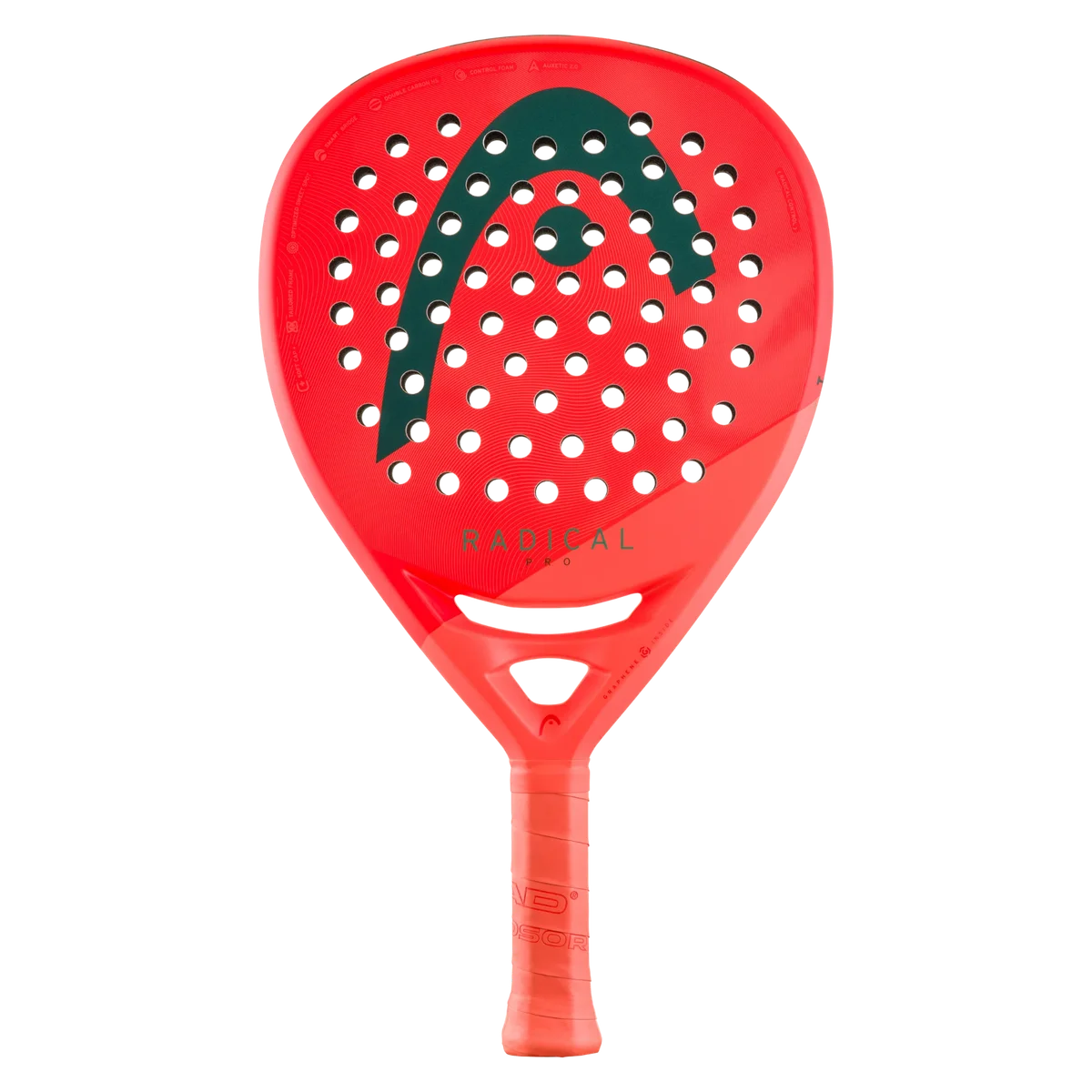
For most club players, a medium core is the right default. A hard core rewards clean technique and punishes timing. A soft core keeps the arm happier and forgives early-season rust. The RankGrids Best Padel Rackets of 2026 list includes both profiles on purpose: a hard-EVA pro frame like the Siux Fenix Pro 2026 and softer medium-density options like the Head Radical Pro 2026 earn similar scores because each is well-matched to its intended player.
Balance point changes the feel more than grams do
Two rackets of identical weight can feel completely different in the hand. Balance is measured in millimeters from the butt end of the handle. Padel Setup opens its guide with the point directly: balance "can change the feel more than a 10 g difference in total weight." The same article warns that manufacturer labels for "even," "medium," and "mid" are not standardized, so two frames tagged the same can play differently.
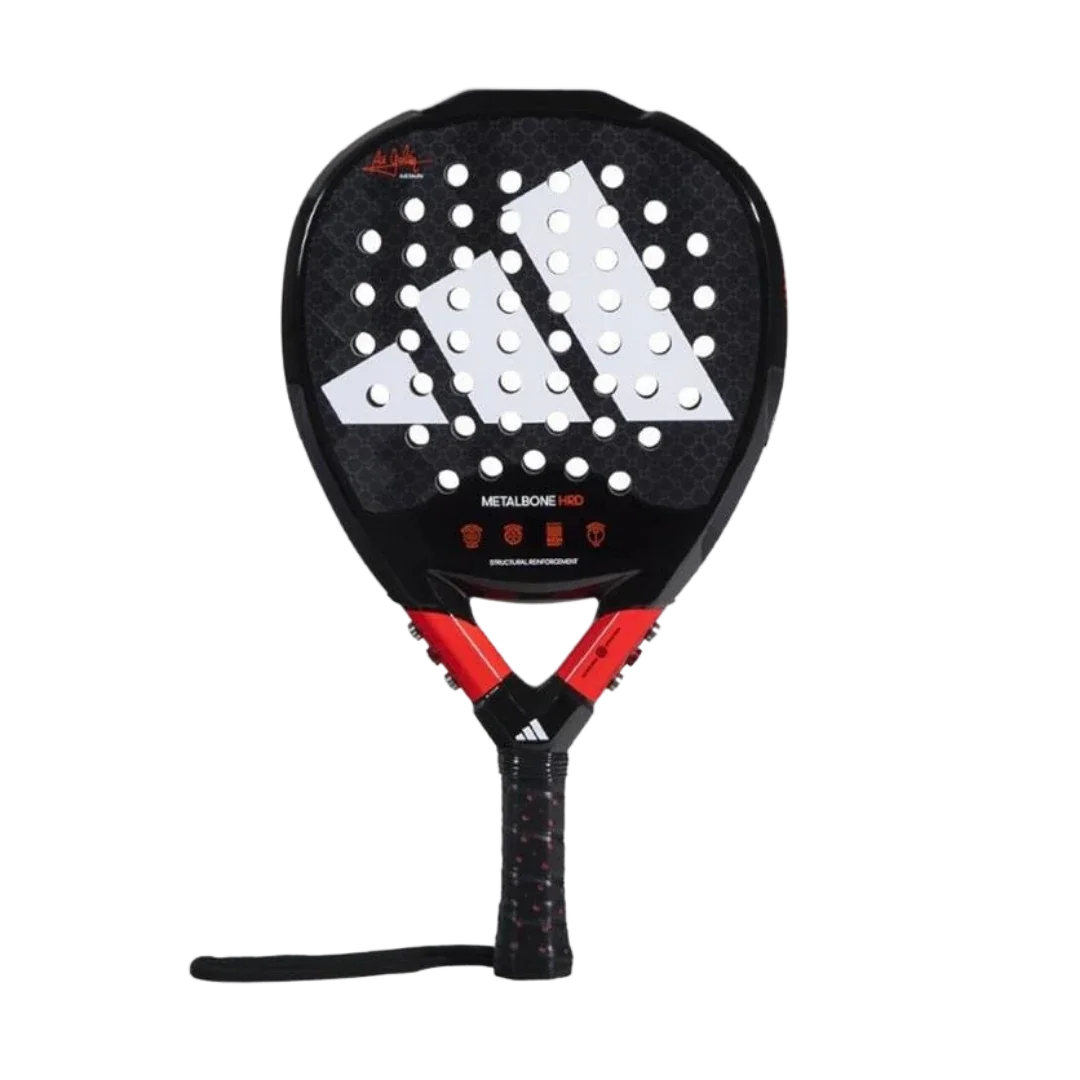
The Adidas Metalbone HRD+ 3.3 2024 in our ranking is a clean illustration. It weighs 355 grams, which puts it in a light category on paper, but its 280mm balance is as head-heavy as padel gets. In practice it swings like a heavier racket and hits like one. The Head Radical Pro 2026 is the opposite case: 370 grams on the scale but a 260mm head-light balance. Tennis Warehouse calls it "a highly maneuverable racket despite its heavier weight class."
The practical rule: if you feel late at the net, the balance is too high, regardless of what the label weight says. If you cannot generate pace on smashes, the balance is probably too low for your game. Weight and balance need to be read together.
How do I know which racket actually suits my level?
Match the three decisions to how you currently play, not how you want to play. The honest self-check matters more than the self-image. Padel.how puts the warning sign in plain terms: "If your shoulder or forearm feels busy after a short session, do not assume you need to get stronger. You may simply need a more manageable racket."
A rough ladder, cross-referenced against the RankGrids Best Padel Rackets of 2026 list:
- If you miss the center of the face regularly, prioritize a round shape or a wide teardrop. Diamond frames assume you do not miss. The Nox ML10 Pro Cup Rough Surface 2025 or the Adidas Adipower CTRL 3.3 2024 fit here.
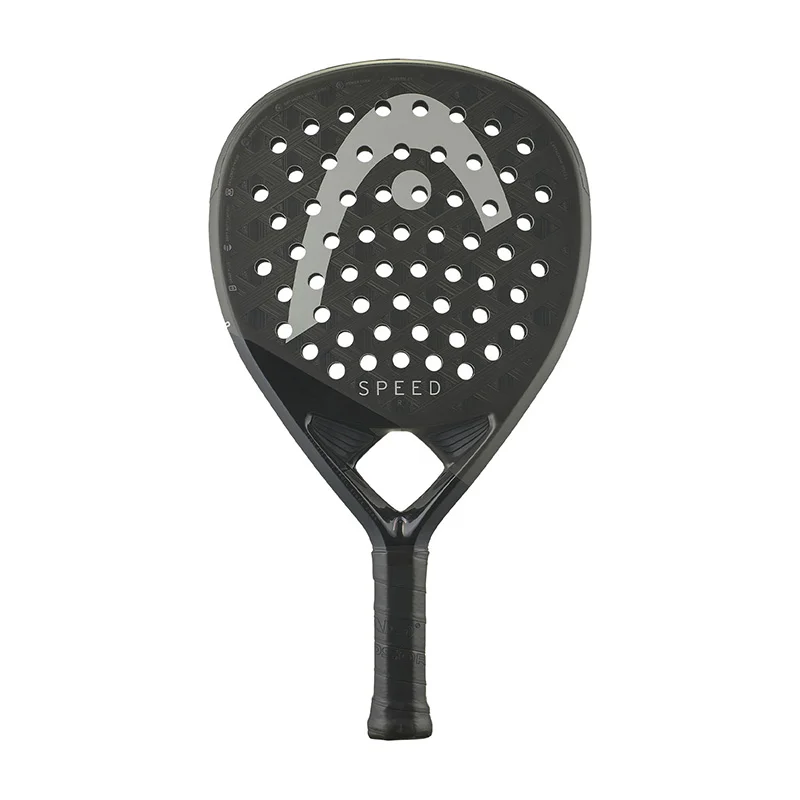
- If you have a tennis background with a developed swing but are new to padel, a mid-balance teardrop with a medium core is usually the smoothest crossover. The Head Speed Pro 2025 at $249.95 is built for exactly that player.
- If you win points at the net with volleys and smashes, and your technique is reliable under pressure, teardrops with firmer cores become usable. The Nox AT10 Luxury Genius 12K 2026 and the Siux Diablo Pro 2026 sit in this band.
- If you win points from the back with recovery and placement, stay round or teardrop with a low-to-mid balance. A diamond will make deep defense harder, not easier.
- Only when timing is consistent on fast exchanges does a diamond start to earn its place. The Bullpadel Hack 04 2026, Head Delta Pro 2026, and Dunlop FX Pro 2026 are tournament frames and will punish you below that level.
Is a more expensive padel racket worth it?
Only up to a point. The price-to-performance curve is not linear. Moving from an entry-level fiberglass racket under $100 to a hybrid or full-carbon frame in the $150 to $280 range buys a real jump in build quality, face stiffness, and frame life. Moving from there to a $350 to $400 pro signature racket is mostly marketing budget, royalty payments, and incremental performance that only a top-tier player can read.
The top of the RankGrids Best Padel Rackets of 2026 ranking makes the point directly. The number-one Bullpadel Paquito 04 2026 at $395 is a demanding pro-tour diamond. The number-eleven Nox ML10 Pro Cup Rough Surface 2025 at $153 is a forgiving round control racket for the club game. They score within half a point of each other on the RankGrids composite rating because each serves its target player well. If you are not the player the Paquito is built for, the extra $242 does not become better play; it becomes slower swings and sore forearms.
A better rule than price-chasing: pick the shape and core that match your level, then buy the cheapest version of that profile that comes with a full carbon frame and a reputable warranty. Put the rest of the budget into overgrips, balls, and court time. NEX Padel positions full carbon for club-level competitors and tennis converts with established technique, and fiberglass for casual players who want comfort and value.
What should a beginner buy first?
For a first racket the specs that matter most are a round or wide teardrop shape, a soft or medium EVA core, and a balance under about 265mm. Something in the 345 to 370 gram range is easier to swing and less likely to strain a developing wrist and elbow. Red Bull's buying guide and The Padel Brief land on the same profile independently; Padel Brief puts the weight window at 345 to 370g, and Red Bull recommends the 350 to 360g band with a round head.
From the RankGrids Best Padel Rackets of 2026, the closest-fit beginner-and-improver options in the top 20 are the round, HR3-cored Nox ML10 Pro Cup Rough Surface 2025 at $153; the forgiving round Adidas Adipower CTRL 3.3 2024 at $280; the teardrop all-court Nox Equation 2024 at $199; and the low-balance teardrop Head Radical Pro 2026 at $249.95. Between them they cover most of the profiles a developing player can learn with and keep for a season or two.
None of these are pro-tour diamonds. That is the point. The frames at the very top of the ranking exist to reward swings that are already there; the frames on this list exist to help you build one.
The short version
The decision is cleaner than the marketing makes it look. Pick the shape that matches how often you miss the middle of the face: round if often, teardrop if sometimes, diamond if almost never. Pick a core hardness that matches how hard you actually swing, not how hard you plan to swing next year. Pick a balance point you can move around the court without lagging at the net. A $150 racket in the right profile will outperform a $400 signature racket in the wrong one. Save the brand and the pro signature for the last question, not the first.
See Best Padel Rackets of 2026Questions people ask
What padel racket should I buy as a beginner?+
Start with a round or wide teardrop head, a soft or medium EVA core, a balance under 265mm, and total weight in the 345 to 370 gram range. The Nox ML10 Pro Cup Rough Surface 2025 at $153 or the Nox Equation 2024 at $199 both fit that profile. Skip pro-tour diamond frames; they are one of the fastest routes to arm pain for players whose timing is still forming.
How do I know which racket suits my level?+
Match specs to how you actually play. If you miss the sweet spot regularly, stay round or teardrop with a soft to medium core. If your net technique is reliable and you finish points with volleys and smashes, firmer teardrops become usable. Diamonds assume consistent timing on fast exchanges. A tennis-background player new to padel usually lands best on a mid-balance teardrop with a medium core, like the Head Speed Pro 2025.
What should I look for when buying a padel racket?+
Three specs, in this order. Shape: round for forgiveness, teardrop for all-court, diamond for power. Core hardness: soft or medium for comfort and a bigger margin on mishits, hard for players who already generate their own pace. Balance point: under 260mm for agility, 275mm or more for head-heavy power. Weight and grip matter too, but they are secondary to those three.
Does racket shape actually matter?+
Yes, more than any other single spec. The shape determines where the sweet spot sits on the face. Round centers it low and wide; teardrops push it to the middle; diamonds move it high and make it smaller. That changes how forgiving the racket is far more than price or brand do. Two rackets from the same brand in different shapes will play very differently; two rackets from different brands in the same shape will often feel like close cousins.
Is a more expensive padel racket worth it?+
Up to about $250 to $280, yes. The jump from entry-level fiberglass to a well-built full-carbon frame in that range is a real one. Above that, returns diminish fast. A $400 pro signature racket only outperforms a $150 club racket in the hands of a player who can already generate the pace and timing to use it. Spend the money on the right profile, not the biggest name.
Sources
What this guide is based on. We research from published specifications, independent reviews and owner reports; we did not test these products ourselves.
- 1.Padel Racket Shapes Explained, Macron
- 2.Different padel racket shapes. Which one is the best?, Playtomic
- 3.Beginner Padel Racket Mistakes, Padel.how
- 4.Padel Racket Core (EVA) Explained: Soft vs Hard, UK Padel Guide
- 5.Padel Racket Balance Explained: Head-Heavy, Even and Head-Light, Padel Setup
- 6.Best Padel Rackets for Beginners in 2026, The Padel Brief
- 7.How to choose the right padel racket: The ultimate guide, Red Bull
- 8.Bullpadel Hack 04 2026 Padel Racket Review, Padelspeed
- 9.Siux Diablo Pro 2026 Review, PadelVerdict
- 10.Head Radical Pro 2026 Padel Racket, Tennis Warehouse
- 11.Head Delta Pro 2026 Review, UK Padel Guide
- 12.Carbon Fiber vs Fiberglass Padel Rackets: Which Should You Choose?, NEX Padel
Products mentioned

More on padel rackets
Explainer
Padel Racket Weight vs Balance Point: Why the Grams on the Label Don't Tell the Full Story
Total weight is one spec on the box. Balance point and swing weight explain why two rackets at the same grams play nothing alike, with examples from today's frames.
Explainer
Padel Rackets and Arm Pain: Which Specs Actually Reduce the Risk
Elbow injuries are the most common padel complaint. Here is which racket specs (core hardness, face stiffness, balance, shape) measurably change how much shock reaches your arm.
Explainer
What 12K, 18K and 24K Carbon Mean on a Padel Racket (And What They Don't)
The K on a padel racket counts filaments per tow in the carbon weave, not stiffness or quality. This guide separates what carbon grade actually changes from what it doesn't.