Explainer
Japanese Floor Mattresses and Mold: Why It Happens and What Prevents It
Mold under a shikibuton is not a product defect. It is condensation from body moisture meeting a sealed floor, and the traditional fold-and-air cycle is what prevents it. This guide explains the physics, the right surfaces, and the warning signs.
Updated November 18, 2026 · Based on 11 sources · How we research
If you are sleeping on a shikibuton or any other Japanese floor mattress and you have started to wonder about mold, you are not being paranoid and your mattress is not defective. Mold under a floor mattress is what happens to any bedding that traps body moisture against a sealed floor with no chance to dry. The traditional Japanese practice of folding the futon each morning and airing it in the sun is not a quaint extra; it is the mechanism that makes floor sleeping hygienic in the first place. This guide explains the physics, the role of your surface, how humidity changes the required frequency, and the warning signs that mold has already begun.
A floor mattress holds body moisture that has nowhere else to go
The human body releases moisture overnight through perspiration and respiration. Wikipedia's entry on futons notes that tatami rush mats are built to absorb and re-release up to half a liter of moisture per night, which is roughly the upper bound of what a sleeper gives off (Wikipedia: Futon). A shikibuton absorbs some of that moisture in its cotton or wool fill. The rest tries to leave through the top and bottom of the mattress. When the mattress sits flat on hardwood, laminate, tile, or concrete, the underside has no airflow. Warm, humid air meets a cool, sealed surface and the water comes out of suspension as condensation. That is the mechanism of floor-mattress mold, described plainly by owners and sleep-health sources alike (Sleep Foundation).
The U.S. EPA's guidance is that damp or wet building materials must be dried within 24 to 48 hours to avoid mold, and that indoor relative humidity should stay below 60 percent, ideally between 30 and 50 percent, to keep surfaces from supplying water on their own (EPA Mold Course). A floor mattress left down day after day puts a thin layer of damp fabric against a cool floor for 8 to 10 hours at a stretch, which is exactly the condition that guidance warns about.
This is why even the most carefully built shikibutons in our Best Japanese Floor Mattresses Ranked for 2026, including the handcrafted J-Life Shikifuton with Shiruku Silk Snow Cover and the Made-in-Japan FULI Japanese Futon King Size White, still require the daily cycle. Breathable natural materials dissipate moisture faster, but no material survives being pressed against a sealed surface indefinitely.
Folding and airing is the system, not a cleaning tip
The Japanese practice is simple: lift the mattress each morning, drape it over a balcony rail, a chair, or a clothesline, and let the sun and air finish drying what your body left overnight. Wikipedia notes that in Japan futons can commonly be seen hanging over balconies, airing in the sun, and that shikibutons need to dry well or they will become heavy and moldy (Wikipedia: Futon).
J-Life International, maker of three shikibutons in our top five, is direct about why cotton futons need it: cotton is an all-natural fiber, and it needs time in the sun to breathe, air out, and fluff the internal fibers. J-Life's recommendation is a minimum of twice a year for lightly used futons and every one to two weeks for daily-use futons in humid conditions or when the mattress rests on carpet (J-Life International).
FULI Japan, which builds our #2 and #7 ranked shikibutons in Japan, is more prescriptive. Its own care guidance says shikibutons easily absorb moisture, and recommends sun-drying for two to three hours at least once a week, ideally in the morning when the sun is at its peak (FULI Japan).
Japanese retailer Ikehiko frames the trade-off plainly for anyone using a futon on flooring rather than tatami: laying out the futon and putting it away every day is itself a mold-prevention measure, and if the futon is left unused, mold will grow (Ikehiko Japan).
The surface under the mattress decides how hard the system has to work
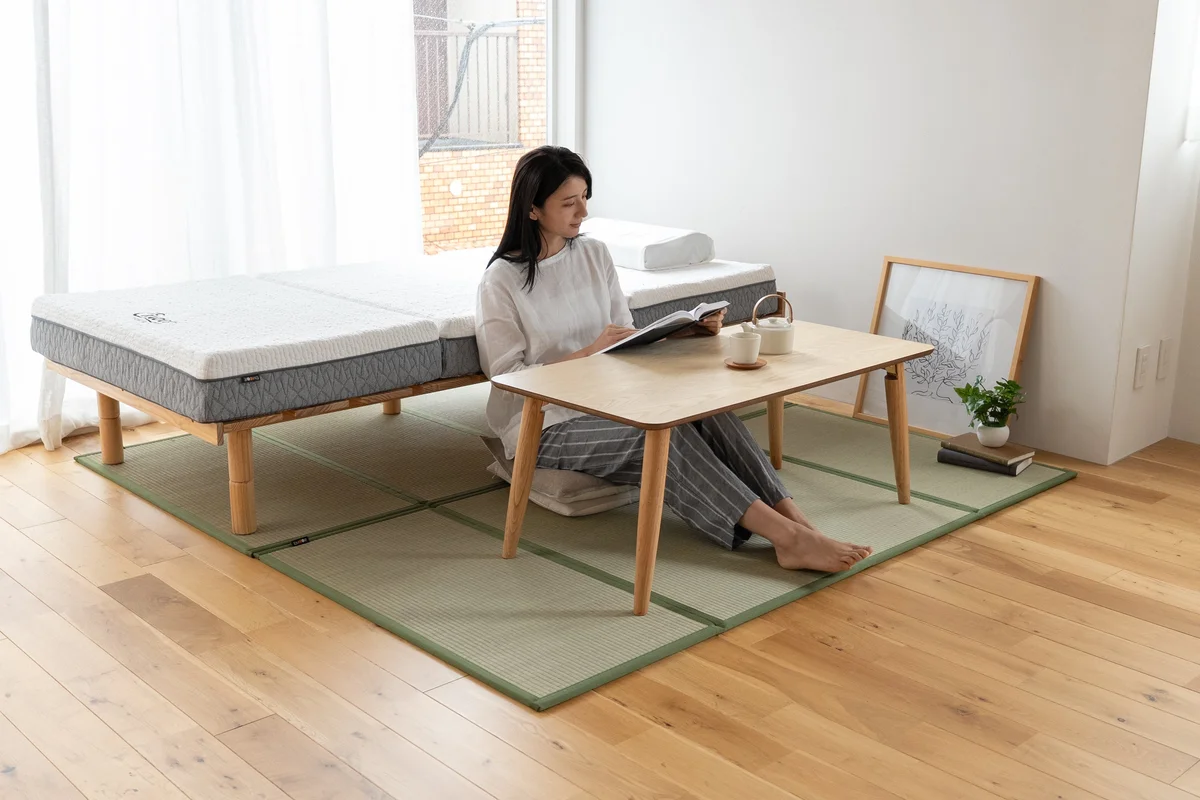
Tatami was designed to pair with a floor mattress. Its core material, igusa (soft rush), has a sponge-like interior that absorbs moisture when humidity is high and releases it when the air dries. Manufacturer and independent sources put igusa moisture absorption at roughly 2.5 times that of cotton, which is why tatami acts as a passive humidity buffer between a shikibuton and the floor (Made in Japan).
The Futon Shop, maker of three shikibutons in our top ten, states the case most clearly: during sleep the body releases moisture that travels through the shikifuton, and a tatami mat is specifically designed to handle this. The retailer recommends tatami on hardwood or tile floors because those surfaces hold cold and dampness, and advises standing the mat against a wall for a few hours every few weeks to release moisture from both the mat and the floor beneath (The Futon Shop).
The next best option is a sunoko, the slatted wooden pallet long used in traditional Japanese homes, where boards or bamboo are laid parallel with space between them so air can pass freely (Columbia JAANUS). This is also why Japanese bed bases for shikibutons use slats rather than solid platforms: retailers point to slatted frames as what allows air flow underneath the mattress and lets condensation evaporate instead of pooling (The Futon Shop).
Hardwood, laminate, and tile floors are the common failure cases. They are cool, sealed, and non-porous. Condensation that would wick into tatami or escape through slats has nowhere to go. Carpet is worse: the pad holds water inside the floor system for days, and the warm interface at the top of the carpet feeds mold on both sides, which is why J-Life calls out carpet by name when it tightens its airing cadence (J-Life International).
| Surface | Why it behaves this way | Minimum care |
|---|---|---|
| Tatami (igusa) | Absorbs ~2.5x the moisture of cotton and releases it as the room dries | Fold daily, air mattress monthly |
| Sunoko slatted base | Open airflow under the mattress | Fold daily, air mattress monthly |
| Breathable area rug on wood | Some airflow, limited absorption | Fold daily, air mattress weekly |
| Hardwood or laminate | Sealed, cool, zero airflow; condensation collects | Fold daily, air weekly, lift and inspect every few days |
| Carpet with pad | Pad holds water; interface runs warm | Fold daily, add tatami or sunoko layer, air weekly |
| Concrete slab | Coldest surface, worst condensation | Not advisable without tatami or sunoko above |
How often to air it, by humidity and climate
There are two cycles. The daily cycle is non-negotiable: fold or roll the futon in the morning and let both sides breathe for at least half an hour, longer if you can, before you make the bed again. The weekly or monthly cycle is the full sun-drying session.
Published guidance ties the sun-drying session to indoor relative humidity. J-Life's baseline is twice a year for light use, tightening to every one to two weeks when the futon is used daily in humid conditions or on carpet (J-Life International). FULI Japan sets a stricter floor: at least once a week, two to three hours per session (FULI Japan). In U.S. climates above 60 percent indoor humidity, which includes most of the South and East in summer, the realistic adjustment is to meet or exceed FULI's weekly cadence and to run a dehumidifier during sleep hours to pull the ambient humidity back into the 30 to 50 percent range the EPA recommends (EPA Mold Course).
Winter is the trap. Dry outdoor air does not mean dry indoor conditions. Heated homes with closed windows push indoor humidity up, and the floor under the mattress runs colder than it does in summer, which makes condensation more likely rather than less. A simple field test: if you see condensation on your bedroom windows in the morning, the same process is almost certainly happening on the underside of your floor mattress.
The most forgiving shikibutons here are the all-natural ones. The J-Life Shikifuton with Shiruku Silk Snow Cover uses a silk outer and an unbleached cotton duck base specifically for airflow and moisture wicking. The Futon Shop Natural Wool and Organic Cotton Shiki Futon wraps organic cotton in American-grown wool, which actively wicks and releases moisture. They still need the cycle; they tolerate a missed session better than foam-core alternatives.
You cannot leave a shikibuton on the floor all the time
You can physically. People do it. In a dry, well-ventilated room above tatami, you may go weeks without visible problems. But the question is not whether it is possible; it is what happens when the cycle fails.
The EPA's 24 to 48 hour window describes materials that are fully wet. A shikibuton on a sealed floor accumulates condensation gradually instead, so the timeline to visible mold is longer and far more variable, on the order of weeks in humid climates and months in dry ones. Retailer guidance and mold-inspection sources consistently point to the underside as the first site; by the time you can see growth from above, it has been going for a while (Amerisleep).
The foam-core and polyester-fill models in our ranking are more vulnerable than natural-fiber shikibutons. The FULI Premium Wavy Foam Core Queen, the EMOOR MACHI padded futon, and the MAXYOYO 6-Inch Extra Thick Queen all rely on foam cores that retain body heat, push humid air toward the underside, and dry slowly once they take on moisture. If you own one, the margin for a missed day is smaller.
Fill material changes how much margin you have
Natural cotton, wool, and silk release absorbed moisture quickly in sun and moving air. Polyester, polyurethane foam, and chip-foam cores retain it. Fill composition matters for mold risk even more than for comfort, because the comfort gap between a good cotton and a good foam shikibuton is smaller than the drying-speed gap.
The top-ranked natural-fiber shikibutons are built around this. The J-Life Shikifuton with Removable Cover is 100 percent American-grown cotton batting inside a zippered Japanese-fabric cover. The Futon Shop All Natural Latex and Wool Shikibuton uses GOTS-certified cotton canvas over Dunlop latex and virgin wool. Both wick moisture from the body and give it back to the air during the daytime fold.
Foam-based floor mattresses are not disqualified; they demand a different care model. If your floor mattress has a polyester or foam core, which is standard in budget options like the ZonLi Japanese Floor Mattress Queen and the EMOOR Japanese Floor Futon Set Kyoto Queen, treat the washable cover as your main defense: wash it regularly, lift the mattress completely off the floor (not just folded in place) for a few hours daily, and prioritize a sunoko or tatami underneath.
A musty smell when you make the bed is the first warning
A faintly musty, earthy, or basement-like smell on fresh sheets is the earliest reliable sign of mold, often before anything is visible. Amerisleep's inspection guidance calls out that a musty smell or stains can indicate mold, and that invisible mold can be identified by its musty odor even without visible contamination (Amerisleep).
The next stage is visible: small dark spots, usually black or green, often on the underside or along the bottom edge where the mattress meets the floor. Discoloration along the stitching or quilting lines is another common early pattern. If a stain looks new and you cannot explain it, treat it as suspect rather than cosmetic.
Pull the mattress up and look at both the underside and the floor beneath it. Mold on the floor is a separate problem, and it will reinfect a cleaned mattress if ignored. Sometimes the mattress looks clean because the growth is entirely on the floor side; sometimes the floor is fine and the mattress underside is the colony. You need to check both.
If you find mold, treat the cover, the core, and the floor separately
Removable-cover shikibutons are the best case. The covers on the J-Life Shikifuton with Shiruku Silk Snow Cover, the J-Life Shikifuton with Jumbo Seika Ha Green Cover, and the J-Life Shikifuton with Removable Cover unzip and can be laundered per the care tag. Follow the manufacturer's instructions, since cotton tolerates hot water and standard detergent while silk requires a cold, gentle cycle, and dry thoroughly before reinstalling.
The core is harder. Natural cotton or wool shikibutons with surface mold can sometimes be rescued by several days of direct sun exposure, with the surface vacuumed (never wet-cleaned) between sessions. UV kills surface spores and dries the fibers, and igusa guidance similarly warns owners to avoid wet mopping precisely because moisture is the cause rather than the cure (Made in Japan). Any mold that has penetrated the fill is effectively untreatable.
Foam cores with mold growth should be replaced. Foam does not release water quickly even in direct sun, and surface cleaning leaves spores embedded in the open-cell structure. Clean the floor itself separately with a mold-killing cleaner, let it dry fully, and add a tatami or sunoko layer before any new mattress goes down. Then rebuild the cycle. The reason the original failed is almost always that the futon stopped being folded and aired, so the habit matters at least as much as the replacement.
The short version
Mold under a Japanese floor mattress is not a product defect or regional bad luck. It is the predictable result of trapping body moisture against a sealed floor without a drying cycle. Choose a natural-fiber shikibuton from our Best Japanese Floor Mattresses Ranked for 2026 if you can, because cotton, wool, and silk forgive missed care sessions in a way that foam cores do not. Place it on tatami or a sunoko base rather than directly on hardwood, laminate, or carpet. And treat the morning fold as part of the mattress, not as an optional ritual. Every hygiene question people ask about floor sleeping has the same underlying answer: the mattress is designed to work in a cycle, and the cycle is what keeps it dry.
See Best Japanese Floor Mattresses Ranked for 2026Questions people ask
Will a floor mattress get moldy?+
On a sealed floor like hardwood, laminate, tile, or concrete, yes, if you leave it down continuously without airing. Body moisture condenses against the cool floor and has nowhere to escape. On tatami or a sunoko slatted base, with a daily fold and regular sun exposure, mold is avoidable indefinitely.
How do I keep my shikibuton from getting mold?+
Fold or roll it every morning and let both sides breathe. Air the mattress in direct sun for a couple of hours at least once a month in dry climates, weekly in humid ones. Keep indoor humidity between 30 and 50 percent as the EPA recommends. Put a tatami mat or sunoko between the futon and hardwood or carpet floors. Wash removable covers regularly, per their care tags.
How often do I need to air out a Japanese floor mattress?+
Daily, for the morning fold, which only takes seconds. For full sun-drying: J-Life recommends twice a year for lightly used futons and every one to two weeks for daily-use futons in humid conditions or on carpet. FULI Japan sets a stricter minimum of once a week, two to three hours per session, ideally in the morning when the sun is at its peak.
Can I leave a shikibuton on the floor all the time?+
Not safely in most U.S. homes. In a dry room above tatami you can go longer, but on hardwood, laminate, or carpet, continuous placement typically produces mold on the underside on the order of weeks in humid climates and months in dry ones. The traditional Japanese assumption, as Ikehiko and Wikipedia both describe, is that the futon is folded away daily; the care guidance assumes that routine exists.
What surface should I put a Japanese floor mattress on?+
In order of preference: a tatami mat, a sunoko slatted wooden base, a breathable area rug on a wood floor, bare hardwood or laminate (with diligent daily airing), and last, carpet. Concrete without an intermediate layer is not advisable. Tatami and sunoko are the two options traditional Japanese setups use for a reason: both allow the underside of the mattress to dry.
Does a tatami mat prevent mold under a futon?+
It greatly reduces the risk but does not replace airing. Igusa rush grass absorbs roughly 2.5 times as much moisture as cotton and gives it back as the room dries, which acts as a buffer between your body and the floor. The Futon Shop recommends standing the tatami against a wall for a few hours every few weeks to release moisture from both the mat and the floor beneath. Tatami plus daily folding is the combination traditional setups rely on.
My floor mattress smells musty, is it mold?+
Probably yes, or the early stage of it. A musty, earthy, or basement-like odor on fresh sheets, especially when the mattress is warm from sleep, is the standard first warning, and Amerisleep notes that invisible mold is often identifiable by odor before any spots appear. Pull the mattress up and inspect the underside and the floor; by the time anything is visible on top, it has usually been growing for a while.
How long before mold grows under a floor mattress?+
The EPA's reference window is 24 to 48 hours for materials that are fully wet. A shikibuton on a sealed floor accumulates condensation gradually instead, so visible growth takes longer and varies with conditions, on the order of weeks in humid climates and months in dry ones, with foam-core models at the faster end and natural-fiber shikibutons at the slower end. The clock resets every time you lift and air the mattress.
Sources
What this guide is based on. We research from published specifications, independent reviews and owner reports; we did not test these products ourselves.
- 1.Caring For Your Shikifuton, J-Life International
- 2.What is a Shikibuton?, FULI Japan
- 3.Is it fine to put a futon on the flooring?, Ikehiko Japan
- 4.Mold in the Bedroom: How It Impacts Sleep and Health, Sleep Foundation
- 5.Mold Course Chapter 2: Why and Where Mold Grows, U.S. Environmental Protection Agency
- 6.Japanese Igusa Tatami Mats: Humidity Control on Any Floor, Made in Japan
- 7.Sunoko, Columbia University JAANUS
- 8.Tatami 101: Why Tatami Mats Matter for Authentic Japanese Floor Sleeping, The Futon Shop
- 9.Will my Mattress/Futon Mattress Get Moldy? Importance of Air Circulation, The Futon Shop
- 10.Futon, Wikipedia
- 11.How to Spot Mold on Mattress & What to Do About It, Amerisleep
Products mentioned
 EMOOR Japanese Floor Futon Mattress Anti-Sag FullEMOOR Japanese Floor Futon Set Kyoto Queen
 EMOOR Japanese Padded Futon Mattress MACHI Full
 FULI Japanese Futon King Size WhiteFULI Premium Japanese Futon Bed Wavy Foam Core Queen
 J-Life Shikifuton with Removable CoverJ-Life Shikifuton with Jumbo Seika Ha Green Removable CoverJ-Life Shikifuton with Shiruku Silk Snow Removable Cover
 MAXYOYO 6-Inch Extra Thick Japanese Floor Mattress Queen
 The Futon Shop All Natural Latex and Wool ShikibutonThe Futon Shop Natural Wool and Organic Cotton Shiki Futon
More on japanese floor mattresses
Explainer
Shikibuton vs Futon: Why They Are Not the Same Product
The word futon covers two unrelated products in English: a 2 to 4 inch Japanese floor mattress and a 6 to 10 inch Western sofa bed. Here is how to tell them apart and buy the right one.
Explainer
Does Sleeping on a Japanese Floor Mattress Help Back Pain? What the Evidence Actually Shows
A plain look at what the clinical trials, Japanese epidemiology and owner reports say about shikibutons and back pain, and who should sleep elsewhere.
Buying guide
How to Choose a Japanese Floor Mattress: The Four Decisions That Actually Matter
Shikibuton thickness, fill material, airing routine, and 'Made in Japan' versus authentic construction: the four decisions that decide whether a Japanese floor mattress works for you.