Buying guide
How to Choose a Japanese Floor Mattress: The Four Decisions That Actually Matter
Shikibuton thickness, fill material, airing routine, and 'Made in Japan' versus authentic construction: the four decisions that decide whether a Japanese floor mattress works for you.
Updated November 18, 2026 · Based on 9 sources · How we research
This guide is for a buyer who has decided to try floor sleeping, has seen prices swing from under $100 to over $700, and cannot tell from the product listings which features are load bearing and which are marketing. The one thing most people get wrong is treating a shikibuton as a brand and price choice. It is really a four-part specification: thickness (set by your body weight and sleep position), fill (cotton, latex, foam, polyester, each with its own lifespan), the airing routine you can actually keep up, and what you mean by 'authentic' once you separate country of origin from construction. We work through each decision with real models from our best Japanese floor mattresses ranking, noting where reviewers and owners disagree.
Thickness is a decision about your body, not your taste
The first number on every shikibuton listing is thickness, and buyers tend to read it as a comfort preference. It is not. It is a function of body weight and sleep position. J-Life International, one of the few Western sellers of hand-stuffed cotton shikibutons, calls its 3-inch model 'super firm' and 'the thinnest and firmest mattress we have,' and its 4-inch 'great medium firmness' and its best-selling size (J-Life International buying guide). On J-Life's own scale those translate to 8 out of 10 and 6 out of 10. The 3-inch is traditional, and it is punishing if your body does not fit the profile it was designed for.
Rough rule from multiple retailers: back sleepers under about 180 pounds do fine on a 3-inch cotton shikibuton. Above that, or if you shift between back and side through the night, the 4-inch is the honest pick. Sleepopolis specifically flags EMOOR models as potentially 'a bit thin to heavy sleepers over 250 pounds' and warns The Futon Shop's natural wool and organic cotton shikibuton 'may not be supportive enough for heavier users (i.e. sleepers over 250 pounds)' (Sleepopolis 5 Best Japanese Futon Mattresses). The J-Life Shikifuton with Silk Snow Cover is sold in both 3-inch and 4-inch; the 4-inch is the version most adult Americans will want.
Side sleepers are the group most often disappointed. Side sleeping concentrates pressure at the shoulder and hip, which are the widest points. A 2.5-inch pad does not have the depth to let a shoulder sink. Zonli recommends a 4 to 6 inch floor mattress for side sleepers, with a soft to medium firmness (3 to 5 of 10) that lets shoulders and hips sink while supporting the waist (ZonLi on firmness by sleep position). Even J-Life, whose business depends on selling thin cotton mattresses, writes that 'stomach and side sleepers need a mattress with more cushion,' and recommends layering a tatami mat underneath (J-Life buying guide). Products in our ranking that genuinely clear the side-sleeper bar are the Futon Shop 5-inch Traditional Organic Cotton, the Futon Shop All Natural Latex and Wool Shikibuton, and the MAXYOYO 6-Inch Extra Thick.
Owners learn the limits the hard way. A Mattress Underground thread from a reviewer on a 4-inch J-Life documents what happens when a soft new cotton shikibuton meets a heavier body: 'My butt was on the floor, and my arms and legs in the air like on an air mattress that has a slow leak' (Mattress Underground forum). Cotton firms up over one to two weeks of break-in, but if the starting thickness is wrong for your weight the break-in will not rescue it.
| Profile | Thickness | Example |
|---|---|---|
| Back sleeper, under 180 lb | 3 inch cotton | J-Life 3 inch |
| Back sleeper, 180 to 230 lb | 4 inch cotton | J-Life 4 inch with cover |
| Side sleeper, any weight | 5 inch cotton or 3 inch latex | Futon Shop 5 in organic cotton or Futon Shop latex and wool |
| Over 230 lb | Latex core or 6 inch foam | Futon Shop latex and wool or MAXYOYO 6 in |
The fill decides what it feels like and how long it lasts
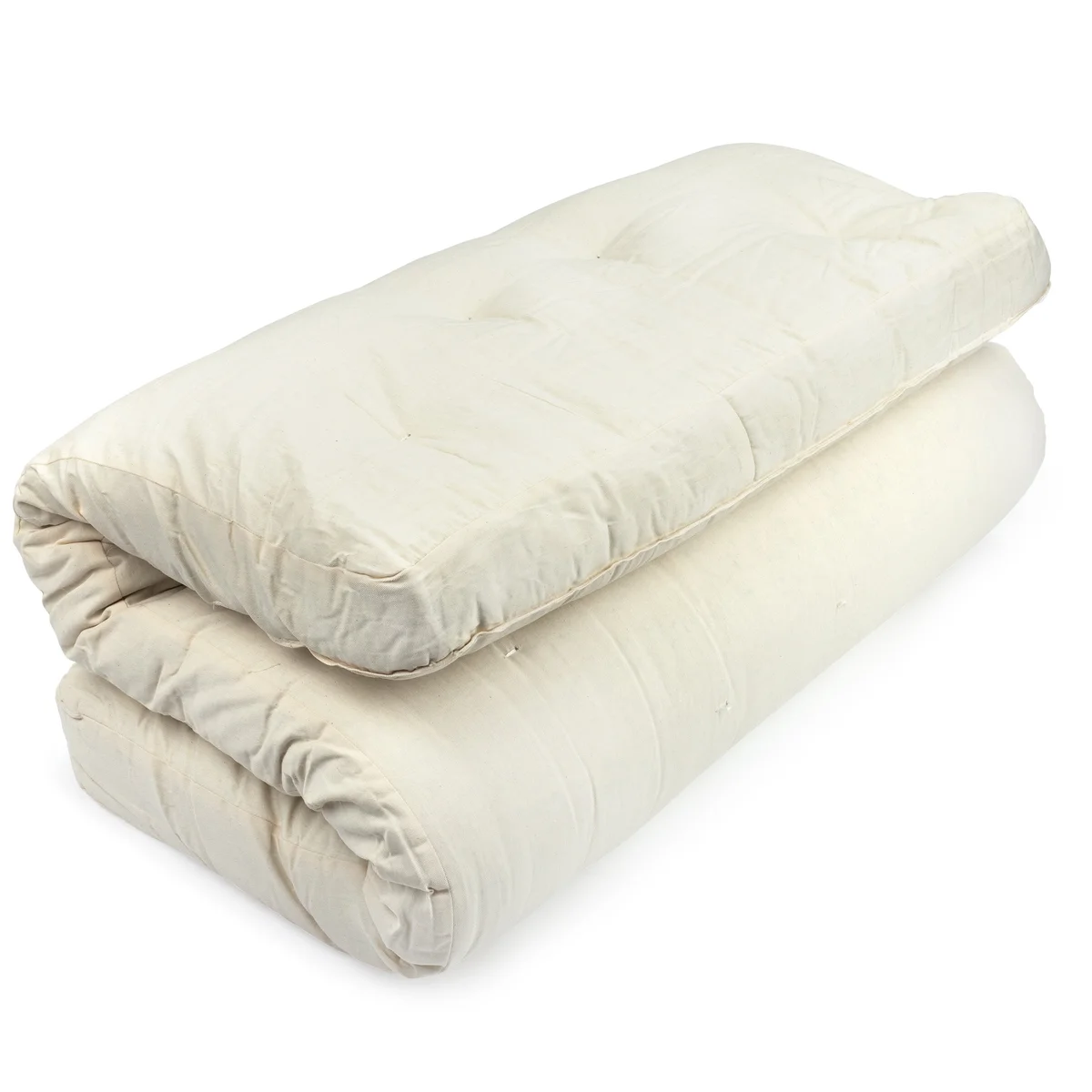
Cotton is the traditional fill, and it is the one most buyers imagine. Dense cotton batting breathes well, sleeps cooler than polyester, and does two things over time: it compresses, and it clumps if not refluffed. Mattress Miracle pegs a well-cared-for cotton shikibuton at 7 to 15 years, with specialist re-carding of the batting extending that by another 5 to 10 years (Mattress Miracle shikibuton buying). The top-ranked handmade cotton builds, J-Life's shikifutons and The Futon Shop's organic lines, lean into this: dense cotton batting in cotton, silk, or wool covers. Reviews are mixed. Trustpilot reviewers of The Futon Shop's organic wool and cotton lines report a barnyard odor from the wool that, in some accounts, did not dissipate even after months of use (Futon Shop Trustpilot reviews).
Latex is the quiet upgrade. A Dunlop natural latex core compresses far less than cotton, rebounds under pressure, and lasts longer. Soaring Heart, a Seattle organic-shikibuton specialist, puts latex shikibutons at 15 to 20 years, 'perhaps more,' with monthly flipping for airflow rather than to prevent sag (Soaring Heart FAQ). The Futon Shop All Natural Latex and Wool Shikibuton sits at $472.98 for a twin, GOTS-certified, rated medium firm. The trade-offs are weight, the fact that a latex core does not fold into a true trifold as cleanly as cotton, and that it will not feel traditional. It solves pressure points for side sleepers and heavier bodies in a way cotton cannot.
Foam and foam-cotton hybrids are not traditional, but they solve two problems pure cotton does not: shape retention and consistent support under heavier users. The EMOOR Anti-Sag Full uses a cotton chip foam core inside a 100 percent cotton broadcloth shell and is made in Japan to a three-layer anti-sag construction. The FULI Premium Wavy Foam Core Queen is also made in Japan but uses a profile-cut polyurethane core for spinal support. Foam cores do not breathe like cotton and will warm up, so pair them with a cotton top sheet.
Polyester batting is the quiet middle ground. Several Made-in-Japan builds, including the FULI King Size White and the EMOOR CLASSE, use polyester inside a cotton outer. Polyester resists clumping and migration far better than loose cotton batting, holds its shape through daily folding, and keeps the price under $250 in the Made-in-Japan tier. It gives up some breathability and does not have cotton's moisture-wicking behavior. For city apartments where the mattress is folded and stowed every day, that trade is often correct.
Wool shows up most often in the cover or a thin comfort layer. It wicks moisture and helps temperature regulation. Wool is also naturally flame resistant, which matters in the US market because federal flammability rules push most cotton-only builds toward boron treatments; the Futon Shop's wool-wrapped shikibutons use the wool itself instead.
| Fill | Expected lifespan | Best for | Airing demand |
|---|---|---|---|
| Pure cotton | 7 to 15 years with proper care | Traditionalists, hot sleepers | Weekly to biweekly in humid conditions |
| Natural latex | 15 to 20 years | Side sleepers, heavier sleepers, longevity | Monthly or less |
| Chip or block foam | 3 to 5 years | Small apartments, low-airing lifestyles | Low |
| Polyester batting | 2 to 3 years heavy use, longer light use | Daily foldable use, mid-budget | Low to moderate |
Before you buy, ask whether you can actually air it
Airing is not optional for cotton. J-Life's own care guide advises sunning the futon 'as much as possible, at a minimum of 2 times per year,' and every one to two weeks if the mattress is placed directly on the floor, used nightly, by someone who sleeps warm, or in a humid climate. Each session is roughly two hours per side in direct sun (J-Life Caring for your Shikifuton). The principle J-Life states plainly: the less airflow your mattress receives, the more often it should be sunned. Cotton holds moisture, and without airing it does not leave.
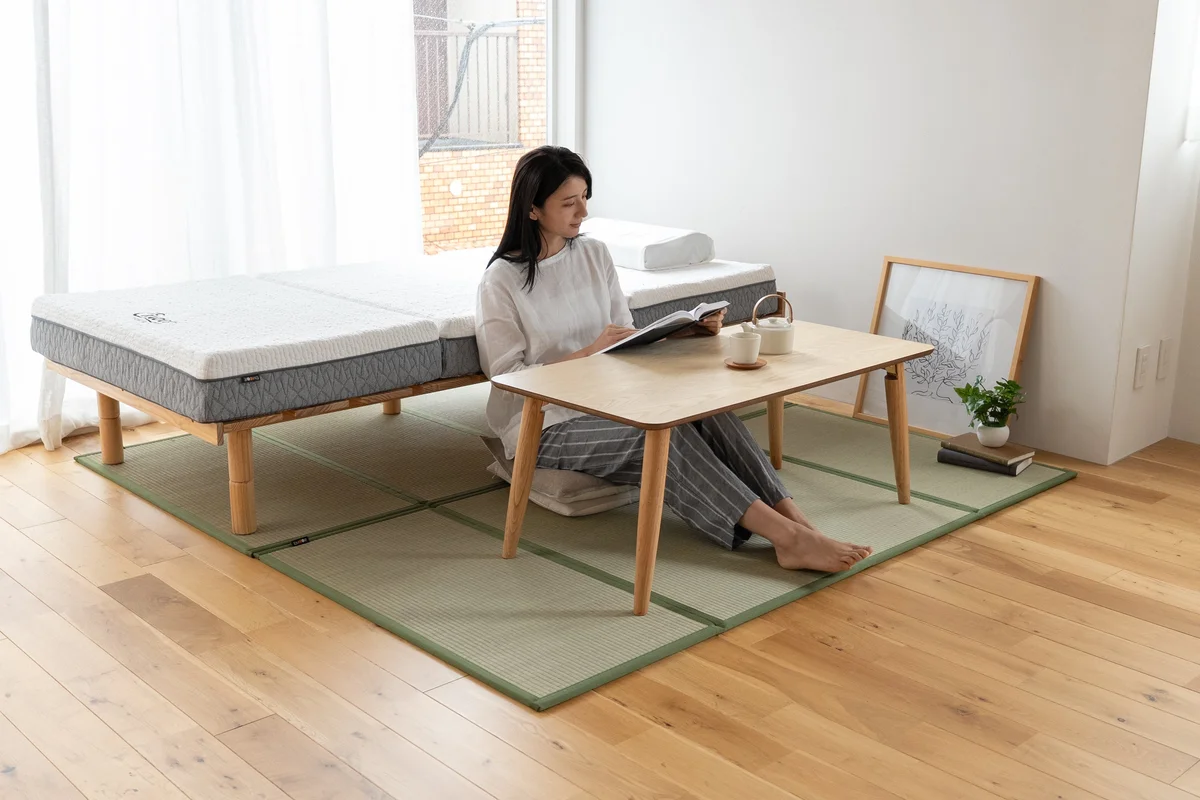
What this means in practice: if you live in a studio with no outdoor space, no balcony, and limited direct window sun, a cotton shikibuton is going to fight you. The alternatives are to buy a foam or polyester build that forgives missed airings, or to put a tatami mat platform under a cotton shikibuton to lift it off the floor and let air circulate from below. Mattress Miracle, writing for the Canadian market, calls rolling and airing 'non-negotiable for preventing mold in Canadian winter humidity conditions,' and warns that a shikibuton on a cold floor can trap moisture condensation between the mattress and the floor (Mattress Miracle).
Humidity is the hidden variable. In the Gulf Coast or the Pacific Northwest, even a well-made cotton shikibuton struggles without a tatami platform. In Denver, Phoenix, or Salt Lake City, cotton dries out in hours. Match the fill to the climate: cotton on carpet in Houston is a bad combination; cotton on tatami in Colorado is fine. For apartment dwellers in humid climates who still want the traditional look, the EMOOR Anti-Sag, FULI Wavy Foam Core, and ZonLi Queen have cotton or cotton-blend covers over cores that do not absorb moisture the way pure cotton does.
'Made in Japan' and 'authentic construction' are two different claims
These two phrases get used interchangeably in product listings. They are not the same. 'Made in Japan' is a country-of-origin claim and is verifiable. FULI and EMOOR both assemble in Japanese factories using Japanese labor (Sleepopolis review). That is the entire content of the label. It does not tell you the fill is cotton, that it is hand tufted, or that it is thick enough for your body.
'Authentic construction,' as used by specialty retailers and by Japan-based craftspeople writing in English, has a more specific meaning: cotton batting (sometimes blended with a small percentage of resilient fibers), hand-assembled with expert stitching to prevent sagging, in a cotton outer cover (EMOOR on the traditional shikibuton). That is what people have in mind when they hear the word.
The two claims often do not overlap. Some of the most traditional-construction cotton shikibutons sold in the US are from J Life International, which hand-stuffs American-grown cotton in Nevada and imports its cover fabric from Japan. The top-ranked J-Life Shikifuton with Silk Snow Cover is not Made in Japan, and is a more traditional build than many Japan-labeled competitors. Conversely, FULI's Wavy Foam Core model is proudly Made in Japan, and no Japanese household from the Edo period through the 1980s would have recognized the profile-cut polyurethane core inside it.
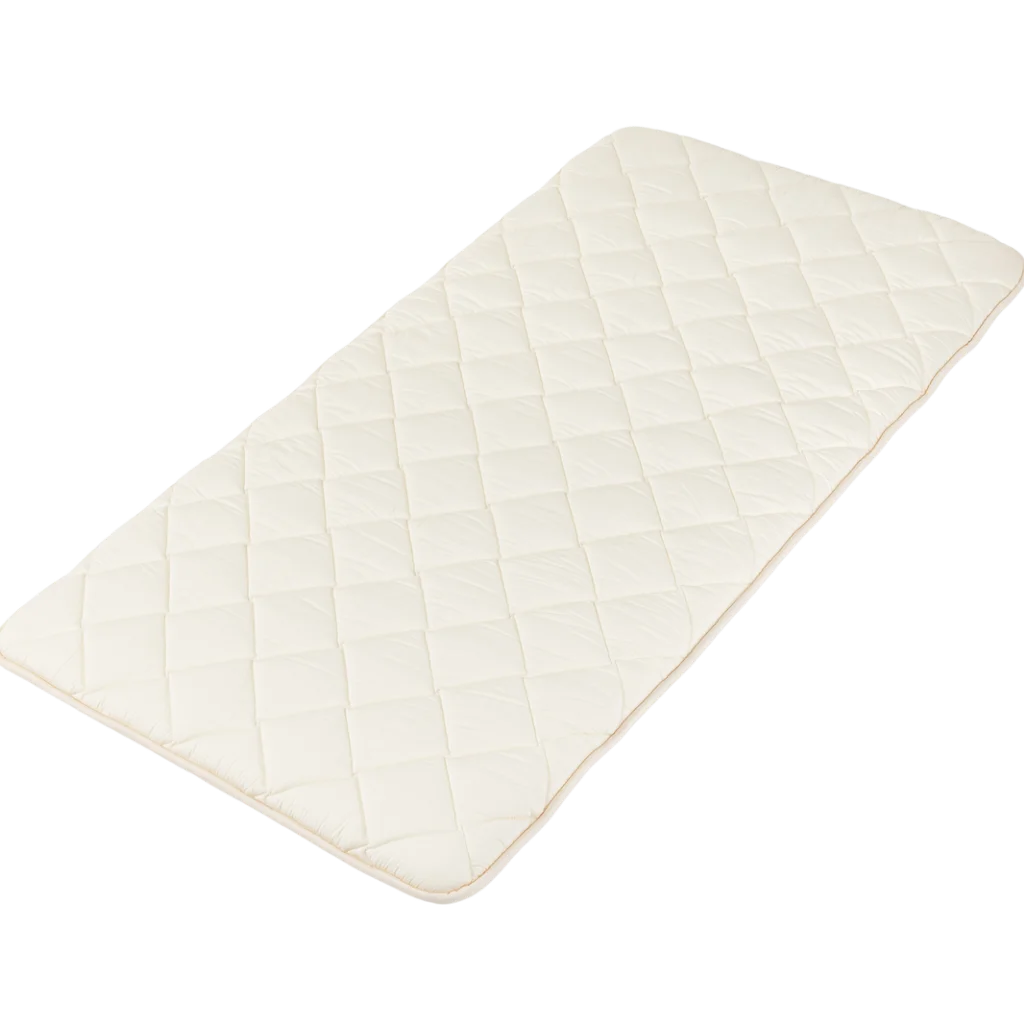
What to do with this. If sleeping on real cotton the traditional way is what you want, read the fill spec and ignore the flag in the listing. If made-in-Japan manufacturing is itself the point, the honest mid-price pick is the FULI Traditional Shikibuton at $238, all cotton, diamond quilted, Made in Japan. The EMOOR CLASSE at $195 is Made in Japan with a cotton outer and polyester core, which is a reasonable middle ground.
When a shikibuton is wrong for you
Over about 230 to 250 pounds, pure cotton of any practical thickness compresses to floor contact under concentrated weight at the hips and shoulders. Sleepopolis flags this on the EMOOR line and on The Futon Shop's natural wool and organic cotton model specifically for sleepers over 250 pounds (Sleepopolis). The realistic options in this weight range are the Futon Shop latex and wool shikibuton or a 6-inch foam build like the MAXYOYO, with the understanding that neither is a traditional product.
Dedicated side sleepers are the other group a thin cotton shikibuton is wrong for. A 2.5 to 3 inch cotton pad has nowhere for a shoulder or hip to sink. A 4-inch cotton helps; a 5-inch organic cotton helps more; a latex or 6-inch foam build genuinely solves it. The shikibuton tradition was built around sleepers who lie on their back or shift between positions overnight, not pure side sleepers on hardwood (ZonLi on sleep position).
People who want a Western mattress feel are the third group. A shikibuton is designed to approach the floor, not to buffer you from it. Owners who go in expecting a 6-inch foam feel out of a 3-inch cotton report lower back pain for the first two weeks, and some do not push past the break-in. If the floor sleeping premise itself is uncertain, start with a cheaper foam-core build such as the ZonLi at $89 and see if you adjust before paying handmade-cotton prices.
The short version
Pick thickness from your weight and sleep position first: under about 180 pounds on your back, 3-inch cotton is fine; over that, or if you shift sides, step up to 4 inches or layer a tatami underneath. Pick fill from how long you want the mattress to last and whether your home supports airing: cotton for breathability and tradition if you can air it regularly, latex if you want 15-plus years and gentler pressure relief, foam if you live where airing is hard. Treat 'Made in Japan' and 'authentic construction' as two separate boxes to check. The honest picks are the FULI Traditional Shikibuton at $238 as the mid-priced authentic cotton option, the J-Life handmade line at $412 for enthusiasts, and the EMOOR Anti-Sag at $186 as the small-apartment compromise that forgives missed airings. The full set of twenty is here: Best Japanese Floor Mattresses 2026.
See Best Japanese Floor Mattresses Ranked for 2026Questions people ask
What thickness shikibuton should I get?+
Start from body weight and sleep position, not preference. Back sleepers under 180 pounds do fine with 3 inches of cotton. Back sleepers between 180 and 230 should go to 4 inches. Side sleepers want 4 to 6 inches, a latex core, or a 6-inch foam build. Over 230 pounds, go to latex or 6-inch foam. Adding a tatami mat underneath buys a level of extra cushioning if you are between sizes.
Is 3 inch or 4 inch better for a shikibuton?+
Three inches is the traditional thickness. J-Life describes it as 'super firm' and rates it 8 out of 10; the 4-inch is 'great medium firmness' and rated 6 out of 10, and it is J-Life's best-selling size. Choose 3 if you weigh under 180 pounds, sleep on your back, and want the traditional feel. Choose 4 if you are heavier, shift to your side overnight, or sleep on hardwood without a tatami.
Cotton vs latex vs foam floor mattress, which is better?+
Cotton breathes best and feels most traditional but compresses over 7 to 15 years with proper care and needs regular airing. Natural latex lasts 15 to 20 years, gives more pressure relief for side sleepers and heavier bodies, and does not fold as cleanly. Foam does not breathe like cotton and is not traditional, but it holds its shape through daily folding and forgives missed airings. There is no single winner; pick by lifespan expectations, sleep position, and whether you can air a cotton build regularly.
Is made in Japan better than made in USA for a shikibuton?+
Not necessarily. 'Made in Japan' is a country-of-origin claim and does not tell you the fill, thickness, or construction method. J Life International hand-stuffs cotton shikibutons in Nevada using Japanese cover fabric, and that is a more traditional build than FULI's Made-in-Japan wavy foam core model. If what you want is a traditional cotton shikibuton, read the fill spec; if what you want is Japanese manufacturing itself, FULI and EMOOR are the Made-in-Japan picks in our ranking.
What body weight is too heavy for a Japanese floor mattress?+
Over about 230 to 250 pounds, pure cotton shikibutons in the 2.5 to 4 inch range tend to compress to floor contact at the hips and shoulders. Sleepopolis flags this specifically on the EMOOR line and on The Futon Shop's natural wool and organic cotton model for sleepers over 250 pounds. At that weight, the realistic options are latex cores like the Futon Shop latex and wool model, or a 6-inch foam build like the MAXYOYO. Neither is traditional, but both support the weight.
Is a shikibuton good for side sleepers?+
A thin cotton shikibuton is not good for dedicated side sleepers. Side sleeping concentrates pressure at the shoulder and hip, and a 2.5 to 3 inch cotton pad does not have the depth to let those joints sink. ZonLi's guidance is 4 to 6 inches for side sleepers, with soft to medium firmness. If you sleep on your side and want to stay in this category, pick the 5-inch Futon Shop organic cotton, the Futon Shop latex and wool, or the 6-inch MAXYOYO.
What do I need to know before buying a shikibuton?+
Four things. One, the thickness has to match your weight and sleep position, or the cotton will bottom out. Two, the fill decides both the feel and the lifespan. Three, cotton shikibutons need regular sunning, every one to two weeks in humid conditions or when used nightly on the floor, and if you cannot do that, buy a foam or polyester build instead. Four, 'Made in Japan' and 'authentic construction' are separate claims; some Japan-made products use foam, and some of the most traditional cotton builds are stuffed in the US.
How do I know if a shikibuton is authentic?+
Authentic in the construction sense means cotton batting (sometimes with a small percentage of resilient fibers), hand-assembled with expert stitching to prevent sagging, in a cotton outer cover. A spec sheet listing polyurethane foam, polyester fiberfill, or memory foam is a different product, even if the listing says 'Japanese style.' Country of origin is a separate label; a shikibuton can be made in Japan with foam, or made in the US with traditional cotton construction.
How long does a shikibuton last before it goes flat?+
A well-cared-for cotton shikibuton lasts 7 to 15 years with regular airing and refluffing, per Mattress Miracle. In Japan, specialist shops re-card the cotton batting to restore loft, which can extend a quality shikibuton another 5 to 10 years. Natural latex lasts 15 to 20 years per Soaring Heart; polyester-batting shikibutons hold up for 2 to 3 years of nightly use; foam-core builds typically hold their shape for 3 to 5 years.
Sources
What this guide is based on. We research from published specifications, independent reviews and owner reports; we did not test these products ourselves.
- 1.The Complete Futon Mattress Buying Guide, J-Life International
- 2.Caring For Your Shikifuton, J-Life International
- 3.My J-Life Shikifuton Experience, Mattress Underground Forum
- 4.5 Best Japanese Futon Mattresses: Comprehensive Review and Buying Guide, Sleepopolis
- 5.How Firm Should a Floor Mattress Be? Expert Guidelines by Sleep Position, ZonLi Home
- 6.Japanese Futon Canada: Shikibuton Buying, Mattress Miracle
- 7.What Is a Japanese Futon? The Traditional Shikibuton Handmade in Japan, EMOOR Store
- 8.Frequently Asked Questions, Soaring Heart Natural Bed Company
- 9.The Futon Shop Reviews, Trustpilot
Products mentioned
 EMOOR Japanese Floor Futon Mattress Anti-Sag Full
 FULI Japanese Futon King Size WhiteFULI Premium Japanese Futon Bed Wavy Foam Core Queen
 FULI Traditional Japanese Shikibuton
 J-Life Shikifuton with Removable CoverJ-Life Shikifuton with Shiruku Silk Snow Removable Cover
 MAXYOYO 6-Inch Extra Thick Japanese Floor Mattress Queen
 The Futon Shop All Natural Latex and Wool ShikibutonThe Futon Shop Natural Wool and Organic Cotton Shiki Futon
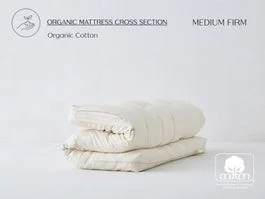 The Futon Shop Traditional Organic Cotton Shiki Futon
 ZonLi Japanese Floor Mattress Queen Size
More on japanese floor mattresses
Explainer
Shikibuton vs Futon: Why They Are Not the Same Product
The word futon covers two unrelated products in English: a 2 to 4 inch Japanese floor mattress and a 6 to 10 inch Western sofa bed. Here is how to tell them apart and buy the right one.
Explainer
Does Sleeping on a Japanese Floor Mattress Help Back Pain? What the Evidence Actually Shows
A plain look at what the clinical trials, Japanese epidemiology and owner reports say about shikibutons and back pain, and who should sleep elsewhere.
Explainer
Japanese Floor Mattresses and Mold: Why It Happens and What Prevents It
Mold under a shikibuton is not a product defect. It is condensation from body moisture meeting a sealed floor, and the traditional fold-and-air cycle is what prevents it. This guide explains the physics, the right surfaces, and the warning signs.