Explainer
EV Charging Explained: Level 1, Level 2, and DC Fast Charging, and What You Actually Need at Home
What hardware you need at home, what charging costs in public versus at home, and how to plan an electric SUV road trip without range anxiety.
Updated November 6, 2026 · Based on 16 sources · How we research
Most first-time EV buyers ask the same two questions: "Do I need a special outlet in my garage?" and "How am I going to make it across the country?" The answers are simpler than EV marketing makes them sound, but the specifics matter. The thing most people get wrong is overbuying: they install the fastest home charger they can find and plan road trips around 350 kW stations, when an ordinary 40-amp Level 2 unit refills a daily commute in under two hours, and most electric SUVs only use a fraction of a DC station's rated speed anyway. This guide explains what hardware you actually need at home, what charging costs in practice, and how to plan a long drive around charging stops that take minutes, not hours.
The three levels of EV charging, and what each one is for
Level 1 is the cord that ships in the trunk of every electric SUV. It plugs into a standard 120-volt household outlet and adds roughly 3 to 5 miles of range per hour (ChargeCostLab). On a 75 kWh battery like the one in the Tesla Model Y Performance, a full refill from empty takes more than two days. Level 1 is fine as a backup or for a plug-in hybrid. It is not a serious home-charging solution for an SUV with a 100 kWh pack.
Level 2 uses the 240-volt circuit a clothes dryer or electric stove runs on, and it is the level most home users should plan around. Output ranges from about 3 kW up to 19.2 kW, enough to add 25 to 40 miles per hour (ChargeCostLab). A 40-amp unit delivers about 9.6 kW, a 48-amp unit about 11.5 kW (LevelTwoClub). Either refills an average day's driving in under two hours, and both fully charge any current electric SUV overnight.
DC fast charging is the only level that bypasses the car's onboard AC-to-DC converter and feeds the battery directly. Stations are rated from 50 kW at older highway stops up to 350 kW on the newest 800-volt networks, and they can take a typical pack from 10 to 80% in 20 to 45 minutes (ChargeCostLab). DC fast chargers are built for road trips, not daily use. Most owners plug into one only a few times a year, and repeated DC fast charging as your primary method can accelerate battery degradation.
What you actually need at home for an electric SUV
For an SUV with a battery over about 70 kWh, which includes almost every vehicle on our 2026 electric SUV ranking, Level 2 at home is the practical answer. A 40-mile commute takes 8 or 9 hours to replace on Level 1, and that assumes nothing else, cold-weather climate preconditioning, battery heating, is drawing on the pack.
Installation costs vary with how far the charger sits from your panel. A NEMA 14-50 outlet, the 240-volt plug most portable EV chargers use, typically costs $300 to $800 installed, while a hardwired wallbox runs $500 to $1,300 for the install itself (EV Charger Lab). The charger hardware adds another $350 to $700. A typical all-in install lands around $1,200. A long conduit run or a panel upgrade can push the number past $2,000.
The 40-amp vs 48-amp decision is the one most buyers overthink. A 40-amp charger plugs into a standard 50-amp circuit; a 48-amp charger requires a hardwired 60-amp circuit, which many older residential panels do not have the headroom to add without an upgrade (EnergySage). The extra 2 kW buys you roughly 6 more miles of range per hour (LevelTwoClub). For a single-EV household charging overnight, that difference does not matter. For two EVs sharing one charger or a family driving 150+ miles a day, it does.
One timing note: the federal 30C tax credit, worth 30% of install costs up to $1,000, ended for equipment placed in service after June 30, 2026 (EV Charger Lab). Some state and utility rebates remain. Check your utility's website before scheduling the electrician.
How long does charging actually take?
The useful number for DC fast charging is not peak kW, it is minutes from 10 to 80%. Every modern EV charges fastest near the bottom of the pack and tapers sharply above 80% to protect the battery. A "350 kW" station is a ceiling the car rarely touches for more than a few minutes.
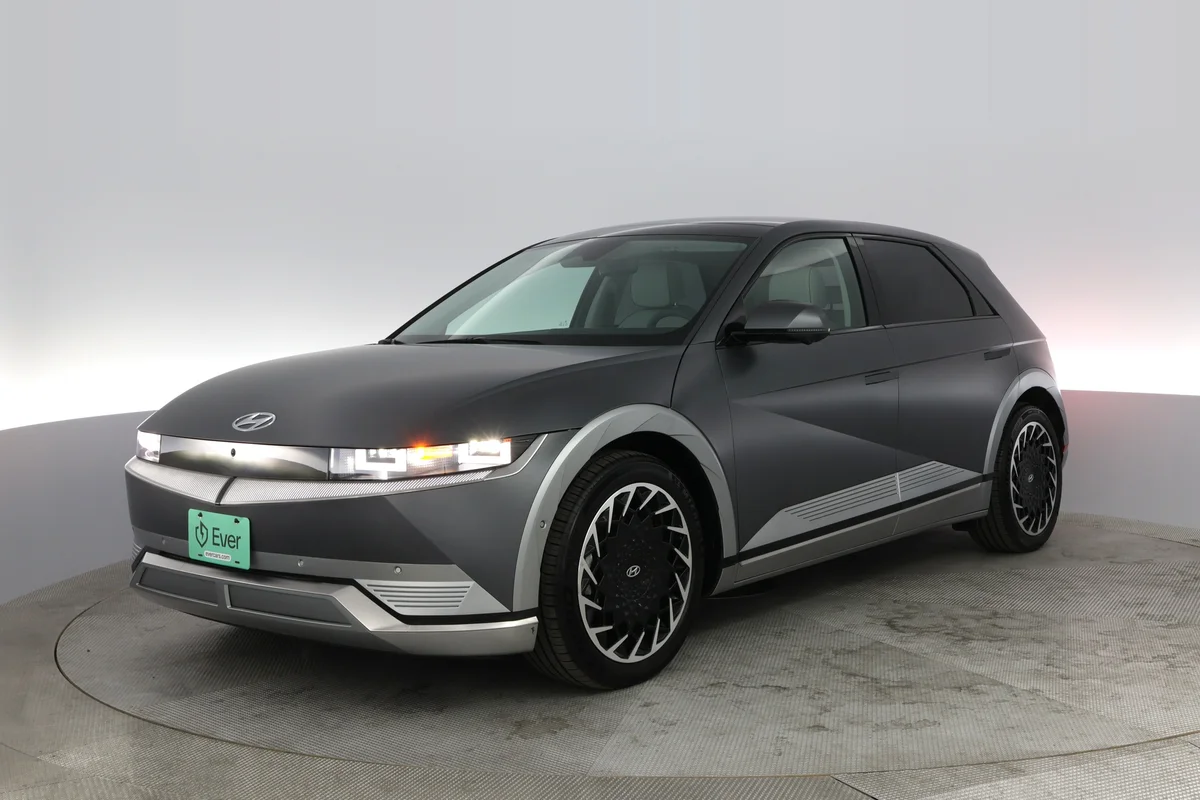
Hyundai's 800-volt E-GMP platform, used in the Hyundai IONIQ 5 Limited AWD, charges 10 to 80% in about 18 minutes at a 350 kW station per Hyundai's own spec (Hyundai). The Kia EV9 Land AWD shares the platform with a larger 99.8 kWh pack and is quoted at 24 minutes. InsideEVs clocked 18 to 80% in 22 minutes on a 350 kW Electrify America stall, roughly in line with that spec (InsideEVs).
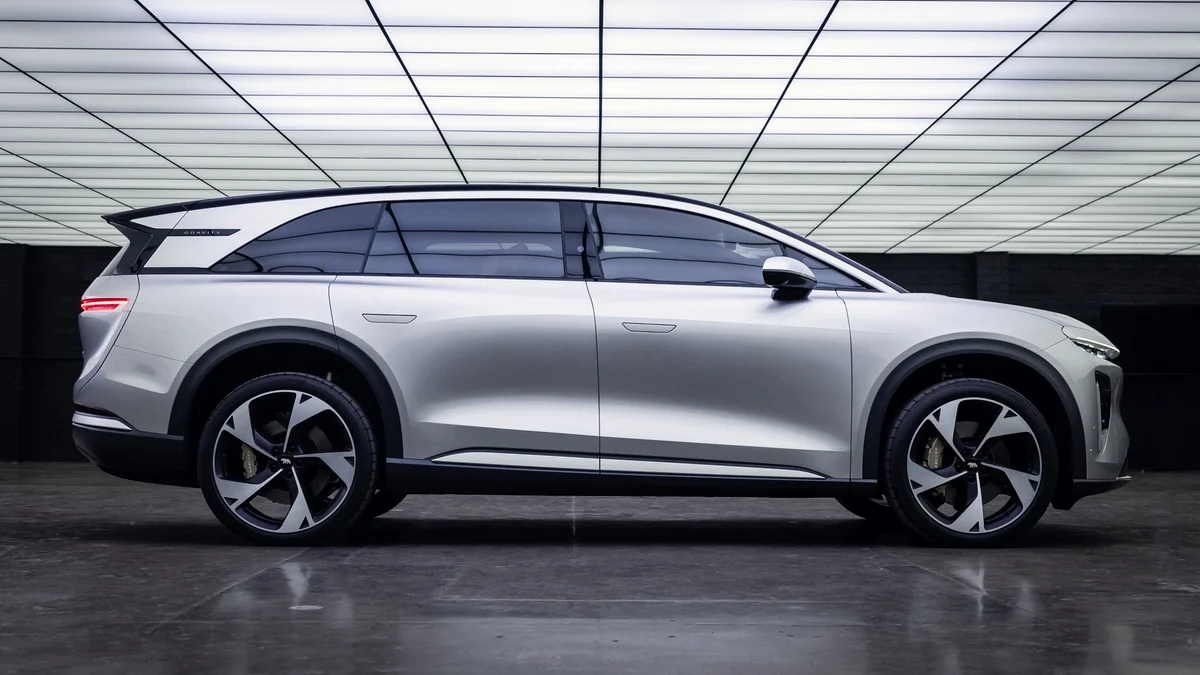
The Lucid Gravity Touring sits in a class of its own. On Lucid's 926-volt architecture, the Grand Touring version peaked at 419 kW on a Tesla V4 Supercharger and added 200 miles of EPA range in about 10 minutes; the Touring trim is capped at 300 kW (EV Charging Stations). Those are numbers no other SUV on sale today matches.
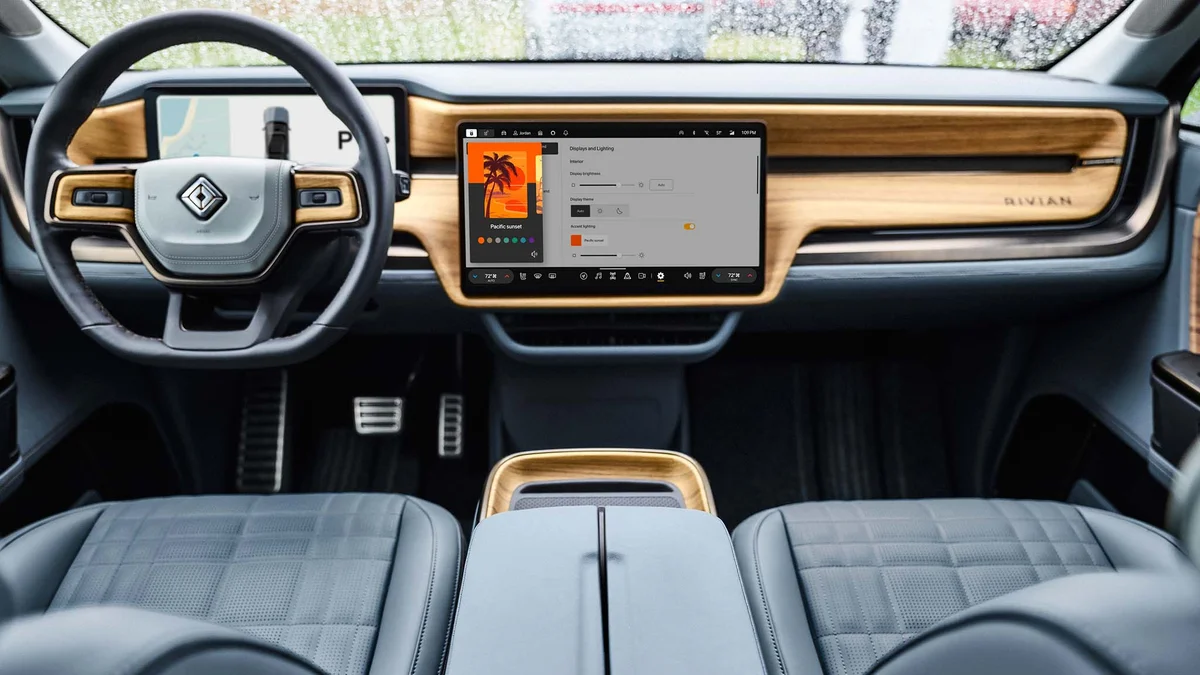
The Tesla Model Y Performance peaks at 250 kW on V3 and V4 Superchargers, with 10 to 80% sessions typically running in the low 20-minute range on V4 and closer to 27 minutes on V3 (AutoEdgeView). The Rivian R1S Quad-Motor, on a larger 135 kWh pack, needs about 42 minutes for the same window, with peaks around 220 kW (Recharged). More battery means more minutes at the plug, even on the same station.
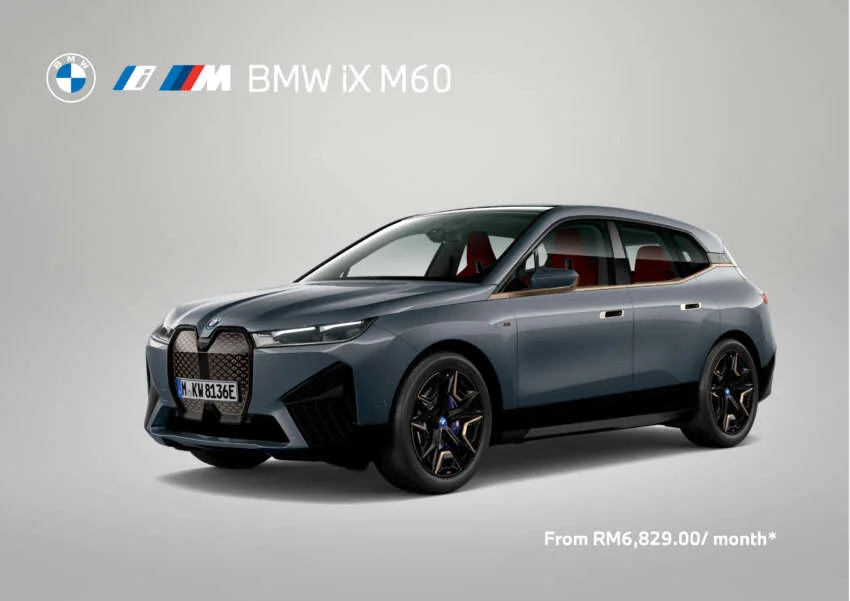
Home Level 2 numbers are far more predictable because the car, not the station, controls the rate. A 48-amp charger feeding a car that accepts 11.5 kW delivers about 11 kWh an hour regardless of pack size. Plug a BMW iX M60 in at 20% at 10 PM and it will be at 100% before 8 AM.
What it costs to charge, at home and in public
The U.S. residential electricity rate averaged about 18 cents per kWh through 2026 (Neocharge). That works out to roughly $13 to $14 to refill a 75 kWh pack and about $50 to $60 a month for a 1,000-mile driver. Charging overnight on a time-of-use EV rate, now offered by most major utilities, often cuts the per-kWh number close to half.
Public DC fast charging is more expensive and more variable. Tesla Superchargers run roughly $0.30 to $0.40 per kWh with an average around $0.35, moving by location and time of day (AutoEdgeView). Electrify America and EVgo list wider ranges, roughly $0.43 to $0.64 per kWh at Electrify America and $0.34 to $0.56 at EVgo, with subscription plans lowering the per-kWh number (EV Charging Stations).
The practical implication: an electric SUV only makes financial sense if you can charge at home. Doing all your charging at public DC fast chargers at the top of these ranges works out to a per-mile fuel cost close to a gasoline SUV's, and it erases the main economic argument for the car.
| Where you charge | Typical rate | Cost to refill a 75 kWh pack |
|---|---|---|
| Home, US average | $0.18/kWh | $13.50 |
| Home, time-of-use overnight rate | ~$0.10/kWh | ~$7.50 |
| Tesla Supercharger | ~$0.35/kWh | ~$26 |
| Electrify America standard | $0.43-$0.64/kWh | $32-$48 |
| EVgo standard | $0.34-$0.56/kWh | $26-$42 |
How to plan an electric SUV road trip without the anxiety
Range anxiety is largely solved by two free apps. A Better Route Planner (ABRP) models your specific vehicle, elevation, weather, speed, and real-world efficiency, then produces a stop-by-stop plan with suggested charge times at each (Recharged). PlugShare is the second check: a user-reviewed map of chargers with recent comments on whether individual stalls are working. Experienced owners use ABRP to plan, PlugShare to verify, and the car's built-in navigation once underway.
The connector question has mostly been settled. By late 2026, Ford, GM, Rivian, Hyundai, and Kia all ship vehicles with native NACS ports that plug straight into Tesla Superchargers, and manufacturer-supplied adapters cover older CCS cars (Lectron). A 2026 Rivian R1S Quad-Motor owner and a Tesla Model Y Performance owner are now largely sharing the same network.
The real wildcard on road trips is cold weather. At 20°F, EVs typically lose 20 to 30% of their rated range, and at 0°F the loss is 30 to 40%. AAA's May 2026 test of six current-model EVs measured a 39% average range loss at 20°F (Autoblog). Charging speeds also drop in the cold because the battery needs to warm before it accepts high power. Preconditioning helps, starting the day at 100% helps, and planning an extra cushion stop in genuinely cold weather helps most.
- Plan stops around 10 to 80% charging, not 0 to 100%. Charging the last 20% can take as long as the first 70% and costs the same per kWh.
- Precondition the battery. Every vehicle on our 2026 best electric SUV ranking will warm the pack when you route to a fast charger. In winter it can cut charge time meaningfully.
- Check PlugShare comments from the last week, not the last month. A single broken cable can turn a planned stop into a 40-mile detour.
Are public chargers actually reliable now?
The honest answer: more reliable than two years ago, still not as reliable as a gas pump. J.D. Power's 2026 EV Experience study found that 12% of DC fast-charging visits ended in a failure, down from 14% the year before, and overall DC fast-charging satisfaction rose 12 points to 666 on a 1,000-point scale (InsideEVs).
What matters for planning: the newer OEM-backed networks scored meaningfully higher than the older third-party operators. Ionna (backed by BMW, GM, Honda, Hyundai, Kia, Mercedes-Benz and Stellantis) led with 807, followed by Mercedes-Benz High-Power Charging at 797 and Rivian Adventure Network at 755, while Tesla Superchargers fell to fourth at 701 (EV Charging Stations). Chargers located at hotels, gas stations and restaurants also scored higher than those at dealerships and stand-alone parking lots. Plan stops where there is something else to do: coffee, food, a bathroom. A broken charger at a hotel is a minor annoyance; a broken charger in an empty lot off the interstate is a problem.
The short version
For most buyers of an electric SUV, the right home setup is a 40-amp Level 2 charger, costing roughly $1,200 installed, paired with the free combination of ABRP and PlugShare for the handful of road trips a year that need DC fast charging. Spend the extra on a 48-amp hardwired unit only if two EVs share one charger or you regularly drive more than 150 miles a day. If you road-trip often, prioritize an SUV that charges quickly end-to-end on the networks you will actually use, not one with the highest peak kW. Our rankings cover both ends of that trade-off in top electric SUVs for enthusiasts and the broader 2026 best electric SUV ranking.
See Best Electric Suv 2026Questions people ask
Do I really need to install a Level 2 charger at home?+
For an electric SUV, yes in almost every case. Level 1 at 120 volts adds 3 to 5 miles per hour, which is not enough to replace a typical daily drive overnight, let alone recover from a long commute or a weekend trip. Level 2 refills an average day's driving in under two hours and lets you start every morning with a full pack.
How long does it take to charge an electric SUV?+
On a Level 2 home charger, 8 to 12 hours from near-empty to full for most SUVs, which is why people charge overnight. On a DC fast charger, 10 to 80% takes about 18 to 24 minutes for 800-volt vehicles like the Hyundai IONIQ 5 and Kia EV9, low 20s on a V4 Tesla Supercharger for a Model Y, and around 42 minutes for larger-battery vehicles like the Rivian R1S Quad-Motor.
How much does it cost to install a home EV charger in 2026?+
A typical complete install lands around $1,200, with a working range of $800 to $2,500 depending on panel distance and electrical work. A NEMA 14-50 outlet runs $300 to $800; a hardwired 48-amp wallbox runs $500 to $1,300 for the install, plus $350 to $700 for the hardware. The federal 30% tax credit (up to $1,000) ended for equipment placed in service after June 30, 2026.
How much does public DC fast charging cost compared to home?+
Home charging at the US average residential rate of about $0.18/kWh costs roughly $13.50 to refill a 75 kWh pack. The same refill at a Tesla Supercharger runs around $26 at an average $0.35/kWh. Electrify America and EVgo prices sit higher and vary more, with top-end rates landing closer to $48 for the same 75 kWh. Public DC fast charging is typically 2 to 3 times more expensive than charging at home.
Can I charge a non-Tesla EV at a Tesla Supercharger?+
Yes, with the right hardware and account access. 2025 and 2026 EVs from Ford, GM, Rivian, Hyundai, and Kia ship with native NACS ports that plug straight in. Older CCS vehicles need a manufacturer-supplied NACS adapter and must be enabled through the automaker's app. Not every Supercharger location is open to non-Tesla vehicles yet; check the Tesla app before you arrive.
How reliable are public EV chargers?+
Getting better, but not yet gas-pump reliable. J.D. Power's 2026 study found 12% of DC fast-charging visits failed, down from 14% the year before. Newer OEM-backed networks, Ionna, Mercedes-Benz HPC, and Rivian Adventure Network, outperformed older third-party operators and ranked above Tesla Superchargers. Stations at hotels and restaurants scored higher than those at dealerships or stand-alone lots.
How do I plan a road trip in an electric SUV?+
Use A Better Route Planner to generate a stop-by-stop plan based on your specific vehicle, weather, and driving speed, then verify each stop with recent PlugShare comments. Plan charges from 10 to 80% rather than 0 to 100%, precondition the battery when routing to a fast charger, and in winter allow an extra cushion stop since cold weather can cut range by 20 to 40% and slow the charge itself.
Does the car or the charger decide how fast charging goes?+
Both, and the slower of the two wins. A 150 kW car at a 350 kW station charges at 150 kW. A 250 kW car at a 100 kW station charges at 100 kW. The Ford Mustang Mach-E Rally caps at 150 kW; the Hyundai IONIQ 5 and Kia EV9 run their 800-volt packs closer to 230 kW. Battery temperature and state of charge also throttle the rate.
Sources
What this guide is based on. We research from published specifications, independent reviews and owner reports; we did not test these products ourselves.
- 1.EV Charging Speed Levels Explained: Level 1 vs Level 2 vs DC Fast (2026), ChargeCostLab
- 2.EV Charger Installation Cost 2026: Real Prices, Line by Line, EV Charger Lab
- 3.40-Amp vs 48-Amp EV Charger: Is the Upgrade Worth It?, Level Two Club
- 4.Level 2 EV Charger Amps: How to Choose The Right Amperage, EnergySage
- 5.How Much Does It Cost to DC Fast Charge an Electric Car?, EV Charging Stations
- 6.How Much Does It Cost to Charge an EV at Home? (2026, by State), Neocharge
- 7.Here's When These 16 Automakers Will Switch to Tesla's Charging Network, Lectron
- 8.Study: DC Fast Charging Satisfaction Is Up, And Ionna Takes The Top Spot, InsideEVs
- 9.Ionna, Mercedes & Rivian Dethrone Tesla in 2026 JD Power Public Charging Satisfaction, EV Charging Stations
- 10.Best Apps for EV Road Trip Planning 2026, Recharged
- 11.AAA Finds EV Range Drops 39% in Cold Weather and Costs Jump, Autoblog
- 12.Hyundai IONIQ 5 Performance and Charging, Hyundai
- 13.2024 Kia EV9 Fast Charging Test: Now That's Quick, InsideEVs
- 14.2026 Lucid Gravity GT DC Fast-Charging Analysis, EV Charging Stations
- 15.How Long Does a Tesla Supercharger Take? 2026 Speed & Cost Guide, AutoEdgeView
- 16.Rivian R1S Charging Speed Guide (Home & DC Fast), Recharged
Products mentioned
More on electric suvs
Explainer
What 'Autopilot,' 'Full Self-Driving,' and Other Driver-Assist Names Actually Do
A plain-English breakdown of every driver-assist badge on today's electric SUVs: what Tesla Autopilot, FSD, Ford BlueCruise, GM Super Cruise, Rivian Driver+, Hyundai HDA 2, BMW Highway Assistant, Volvo Pilot Assist, Lucid DreamDrive Pro and Mercedes Drive Pilot genuinely do.
Explainer
Why Your Electric SUV Gets Less Range Than the Sticker Says
How the EPA range figure is actually produced, why real-world mileage runs 10 to 30 percent lower, and what that means when two electric SUVs look identical on paper.
Buying guide
How to Choose an Electric SUV: The Decisions That Actually Matter
The four gates every electric SUV buyer should clear before picking a model: home charging, real-world range, towing, and the ownership math on your timeline.