Explainer
Why Magnetic Shelves Won't Stick to Many Stainless Steel Fridges, and What to Do About It
Most modern stainless fridges use non-magnetic 304 steel on the door. Here is how to test before you buy, which finishes do hold, and the workarounds that actually work.
Updated November 11, 2026 · Based on 10 sources · How we research
If you are about to buy a magnetic spice rack or shelf for a stainless steel fridge, the one thing most people miss is this: the front of a stainless steel refrigerator is often not magnetic at all. The alloy underneath, usually SAE 304, has a crystal structure that magnets ignore. That is why a magnet can grip the side of your fridge hard and then slide right off the door. This guide explains the material science in plain words, how to test your fridge in ten seconds before you order anything, which brands and finishes tend to hold magnets, and what to do when the door you were counting on turns out to be dead to a magnet.
The crystal structure that eats your magnet
Stainless steel is not one material. The grade written on the spec sheet decides whether a magnet grips or not. Most visible stainless steel on modern refrigerator doors is SAE 304, an austenitic alloy with roughly 18 to 20 percent chromium and 8 to 11 percent nickel. Per the published composition and classification, 304 is "an austenitic stainless steel, and is therefore not magnetic" (SAE 304 stainless steel, Wikipedia). The nickel stabilizes a face-centered cubic crystal structure that prevents the iron atoms from lining up the way a magnet needs them to.
The other family shows up in cheaper appliances and in older fridges: ferritic grades like 430. 430 contains about 16 to 18 percent chromium and little or no nickel, so it keeps the body-centered cubic structure of plain iron and "is strongly magnetic in every condition, annealed or cold worked" (American Steel and Aluminum: 430 Stainless Steel Properties). Because it contains no nickel, 430 is cheaper to produce, which is why it still appears on budget fridges, trim pieces, and the inside of drums and liners.
Whirlpool puts the household version plainly: if magnets are not sticking to your stainless steel refrigerator, it may be because the stainless is austenitic (Do Magnets Stick to Stainless Steel Appliances?, Whirlpool). A stronger magnet does not rescue you here. Holding power is a property of the surface, not the shelf: on austenitic 304, the 700-Gauss magnets SONGMICS lists for its bamboo rack and a cheaper rare-earth pad will both do nothing.
Why the side of your fridge holds and the front does not
Owner questions on Samsung, LG, and KitchenAid fridges keep landing on the same pattern: magnets grip the sides but fail on the door. LG's official response for its counter-depth LRFXC2606S is that "the LG LRFXC2606S refrigerator has a stainless steel finish, which is generally not magnetic" (LG LRFXC26 Best Buy Q&A). Samsung says much the same: "Most stainless steel used for Samsung refrigerators is not magnetic" (Samsung Side-by-Side Best Buy Q&A).
The reason is cost and visibility. Manufacturers reserve the premium 304 panel for the door, where customers see and touch it. The side panels, which usually sit between cabinets or against a wall, are commonly painted or powder-coated mild steel. Mild steel is strongly ferromagnetic. So a magnetic spice rack rated for "refrigerators" is really rated for the painted side panel, not the austenitic door. That is a quiet mismatch between how these products are marketed and how modern fridges are built.
The ten-second test to run before you order anything
You do not need the manufacturer spec sheet. Grab the weakest magnet in the house: a pizza-place business card magnet, a fridge letter, a souvenir from a trip. If that weak magnet will not hang on the exact spot you plan to mount a shelf, no product in this category is going to help you. Walker Metalsmith recommends the same check: "You can test by placing a small magnet on the refrigerator surface. If it sticks firmly, the surface is magnetic; if it slides off or does not adhere, the stainless steel is likely non-magnetic" (Can You Put Magnets on Stainless Steel Refrigerators?, Walker Metalsmith).
Test four spots, not one. The center of the door, the edge near the hinge, the side of the cabinet, and the freezer section. Austenitic 304 can pick up partial magnetism at bent corners and stamped edges: Jindal Stainless notes that "mechanical deformation such as bending, drawing or rolling can induce a transformation from the austenitic phase to the martensitic phase, which is magnetic" (Can 304 Stainless Steel become Magnetic?, Jindal Stainless). That can trick you: a magnet may cling on the folded edge of the door and still fail across the flat face where you actually want to put a rack. A rack sitting on 11.8 inches of flat face needs the whole span to grip.
A paper-clip test is the next check. Rest a magnet on the surface, then slide a stack of three index cards under it and hang a paper clip off the magnet. If the clip drops at one card of standoff, a fully loaded shelf sitting on its own coating plus printed finger-print film will slide.
Which refrigerators tend to hold magnets, and which do not
Bosch's front doors read as magnetic in owner reports. Verified-purchaser answers on the 800 Series counter-depth model are uniformly affirmative: "Yes, the product's doors are magnetic," "Yes we have magnets on our front door," and "Yes, ours is covered with magnets" (Bosch 800 Series Best Buy Q&A). KitchenAid stainless doors also hold magnets, but the brand's own response is that "while the refrigerator can hold magnets, we do not recommend it. It can help adhere moisture to the surface of unit, and can cause staining" (KitchenAid Best Buy Q&A). That is a caveat for any loaded shelf that is going to sit in one spot for months.
LG's PrintProof fingerprint-resistant finish is inconsistent across models. Some PrintProof panels accept magnets and others do not, and LG's official line is that stainless steel "is generally not magnetic." Samsung's own line for most models is the same, so plan around the side panel on those fridges rather than the door.
High-end and built-in refrigerators are the hardest category. Sub-Zero, Thermador, and panel-ready counter-depth models are frequently covered with a wood or custom cabinet panel that matches the kitchen. Those surfaces are not steel at all. A magnetic shelf has nothing to attach to, full stop.
| Surface or finish | Typical magnetism | What this means for a magnetic shelf |
|---|---|---|
| SAE 304 austenitic front door (most modern stainless fridges) | Non-magnetic | No shelf in this category will hold on the door face |
| Ferritic 430 panel (some budget and older fridges) | Strongly magnetic | Standard racks hold on this panel |
| Painted mild-steel side panel | Strongly magnetic | Works for side-mounted spice racks and baskets |
| LG PrintProof, GE fingerprint-resistant finishes | Model-dependent | Test with a magnet; do not trust the label |
| Panel-ready / cabinet-faced built-in | Not magnetic (wood or MDF face) | Not a candidate for any magnetic shelf |
What to do when your magnetic spice rack won't stick
The first move is to accept where the magnetism actually is in your kitchen and put the shelf there. The side of the fridge is the most common fix, and every spice-rack set in our best magnetic shelves ranking is sized to fit against that panel. The SONGMICS UKCS062BH01 bamboo and ink-black 4-pack at 11.8 inches by 4.1 inches and the HuggieGems black metal 4-pack at 11.8 inches by 4.33 inches both fit comfortably on a standard fridge side. Their listed surface compatibility differs: SONGMICS covers refrigerator, microwave, and washing machine; HuggieGems covers refrigerator, oven, washing machine, and metal cabinet. Both share the washing machine as a backup if the fridge is out.
If you need the door and the door is not magnetic, a peel-and-stick magnetic sheet is a cleaner fix than fighting with putty. Walker Metalsmith lists "magnetic strips or sheets with adhesive backing" that "can be adhered to the refrigerator, providing a magnetic surface to which magnets can attach" (Walker Metalsmith). Appliance Analysts recommends reusable putty as the simpler alternative for lightweight items: "Simply take your magnets, put a bit of reusable putty on the back, and that'll get them to stick" (Can't Hang Things On Your Non-Magnetic Fridge?, Appliance Analysts). The tradeoff on either approach is that neither will carry a loaded spice rack holding pounds of jars.
For heavy loads, do not try to force the fridge into service. The ULIBERMAGNET 40-pound folding shelf is designed for steel toolboxes, workshop cabinets, and RV walls; the VIVO magnetic laptop workstation is rated for steel filing cabinets and appliance sides. A 40-pound load belongs on a steel cabinet with a thick ferrous plate behind the magnet, not on a 304 panel that would not hold a single ounce anyway.
If you only need light fridge-door organization and your door happens to be magnetic, the HuggieGems silver 4-pack is designed to color-match brushed stainless at 11.8 by 3.5 inches. Note that the silver finish is a cosmetic match, not a magnetism fix: color coordination on a 304 door still gets you zero holding power.
Even on a magnetic door, you have to think about the finish
A magnetic door is a necessary condition, not a sufficient one. KitchenAid's own answer to the magnet question on Best Buy is a yes with a caveat: the company says that while the fridge can hold magnets, "we do not recommend it. It can help adhere moisture to the surface of unit, and can cause staining" (KitchenAid Best Buy Q&A). A loaded spice rack sits in one spot and holds pounds of jars, which is exactly the condition the brand warns against.
Fingerprint-resistant coatings add a second layer. The coating is a polymer film that both reduces the magnetic grip, by increasing standoff from the ferrous substrate, and can be marked by repeated friction. If you move a shelf around to find the best spot, you are rubbing a loaded steel rack across a coated finish. Test in a corner first, inspect the surface, and expect to leave the shelf in one place once you commit.
The short version
If your fridge door takes a magnet, pick a product from our best magnetic shelves ranking that matches your load: a four-pack like the HuggieGems black metal set for everyday spice storage, or a heavier single shelf for tools. If your door is 304 austenitic and non-magnetic, do not fight it. Use the painted side panel, move to a washing machine or microwave, or add a peel-and-stick magnetic sheet to create a surface. And before ordering anything, run the ten-second magnet test on the exact spot you plan to use.
See Best Magnetic Shelves of 2026Questions people ask
Why won't my magnetic shelf stick to my stainless steel fridge?+
Because most modern stainless refrigerator doors are made from SAE 304 austenitic stainless steel, which contains about 8 to 11 percent nickel and has a face-centered cubic crystal structure that is non-magnetic. The magnets on the shelf are working fine; the door is just not a ferromagnetic surface.
Do magnets stick to stainless steel refrigerators?+
It depends on the grade. Ferritic grades like 430 are strongly magnetic and are used in some budget and older fridges. Austenitic grades like 304 and 316, which are more common on mid-range and premium doors, are non-magnetic. There is no reliable answer from the word "stainless" alone.
Why does my magnetic organizer stick to the side of my fridge but not the front?+
Manufacturers use different materials for different panels. The visible front is usually premium 304 austenitic stainless, which is non-magnetic. The side panels are typically painted or powder-coated mild steel, which is strongly ferromagnetic. Same fridge, two completely different surfaces.
Which refrigerators are magnetic?+
Owner reports and manufacturer responses on Best Buy indicate Bosch and KitchenAid stainless doors usually hold magnets, and some LG PrintProof models do. LG and Samsung both state that their stainless finishes are generally not magnetic. Panel-ready built-ins are not candidates because the face is a wood or MDF cabinet panel, not steel.
My magnetic spice rack is not sticking to my fridge. What do I do?+
First, test the surface with any weak magnet. If nothing holds, you cannot fix this by swapping products or adding stronger magnets. Options: move the rack to the side of the fridge or to another appliance like a microwave or washing machine, add a peel-and-stick magnetic sheet to create a receptive patch, or return the shelf and plan around a different surface.
Will a stronger magnet solve the problem on a non-magnetic fridge?+
No. Holding power requires a ferromagnetic surface. On austenitic 304, an industrial neodymium magnet performs no better than a novelty fridge magnet: zero. Spec sheets that list refrigerator compatibility assume a ferrous surface that many modern fridges simply do not have.
Can cold-worked areas of a stainless steel door hold a magnet even if the center won't?+
Sometimes. Austenitic 304 can develop partial magnetism where it has been bent, drawn, or rolled during manufacturing, as some of the austenite transforms into ferromagnetic martensite. A magnet may cling to a folded edge of the door and fail across the flat face, so test the exact span your shelf will cover, not just one spot.
Is there any way to add magnetic capability to a non-magnetic stainless fridge?+
Yes. Self-adhesive magnetic sheets apply a thin magnetic layer to any flat surface, giving you an area that accepts magnets without modifying the appliance. It is cosmetic rather than invisible, so match the location to something unobtrusive, and expect to peel it off eventually when you remove the shelf.
Sources
What this guide is based on. We research from published specifications, independent reviews and owner reports; we did not test these products ourselves.
- 1.Do Magnets Stick to Stainless Steel Appliances?, Whirlpool
- 2.SAE 304 stainless steel, Wikipedia
- 3.430 Stainless Steel: Properties, 2B & BA Finishes, Uses, American Steel and Aluminum
- 4.Can't Hang Things On Your Non-Magnetic Fridge? Solved!, Appliance Analysts
- 5.Can You Put Magnets On Stainless Steel Refrigerators Without Damaging Them?, Walker Metalsmith
- 6.Can 304 Stainless Steel become Magnetic? Facts and Misconceptions, Jindal Stainless
- 7.LG Counter-Depth Max 25.5 cu ft French Door Smart Refrigerator Q&A, Best Buy
- 8.KitchenAid 22.1 cu ft Bottom Freezer Refrigerator Q&A, Best Buy
- 9.Bosch 800 Series 20.7 cu ft 4-Door French Door Counter-Depth Refrigerator Q&A, Best Buy
- 10.Samsung Side-by-Side Counter-Depth Fingerprint-Resistant Refrigerator Q&A, Best Buy
Products mentioned
 Aufworld 3-Pack Magnetic Spice Rack with 8-Hook Utility Rack for Refrigerator
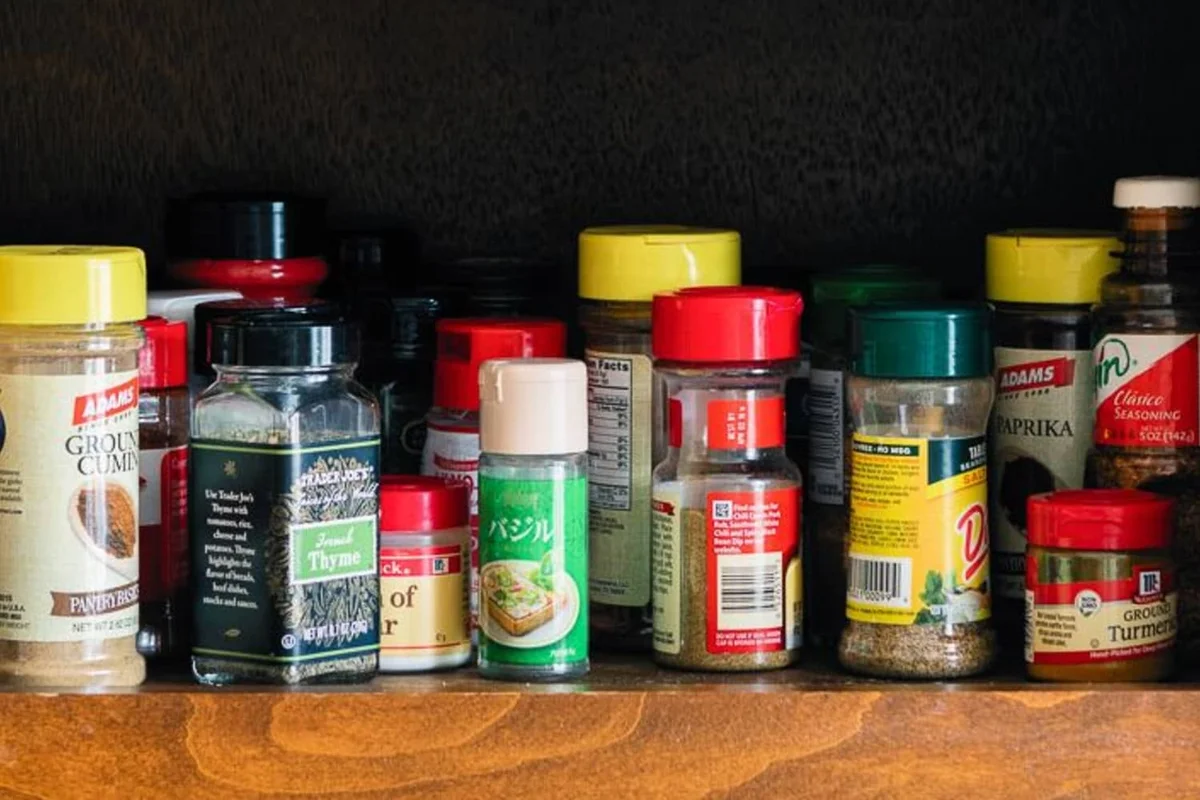 HuggieGems Metal 4-Pack Magnetic Spice Rack Organizer for Refrigerator Black
 HuggieGems 4-Pack Silver Magnetic Spice Rack Organizer for Refrigerator
 SONGMICS 4-Pack Ink Black and Bamboo Magnetic Spice Rack UKCS062BH01ULIBERMAGNET Magnetic Folding Shelf 40LBS Heavy Duty Rack for Garage and WorkshopVIVO Magnetic Portable Laptop Workstation 12 x 13 Inch, Black DESK-MAG01
More on magnetic shelves
Explainer
Will a Magnetic Shelf Scratch or Mark Your Refrigerator? What Owner Reports and Manufacturer Warnings Say
Household magnets will not hurt the compressor, but owner reports and GE's own guidance show the exterior finish is a different story. Here is what actually causes the marks and how to avoid them.
Explainer
Gauss Numbers on Magnetic Shelves Are Mostly Useless: Here Is the Spec That Actually Predicts Holding Power
Gauss measures field density at one point, not how much weight a magnetic shelf can hold. Here is why pull force in pounds is the only spec worth comparing, and how to apply it to a real fridge door.
Buying guide
How to Choose a Magnetic Shelf: Surface, Load, and Use-Case Decisions That Actually Matter
A practical buying guide for magnetic shelves: how to test your surface, what real holding force looks like in pounds rather than Gauss, and when to pick a kitchen kit, garage folding shelf, workshop tool organizer, or whiteboard display shelf.