Buying guide
How to Choose an Air Fryer: The 5 Decisions That Actually Matter
A plain-English buying guide to the five air fryer specs that actually change your experience: capacity, basket layout, format, coating and smart features.
Updated November 6, 2026 · Based on 13 sources · How we research
Two regrets come up most often with air fryers: buyers go too small and end up cooking in batches every night, or they pay for WiFi, voice control and preset modes they never touch. The machine is the easy part. The hard part is matching what you cook, how you cook it and who you cook for, to the five specs that actually change your experience. This guide walks through capacity, basket layout, format, coating and smart features in that order, so by the time you look at brand names you already know what you need. The examples use real models from our best air fryers of 2026 ranking.
Start with capacity, because it is the decision you cannot fix later
The single most common air fryer regret is buying too small. A 5 to 6.5 quart basket handles most family-of-four weeknight meals in one batch, and Everyday Family Cooking's size guide pegs roughly 5.8 quarts as the practical sweet spot for a family of four with young children, with a step up recommended if you have teenagers or big eaters (Everyday Family Cooking). Go bigger than that if you cook for five or more, or if your definition of dinner involves a whole chicken. Go smaller, 3 to 5 quarts, only when you are cooking for one or two and the counter space genuinely matters.
Capacity numbers also mislead in two ways. First, a 10 quart dual-zone unit is not 10 quarts of continuous space: it is two 5 quart baskets with a wall between them. That is fine for two different foods at once, but you cannot fit a 4 pound chicken in either side. Second, published quart figures measure drawer volume, not usable cooking surface. The number on the box tells you the drawer; what you actually care about is the single-layer area that touches the crisper plate.
The practical rule: picture a half-sheet pan's worth of food you commonly cook (say, chicken thighs and vegetables for four), and buy the smallest unit that holds it in one layer. Our best air fryers of 2026 list separates picks by capacity class so you can shop within your household size rather than by headline quart number.
| Household | Target capacity | Format | Example from our rankings |
|---|---|---|---|
| 1 to 2 people | 3 to 5 quarts | Single basket | Ninja Air Fryer Pro AF141 (5 qt) |
| 3 to 4 people | 5 to 6.8 quarts | Single basket | Cosori TurboBlaze (6 qt), Cosori Iconic (6.5 qt) |
| 4 to 6 people | 7 to 10 quarts | Dual zone | Ninja Foodi DZ201 (8 qt), Ninja DZ550 (10 qt) |
| 6 or more, sheet-pan cooks | Oven-style units | Toaster-oven form factor | Cuisinart Artisan French Door TOA-FD70 |
A dual zone earns its space only if you cook two things at once
Dual zone means two separate baskets with independent heat elements, temperatures and times, usually joined by a sync-finish mode that stages both to end at the same minute. The Ninja DualZone line (DZ201, DZ550, DZ071 FlexBasket, DoubleStack SL401) built the category, and Dual Air Fryers' DZ550 review describes Smart Finish as syncing both baskets to finish at the exact same time even with different cook times (Dual Air Fryers).
The trade-off is single-basket versatility. You cannot cook a whole chicken or a 9 inch pie dish in half of a dual zone, and the footprints are substantial: the Ninja Foodi DZ201 is roughly 16 inches wide and 14 inches deep, and the Ninja DoubleStack SL401 trades counter width for vertical height that may not fit under an upper cabinet. Cosori argues that for one to three person households cooking one dish at a time, a single basket is the better pick because dual-basket zones are narrower than a single basket of equivalent total capacity (Cosori). Tom's Guide reaches a similar conclusion for smaller households (Tom's Guide).
The compromise format is Ninja's FlexBasket DZ071: remove the divider and you get one 7 quart basket for a whole chicken, snap it back in and you get two zones for a weeknight meal. It is not quite as capacious as a true 10 quart dual zone, but it is the only basket that behaves like both.
Pick a basket for crisping, an oven style only to replace a toaster oven
A basket air fryer is essentially a drawer with a convection fan on top. An oven-style air fryer looks like a countertop toaster oven with a convection fan and rack slots. The practical difference, per The Daily Meal: baskets preheat faster and crisp harder because the smaller chamber accelerates airflow, while oven-style units trade some crisping speed for more capacity, multiple racks and extra functions like toast, bake, broil and pizza (The Daily Meal).
Pick a basket if air frying is the main thing you want the appliance to do, if counter space is tight, and if you want the hottest, crispiest fries and wings. Pick an oven style if you are consolidating a basket plus a toaster oven into one unit, or if you bake and roast on sheet pans often. The Cuisinart Artisan French Door TOA-FD70 is the oven-style pick in our rankings: a 16.5 inch wide stainless cavity with seven cooking modes, a three year warranty, and a stainless steel interior with no nonstick coating to wear out. It is less of an air fryer than a toaster oven that air fries well.
'PFAS-free' and 'PFOA-free' are not the same label
Nearly all conventional air fryer baskets are coated in PTFE, the compound commonly known as Teflon, which is itself a member of the PFAS family of 'forever chemicals.' CookGator's thermal breakdown puts PTFE as molecularly stable up to 400°F, with progressive pyrolysis beginning around 500°F (CookGator). Most air fryers top out at 450°F, so there is a narrow band where the basket can run hotter than the coating is rated to stay fully stable.
The label to look for is 'PFAS-free,' not 'PFOA-free.' PFOA was phased out of nonstick cookware over a decade ago, but PTFE and related fluoropolymers remain in most 'PFOA-free' baskets. Get Plastic Proof puts it plainly: PFOA is just one chemical in a PFAS family of more than 12,000 compounds, and a basket marketed 'PFOA-free' can still contain PTFE itself, which is a PFAS compound (Get Plastic Proof). Only baskets explicitly marked PFAS-free or PTFE-free avoid the full fluoropolymer family.
There are three realistic fluoropolymer-free routes. First, ceramic coating (silica-based, genuinely nonstick, but with a shorter wear life than PTFE: CookGator's bench data puts ceramic at 1,500 to 2,500 cycles before release degrades, versus roughly 4,200 cycles for PTFE) is what the Cosori Iconic, Cosori TurboBlaze and Typhur Sync use. Second, stainless steel (no coating at all, essentially forever durable, but food sticks more and cleanup is harder) is what the Cuisinart TOA-FD70 and Dreo ChefMaker use. Third, borosilicate glass baskets, the newest option, are what the Ninja Crispi DD101 relies on: no coating, visible food during cooking, fully dishwasher safe. Prudent Reviews flags that the glass container weighs 4.2 pounds versus about 2.5 pounds for a traditional aluminum basket, and documents owner reports of containers shattering, with replacements running $44 to $60 (Prudent Reviews).
A probe thermometer earns its price; WiFi usually does not
Smart features fall into two tiers of actual utility. App-based control (WiFi, push alerts when food needs shaking, scheduled start, voice via Alexa or Google) is modestly convenient. Tom's Guide's Cosori Smart WiFi review treats the VeSync app, scheduling and push alerts as useful conveniences rather than cooking upgrades (Tom's Guide). You are paying for scheduling and status, not better food.
The feature that genuinely changes the cooking is a built-in probe thermometer. The Dreo ChefMaker, Typhur Sync AF14 and Ninja DZ550 all use a probe inserted into the thickest part of a protein and stop the cook at a target internal temperature rather than a fixed time. The Kitchn's ChefMaker review credits the combination of probe and water atomizer with keeping proteins tender and juicy in the center and producing a reliable result regardless of the cut (The Kitchn). Homes & Gardens' Typhur Sync review singles out the wireless probe with its five-point sensor as what finally made the reviewer confident preparing a whole chicken in an air fryer (Homes & Gardens).
If you cook whole proteins (chicken, pork tenderloin, salmon, steak) more than occasionally, an integrated probe is the single upgrade most worth paying for. If you air fry mostly fries, nuggets and vegetables, skip it. A separate instant-read thermometer handles the occasional protein without adding $60 to $150 to the air fryer.
A good air fryer costs $100 to $200, and more only buys one specific thing
Mashed lands on the same bracket as most independent reviewers: a good-quality air fryer that shoppers love runs $100 to $200, with features that push prices well above that reserved for premium construction, probe thermometry, PFAS-free materials or oven-style multi-function units (Mashed). Food Network's 2026 testing round-up lands in a similar range for best-value picks (Food Network).
Here is where the money goes at each tier. Under $150 gets a competent basket air fryer with PTFE nonstick, 5 to 6.8 quarts, a digital panel and sometimes WiFi: the Cosori Smart WiFi CS168-AF ($89.99), Ninja AF141 ($99.99), Instant Vortex Plus ($109.99), Cosori TurboBlaze ($119.99) and Cosori Dual Blaze ($119.99) live here. The $150 to $220 range adds PFAS-free ceramic materials, a probe thermometer, or a dual-zone layout: the Ninja DZ201 ($159.99), Typhur Sync AF14 ($199.99), Cuisinart TOA-FD70 ($199.95) and Ninja DZ550 ($219.99) are the leaders. Above $249 you are paying for premium construction (stainless housing and a five-year warranty on the $249 Cosori Iconic), category-leading precision (the $359 Dreo ChefMaker's probe-plus-water-atomizer Chef mode), or specialty formats (the Ninja Crispi's twin glass baskets at $349.99 and the Ninja DoubleStack SL401's narrow vertical footprint at $264.99).
For a direct side-by-side on three of the most-compared premium picks, see our head-to-head of the Cosori Iconic, Ninja DZ550 and Dreo ChefMaker.
The short version
The decision collapses to a few answers. For most buyers, the right machine is a 5 to 6.5 quart single basket for solo and couple use, a 7 to 10 quart dual zone for families who cook two things at once, and an oven style only if you want one appliance to replace a toaster oven. Spend $100 to $200 unless you specifically want premium construction, category-leading precision, or a specialty format. Smart WiFi is a convenience, not a cooking upgrade. A probe thermometer is a cooking upgrade, not a gimmick.
See Best Air Fryers of 2026Questions people ask
What size air fryer do I need for a family of 4?+
A 5 to 6.5 quart basket fits most four-person weeknight meals in one batch. Everyday Family Cooking's size guide puts roughly 5.8 quarts as the sweet spot for a family of four with young children, with a step up recommended if you have teenagers or big eaters. Move to 8 to 10 quarts in a dual zone if you regularly cook two different dishes at once.
How many quarts should I get?+
1 to 2 people: 3 to 5 quarts. 3 to 4 people: 5 to 6.8 quarts. 4 to 6 people: 7 to 10 quarts, usually in a dual-zone format. Above that, almost always an oven-style unit rather than a basket.
Do I need a dual-zone air fryer?+
Only if you regularly need a main and a side finished at the same time at different temperatures. If you cook one dish at a time, a single 6 to 6.5 quart basket gives more usable cooking surface and takes less counter space, because Cosori notes that dual-basket zones are narrower than a single basket of equivalent total capacity.
Is a smart air fryer worth it?+
WiFi and app control add scheduling and push alerts, not better cooking. Tom's Guide's review of the Cosori Smart WiFi treats the VeSync app and remote features as convenience upgrades rather than cooking improvements. Pay the premium only if remote start and done-cooking notifications fit your routine.
Do I need a built-in thermometer?+
If you cook whole chicken, pork, salmon or steak more than occasionally, yes. An integrated probe cooks to a target internal temperature rather than a timer, which The Kitchn and Homes & Gardens both rate as a meaningful upgrade for proteins. For fries, nuggets and vegetables, skip it.
What is the difference between a basket air fryer and an oven-style air fryer?+
Basket: smaller chamber, faster preheating, crispier results. Oven style: looks like a toaster oven, more capacity, multiple racks and functions like toast, bake and pizza. Basket for air frying as the primary job, oven style to consolidate a toaster oven as well.
How much should I spend on an air fryer?+
$100 to $200 for a very good air fryer, per Mashed's 2026 bracket. In that range you can find PFAS-free ceramic materials, probe thermometers, and dual-zone layouts. Above $250 is for specialty formats, premium construction or category-leading precision. Spending more does not improve how ordinary fried food turns out.
Should I get a ceramic or stainless steel air fryer?+
Ceramic is nonstick and often PFAS-free, but CookGator's bench testing puts its wear life at roughly 1,500 to 2,500 cycles before release degrades, versus about 4,200 cycles for PTFE. Stainless steel has no coating to wear out but food sticks more and cleanup takes longer. Pick ceramic for cleanup convenience, stainless for long-term durability. Both avoid the PTFE chemistry concerns of conventional nonstick coatings.
Sources
What this guide is based on. We research from published specifications, independent reviews and owner reports; we did not test these products ourselves.
- 1.Air Fryer Sizes: What Size Air Fryer Do I Need?, Everyday Family Cooking
- 2.Dual Basket vs. Single Basket Air Fryer: Which Do You Need?, Cosori
- 3.Should you get a dual-basket air fryer? Here's the pros and cons, Tom's Guide
- 4.Ninja DZ550 10-Qt DualZone Smart XL Air Fryer Review, Dual Air Fryers
- 5.Basket Vs Oven: What's The Best Type Of Air Fryer?, The Daily Meal
- 6.Are Air Fryers Toxic? PFAS, Teflon Fumes & Microplastics Explained, Get Plastic Proof
- 7.Ceramic Vs Teflon (PTFE) Air Fryer Baskets: Thermal Breakdown, PFAS & Safety Guide, CookGator
- 8.Cosori Smart Wifi Air Fryer review, Tom's Guide
- 9.Dreo ChefMaker Combi Fryer Review 2023, The Kitchn
- 10.Typhur Sync Air Fryer Review: Precise, PFAS-Free Air Frying, Homes & Gardens
- 11.Ninja Crispi Review: Pros & Cons You Must Know Before Buying, Prudent Reviews
- 12.How Much You Should Spend On A Good Air Fryer In 2026, Mashed
- 13.9 Best Air Fryers of 2026, Tested and Reviewed by Kitchen Experts, Food Network
Products mentioned
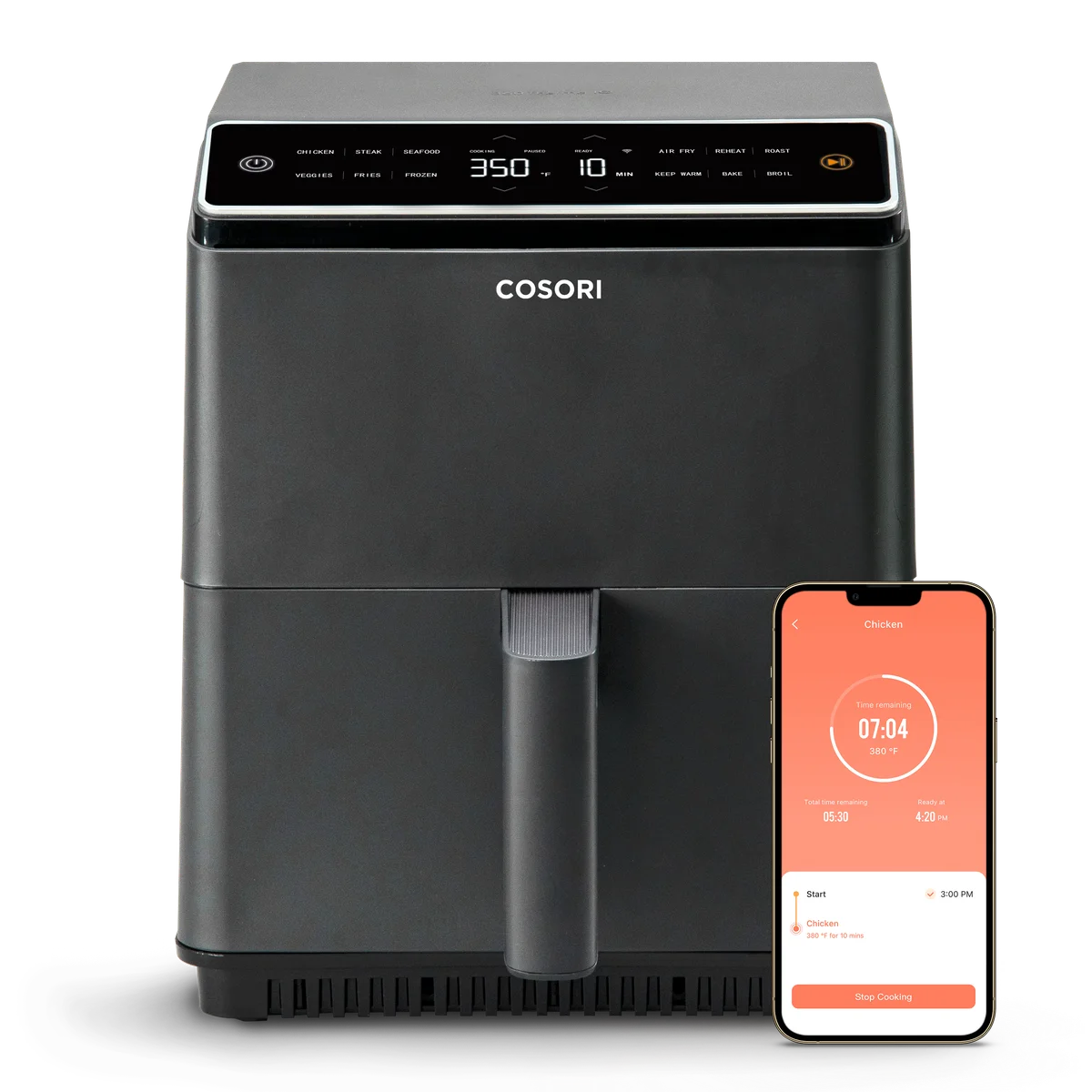 Cosori Dual Blaze 6.8-Quart Smart Air Fryer
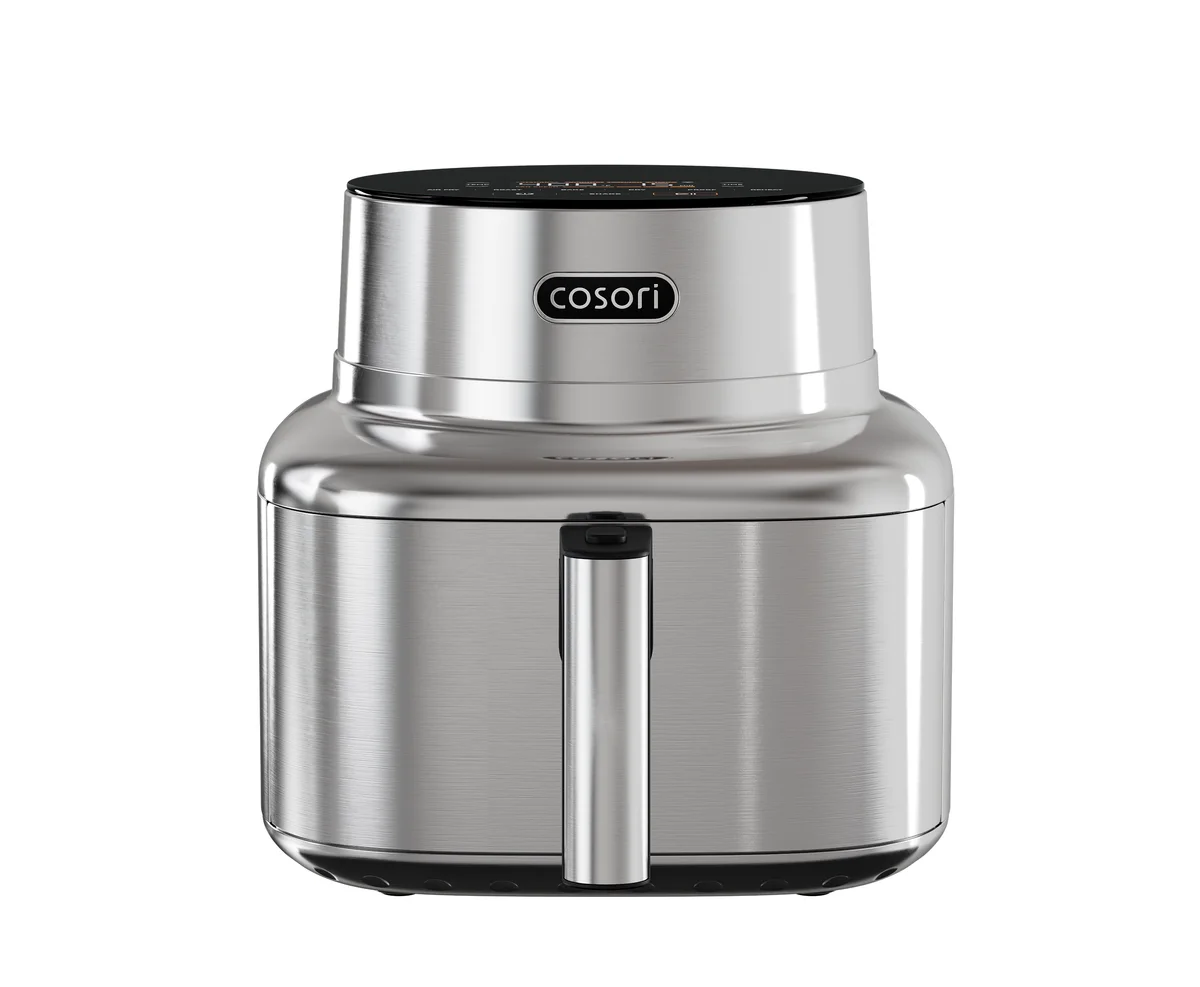 Cosori Iconic Stainless Steel 6.5-Quart Smart Air Fryer
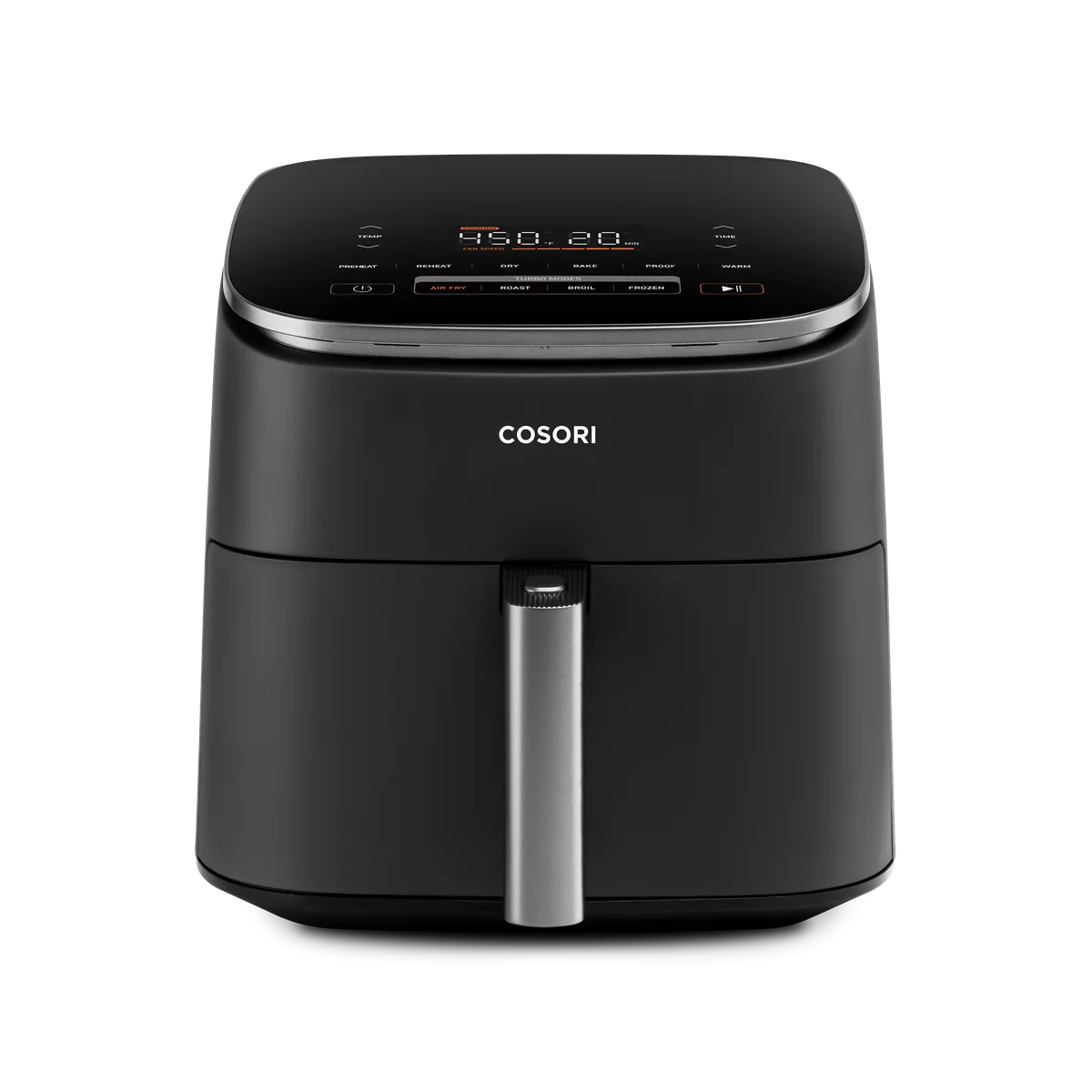 Cosori TurboBlaze 6.0-Quart Air Fryer
 Cuisinart Artisan French Door Air Fryer Toaster Oven TOA-FD70
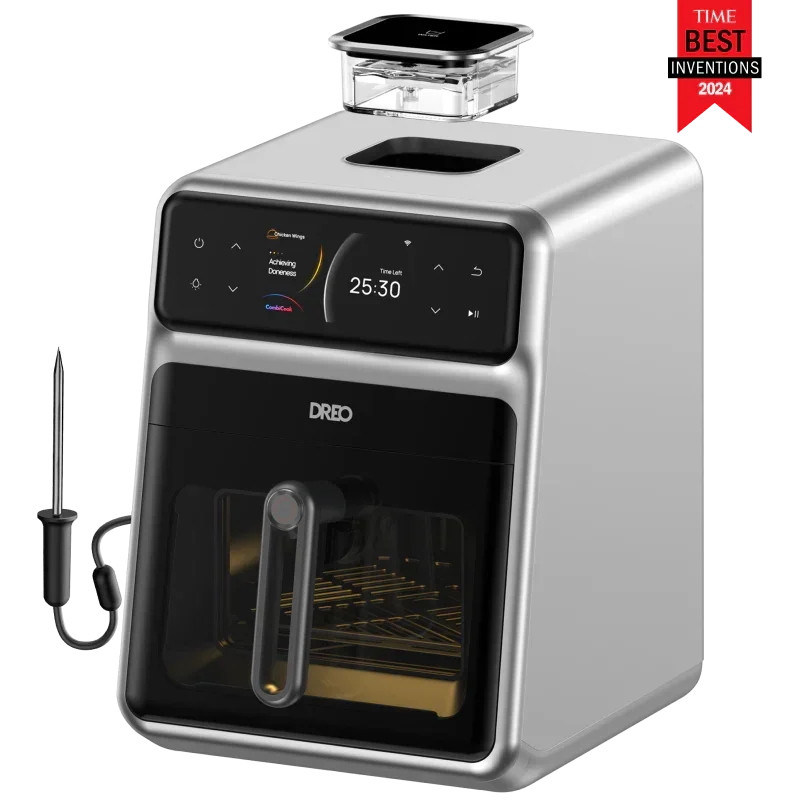 Dreo ChefMaker Combi Fryer
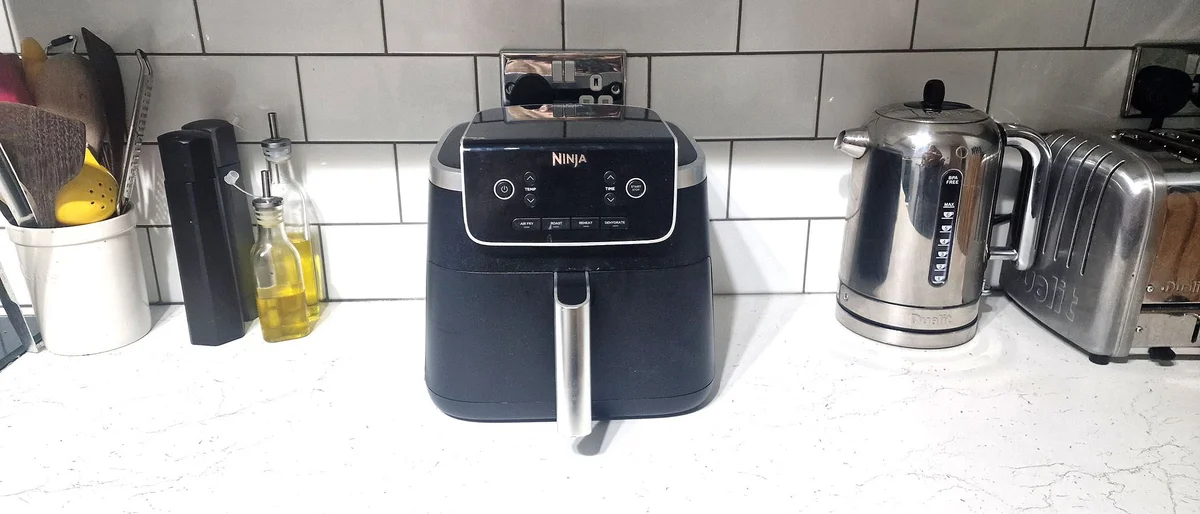 Ninja Air Fryer Pro 4-in-1 AF141
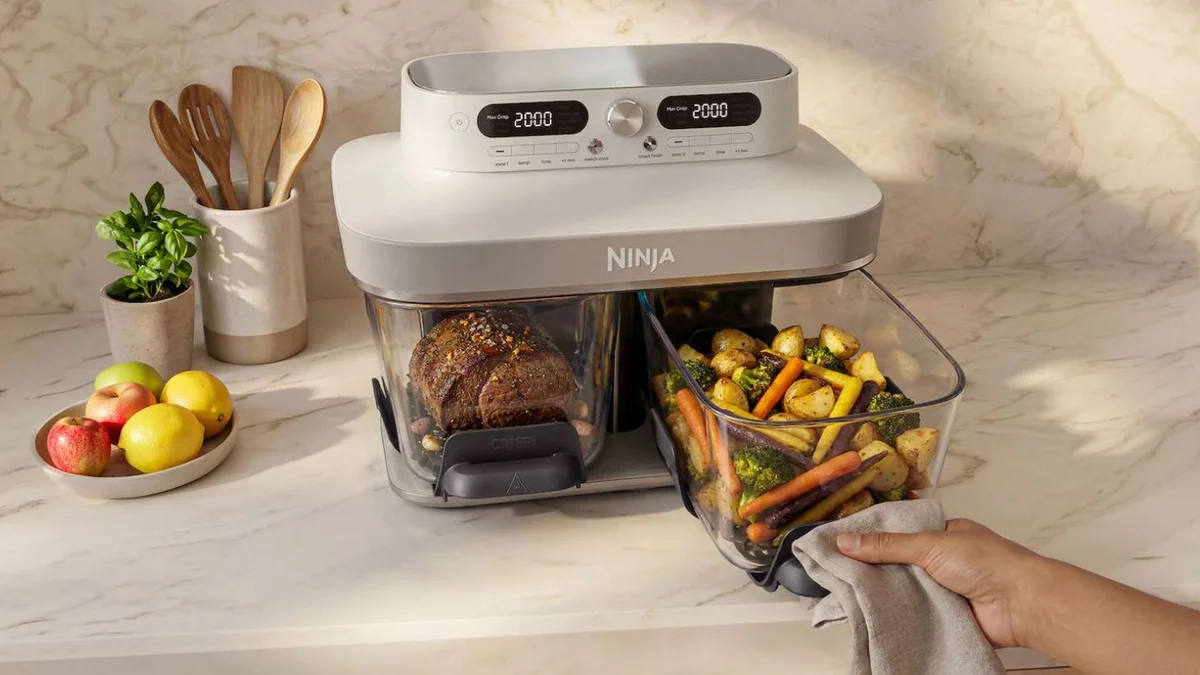 Ninja Crispi DualZone Glass Air Fryer DD101Ninja DoubleStack XL 10-Qt 2-Basket Air Fryer SL401
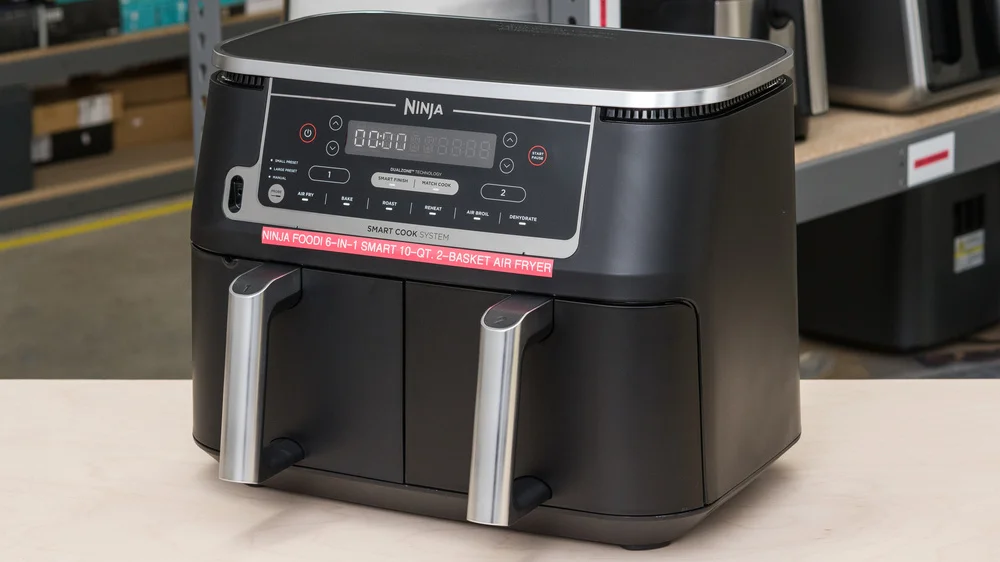 Ninja DZ550 Foodi 10-Quart 6-in-1 DualZone Smart XL Air FryerNinja Foodi DualZone FlexBasket 7-Quart Air Fryer DZ071Ninja Foodi 6-in-1 8-Qt 2-Basket Air Fryer DZ201
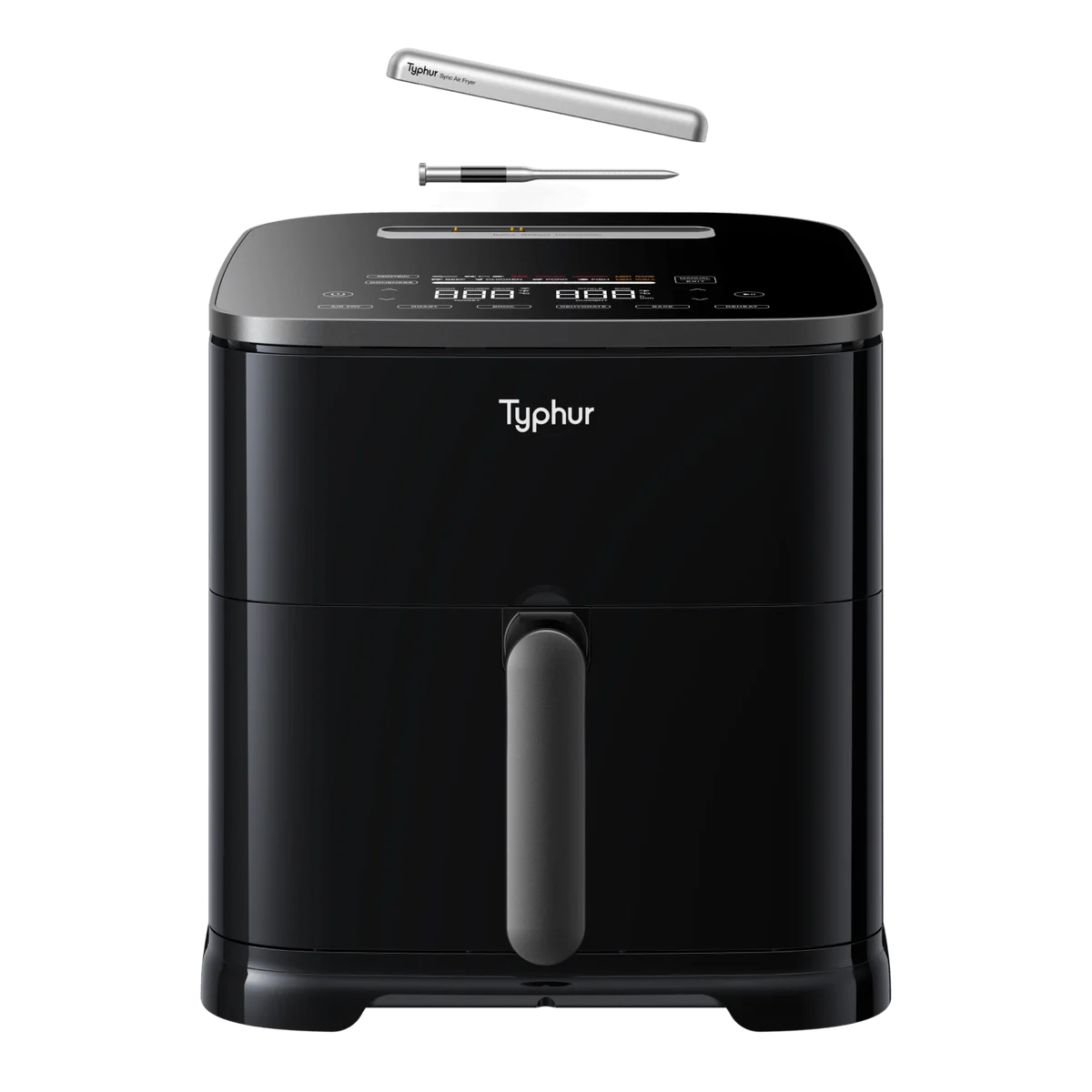 Typhur Sync Air Fryer AF14
More on air fryers
Explainer
Air Fryer vs. Convection Oven: Same Technology, Different Results
An air fryer is a small convection oven with a faster fan. Here is when that gap is worth the counter space, and when your oven already does the job.
Explainer
PFAS-Free, PFOA-Free, Ceramic: What Air Fryer Coating Labels Actually Mean
PFOA-free and PFAS-free are legally different claims, and ceramic coatings vary widely. A plain-English decoder for air fryer label chemistry, with examples from current models.